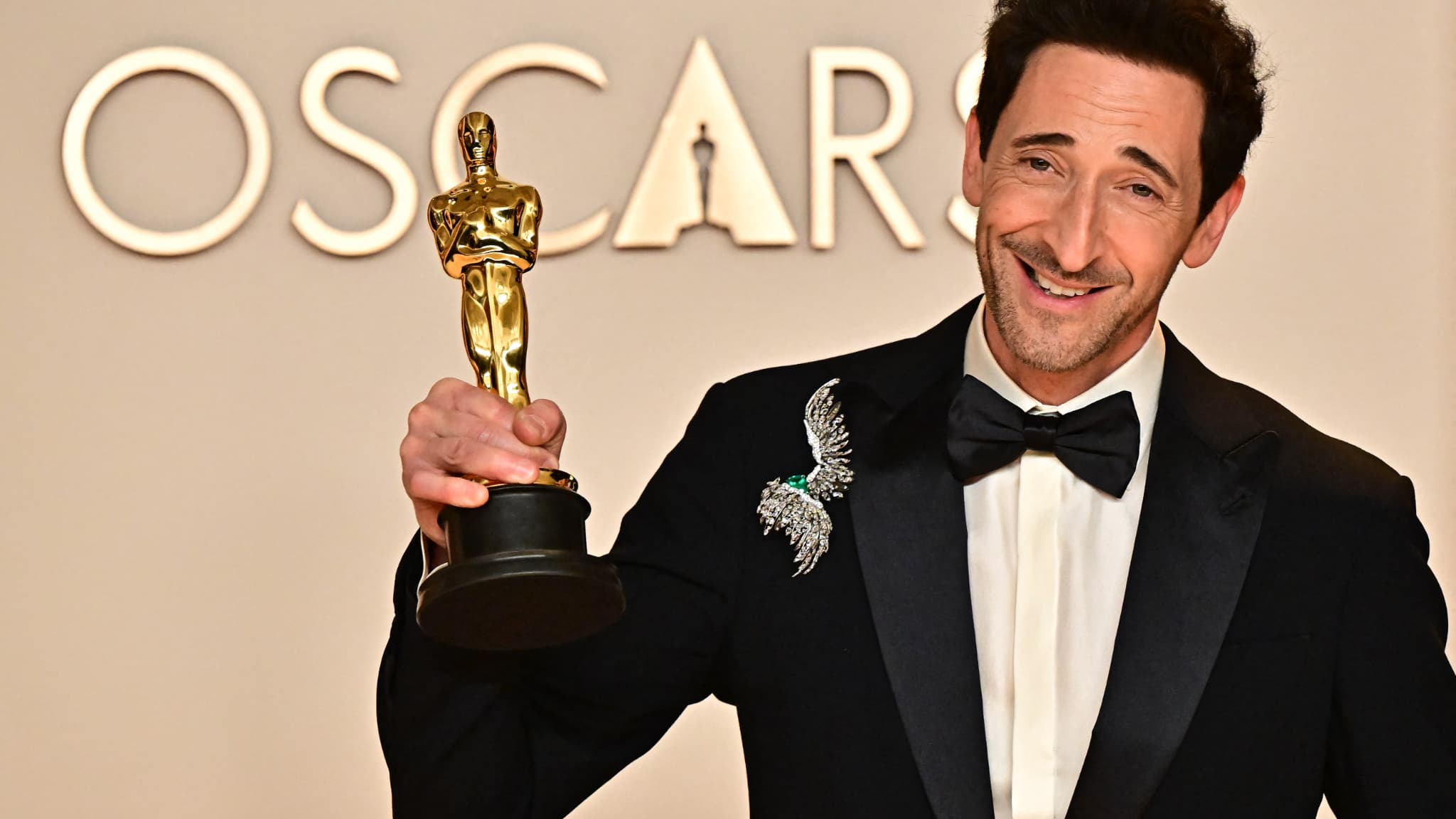
The primary Adrien Brody film released and widely distributed in 2025 is The Brutalist, a sweeping historical epic directed by Brady Corbet. Following its critical triumph at the 81st Venice International Film Festival in late 2024, the film saw its major theatrical expansion and global rollout in early 2025, solidifying its place as a cornerstone of modern cinema.
The Narrative Core of The Brutalist
The Brutalist represents a monumental achievement in contemporary filmmaking, spanning thirty years in the life of László Tóth (played by Adrien Brody), a Hungarian-born Jewish architect and Holocaust survivor. The story begins in 1947 as Tóth arrives in the United States, seeking to rebuild his life and professional identity in a land that promises opportunity but often delivers hardship.
The film is structured as a grand historical drama that explores the intersection of art, trauma, and the immigrant experience. Unlike many films that focus solely on the immediate aftermath of World War II, The Brutalist follows Tóth's journey through the mid-20th century, culminating in a transformative commission from a wealthy, mysterious industrialist, Harrison Lee Van Buren (Guy Pearce). This relationship becomes the fulcrum of the film, as Tóth is tasked with designing a massive community center that embodies the "Brutalist" architectural style—a movement characterized by raw, unadorned concrete and functionalist integrity.
Throughout its 215-minute runtime (which includes a formal 15-minute intermission), the film examines how the weight of the past influences the structures—both literal and metaphorical—that we build for the future. It is not merely a biography of a fictional architect; it is a meditation on the American Dream's complexity and the enduring scars of the 20th century.
Adrien Brody’s Transformative Performance
For Adrien Brody, the 2025 release of The Brutalist marked a significant career renaissance. Since becoming the youngest Best Actor Oscar winner for The Pianist (2002), Brody has maintained a steady presence in film, but The Brutalist offered him his most substantial and demanding lead role in decades.
Brody’s portrayal of László Tóth is characterized by a profound internal stillness and a palpable sense of intellectual rigor. To prepare for the role, Brody immersed himself in the history of mid-century architecture and the specific cultural nuances of the Hungarian Jewish diaspora. His performance captures the dual nature of an immigrant who is simultaneously grateful for his survival and haunted by the loss of his cultural and professional status.
Critics in 2025 frequently noted the "Full Circle" nature of this role. While The Pianist focused on the survival of an artist during the Holocaust, The Brutalist examines the survival of an artist after the tragedy, focusing on the struggle to create beauty in a world that has seen such profound ugliness. Brody’s chemistry with Felicity Jones, who plays his wife Erzsébet, provides the film's emotional anchor, as the couple navigates the physical and psychological distance imposed by the war and their subsequent relocation.
Technical Artistry: 70mm VistaVision and Visual Language
One of the most discussed aspects of the film during its 2025 theatrical run was its technical ambition. Director Brady Corbet and cinematographer Lol Crawley made the bold decision to shoot the entire project on 70mm VistaVision. This large-format process, famously used for epics like The Ten Commandments and later revived by directors like Christopher Nolan, provides a level of detail and textural depth that is rare in the digital age.
The use of VistaVision serves a thematic purpose. The high resolution and expansive frame allow the audience to appreciate the architectural scale of Tóth’s designs. The film’s visual style mirrors the Brutalist movement itself: it is grand, uncompromising, and emphasizes the "honesty" of its materials (in this case, film grain and natural light).
Why the 70mm Format Matters
- Resolution: The 70mm format offers significantly higher resolution than standard 35mm or 4K digital, capturing the intricate textures of concrete, stone, and fabric.
- Immersive Scale: The wider field of view is essential for a film that treats architecture as a primary character.
- Color Depth: The photochemical process provides a rich, organic color palette that evokes the specific historical periods of the 1940s through the 1970s.
The Role of A24 and the 2025 Release Strategy
The journey of The Brutalist to its 2025 release was a masterclass in independent film distribution. After the film became the breakout sensation of the Venice Film Festival—where Brady Corbet won the Silver Lion for Best Direction—the distribution rights were acquired by A24.
A24, known for its curated approach to prestige cinema, recognized that a three-and-a-half-hour historical epic required a specialized release strategy. Instead of a standard wide release in late 2024, A24 opted for a "slow burn" approach. The film had limited engagements in 70mm-equipped theaters in December 2024 to qualify for awards, but its true cultural footprint was established during its wide expansion in January and February of 2025.
This strategy allowed word-of-mouth to build, particularly regarding the film's "event" status. The inclusion of a mandatory intermission turned the theatrical experience into a communal event, reminiscent of the "roadshow" releases of the mid-20th century. By the time the Academy Awards arrived in early 2025, The Brutalist was at the center of the cinematic conversation, earning multiple nominations across major categories.
Production History and Collaborative Vision
The production of The Brutalist was a seven-year odyssey for Brady Corbet. Financing a period piece of this scale, shot on expensive film stock with a long runtime, proved to be a significant challenge. The project underwent various casting changes and production delays before finally filming in Hungary and Italy.
The collaborative team behind the camera was essential to the film's success:
- Direction and Screenplay: Brady Corbet and Mona Fastvold crafted a script that avoids the clichés of the immigrant saga, focusing instead on the technical and philosophical specifics of architecture.
- Score: Daniel Blumberg provided an avant-garde, orchestral score that oscillates between mechanical rigidity and soaring emotionality, reflecting the protagonist's mental state.
- Production Design: Judy Becker was tasked with recreating several decades of American and European history, as well as designing the "Brutalist" structures that give the film its name.
| Feature | Details of The Brutalist |
|---|---|
| Lead Actor | Adrien Brody (as László Tóth) |
| Director | Brady Corbet |
| Supporting Cast | Felicity Jones, Guy Pearce, Joe Alwyn, Stacy Martin |
| Runtime | 215 Minutes (including 15-minute intermission) |
| Film Format | 70mm VistaVision |
| Major Awards | Silver Lion for Best Direction (Venice Film Festival) |
| Key Themes | Architecture, Post-WWII Immigrant Experience, Artistic Integrity |
| Release Window | Wide expansion in early 2025 |
The Supporting Ensemble: Jones, Pearce, and Alwyn
While Adrien Brody is the undisputed lead, the film's depth is bolstered by a stellar supporting cast. Felicity Jones delivers a powerhouse performance as Erzsébet Tóth. Her character is not merely a supportive wife; she is a survivor of the camps who suffers from chronic health issues and a sharp, cynical intellect that often clashes with László’s idealism. The 2025 critical consensus frequently highlighted the chemistry between Brody and Jones as the film's beating heart.
Guy Pearce portrays Harrison Lee Van Buren, a character who embodies the contradictions of American wealth. Van Buren is both a patron of the arts and a volatile figure who views Tóth as a tool for his own legacy. Their power dynamic serves as a critique of the relationship between capital and creativity. Joe Alwyn and Stacy Martin round out the cast, representing the younger generation and the changing social tides of the 1950s and 60s.
Architectural Symbolism in the Film
The title, The Brutalist, refers to more than just a style of building; it refers to a way of existing in the world. Brutalism—derived from the French term béton brut (raw concrete)—is often misunderstood as "brutal" in the sense of cruelty. In the film, however, Corbet uses it to represent a search for truth.
For László Tóth, architecture is a language of permanence in a world that proved to be terrifyingly fragile. The buildings he designs are heavy, grounded, and honest about their construction. This mirrors his own refusal to assimilate by erasing his past. The film uses the progression of his designs to track his psychological state, moving from the cramped, makeshift offices of his early immigrant days to the expansive, concrete monuments of his later career.
Practical Information for Viewers
As of 2026, The Brutalist has transitioned from its 2025 theatrical peak to a staple of high-end home cinema and streaming. However, the film is best experienced in a theatrical setting, particularly in its original 70mm format.
- Viewing Options: While available on 4K Blu-ray and premium streaming platforms, film societies and specialty cinemas (such as the Alamo Drafthouse or the BFI) frequently host 70mm "roadshow" screenings.
- Time Commitment: Prospective viewers should be prepared for the 3.5-hour duration. The intermission is designed into the film's pacing, providing a necessary break to process the first act's heavy themes.
- Parental Guidance: The film contains mature themes, including depictions of historical trauma, drug use (morphine addiction resulting from war injuries), and brief violence. It is generally rated R or 15 depending on the jurisdiction.
FAQ
When was The Brutalist officially released?
The film premiered at the Venice International Film Festival on September 1, 2024. It had a limited awards-qualifying run in December 2024, but its wide theatrical release and international rollout occurred in early 2025.
Is The Brutalist based on a true story?
No, László Tóth is a fictional character. However, the film is deeply researched and draws inspiration from real historical events, the lives of various mid-century architects, and the actual "Brutalist" architectural movement that gained prominence in the 1950s.
What is the significance of the 70mm VistaVision format?
VistaVision is a higher-resolution film format where the film runs horizontally through the camera, allowing for a larger image area than standard vertical 35mm. For The Brutalist, this creates a grand, painterly aesthetic that emphasizes the architectural themes of the story.
Does the film have an intermission?
Yes. Director Brady Corbet included a formal 15-minute intermission in the middle of the film. This is a deliberate artistic choice to honor the "epic" tradition of cinema and to give the audience a moment to reflect on the first half of the story.
Where was The Brutalist filmed?
Despite being set largely in Pennsylvania, USA, the majority of the film was shot on location in Hungary and Italy. This allowed the production to utilize authentic period architecture and expansive landscapes that suited the 70mm format.
How does this role compare to Adrien Brody’s Oscar-winning performance in The Pianist?
While both characters are Hungarian Jewish survivors of the Holocaust, László Tóth in The Brutalist is focused on the "aftermath" and the act of creation, whereas Wladyslaw Szpilman in The Pianist was focused on immediate survival. Critics have described The Brutalist as a spiritual successor to Brody's earlier work.
Final Recommendation
For those who value cinema as an art form rather than mere entertainment, The Brutalist is essential viewing. Its 2025 release served as a reminder that large-scale, intellectual epics still have a place in the cultural landscape. To get the most out of the experience, seek out a 70mm screening if possible; the scale and detail of Adrien Brody’s performance and Brady Corbet’s direction are maximized on the big screen. If watching at home, ensure a high-quality 4K setup to appreciate the intricate film grain and the complex sound design of this modern classic.