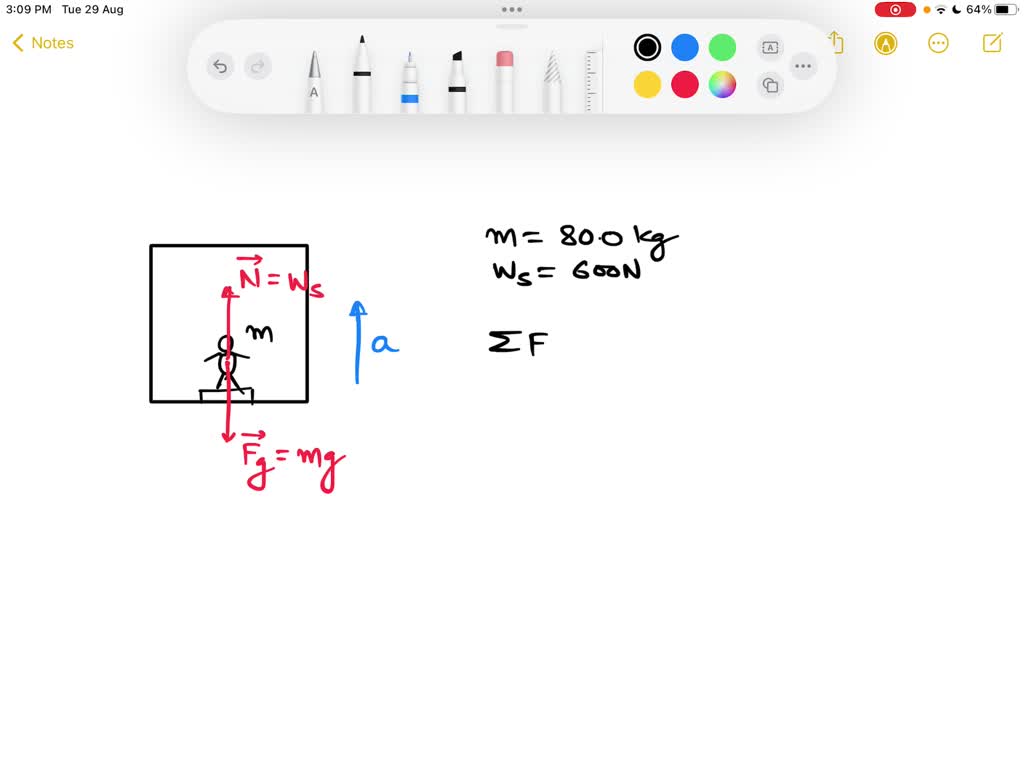
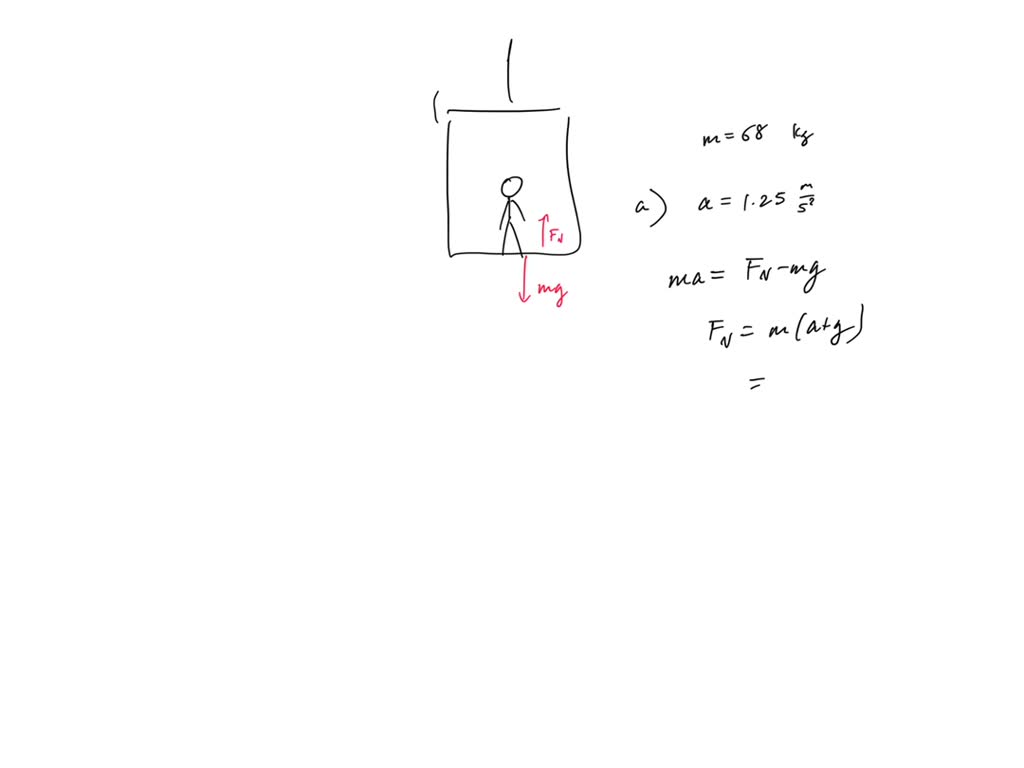
When a woman stands on a scale inside a moving elevator, the scale does not measure her true body mass or static gravitational force; instead, it measures the normal force exerted by her feet against the scale's platform, which fluctuates as the elevator accelerates, decelerates, or moves at a constant velocity.
Introduction to Elevator Physics and Apparent Weight
The scenario of a person standing on a weighing scale inside a moving elevator is a classic physics problem used to illustrate Newton's laws of motion, specifically the concepts of inertia, acceleration, and apparent weight. In daily life, individuals assume that bathroom scales measure mass in kilograms or pounds directly. However, these mechanical or digital scales are fundamentally force sensors. They do not calculate the amount of matter in a body; they calculate the downward force pressed upon their surface.
When an elevator is stationary or moving at a constant, unvarying speed, the reading on the scale matches a person's true static weight because the forces are in equilibrium. The moment the elevator begins to move—accelerating upward or downward—the physics change dramatically. External forces act upon the cabin, altering the normal force ($N$) required to accelerate the person along with the elevator car. This variation creates the sensation of feeling heavier or lighter, phenomena that can be precisely calculated using Newtonian mechanics.
The Underlying Physics: Forces at Play
To understand what happens when a woman steps onto a scale in an elevator, one must analyze the primary forces acting upon her body. Two main vectors dictate the interaction: gravity and the normal force.
Gravitational Force
Gravity exerts a constant downward pull on the human body, represented mathematically as the product of mass ($m$) and the acceleration due to gravity ($g$). On Earth, $g$ is approximately $9.8 , \text{m/s}^2$. This force ($W = mg$) pulls the person toward the center of the Earth regardless of whether they are standing on solid ground, floating in water, or riding an elevator.
Normal Force and Newton's Second Law
The normal force ($N$) is the perpendicular contact force exerted by a surface—in this case, the scale platform—upon an object resting on it. According to Newton’s Third Law, the force the person exerts downward on the scale is equal in magnitude to the normal force pushing upward.
Newton’s Second Law states that the net force ($F_{\text{net}}$) acting on an object is equal to its mass multiplied by its acceleration ($F_{\text{net}} = ma$). When applied to a person inside an elevator, the vertical forces can be summed up as:
$$N - mg = ma$$
Where:
- $N$ = Normal force (what the scale reads)
- $mg$ = True gravitational weight
- $ma$ = Force due to the elevator's vertical acceleration ($a$)
Rearranging the formula to solve for the normal force yields:
$$N = mg + ma = m(g + a)$$
This equation demonstrates that the scale reading depends entirely on the magnitude and direction of the elevator's acceleration ($a$).
Scenario Breakdown: Stationary, Constant Speed, and Acceleration
The behavior of the scale changes through distinct phases of an elevator ride. Every journey involves starting from rest, accelerating, cruising at a steady velocity, decelerating, and coming to a stop.
Elevator Motion Phase | Acceleration ($a$) | Scale Reading ($N$) | Sensation --------------------------|--------------------|---------------------|------------------ Stationary / Constant | $0$ | Equal to $mg$ | Normal Accelerating Upward | Positive ($+a$) | Greater than $mg$ | Heavier Decelerating Upward | Negative ($-a$) | Less than $mg$ | Lighter Accelerating Downward | Negative ($-a$) | Less than $mg$ | Lighter Decelerating Downward | Positive ($+a$) | Greater than $mg$ | Heavier
1. Stationary or Moving at Constant Velocity
If the elevator is completely stationary ($a = 0$), the scale displays the woman's true weight ($N = mg$).
Surprisingly, the exact same reading occurs if the elevator is moving upward or downward at a constant velocity. Because velocity is steady, acceleration is zero ($a = 0$). According to the laws of inertia, no net external force is required to maintain a constant speed in a straight line. Therefore, the scale registers the exact static weight.
2. Accelerating Upward
When the elevator doors close and the car begins to move upward from the ground floor, it must accelerate. In this phase, acceleration ($a$) is positive.
To push the woman's body upward against gravity while simultaneously accelerating her mass upward, the floor and the scale must push harder against her feet. Consequently, the normal force increases:
$$N = m(g + a)$$
The scale reading spikes above her true weight. During this brief window, the woman feels heavier, and her feet press into the platform with greater force.
3. Accelerating Downward
Conversely, when the elevator starts moving downward from the top floor, or when an upward-moving elevator begins to slow down before reaching a floor, the acceleration vector points downward.
If the elevator accelerates downward at a rate $a$, the equation adjusts:
$$N = m(g - a)$$
Because the scale does not need to push as hard to support the body while the floor is dropping away, the normal force decreases. The scale displays a lower weight, and the woman experiences a sensation of lightness in her stomach.
4. Free Fall (Extreme Scenario)
If the elevator cables were to snap, causing the car to fall freely under gravity alone, the elevator and everything inside it would accelerate downward at $g$.
Substituting $a = g$ into the equation yields:
$$N = m(g - g) = 0$$
The scale would read zero. The woman would float inside the elevator cabin, experiencing complete weightlessness, because neither her feet nor the scale would be exerting force against one another.
Physiological Sensations vs. Scale Readings
Human beings do not possess sensory organs dedicated to measuring absolute velocity or absolute position; instead, our vestibular systems and proprioceptors are highly sensitive to acceleration.
When a woman stands on a scale in a moving elevator, her brain interprets changes in the normal force as changes in weight. When the elevator accelerates upward, the deep mechanoreceptors in her joints and soles register the increased pressure. Her vestibular system notes the upward push. This combined sensory input creates the unmistakable physical sensation of heaviness.
Conversely, when the elevator slows down on its way up or starts moving down, the floor momentarily drops away faster than gravity would pull the body alone, reducing the pressure on the soles of the feet. This sudden reduction in normal force triggers the familiar "stomach-drop" feeling associated with rapid descents.
Common Misconceptions About Scales in Elevators
Several widespread myths surround physics problems involving scales and elevators. Clarifying these points prevents common conceptual errors.
- Scales measure mass: As established, bathroom scales measure force, not mass. Mass remains constant regardless of location or movement, whereas apparent weight changes with acceleration.
- Constant speed changes weight: Many assume that traveling at high speeds (such as in a high-speed skyscraper elevator moving at 10 meters per second) alters weight. In reality, uniform motion has zero effect on the scale reading once cruising speed is reached.
- The scale breaks: While rapid acceleration can cause mechanical needles to jump or digital displays to fluctuate wildly, the changes are temporary and reflect real mechanical forces rather than device malfunction.
Frequently Asked Questions
Does a scale in an elevator show your true weight?
A scale in an elevator only shows your true weight when the elevator is completely stationary or traveling at a strictly constant, unvarying speed. During acceleration or deceleration phases, the scale displays your apparent weight, which is either higher or lower than your true weight depending on the direction and magnitude of the motion.
Why do you feel lighter when an elevator goes down?
You feel lighter because the downward acceleration of the elevator reduces the normal force exerted by the floor against your feet. Because the cabin accelerates downward, the support force decreases temporarily, creating a momentary sensation of reduced gravity and weightlessness.
What would a scale read if the elevator cable broke?
If an elevator were in unpowered free fall, the scale would read zero. Both the elevator car, the scale, and the person inside would accelerate downward at the exact same rate ($9.8 , \text{m/s}^2$), meaning there would be no contact force between the person's feet and the scale platform.
Does your mass change inside a moving elevator?
No. Mass is an intrinsic property representing the amount of matter in a physical body and remains entirely constant. Only the apparent weight—the force exerted on the scale due to acceleration—changes during the ride.
Can you calculate elevator acceleration using a bathroom scale?
Yes. If you know your true static weight ($W = mg$) and record the peak or trough reading on the scale ($N$) during acceleration, you can algebraically solve for acceleration using the rearranged formula: $a = \frac{N - m}{m} \cdot g$ (using appropriate unit conversions for mass and force).
Practical Takeaways and Next Actions
Understanding the mechanics of a woman standing on a scale in a moving elevator provides a clear window into foundational Newtonian physics. To apply or test these concepts practically:
- Verify Baseline Weight: Step onto a scale while the elevator is stationary to establish your true static weight.
- Observe Transitions: Pay close attention to the scale reading during the exact second the elevator starts moving upward or downward.
- Analyze Forces: Remember that fluctuations are temporary mechanical responses to acceleration, not actual changes in your body mass.