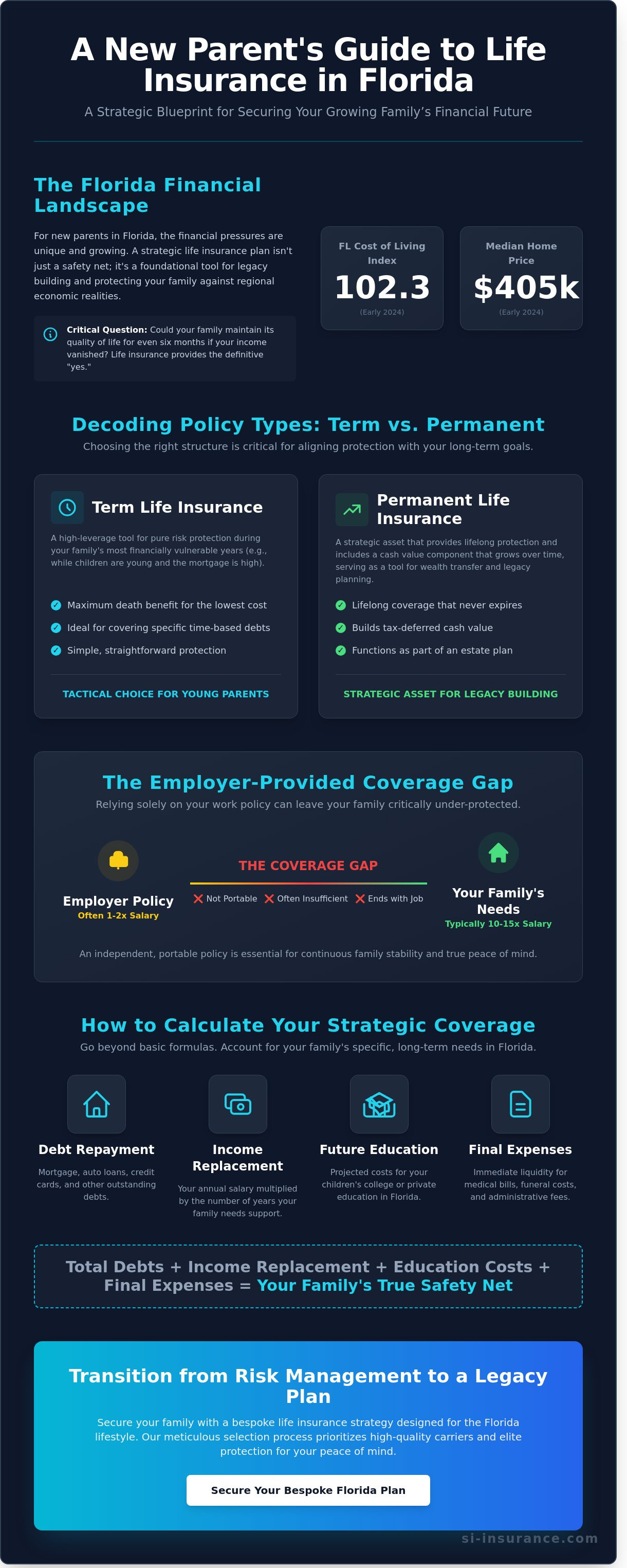
Life insurance acts as a foundational component of long-term family financial security, designed to replace lost income and cover essential expenses such as childcare, education, and debt obligations in the event of a parent’s death. For parents, the primary goal is to ensure that dependents maintain their standard of living and have access to necessary resources if the family’s primary breadwinner or caregiver is no longer present.
Navigating the landscape of life insurance requires an understanding of your specific financial obligations, the duration for which coverage is needed, and the distinction between various policy types. Because every family situation is unique, there is no universal "best" policy; instead, the correct choice is determined by calculating your family's future costs against your current assets and potential inheritance. This guide explores the mechanisms of life insurance, how to assess your specific needs in 2026, and the steps required to secure a policy that aligns with your family’s long-term protection strategy.
Understanding the Purpose and Mechanics of Life Insurance
At its core, life insurance is a contract between a policyholder and an insurer. The policyholder pays premiums in exchange for a death benefit, which is a tax-free lump sum paid to designated beneficiaries upon the death of the insured. For parents, this financial safety net is intended to mitigate the disruption caused by a sudden loss of income or the loss of services provided by a non-earning parent, such as childcare or household management.
Unlike other forms of insurance, such as health or auto, which often focus on immediate, recurring costs, life insurance is oriented toward long-term stability. It is often structured to cover specific "life stages" of children, such as reaching adulthood, finishing higher education, or paying off major family debts like a mortgage.
Differentiating Term and Permanent Insurance
When researching options, you will primarily encounter two categories of insurance: term life and permanent (or whole) life. Understanding the difference is the most critical step in selecting a policy that fits your budget and goals.
Term Life Insurance
Term life is the most straightforward and typically the most affordable option for young to middle-aged parents. You purchase coverage for a specific period—most commonly 10, 20, or 30 years.
- Suitability: It is ideal for parents who have specific, time-bound financial responsibilities, such as a 20-year mortgage or the years leading up to when children become financially independent.
- Cost: Premiums are fixed for the duration of the term. Because the policy only pays out if you die within that set timeframe, the cost is significantly lower than permanent alternatives.
- Limitation: Once the term ends, coverage expires. If you still have financial dependents or outstanding debt at the end of the term, you would need to re-apply for a new policy, often at a higher rate due to age or health changes.
Permanent Life Insurance
Permanent insurance, which includes whole life and universal life, remains in effect for your entire life as long as premiums are paid.
- Suitability: This is often utilized for high-net-worth individuals seeking estate planning tools, tax-advantaged savings components, or coverage for a child with special needs who may require financial support throughout their entire life.
- Cost: Premiums are significantly higher than term insurance.
- Cash Value: These policies include a savings component (cash value) that grows over time. While this can provide a source of liquidity, the costs associated with these policies can be prohibitive for families looking primarily for death benefit protection.
Determining How Much Coverage You Need
A common mistake parents make is selecting a coverage amount based on a round number or a generic estimate. Experts suggest a more precise calculation based on your family’s "income replacement" and "debt clearance" needs.
The Income Replacement Method
To determine the death benefit, consider your annual salary and multiply it by the number of years you wish to replace that income. For instance, if you earn $80,000 annually and want to ensure your family can maintain their current lifestyle for 15 years, a $1.2 million death benefit is a logical starting point.
The Debt and Expense Method
In addition to income replacement, list your significant liabilities:
- Mortgage Balance: The remaining principal on your home loan.
- Educational Costs: Estimated tuition for children’s college education.
- Immediate Expenses: Funeral costs, final medical bills, and probate fees.
- Childcare: If one parent passes, what would the cost of professional childcare be for the surviving parent?
Comparison Table: Policy Selection Framework
| Feature | Term Life Insurance | Whole Life Insurance |
|---|---|---|
| Duration | Fixed (e.g., 10–30 years) | Lifetime |
| Premium Cost | Low/Predictable | High |
| Cash Value | No | Yes (builds over time) |
| Primary Goal | Income replacement | Estate/long-term planning |
| Best For | Families with debt/kids at home | High-net-worth/Estate planning |
The Application Process: Steps and Requirements
Applying for life insurance is an underwriting process where the insurer assesses your "mortality risk." The following steps are standard across the industry in 2026:
- Needs Assessment: Consult with a fee-only financial planner or use an independent insurance calculator to determine your target death benefit.
- Choosing a Carrier: Research the financial stability of insurers using ratings from agencies such as AM Best or Standard & Poor’s. Financial strength is critical because you want to ensure the company will be solvent decades from now.
- Application: You will provide personal information, including medical history, occupation, and lifestyle habits (e.g., smoking, extreme sports).
- Medical Underwriting: Many companies require a paramedical exam, which includes blood work and a physical. Some policies offer "accelerated underwriting," where you may bypass the medical exam based on existing digital medical records, though this is usually reserved for younger, healthier applicants.
- Review and Policy Issuance: Once the underwriter reviews your file, they provide a premium quote. You then accept the policy and begin paying premiums to keep it active.
Common Mistakes Parents Make
- Under-insuring: Many parents rely solely on group life insurance provided by their employer. These policies are often tied to your employment; if you leave the company or are laid off, you typically lose your coverage. Always maintain an individual policy as your baseline.
- Ignoring the Non-Working Parent: A stay-at-home parent provides significant value in childcare, cooking, and household management. If that parent were to pass, the surviving partner would likely need to hire help. Life insurance for a non-working parent is essential for maintaining household stability.
- Procrastinating: Insurance premiums are heavily tied to age and health. The longer you wait to apply, the higher your premiums will be. Applying in your 30s is almost always cheaper than applying in your 40s or 50s.
- Incorrect Beneficiary Designations: Ensure your beneficiaries are updated. If your children are minors, you cannot name them as direct beneficiaries of a death benefit because they cannot legally manage the funds. Instead, you should consult an attorney to set up a trust, and name the trust as the beneficiary.
Frequently Asked Questions
Can I get life insurance if I have a pre-existing medical condition? Yes, but your premiums may be higher. Underwriters look at how well your condition is managed. In some cases, you may qualify for "guaranteed issue" policies, though these often have lower death benefits and higher costs.
Should I buy life insurance for my children? Generally, no. Life insurance is designed to replace income. Unless your child has a specialized skill set that generates significant family income, a policy on them is rarely a sound financial investment compared to putting those same funds into a 529 education savings plan or a custodial brokerage account.
How often should I review my policy? Review your policy every 3 to 5 years, or whenever you experience a major life event, such as the birth of a new child, a marriage, a divorce, or a significant increase in your debt load.
What happens if I stop paying my premiums? For term life policies, the policy will lapse, and you will lose all coverage. For whole life policies, you might be able to draw upon the accumulated cash value to pay the premiums for a limited time, or the policy might be converted to a smaller, paid-up death benefit.
Is the death benefit taxable? In most cases, life insurance proceeds are paid to beneficiaries income-tax-free in the United States. However, if the policy is owned by an estate or not structured correctly, it could potentially be subject to estate taxes. Consult a tax professional regarding your specific situation.
Next Actions for Parents
To take action today, perform an audit of your current financial liabilities. Calculate exactly what your family would need to pay for the mortgage and education in your absence. If you have existing policies, locate the declaration page to confirm the death benefit amount and the length of the remaining term. If you find you are under-insured, reach out to an independent, non-captive insurance agent who can compare rates across multiple A-rated carriers to find a policy that balances your coverage needs with your household budget.