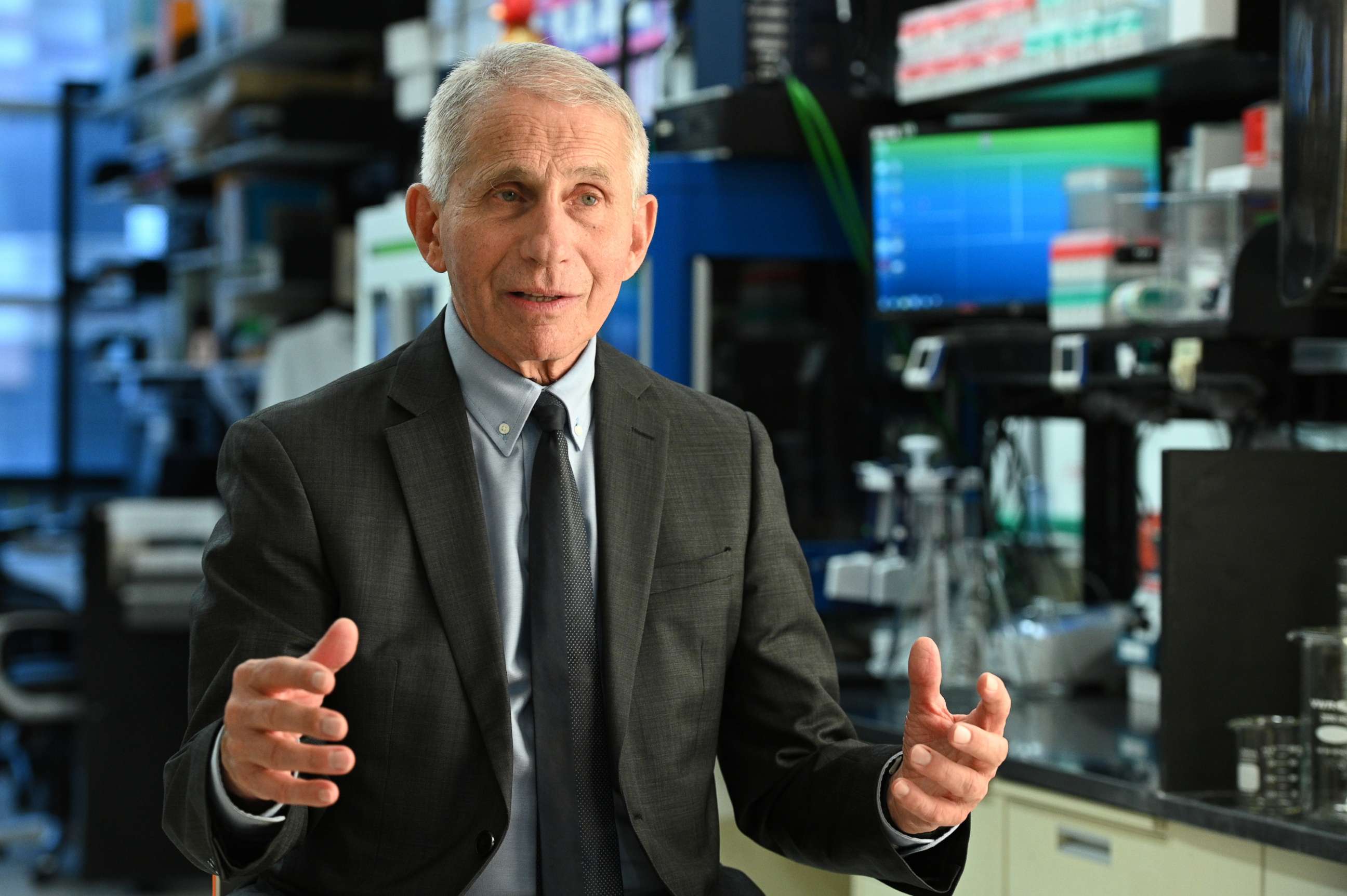
Dr. Anthony Fauci’s journey in public service offers a blueprint for navigating the complex intersection of clinical science and federal policy. His career emphasizes the necessity of data-driven decision-making, transparent communication during uncertainty, and the resilience required to maintain scientific integrity amidst intense political and social polarization across seven presidential administrations.
The Foundation of a Career in Public Service
To understand the lessons derived from Dr. Anthony Fauci’s career, one must look at the early influences that shaped his approach to medicine and government. Born in Brooklyn and educated in the Jesuit tradition at the College of the Holy Cross, Fauci often credited his education for instilling a philosophy of being a "man for others." This service-oriented mindset became the bedrock of his 54-year career at the National Institutes of Health (NIH).
Fauci joined the NIH in 1968, a time when infectious diseases were often thought to be a solved problem in the developed world. However, his decision to stay in the public sector rather than pursue a more lucrative private practice set the stage for a unique career arc. By 1984, he was appointed Director of the National Institute of Allergy and Infectious Diseases (NIAID), a position he would hold until his retirement in late 2022. The primary lesson here is the value of institutional stability. In an era of high turnover in government roles, Fauci’s longevity allowed him to build deep historical memory, which proved vital when facing recurring pathogens and emerging biosecurity threats.
The Lesson of Empathy and Activism: The HIV/AIDS Crisis
Perhaps the most transformative period of Fauci’s journey was the early HIV/AIDS epidemic. In the 1980s, the medical establishment was slow to respond to the crisis, and activists from groups like ACT UP were often at odds with federal researchers. Dr. Fauci’s initial reaction was traditional—defending the slow, rigorous pace of clinical trials. However, his willingness to listen to activists like Larry Kramer remains one of his most significant leadership lessons.
Instead of retreating into the ivory tower of the NIH, Fauci opened a dialogue with the community. He realized that the standard rules for clinical trials, while scientifically sound, were ethically problematic for a population facing a terminal illness with no existing treatments. This led to the development of "parallel tracks" for drug testing, allowing patients to access experimental therapies while formal trials continued.
This chapter of his life teaches public health officials that community engagement is not just a PR exercise; it is an essential component of effective science. By bringing activists into the decision-making process, Fauci helped accelerate the pace of research and built a bridge of trust that eventually led to the development of life-saving antiretroviral therapies.
Global Health Diplomacy: The PEPFAR Legacy
A doctor’s journey in public service often extends beyond national borders. One of Dr. Fauci’s most enduring achievements was his role as a primary architect of the President's Emergency Plan for AIDS Relief (PEPFAR). Launched under President George W. Bush in 2003, PEPFAR represents one of the largest commitments by any nation to combat a single disease.
The lesson from PEPFAR is the power of evidence-based advocacy. Fauci had to convince a conservative administration and a divided Congress that investing billions of dollars in global health was not only a moral imperative but also a matter of global security. By presenting clear, data-driven projections of the impact of the virus on sub-Saharan Africa, he helped create a program that has since saved over 25 million lives.
This highlights a critical skill for public health leaders: the ability to translate complex medical data into a compelling narrative that resonates with policymakers who may not have a scientific background. According to the U.S. Department of State, PEPFAR remains a cornerstone of American soft power and global health infrastructure even as we look back from 2026.
Communicating Through Uncertainty: The COVID-19 Era
The final and most public chapter of Fauci’s federal service involved the COVID-19 pandemic. This period provided a masterclass—and a cautionary tale—in crisis communication. As the public face of the White House Coronavirus Task Force, Fauci faced the Herculean task of explaining a rapidly evolving viral threat to a frightened and increasingly skeptical public.
One of the hardest lessons learned during this time was the difficulty of communicating scientific uncertainty. In science, recommendations change as new data emerges (the "self-correcting" nature of the scientific method). However, in a politically charged environment, these shifts were often perceived as flip-flopping or incompetence.
The lesson for future public servants is the importance of "precision of language." Fauci’s experience underscored that leaders must explicitly state what they know, what they don’t know, and the fact that guidance will likely change as more evidence is gathered. Despite the intense polarization, Fauci remained a symbol of scientific rigor for many, leading to what sociologists termed the "Fauci Effect"—a significant surge in medical school applications from individuals inspired by his dedication to public truth.
Navigating the Intersection of Science and Politics
Dr. Fauci served seven U.S. presidents, ranging from Ronald Reagan to Joe Biden. Maintaining a non-partisan stance while working at the highest levels of government is a delicate balancing act. His journey teaches that the primary loyalty of a public health official must be to the truth and the data, rather than to the political fortunes of any administration.
There were moments of significant friction, particularly during the COVID-19 response, where scientific recommendations clashed with political optics. Fauci’s strategy was to remain focused on the "North Star" of public health: protecting the population. He famously noted that you must "speak truth to power," even when that truth is unpopular. This requires a level of professional courage that is rare in bureaucracy.
For those pursuing a career in public service, Fauci’s path illustrates that credibility is a leader’s most valuable currency. Once lost through political compromise, it is nearly impossible to regain. His transition to academia at Georgetown University in 2023 allowed him to continue this mission by teaching the next generation of leaders how to navigate these very pressures.
Comparative Overview of Public Health Crises
The following table summarizes the major public health challenges Dr. Fauci managed during his tenure at the NIAID and the core lessons derived from each.
| Crisis/Outbreak | Primary Role | Core Leadership Lesson | Key Outcome |
|---|---|---|---|
| HIV/AIDS (1980s-90s) | Lead Researcher / Director | Community engagement and empathy. | Modernizing clinical trial protocols; ART development. |
| Anthrax Attacks (2001) | Biodefense Coordinator | The importance of national preparedness. | Expansion of the Strategic National Stockpile. |
| Ebola (2014-2016) | Clinical Lead / Spokesperson | Combating fear with clinical facts. | Successful treatment of patients in the U.S.; vaccine research. |
| Zika Virus (2016) | Research Director | Proactive research for emerging threats. | Rapid development of diagnostic tools and vaccine candidates. |
| COVID-19 (2020-2022) | Chief Medical Advisor | Scientific integrity amidst polarization. | Rapid mRNA vaccine deployment; public health guidance. |
The Role of Mentorship and Institutional Legacy
A significant but often overlooked aspect of Fauci’s journey is his commitment to mentorship. Throughout his decades at the NIH, he trained hundreds of physicians and scientists who now lead departments at major universities and research centers worldwide. This is a vital lesson in institutional sustainability: a leader's success is measured not just by their own achievements, but by the strength of the team they leave behind.
By fostering an environment of rigorous debate and high standards at the NIAID, Fauci ensured that the agency remained a global leader in infectious disease research. His journey shows that public service is a relay race, not a sprint. The infrastructure he helped build—including the Vaccine Research Center—continues to protect the public long after his departure from federal service.
Addressing Criticism and the Burden of Public Life
No journey in public service is without its detractors. Dr. Fauci’s career was marked by significant criticism, from the slow response to AIDS in the early 80s to the debate over the origins of COVID-19 and the efficacy of lockdowns. A key lesson for public servants is the necessity of a "thick skin" and the ability to distinguish between constructive criticism and politically motivated attacks.
Fauci’s approach was often to return to the primary literature. When faced with criticism, he relied on peer-reviewed data to justify his positions. This adherence to the scientific process serves as a shield against personal attacks. However, his journey also highlights the personal cost of public service in the digital age, including security threats and the toll on one's family, a reality that future leaders must be prepared for.
Frequently Asked Questions
Why did Dr. Fauci stay in public service for over 50 years?
Fauci often stated that the "broad canvas" of public service allowed him to impact millions of lives in a way that individual clinical practice could not. He saw the NIH as the ultimate platform to combine his love for medicine with his desire to solve large-scale societal problems. His commitment was rooted in the Jesuit principle of service and the belief that the government is the only entity with the scale to handle global health threats.
How did Dr. Fauci manage the relationship with different U.S. presidents?
He followed a strict rule of remaining non-partisan and focusing entirely on the scientific evidence. He viewed his role as an advisor, not a policymaker. By sticking to the data, he was able to maintain his position through vastly different political climates, though this became increasingly difficult as public health itself became a partisan issue.
What was the "Fauci Effect" on medical education?
The "Fauci Effect" refers to a record-breaking increase in applications to medical schools in the early 2020s. Many students cited Fauci’s visibility and his role as a truth-seeker during the COVID-19 pandemic as their inspiration for pursuing a career in medicine and public health. This underscores how a visible, dedicated public servant can influence the workforce of the future.
What is Dr. Fauci’s most significant scientific contribution?
While he is best known as a public official, Fauci's work in the 1970s and 80s on the mechanisms of human immune response—specifically regarding Wegener's granulomatosis and other autoimmune diseases—was groundbreaking. He is consistently ranked as one of the most cited scientists in history, according to the NIH Alumni Association.
What lessons does his 2024 memoir "On Call" offer?
His memoir, "On Call: A Doctor's Journey in Public Service," serves as a detailed roadmap for aspiring physicians and civil servants. It emphasizes the importance of balancing clinical rounds with policy meetings, arguing that seeing patients kept him grounded and reminded him of the human impact of the high-level decisions made in Washington.
Practical Recommendation for Future Public Servants
For those looking to follow a similar path in public service, the primary takeaway is the importance of specialization followed by diversification. Fauci became a world-class expert in immunology before he ever attempted to influence policy. This deep technical expertise provided him with the "scientific street cred" necessary to command respect in the political arena.
If you are a medical or scientific professional considering public service in 2026 and beyond, prioritize your technical training first. Once you have established a foundation of expertise, seek out roles that bridge the gap between your lab or clinic and the public sphere—whether through local health boards, professional societies, or government fellowships. The journey of Dr. Anthony Fauci proves that a single dedicated individual, armed with data and a commitment to service, can indeed change the course of global history.