A California worker compensation case is a state-level legal matter governed by the California Labor Code and administered by the Department of Industrial Relations (DIR). Because California operates its own exclusive administrative system for workplace injuries, these claims are processed within the state court and board infrastructure rather than through federal court systems, ensuring specific state-mandated benefits for injured employees.
The Jurisdictional Framework of Workers' Compensation
To understand why a California worker compensation case is inherently a state case, one must look at the constitutional and statutory foundations of the California workers' compensation system. Unlike federal laws such as the Longshore and Harbor Workers' Compensation Act—which covers maritime employees—most private and public sector employees in California fall under the jurisdiction of the state’s “no-fault” insurance system.
This system is mandated by Article XIV, Section 4 of the California Constitution, which empowers the state legislature to create a complete system of workers' compensation. Because the state has asserted its authority to legislate this area, all disputes regarding compensability, benefits, and medical treatment are handled by the Division of Workers' Compensation (DWC), a subdivision of the California Department of Industrial Relations. This setup provides an exclusive remedy; in exchange for the certainty of benefits regardless of fault, employees generally forfeit the right to sue their employers in civil court for personal injury, effectively keeping the litigation contained within the state administrative framework.
The Role of the Workers’ Compensation Appeals Board (WCAB)
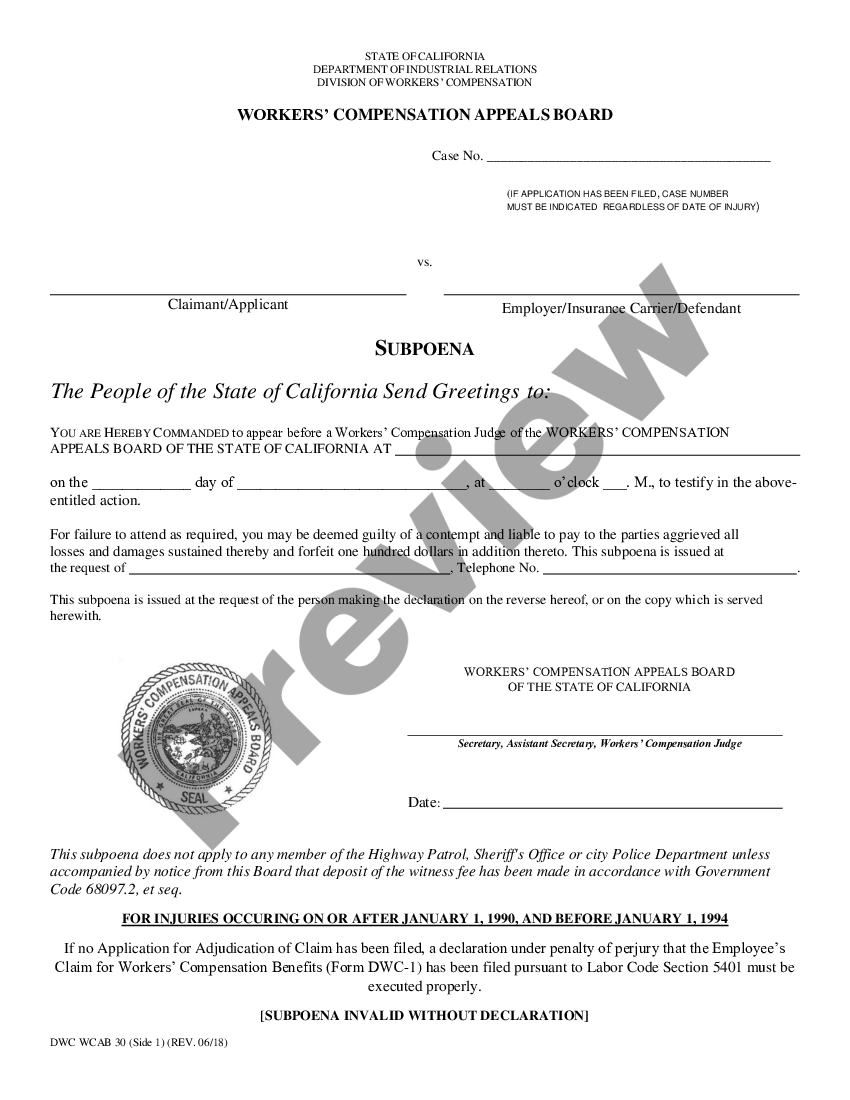
The Workers’ Compensation Appeals Board (WCAB) serves as the judicial body that oversees these state cases. When a dispute arises between an injured worker and an insurance carrier or employer, the case is brought before the WCAB. This body operates similarly to a court system, featuring administrative law judges (workers' compensation judges) who preside over hearings, resolve disputes, and issue rulings.
Because the WCAB is a state-created tribunal, it functions with specific procedural rules laid out in the California Code of Regulations and the California Labor Code. Federal courts rarely have jurisdiction over these matters unless there is a constitutional issue at stake or if the employment relationship involves specific federal-exclusive jurisdictions. For the overwhelming majority of California residents, the WCAB is the final arbiter for their workers' compensation disputes, reinforcing the fact that these are state-controlled proceedings.
Differentiating State Jurisdiction from Federal Coverage
A common point of confusion for workers is determining whether their injury might actually fall under federal law. It is important to identify when a case might be the exception rather than the rule. Certain categories of workers are covered by federal statutes, which overrides the state system:
- Maritime Workers: Covered under the Longshore and Harbor Workers' Compensation Act (LHWCA).
- Federal Employees: Covered under the Federal Employees' Compensation Act (FECA).
- Railway Workers: Engaged in interstate commerce, often covered under the Federal Employers' Liability Act (FELA).
If you are not employed in one of these highly specific federal sectors, your claim remains under the jurisdiction of the California state system. The state system is designed to provide medical care, temporary disability, permanent disability, and vocational rehabilitation benefits based on state-specific schedules and calculations. Attempting to bring a standard California workplace injury claim into a federal venue is typically met with a dismissal for lack of jurisdiction, as the California DWC has exclusive authority over these claims.
The Lifecycle of a California Workers’ Compensation Claim
Understanding that your case is a state matter helps in navigating the procedural lifecycle required by the California Department of Industrial Relations. The state mandates specific timelines and documentation procedures that differ from federal civil litigation.
- Reporting the Injury: An employee must report the injury to their employer within 30 days of the incident to preserve rights to benefits. This is a state-mandated administrative deadline.
- Claim Filing: The employer must provide the worker with a DWC-1 form. Once the worker files this, the claim is officially registered within the state's electronic database.
- Utilization Review (UR): California uses a specific state-mandated process called Utilization Review to determine if medical treatments requested by doctors are medically necessary based on the Medical Treatment Utilization Schedule (MTUS).
- Independent Medical Review (IMR): If treatment is denied, the worker does not appeal to a federal judge but rather to an IMR process, which is an external, state-organized medical review.
- Settlement or Trial: If a dispute cannot be resolved, the case proceeds to a Mandatory Settlement Conference or a Trial before a state judge at the local WCAB district office.
Comparison of Jurisdictional Systems
| Feature | California State System | Federal Systems (e.g., LHWCA, FECA) |
|---|---|---|
| Primary Authority | California Labor Code | Federal Statutes (e.g., 33 U.S.C.) |
| Adjudicating Body | Workers’ Compensation Appeals Board (WCAB) | Federal Administrative Law Judges (DOL) |
| Scope of Coverage | General private/public employees | Maritime, federal, interstate rail |
| Appellate Path | State Appellate Court | Federal Benefits Review Board / Courts |
| Governing Rules | Title 8, California Code of Regulations | Code of Federal Regulations (CFR) |
Procedural Requirements for Claimants
Because the system is a creature of state law, compliance with the California Labor Code is mandatory. Claimants must be aware that deadlines—often called "statutes of limitations"—are strictly enforced by the state. For example, a claim for compensation must generally be filed within one year from the date of injury or the date of the last medical payment.
Furthermore, the state requires the use of Qualified Medical Evaluators (QMEs) or Agreed Medical Evaluators (AMEs) to resolve medical-legal disputes. These evaluators are certified by the state's DWC Medical Unit. A federal doctor or an out-of-state medical opinion, while potentially useful as medical evidence, does not carry the same legal weight as a state-certified QME report when a case is being decided by a California WCAB judge. Understanding these state-specific hurdles is essential to ensuring a claim is not dismissed for procedural failure.
Common Misconceptions About State Jurisdiction
Many individuals assume that because their employer is a multi-state corporation, their worker compensation claim should be treated under a national or federal standard. This is a dangerous misunderstanding. Even if your employer is a Fortune 500 company based in another state, their operations within California must adhere to California labor laws.
When an injury occurs on California soil, the state’s laws apply. The insurance company for the employer must also abide by the California DWC rules. A claim handled in California will not be governed by the laws of the state where the company is headquartered, nor will it be escalated to federal oversight simply because of the size of the employer. The jurisdiction is tied to the location of the employment contract and the site of the injury, reinforcing the state-centric nature of the process.
Challenges in Navigating State-Specific Litigation
The technical nature of a state workers' compensation case often requires knowledge of "case law" established by the California Court of Appeal and the Supreme Court of California. Unlike federal cases, which might rely on broad interpretations of federal statutes, California workers' compensation involves granular details found in decades of state-level judicial opinions.
For instance, the "Going and Coming Rule" (which generally bars compensation for injuries sustained during a commute) has been subject to various state-level exceptions established by California courts. A practitioner must stay updated on these state precedents to advocate effectively for a client. Engaging in a California claim without an understanding of these state-specific nuances can lead to lost benefits, as the administrative judges at the WCAB strictly adhere to these state legal standards.
Frequently Asked Questions
Does federal law ever take precedence in my California case? Federal law only takes precedence if your employment is covered under specific federal maritime or federal worker statutes. If you are a standard employee of a company in California, state law is the supreme authority for your injury claim.
Can I sue my employer in civil court for negligence in California? Generally, no. The California workers' compensation system is an "exclusive remedy." This means that unless specific, narrow exceptions—such as injuries caused by a willful physical assault by the employer—apply, your sole avenue for recovery is the state workers' compensation system.
How do I know if my employer has insurance in California? All employers in California are required by state law to carry workers' compensation insurance or be legally self-insured. You can verify this through the California Department of Industrial Relations’ online Employer Search tool, which allows you to check coverage by searching the employer's name.
What happens if the state-run WCAB denies my claim? If a WCAB judge issues a decision you disagree with, you must file a Petition for Reconsideration with the board. Following that, you may seek a writ of review in the California Court of Appeal. You cannot bypass the state court system to appeal to a federal court.
Are medical reports from outside California valid in my case? While you can provide medical evidence from anywhere, the state system requires specific medical-legal evaluations from certified QMEs in California to resolve disputes about disability and causation. A doctor from another state may not be qualified to write a report that meets the specific statutory requirements of the California Labor Code.
Recommended Next Steps
If you have sustained a work-related injury in California, your first priority is to notify your supervisor in writing immediately. Ensure that you receive a DWC-1 claim form from your employer. If you encounter resistance or have questions regarding your benefit calculations, consult the Information and Assistance (I&A) unit at your local DWC district office. This state-run service provides free assistance to injured workers to help them navigate the administrative requirements of their claim. If your injury involves significant medical complexity or permanent disability, consider consulting with a California-licensed attorney who specializes in workers' compensation to ensure your rights under state law are fully protected.