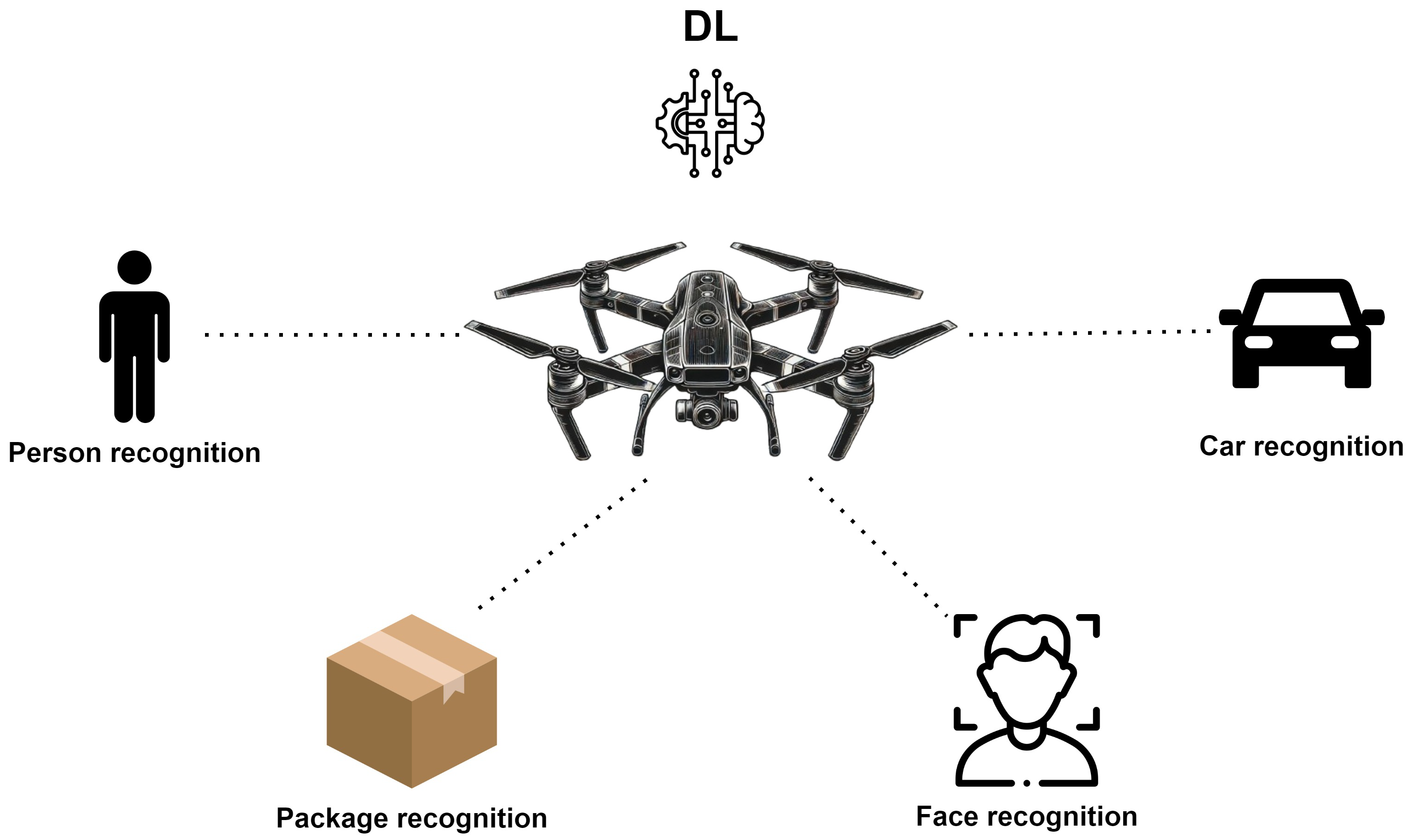
Artificial intelligence transforms military drones from remote-controlled aircraft into autonomous systems capable of real-time decision-making, target identification, and swarm coordination. In 2026, these AI-driven platforms prioritize "human-on-the-loop" oversight, enhancing operational speed and survivability in contested environments where traditional communications are frequently jammed or unavailable.
The transition from Remotely Piloted Aircraft (RPAs) to fully autonomous systems represents a paradigm shift in global defense strategy. While traditional drones like the early MQ-1 Predator relied heavily on constant satellite links and a team of human operators for every maneuver, 2026-era AI drones utilize edge computing to process data locally. This allows them to navigate, identify threats, and execute complex mission profiles even when disconnected from a central command. This evolution is driven by the necessity of operating in "Anti-Access/Area Denial" (A2/AD) zones, where electronic warfare (EW) renders remote control unreliable.
The Evolution of Autonomy: From Remote Control to AI-Driven Flight
In the early 21st century, the primary limitation of military drones was the "latency gap"—the delay between an operator’s command and the aircraft's response. AI has effectively closed this gap. Modern systems integrate advanced algorithms that handle the "inner loop" of flight (stability, take-off, and landing) and the "outer loop" of mission logic (pathfinding and tactical positioning).
By 2026, programs like the United States Air Force’s Collaborative Combat Aircraft (CCA) have reached critical milestones. These drones, often referred to as "Loyal Wingmen," are designed to fly alongside manned fighter jets like the F-35. The AI onboard these drones manages flight formations and sensor fusion, allowing the human pilot to focus on high-level command decisions rather than the minutiae of drone piloting. This modularity ensures that the AI can be updated with new tactical behaviors as quickly as software patches are deployed in the commercial sector.
Core Technologies Powering AI Military Drones in 2026
The efficacy of an AI drone rests on three pillars: computer vision, sensor fusion, and edge computing. Without these, a drone is simply a flying camera; with them, it becomes an intelligent agent.
Computer Vision and Target Recognition
Advanced neural networks, specifically Convolutional Neural Networks (CNNs), allow drones to categorize objects in real-time. In 2026, these systems can distinguish between combatants and non-combatants, identify specific vehicle models, and even detect concealed weapons under camouflage. This process occurs in milliseconds, far faster than a human operator could scan a video feed.
Sensor Fusion
AI drones do not rely on a single data source. They integrate inputs from Electro-Optical/Infrared (EO/IR) sensors, Synthetic Aperture Radar (SAR), and Electronic Intelligence (ELINT) receivers. AI algorithms "fuse" this data to create a Common Operational Picture (COP). For instance, if a thermal sensor detects heat but the camera sees only a bush, the AI can deduce a hidden engine and alert the command chain.
Edge Computing and Resilient Autonomy
In 2026, the shift toward Edge AI—processing data on the drone itself rather than in the cloud—is absolute. Using hardened, low-power AI accelerators (specialized chips similar to commercial NPUs but designed for high-radiation and high-vibration environments), drones can run complex inference models locally. This is vital for "Resilient Autonomy," where a drone must decide to return to base or continue a mission if its GPS signal is spoofed or its radio link is severed.
Operational Use Cases: Reconnaissance, Strike, and Swarming
The application of AI in drone technology has moved beyond simple surveillance into complex, multi-domain operations.
Intelligence, Surveillance, and Reconnaissance (ISR)
AI-enhanced ISR drones can remain airborne for extended periods, using "change detection" algorithms to identify subtle movements in a landscape over time. If a fresh set of tire tracks appears on a road that was clear six hours ago, the AI flags this for human review, significantly reducing the cognitive load on intelligence analysts.
Loitering Munitions and Autonomous Strike
Often called "kamikaze drones," loitering munitions equipped with AI can orbit a specific area and wait for a pre-defined target signature to appear. In 2026, these systems utilize Automatic Target Recognition (ATR) to ensure they only engage valid military targets, reducing collateral damage. However, the use of lethal force remains a point of intense international debate, with most Western doctrines requiring a "human-in-the-loop" for the final engagement decision.
Drone Swarming (Emergent Behavior)
Perhaps the most significant development in 2026 is the deployment of autonomous swarms. Unlike a group of drones controlled individually, a swarm operates as a single collective entity. Using algorithms inspired by flocking birds or schooling fish, dozens or hundreds of small drones can coordinate their movements to overwhelm enemy air defenses. If five drones in a swarm are shot down, the remaining units instantly redistribute their roles to maintain the mission's integrity.
Leading AI Military Drone Platforms (2026 Comparison)
The following table compares the current leading platforms as of 2026, highlighting their AI capabilities and primary mission sets.
| Platform Name | Manufacturer | AI Framework/Core | Primary Mission | Autonomy Level |
|---|---|---|---|---|
| XQ-58A Valkyrie | Kratos Defense | Skyborg Autonomy Core | Loyal Wingman / Strike | High (Autonomous Navigation & Tactical Logic) |
| MQ-28 Ghost Bat | Boeing / RAAF | Advanced Mission System | ISR & Escort | High (Teaming Enabled) |
| V-BAT | Shield AI | Hivemind | Tactical ISR | Full (GPS-Denied Navigation) |
| Altius-700M | Anduril | Lattice | Loitering Munition | Medium-High (Target Matching) |
| Bayraktar Kızılelma | Baykar Tech | Autonomous Flight AI | Air-to-Air Combat | High (Carrier-capable Autonomy) |
Strategic Impacts and the "Replicator" Initiative
The widespread adoption of AI drones has forced a re-evaluation of military spending and force structure. The United States' Replicator Initiative, fully active in 2026, focuses on mass-producing "attritable" (expendable) autonomous systems. The goal is to counter adversaries by deploying thousands of low-cost, AI-enabled drones that can absorb losses without compromising the overall mission.
This strategy shifts the focus from "exquisite" platforms—like $100 million fighter jets—to "distributed lethality." When AI allows a $100,000 drone to perform a mission previously requiring a manned aircraft, the economic and political cost of warfare changes. The loss of a drone does not result in a "pilot down" scenario, reducing the domestic political risk of military engagements.
Ethical and Legal Frameworks in 2026
The rise of "Lethal Autonomous Weapons Systems" (LAWS) has led to significant friction within international bodies like the United Nations. The primary ethical concern is the "accountability gap": if an AI drone commits a war crime or strikes a civilian target due to a software glitch, who is held responsible?
As of 2026, most major powers have adopted versions of the U.S. Department of Defense Directive 3000.09, which mandates that autonomous systems must be designed to allow commanders and operators to exercise appropriate levels of human judgment over the use of force. Despite these guidelines, the development of "Full Autonomy" (where the machine selects and engages targets without any human intervention) continues in some jurisdictions, leading to calls for a global ban or strict regulatory treaty similar to those governing chemical weapons.
Limitations and Vulnerabilities
While AI drones are powerful, they are not infallible.
- Adversarial AI: Opponents can use "spoofing" techniques to trick computer vision systems—for example, by using specific patterns on vehicles that cause the AI to misidentify a tank as a civilian bus.
- Data Bias: If an AI is trained on data from one geographic region, it may struggle to operate effectively in another due to differences in lighting, terrain, or vegetation.
- The "Black Box" Problem: Deep learning models can be opaque; it is often difficult for commanders to understand why an AI made a specific tactical choice, leading to trust issues during high-stakes operations.
Counter-AI and Electronic Warfare
The "cat and mouse" game of electronic warfare has evolved into a battle of algorithms. In 2026, Counter-UAS (Unmanned Aircraft Systems) utilize their own AI to detect the radio signatures of incoming drones. To counter this, AI drones have moved toward Passive Sensing—using cameras and microphones rather than radar—to remain "silent" while approaching a target.
Furthermore, "Cognitive Electronic Warfare" allows drones to sense when they are being jammed and autonomously switch to a different frequency or alter their flight path to escape the jamming cone. This level of rapid adaptation is impossible for human-operated systems.
Frequently Asked Questions
Can AI military drones operate without any human intervention?
Technically, yes. In 2026, many systems are capable of "Full Autonomy," meaning they can take off, navigate to a zone, identify a target based on pre-set parameters, and return to base without a pilot. However, most military doctrines currently require a human "on the loop" to authorize lethal force, acting as a final fail-safe.
How do AI drones navigate if the GPS signal is blocked?
AI drones use Visual SLAM (Simultaneous Localization and Mapping) and Inertial Navigation Systems (INS). By comparing real-time video feeds with pre-loaded satellite maps, the AI can "see" where it is based on landmarks like roads, rivers, or buildings, allowing it to navigate accurately even in GPS-denied environments.
What is the difference between a "drone" and an "AI drone"?
A traditional drone is a remotely piloted vehicle (RPV) that requires a human to control its flight and sensors via a data link. An AI drone possesses an onboard "brain" (AI processor) that allows it to fly itself and make tactical decisions, reducing or eliminating the need for a constant connection to a human operator.
Are AI military drones legal under international law?
As of 2026, there is no specific international treaty banning AI drones. Their use is governed by existing International Humanitarian Law (IHL), which requires any weapon to be able to distinguish between combatants and civilians and to ensure that the force used is proportionate to the military advantage. The debate continues on whether AI can truly meet these legal standards.
What happens if the AI drone's software is hacked?
Cybersecurity is a primary concern for autonomous systems. Military-grade AI drones use encrypted bootloading and "zero-trust" software architectures to prevent unauthorized access. If a hack is detected, most systems are programmed to enter a "dead man" mode, where the drone either self-destructs its data or flies to a pre-determined secure "dump" location to prevent the technology from falling into enemy hands.
Practical Recommendation for Defense Stakeholders
For defense planners and policy analysts in 2026, the focus must remain on interoperability and "Open Architecture" systems. As AI software evolves faster than drone hardware, the ability to swap AI models (the "brains") without replacing the entire aircraft (the "body") is essential for maintaining a competitive edge. Organizations should prioritize investments in modular software frameworks, such as the U.S. Department of Defense's All-Domain Anomaly Resolution Office (AARO) standards, to ensure that autonomous fleets can be updated rapidly to counter emerging threats. Furthermore, rigorous testing in simulated "digital twin" environments is required to identify edge-case failures before these systems are deployed in live combat scenarios.