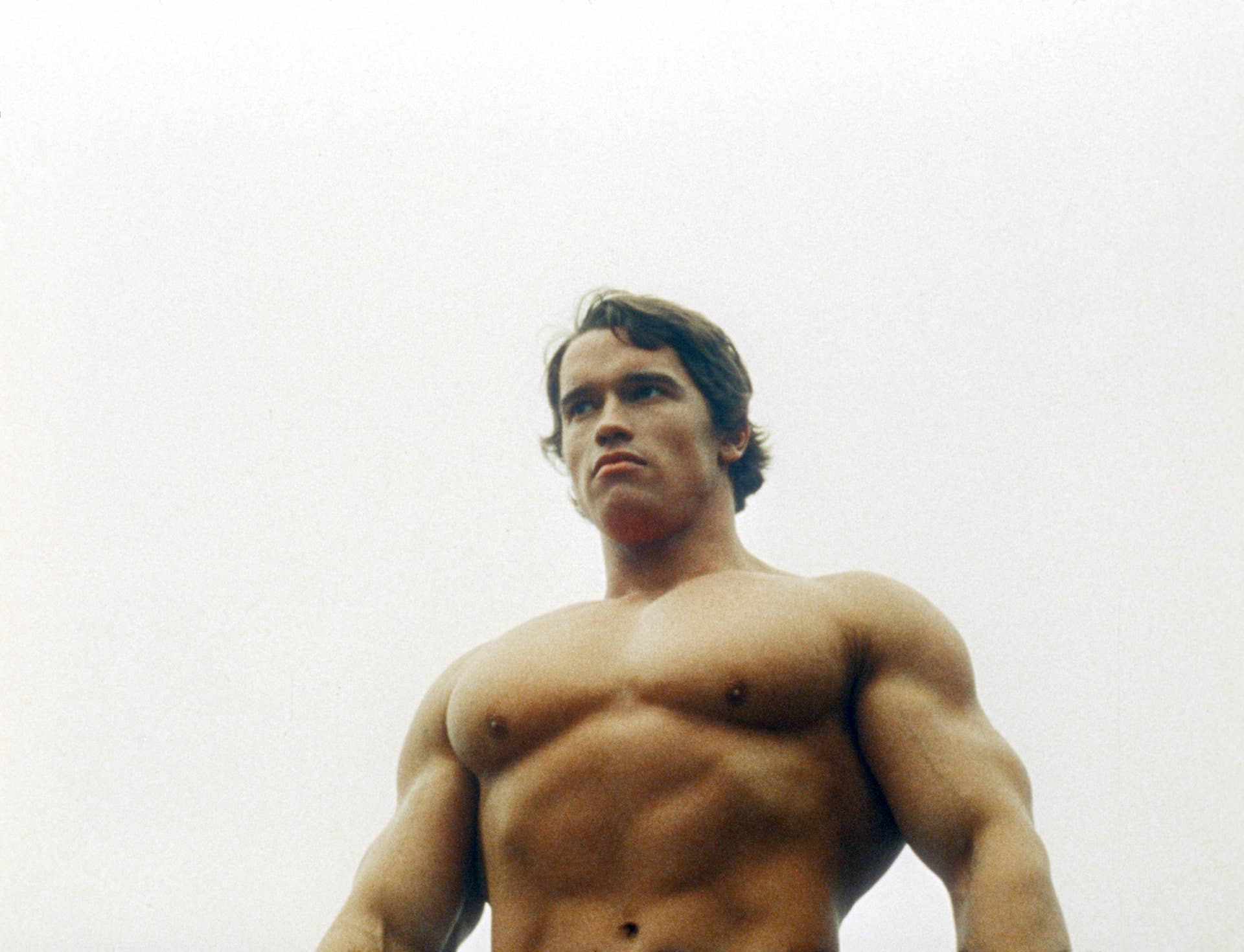
Arnold Schwarzenegger’s best bench press record is widely cited as 525 pounds (238 kg). While this figure represents his absolute personal best achieved in a gym setting during his peak years in the 1970s, his competitive powerlifting marks and standard training weights often fluctuated between 440 and 500 pounds depending on his proximity to a competition.
The Dual Identity: Powerlifter and Bodybuilder
To understand the Arnold Schwarzenegger bench press record, one must first look at his origins. Long before he was "The Austrian Oak" of the Mr. Olympia stage, Schwarzenegger began his athletic career in the weight rooms of Austria, where the distinction between bodybuilding and powerlifting was nearly non-existent. In the mid-1960s, European lifting culture emphasized raw power as the foundation for physical aesthetics.
Arnold competed in several powerlifting and weightlifting contests before fully committing to bodybuilding. His strength was not merely for "show muscles"; it was a functional prerequisite for the mass he intended to build. In 1967, at the age of 20, he competed in the German Powerlifting Championships, showcasing a level of strength that rivaled specialist lifters of the era. This background provided the mechanical tension necessary to develop one of the most famous chests in the history of the sport.
Verified Personal Bests and Competition Stats
When discussing Arnold's "record," it is essential to distinguish between a gym PR (Personal Record) and an official competition lift. In the 1960s and 70s, documentation was less rigorous than the digital tracking available in 2026, but several key figures have been verified through his own writings, training logs, and eyewitness accounts from Gold's Gym.
The 525-Pound Mark
The 525-pound bench press is the figure Arnold himself has consistently cited in his semi-autobiographical works, such as The Education of a Bodybuilder and The Encyclopedia of Modern Bodybuilding. This lift was likely performed with a wide grip, a common technique he used to maximize pectoral recruitment. It is important to note that this was a "raw" lift—performed without the specialized bench shirts or supportive gear that modern powerlifters use to inflate their numbers.
Competition Records
In official powerlifting meets during his early career, Arnold’s numbers were slightly lower but no less impressive. In 1968, he recorded a competitive bench press of approximately 440 pounds (200 kg). While this is lower than his gym max, competition lifts require a distinct pause on the chest and strict adherence to a judge's commands, which naturally reduces the amount of weight a lifter can move compared to a "touch-and-go" gym repetition.
| Lift Category | Weight (lbs) | Weight (kg) | Context |
|---|---|---|---|
| Peak Gym Bench Press | 525 lbs | 238 kg | Training at Gold's Gym (Peak Bulk) |
| Competition Bench Press | 440 lbs | 200 kg | Early Powerlifting Meets (Europe) |
| Squat (Personal Best) | 545 lbs | 247 kg | Gym Record |
| Deadlift (Personal Best) | 710 lbs | 322 kg | Official Competition Mark |
| Standard Training Sets | 315–405 lbs | 143–184 kg | Typical 6–10 Repetition Range |
The Biomechanics of Arnold’s Bench Press
Arnold Schwarzenegger’s success in the bench press is particularly notable given his anthropometrics. Standing 6'2" with relatively long arms, Arnold was not "built" for the bench press in the way a shorter lifter with a barrel chest might be. Longer limbs create a greater range of motion, meaning the bar has to travel a further distance to complete a repetition.
To overcome these mechanical disadvantages, Arnold utilized a specific technical approach:
- Wide Grip Placement: By placing his hands wider on the bar, he effectively shortened the range of motion and placed the maximum amount of stress on the outer and mid-pectorals.
- Controlled Eccentric: Arnold was a proponent of a slow, controlled descent to "feel" the muscle stretch, followed by an explosive concentric (upward) phase.
- The "Mind-Muscle" Connection: Even when moving 500+ pounds, he focused on the contraction of the chest rather than just moving the weight from point A to point B.
Training Methods: How the Record Was Built
Arnold did not achieve a 525-pound bench press through low-volume powerlifting alone. His approach was a hybrid of heavy strength work and high-volume hypertrophy training. He famously utilized the "Basic Training" principle, which focused on heavy compound movements.
The 5x5 Method
During his strength phases, Arnold often employed the 5x5 method—five sets of five repetitions. He would start with a warm-up and then move into sets where the fifth rep was a near-failure effort. This protocol is a staple for building both myofibrillar hypertrophy (muscle density) and neurological strength.
High-Volume Chest Days
In his peak bodybuilding years, Arnold’s chest workouts were legendary for their volume. A typical session might include:
- Bench Press: 5–7 sets, ranging from 20 reps (warm-up) down to 1–2 reps (max effort).
- Incline Barbell Press: 5 sets of 8–10 reps to target the upper pectorals.
- Dumbbell Flyes: 5 sets of 12–15 reps, focusing on a deep stretch.
- Parallel Bar Dips: Weighted dips to failure.
This combination of heavy weight and high volume ensured that his strength (the 525 lb record) was supported by massive muscle fibers capable of enduring grueling three-hour workouts.
The Role of Franco Columbu
It is impossible to discuss Arnold’s bench press record without mentioning his best friend and training partner, Franco Columbu. While Arnold was the larger man, Columbu—a former boxer and world-class powerlifter—was pound-for-pound stronger. Columbu’s bench press record exceeded 525 pounds despite him being significantly shorter and lighter.
Training alongside someone like Columbu provided Arnold with a constant competitive stimulus. If Franco pushed 500 pounds, Arnold felt obligated to match or exceed it. This psychological "push-pull" relationship was a primary driver behind the record-breaking lifts seen at Gold’s Gym in the 1970s. Their partnership proved that elite-level strength is often a byproduct of the environment as much as individual genetics.
How Arnold’s Record Compares to Modern Standards
In the context of 2026, where specialized equipment and advanced pharmacology have pushed strength limits to extremes, Arnold’s 525-pound bench remains highly respectable. For a modern natural bodybuilder, a 500-pound bench press is considered "elite" or "world-class."
In professional powerlifting, the raw world records in the 242-pound or 275-pound weight classes (where Arnold would likely have competed) now exceed 600 pounds. However, Arnold was not a specialized powerlifter. When compared to other Mr. Olympia winners, his strength holds up incredibly well. For instance, Ronnie Coleman—one of the few bodybuilders considered stronger than Arnold—was known to bench press 495 pounds for repetitions, though his max efforts were often performed with dumbbells rather than a barbell for safety reasons.
Common Myths and Misconceptions
Several myths surround Arnold’s lifting career, often fueled by the "Golden Era" nostalgia.
"He never actually lifted that much."
Some critics argue that the numbers were exaggerated for muscle magazines. However, numerous witnesses from the original Gold's Gym era, including contemporaries like Lou Ferrigno and Ken Waller, have corroborated Arnold's incredible strength. Furthermore, his early competition results in Europe provide a documented foundation for his later gym PRs.
"It was all 'fake' weights for movies."
While Arnold did use prop weights for certain scenes in movies like Pumping Iron to ensure consistent takes and safety, his actual training sessions were legitimate. The footage of him benching over 400 pounds with a rhythmic, controlled tempo is a testament to his genuine power.
Technical Advice for Aspiring Lifters
If you are looking to emulate the strength levels of Arnold Schwarzenegger, focus on the following principles derived from his training philosophy:
- Prioritize the Barbell: While machines have their place, Arnold built his record on the standard flat barbell bench press. It requires more stabilization and allows for the heaviest loading.
- Increase Frequency: During his "double-split" routines, Arnold often hit his chest twice or even three times a week. While this is too much for most natural lifters, hitting chest twice every eight days can accelerate strength gains.
- Master the Arch: While Arnold didn't use an extreme "powerlifting arch," he did maintain a slight arch in his lower back and kept his shoulder blades retracted to create a stable platform for the lift.
- Don't Ignore the Back: To bench 500+ pounds, you need a massive back for stability. Arnold’s deadlift (710 lbs) and heavy rowing movements provided the structural integrity needed to support heavy weights over his chest.
Frequently Asked Questions
What was Arnold Schwarzenegger’s maximum bench press?
Arnold’s maximum recorded gym bench press was 525 pounds (238 kg). His best official competition bench press was approximately 440 pounds (200 kg).
Did Arnold Schwarzenegger use a bench shirt?
No. Arnold lifted in the "raw" era of bodybuilding and powerlifting. Bench shirts, which help lifters move significantly more weight by providing elastic tension at the bottom of the lift, were not in common use during his competitive peak.
Was Arnold stronger than Franco Columbu?
Pound-for-pound, Franco Columbu was stronger. While they both benched in the 500-pound range, Franco was roughly 5'5" and 185 pounds, whereas Arnold was 6'2" and 235-250 pounds. Franco's official powerlifting records were higher than Arnold's in almost every category relative to body weight.
How many times could Arnold bench 225 pounds?
While there is no official record of a "reps to failure" test at 225 pounds for Arnold, based on his 525-pound max, strength endurance charts estimate he could have likely performed 40 to 50 repetitions of 225 pounds.
Did Arnold do incline bench presses?
Yes, Arnold was a firm believer in the incline bench press to build the "upper shelf" of the chest. He frequently performed incline presses with both barbells and dumbbells, often reaching weights of 315 to 400 pounds for sets of 6–10.
How did Arnold avoid injuries with such heavy weight?
Arnold focused heavily on warm-ups and progressive loading. He would rarely jump straight to his max weight. Instead, he would perform several "pyramid" sets, increasing the weight while decreasing the reps, which prepared his joints and nervous system for the 500-pound attempts.
Summary of the "Oak's" Legacy
The Arnold Schwarzenegger bench press record of 525 pounds serves as a bridge between the worlds of pure strength and aesthetic bodybuilding. It reminds modern athletes that the legendary physiques of the 1970s were built on a foundation of raw, heavy power. Whether you are a bodybuilder looking for mass or a powerlifter looking for stability, the principles Arnold used to reach his record—high volume, heavy compound movements, and a relentless training partner—remain the gold standard in 2026.
Practical Next Step: To improve your own bench press, evaluate your current program's balance between strength (low reps, high weight) and hypertrophy (moderate reps, moderate weight). Incorporating a "strength phase" similar to Arnold’s 5x5 protocol for 6–8 weeks can help break through plateaus and build the foundational density required for long-term growth.