The most effective Anki decks for USMLE Step 2 CK are the AnKing Step 2 Overhaul, Cheesy Dorian, and Tzanki. As of 2026, the AnKing Overhaul remains the gold standard due to its continuous community updates via AnkiHub, integrating high-yield content from UWorld, AMBOSS, and OnlineMedEd to mirror the current clinical management trends required for the exam.
Preparing for the USMLE Step 2 Clinical Knowledge (CK) exam in 2026 requires a fundamental shift in strategy compared to Step 1. While Step 1 focused on basic science and pathophysiology, Step 2 CK emphasizes clinical diagnosis, the "next best step" in management, and patient safety. Anki, a spaced repetition software (SRS) platform, is the primary tool medical students use to manage the massive volume of clinical algorithms and diagnostic criteria required for a competitive score.
The Evolution of Step 2 CK Anki Decks
Historically, Step 2 CK preparation was fragmented. In the early 2020s, students often relied on disparate decks like Zanki Step 2 or the original Dorian deck. However, as the USMLE transitioned Step 1 to a pass/fail format, the importance of a high Step 2 CK score increased exponentially for residency applications. This shift led to a massive collaborative effort in the medical education community to create a "living deck" that could keep pace with changing clinical guidelines.
Today, the landscape is dominated by collaborative platforms that allow for real-time corrections. Because clinical guidelines—such as the management of hypertension (JNC vs. ACC/AHA) or screening intervals for various cancers—can change, static decks have become less reliable. The decks listed below represent the most vetted and frequently updated resources available for students in 2026.
1. The AnKing Step 2 Overhaul (The Modern Standard)
The AnKing Step 2 Overhaul is not a single deck created by one person but a massive synthesis of several older decks, including Zanki, Cheesy Dorian, and others. It is currently managed primarily through AnkiHub, a subscription-based platform that allows for collaborative updates.
Content and Organization
The AnKing deck is renowned for its comprehensive tagging system. Instead of being organized by simple subdecks (like "Surgery" or "Pediatrics"), it uses hierarchical tags. This allows students to unsuspend cards based on specific resources they are using. For example, if you are watching a specific OnlineMedEd video or completing a block of UWorld questions, you can find the exact cards corresponding to that material.
Strengths in 2026
- Media and Images: The deck is heavily supplemented with high-quality images from Netter’s anatomy, AMBOSS, and educational diagrams that help with visual diagnosis—a critical skill for the CK exam.
- Continuous Updates: Through the AnkiHub add-on, users receive daily updates. If a new guideline for COPD management is released, the community updates the card, and your local deck is corrected automatically.
- UWorld Integration: The cards are tagged by UWorld Question ID (QID). This is arguably the most valuable feature for 2026 students, as it allows for immediate reinforcement of concepts missed during practice questions.
2. Cheesy Dorian: The Balanced Alternative
For students who find the AnKing deck (which can exceed 18,000 cards) too overwhelming, Cheesy Dorian remains a top-tier choice. It is a more refined and "lean" version of the original Dorian deck.
Content Philosophy
Cheesy Dorian focuses heavily on the "classic" Step 2 CK resources: UWorld, OnlineMedEd, and the Emma Ramahi high-yield reviews. It is structured more traditionally, making it easier for students who prefer a folder-based organization rather than a tag-heavy workflow.
Why Choose Cheesy Dorian?
This deck is particularly useful for students who have a shorter dedicated study period or those who already have a very strong clinical foundation from their rotations. It eliminates some of the more "low-yield" or redundant cards found in larger overhauls, allowing for a faster pass through the material.
3. Tzanki: The High-Yield Core
Tzanki is one of the older, "classic" decks that has stood the test of time. It is based primarily on UWorld and is known for its simplicity and directness.
Features
Unlike the AnKing deck, which often uses "cloze deletion" (fill-in-the-blank) for multiple parts of a sentence, Tzanki cards are often shorter and more focused on a single fact. For many students, this reduces "Anki fatigue" and allows for faster daily reviews.
Suitability
Tzanki is best suited for students who want to build a core foundation of UWorld facts without the extra "fluff" of secondary resources. However, it lacks the sophisticated tagging and image support of the AnKing overhaul, which may make it harder to integrate with other study materials.
Comparison of Top Step 2 CK Anki Decks
Choosing a deck depends on your available study time, your clinical background, and your preference for technical complexity.
| Feature | AnKing Step 2 Overhaul | Cheesy Dorian | Tzanki |
|---|---|---|---|
| Primary Source(s) | UWorld, AMBOSS, OME, Sketchy | UWorld, OME, Emma Ramahi | UWorld |
| Card Count (Approx.) | 18,000+ | 10,000 - 12,000 | 7,000 - 8,000 |
| Update Frequency | Daily (via AnkiHub) | Periodic/Static | Mostly Static |
| Tagging System | Very Advanced (by resource/QID) | Moderate (by rotation) | Basic |
| Visual Content | High (Rich Media) | Moderate | Minimal |
| Best For | 3rd Year (M3) Students & High Scorers | Balanced Study Periods | Rapid Review / Short Dedicates |
Technical Setup: Maximizing Anki for Step 2 CK
In 2026, simply downloading a .apkg file is only the first step. To use these decks effectively, several technical configurations and add-ons are recommended.
Using AnkiHub for Real-Time Syncing
AnkiHub has revolutionized medical school prep by solving the "outdated card" problem. For the AnKing deck, you must subscribe to the AnkiHub service to receive the most current version. Once installed, the AnkiHub add-on handles all synchronization. This ensures that if the USMLE changes its stance on a screening guideline (such as the age to begin colonoscopies), your cards will reflect that change without you having to manually edit them.
Essential Add-ons
- Special Fields: This is critical if you want to keep your own personal notes on cards while still receiving updates from a central deck. It prevents the update process from overwriting your custom "My Notes" section.
- Amboss Add-on: This allows you to hover over medical terms within Anki cards to see a quick summary and diagnostic criteria directly from the AMBOSS library. This is a game-changer for understanding the why behind a card without leaving the Anki application.
- Review Heatmap: Essential for tracking consistency and maintaining the "streak" necessary to get through the massive volume of cards during a busy clinical year.
Integration Strategy: Clinical Rotations and Step 2 CK
One of the biggest mistakes students make is treating Anki as a separate task from their clinical rotations. In 2026, the successful "Anki workflow" involves a specialized approach for the Third Year (M3) of medical school.
The Shelf-to-CK Pipeline
Instead of trying to tackle the entire Step 2 CK deck at once, students should focus on the tags relevant to their current rotation (e.g., Surgery, Internal Medicine, OB/GYN).
- Phase 1 (The Rotation): Suspend all cards. Unsuspend cards specifically tagged for your rotation as you do UWorld questions. By the end of each rotation, you should have completed that specific "sub-deck."
- Phase 2 (Maintenance): Keep those cards in your review rotation even after the Shelf exam is over. This prevents the "knowledge decay" that traditionally happens between rotations.
- Phase 3 (Dedicated): During your dedicated 4–6 week study period for Step 2 CK, your "new" cards should only be those you missed or skipped during your rotations, along with the high-yield "Step 2 Only" tags.
Managing Anki During Busy Rotations
Clinical years are physically demanding. To maintain reviews:
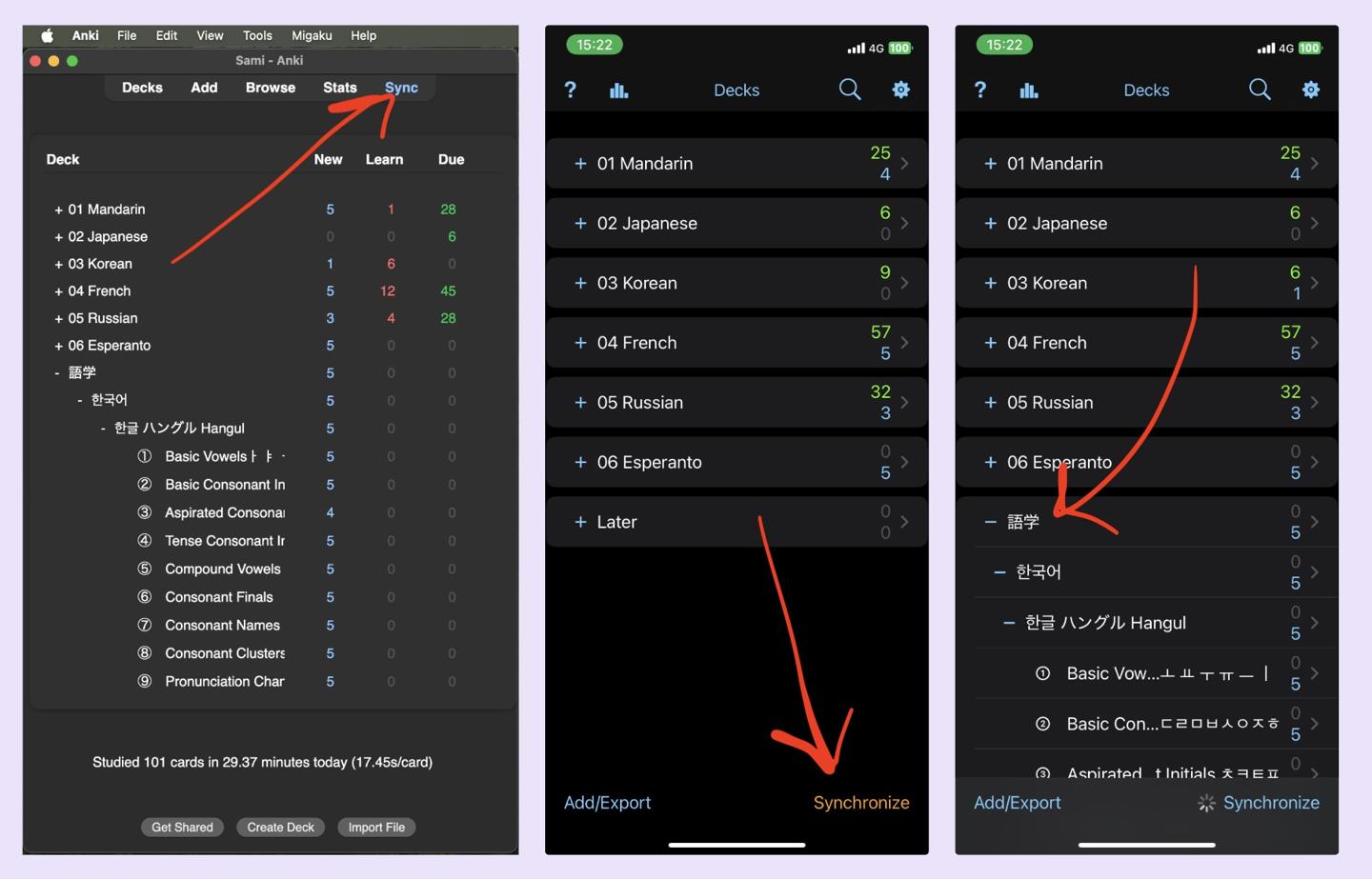
- Mobile Sync: Ensure your Anki is synced to your phone. Use "micro-moments"—the five minutes between cases or while waiting for a preceptor—to clear 10-15 cards.
- Prioritize Reviews: Always finish your "Due" cards before starting any "New" cards. In Step 2 CK prep, retention of old material is more important than the rapid acquisition of new facts.
Common Pitfalls and Troubleshooting
Even with the best decks, students often encounter hurdles that can stall their progress.
1. The "Card Trap"
The most common mistake is focusing on the "number of cards done" rather than understanding the clinical reasoning. Step 2 CK is a management exam. If a card asks for the first-line treatment for a condition, you must also understand why that treatment is chosen and what the second-line treatment would be if the patient had a specific contraindication (e.g., avoiding beta-blockers in a patient with severe asthma).
2. Redundancy
Because the AnKing deck merges several sources, you may encounter cards that ask essentially the same question in slightly different ways.
- The Fix: Use the "Bury" function or the "Duplicate" finder in Anki. If you know a concept cold, don't be afraid to suspend the redundant versions of that card to save time.
3. Outdated Guidelines
While AnkiHub addresses this, if you are using a free, static version of a deck (like an old Dorian or Tzanki file), you must cross-reference management steps with current UpToDate or AMBOSS articles. Medical boards frequently test the "newest" guidelines, particularly in screening and preventative medicine.
Professional Advice Disclaimer
The information provided in this guide is for educational purposes for medical students and professionals. It does not constitute medical advice or a guarantee of exam performance. Exam formats and specific content weights are subject to change by the National Board of Medical Examiners (NBME) and the Federation of State Medical Boards (FSMB). Always refer to official USMLE guidelines and the most recent clinical practice parameters from professional medical societies.
Frequently Asked Questions
Which Anki deck is best for a 4-week dedicated study period?
For a short dedicated period, Tzanki or a heavily filtered version of Cheesy Dorian is best. The AnKing Overhaul is often too large to complete in 4 weeks if you are starting from scratch. In a short timeframe, focus only on your weakest areas using the hierarchical tags to target specific organ systems or rotations.
Can I use my Step 1 Anki deck for Step 2 CK?
While there is some overlap (especially in microbiology and pharmacology), it is generally not recommended to rely on a Step 1 deck. Step 1 cards focus on "What is this enzyme?" while Step 2 CK asks "What is the next step in management?" You should transition to a dedicated Step 2 deck, though you may want to keep a few "high-yield" Step 1 cards active for foundational pathophysiology.
Is an AnkiHub subscription worth it for Step 2 CK?
In 2026, most students find the subscription highly valuable. The ability to have cards automatically updated for the latest clinical guidelines and the precise tagging by UWorld Question ID significantly reduces the time spent "organizing" and increases the time spent "learning."
How many new cards should I do per day during rotations?
A sustainable target is 20-40 new cards per day. This allows you to finish the relevant portion of the deck by the end of a 6-to-8-week rotation without being buried by hundreds of daily reviews while working long hospital hours.
What should I do if I am overwhelmed by reviews?
First, stop adding new cards. Use the "Filter" function to prioritize cards from your current rotation. If reviews are still unmanageable, consider "suspending" cards that cover very basic concepts you already mastered in Step 1 or during your first two years of medical school.
Recommended Next Steps
To begin your Step 2 CK preparation, download the Anki desktop application and install the AnkiHub add-on. Subscribe to the AnKing Step 2 Overhaul to ensure you have the most current clinical data. Begin unsuspending cards that correlate with your first clinical rotation, and integrate your reviews into your daily routine immediately. Consistency over the course of your third year is the single most important factor in achieving a top-tier score on the USMLE Step 2 CK.