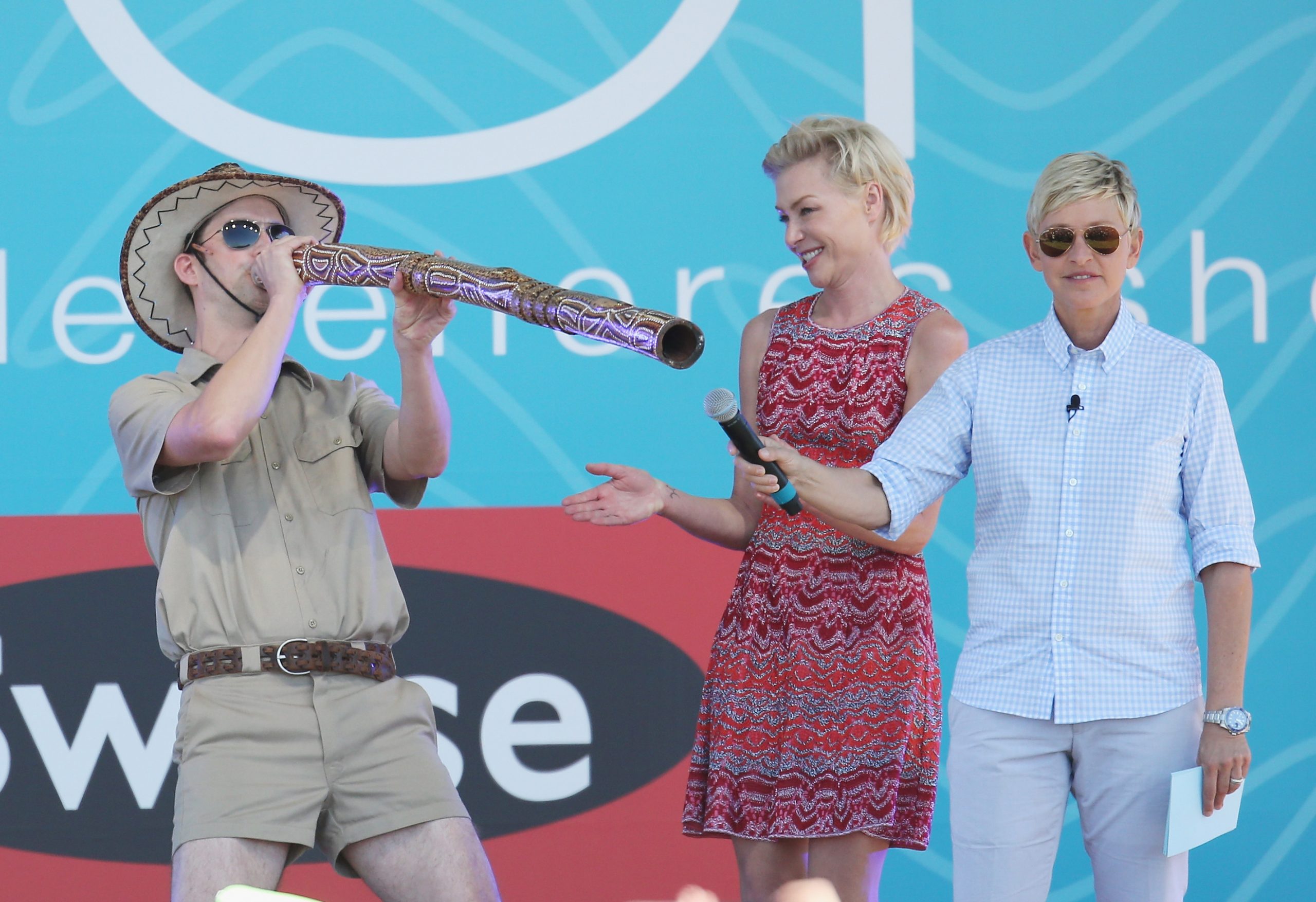
Andy Lassner is an Emmy-winning executive producer whose career tracks the evolution of modern daytime television. Most recognized for his 19-year tenure on The Ellen DeGeneres Show, Lassner pioneered the blend of high-energy variety entertainment with viral, personality-driven digital content, fundamentally altering how talk shows engage with global audiences across platforms.
The Foundations of a Producer: The Early Years of Unscripted TV
To understand the rise of Andy Lassner is to understand the chaotic, experimental landscape of 1990s daytime television. Before the polished, celebrity-driven "lifestyle" talk shows of the 21st century, the genre was dominated by "tabloid talk." Lassner began his journey in this high-pressure environment, serving as a producer on programs like The Jane Whitney Show and The Richard Bey Show.
During this era, television production was primarily focused on linear viewership. The goal was simple: capture a high enough Nielsen rating to satisfy local affiliates and national advertisers. In these early roles, Lassner learned the fundamental mechanics of segment production. This included "booking" guests with high-conflict stories, managing live studio audiences, and ensuring that every 44-minute episode had a clear narrative arc with enough "hooks" to keep viewers from changing the channel during commercial breaks.
This period was a trial by fire. Production cycles were relentless, often requiring teams to produce five hours of original content per week on shoestring budgets. The technical depth required during this time involved mastery of the "control room"—the nerve center where producers communicate with directors, camera operators, and hosts in real-time. Lassner’s ability to navigate these high-stakes environments prepared him for the more sophisticated production demands of the 2000s.
The Rosie and Ellen Transition: Defining Modern Daytime
The late 1990s saw a monumental shift in television production values. Audiences began to fatigue of the confrontational tabloid format, leading to the rise of "service-oriented" and "celebrity-centric" talk shows. Lassner’s transition to The Rosie O'Donnell Show marked a turning point in his career and the industry at large.
Production shifted from exploiting conflict to celebrating personality and talent. Under the influence of producers like Lassner, the role of the executive producer (EP) expanded. The EP was no longer just a manager of logistics; they became brand architects. This era introduced the concept of the "variety-talk" hybrid, which combined celebrity interviews, musical performances, and elaborate comedy sketches.
When The Ellen DeGeneres Show launched in 2003 with Lassner as an executive producer, it solidified a new standard for television production. The technical requirements became more complex, involving:
- Multi-Camera Coordination: Using high-definition setups to capture spontaneous moments of dance and audience interaction.
- Integrated Branding: Seamlessly weaving corporate sponsorships into show segments without breaking the entertainment flow.
- Segment Pacing: Moving away from long-form interviews toward "snackable" segments—games, hidden camera pranks, and human-interest stories—that would eventually become the blueprint for social media virality.
The "Average Andy" Phenomenon: Producer as On-Screen Personality
One of the most significant shifts in the rise of television production during Lassner’s tenure was the breaking of the "fourth wall." Historically, producers remained behind the camera, invisible to the audience. Lassner inadvertently helped dismantle this barrier through his "Average Andy" persona.
By appearing on screen—often as the reluctant participant in Ellen DeGeneres’s pranks or as the terrified visitor to haunted houses—Lassner humanized the production process. This shift was not merely for comedic effect; it was a calculated production strategy. It built a meta-narrative for the show, making the staff and the production environment part of the entertainment "family."
This trend of the "celebrity producer" reflected a broader industry change where audiences craved authenticity and "behind-the-scenes" access. From a production standpoint, this meant that the entire studio—not just the stage—became a potential filming location. Offices, hallways, and control rooms were wired for sound and video, transforming the workplace into a perpetual set. This required producers to be "always on" and necessitated a more flexible, mobile approach to cinematography and audio capture.
Technical Innovations in Unscripted Television
As television production moved into the 2010s and 2020s, the "rise" of the medium was defined by the transition from broadcast to multi-platform delivery. Lassner was at the forefront of this digital integration. Under his leadership, The Ellen DeGeneres Show was one of the first daytime programs to treat its YouTube channel and social media feeds as equal in importance to its linear broadcast.
Production workflows had to be redesigned to accommodate this. Instead of a single "final cut" for television, the production team began producing:
- Digital Exclusives: Content filmed specifically for web audiences that never aired on the television broadcast.
- Short-Form Re-Edits: Optimization of broadcast segments into 60-second "viral" clips for platforms like Instagram and TikTok.
- Real-Time Engagement: Utilizing social media producers to interact with fans during the broadcast window.
This necessitated a massive increase in the size of post-production teams. Editors were no longer just cutting for time; they were cutting for "clickability" and "shareability." The use of metadata, SEO-friendly titling, and thumbnail optimization became as critical to the production process as the lighting and sound on the stage.
The Logistics of a Daily Production Cycle
The sheer scale of a daily talk show under an executive producer like Lassner is a feat of industrial engineering. By 2026 standards, the "classic" daytime model remains one of the most demanding formats in media. A typical production day involves hundreds of moving parts, coordinated with precision.
| Production Phase | Key Activities | Personnel Involved |
|---|---|---|
| Pre-Production | Concept development, guest booking, script writing, legal clearances. | EPs, Segment Producers, Writers, Legal Counsel. |
| Morning Meeting | Reviewing the day's "rundown," final budget approvals, props/wardrobe check. | Full Production Staff, Host, Department Heads. |
| The Tape | Recording the episode, managing the live audience, "pick-ups" for errors. | Director, Camera Ops, Audio Techs, Audience Coordinators. |
| Post-Production | Color grading, audio mixing, inserting graphics, digital asset creation. | Editors, Graphics Designers, Social Media Managers. |
| Distribution | Satellite uplinks to affiliates, uploading to streaming servers/social media. | Broadcast Engineers, Digital Ops Teams. |
The "rise" of production complexity meant that an Executive Producer had to manage not just the creative output, but a massive workforce. At its peak, a show like Ellen employed hundreds of individuals across multiple unions (IATSE, DGA, WGA). Managing these relationships while maintaining a consistent creative vision is the hallmark of Lassner’s professional legacy.
Managing Crisis and Cultural Shifts in Media
The evolution of television production is not solely about technical or creative growth; it also involves navigating the changing cultural expectations of the workplace. In 2020, the production industry faced a reckoning regarding workplace culture, and Lassner, along with other senior executives, was at the center of investigations into the "Ellen" environment.
This period marked a significant shift in how production companies operate. The "rise" of production now includes a heavy emphasis on:
- HR Integration: Dedicated Human Resources personnel embedded within production teams.
- Diversity, Equity, and Inclusion (DEI): Formalized programs to ensure production crews and on-screen talent represent a diverse range of backgrounds.
- Mental Health Resources: Providing support for staff working in the traditionally high-stress environment of daily television.
For Lassner, surviving and evolving through these shifts meant adapting his management style. As the industry moved into the mid-2020s, the focus shifted from "content at any cost" to sustainable, ethical production practices. This cultural shift is now a permanent fixture of any major television production.
The Future of Production: The 2026 Landscape
As we look at the state of television production in 2026, the influence of veterans like Andy Lassner remains palpable. Since the conclusion of The Ellen DeGeneres Show in 2022, Lassner has continued his work through high-level development deals, including his significant partnership with Warner Bros. Unscripted Television.
Production today is dominated by the "unscripted" boom on streaming services. The boundaries between "daytime talk," "documentary series," and "competition reality" have blurred. Producers are now tasked with creating "bingeable" content that retains the immediacy of live television.
Technological advancements such as Virtual Production (Volume stages) and AI-assisted editing have streamlined the workflow, but the core requirement remains the same: the ability to identify a compelling story and present it in a way that resonates emotionally with an audience. Lassner’s career trajectory—from the gritty studios of 90s cable to the polished digital-first environment of 2026—serves as a blueprint for the modern media executive.
Frequently Asked Questions
How did Andy Lassner get his start in television? Andy Lassner began his career in the early 1990s, working his way up from associate producer roles on tabloid talk shows. His early experience on programs like The Jane Whitney Show and The Richard Bey Show provided him with the foundational skills in segment booking and live-to-tape production that would define his later career.
What is Andy Lassner's role at Warner Bros. in 2026? Following the conclusion of The Ellen DeGeneres Show, Lassner entered into a multi-year overall deal with Warner Bros. Unscripted Television. In this capacity, he serves as a developer and executive producer for a variety of new formats, ranging from digital series to traditional broadcast specials, leveraging his expertise in variety and talk entertainment.
What is the "Average Andy" segment? "Average Andy" was a popular recurring segment on The Ellen DeGeneres Show where Lassner was sent to participate in activities he was clearly unsuited for—such as training with professional athletes or visiting haunted houses. The segment became a viral sensation because of Lassner’s relatable, everyman reactions, and it helped popularize the trend of producers becoming on-screen personalities.
How many Emmys has Andy Lassner won? Throughout his career, Andy Lassner has won a total of 18 Daytime Emmy Awards. Most of these accolades were for his work as an Executive Producer on The Ellen DeGeneres Show in the categories of Outstanding Entertainment Talk Show and Outstanding Special Class Series.
What are the primary challenges in television production today? In 2026, the primary challenges include audience fragmentation across dozens of streaming platforms, the rising costs of physical production, and the need to create content that is globally relevant while maintaining local appeal. Additionally, producers must now balance traditional production values with the rapid-fire demands of social media algorithms.
Practical Recommendation for Aspiring Producers
If you are looking to enter the world of television production, focus on platform versatility. The era of being "just a TV producer" is over. Learn the technical basics of video editing (such as Adobe Premiere or DaVinci Resolve), understand the analytics behind social media performance, and develop a "voice" that can translate across both long-form and short-form media. Like Lassner, the most successful producers are those who can manage both the technical logistics of a set and the creative demands of a brand.