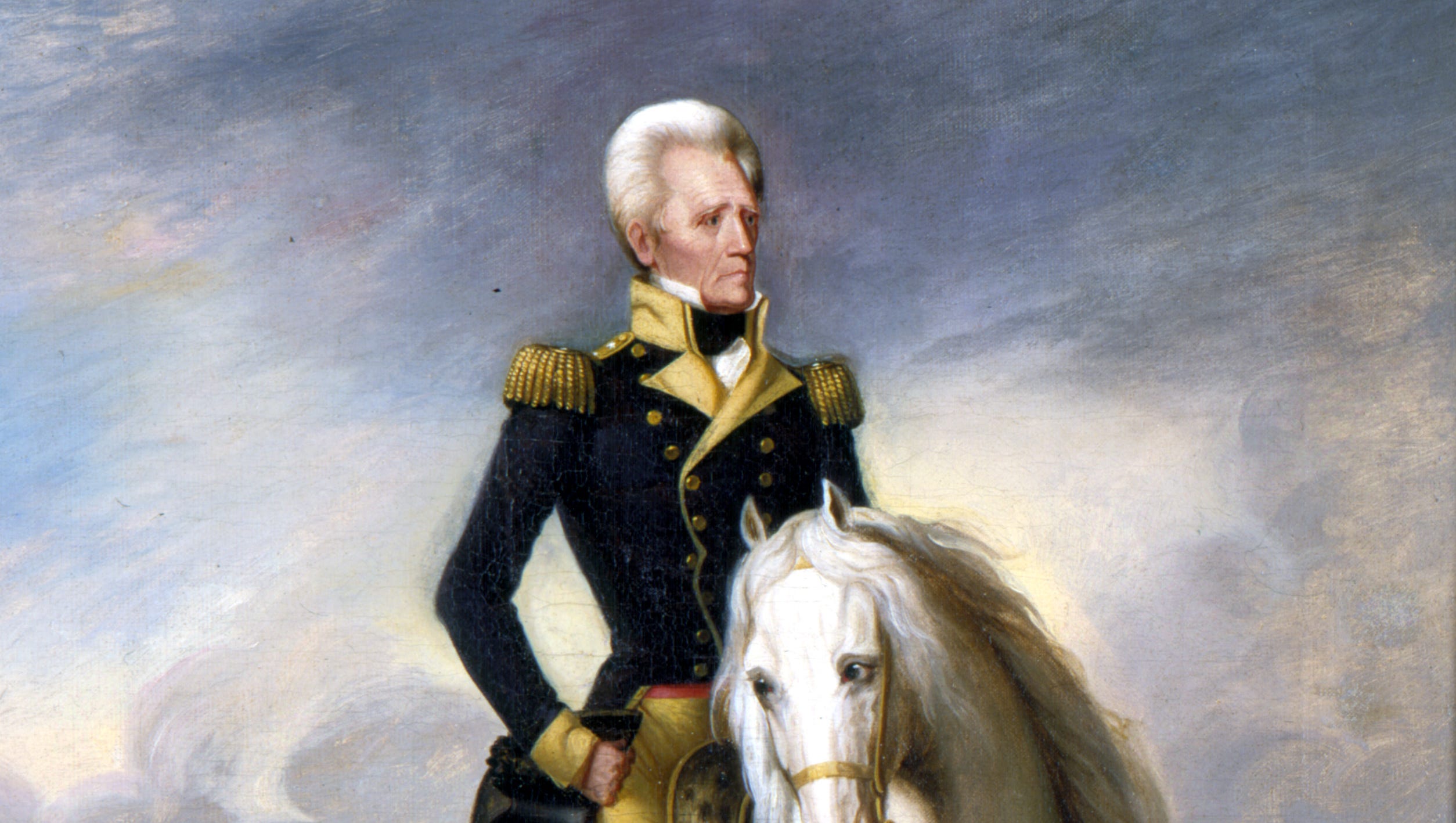
Andrew Jackson reshaped America more fundamentally than Andrew Johnson by expanding presidential authority, creating mass political parties, and establishing democratic populism. While Johnson’s obstruction during Reconstruction deeply altered post-Civil War civil rights and provoked historic constitutional battles, Jackson permanently re-engineered the structure of the American executive branch and federal power dynamics.
Defining Historical Impact: Foundations of the Comparison
Comparing the presidencies of Andrew Jackson (1829–1837) and Andrew Johnson (1865–1869) requires evaluating two distinct modes of historical influence. Impact can be measured by proactive structural transformation—the deliberate rewriting of political rules, economic systems, and presidential powers—or by reactive disruption, where executive choices alter the trajectory of a national crisis.
Jackson governed during a period of rapid national expansion, market revolution, and institutional formation. As the nation’s seventh president, he forged the modern Democratic Party, dismantled the national banking system, vastly expanded executive authority over Congress, and executed forced indigenous removals that altered the continent's demography.
Johnson, the seventeenth president, took office following the assassination of Abraham Lincoln at the close of the American Civil War. tasked with executing Reconstruction, Johnson used executive pardons and presidential vetoes to combat Congressional Republicans, oppose constitutional rights for formerly enslaved people, and defend states' rights in the former Confederacy. His actions triggered the first presidential impeachment in U.S. history and shaped racial inequality in the American South for a century.
Evaluating which president reshaped America more requires examining how each leader reshaped three core pillars of American life: the power of the presidency, national constitutional and legal frameworks, and the social contracts governing citizenship and race.
Andrew Jackson’s Presidency (1829–1837): The Rise of Executive Populism and Mass Democracy
Jacksonian Transformation (1829–1837):
- Executive Power
- Veto used as policy tool
- Champion of "The People"
- Nullification Crisis force
- Institutional & Economic
- Destruction of 2nd Bank of U.S.
- Rise of spoils/patronage system
- Launch of modern Democratic Party
- Demographic & Territorial
- Indian Removal Act (1830)
- Forced westward migration
- Expansion of Southern slavery
Andrew Jackson arrived in Washington in 1829 as an outsider intent on dismantling what he viewed as an entrenched, corrupt political elite. His two terms redefined the relationship between the chief executive, the electorate, and the legislative branch.
Executive Power and the Bank War
Before Jackson, previous presidents used the executive veto sparingly, primarily reserving it for legislation deemed unconstitutional. Jackson transformed the veto into a powerful tool of executive policy. Over his eight years, he vetoed twelve bills—more than all six of his predecessors combined.
His most decisive policy battle occurred during the Bank War against the Second Bank of the United States. Viewing the bank as an unconstitutional monopoly that benefited wealthy Eastern financiers at the expense of agrarian laborers, Jackson vetoed the bank’s recharter in 1832.
After winning re-election, he took the unprecedented step of removing federal deposits from the bank and placing them in state-chartered "pet banks." This action provoked a formal censure by the U.S. Senate in 1834, but Jackson successfully established the precedent that the president, as the only official elected by the entire nation, possessed a direct mandate from the public superior to that of Congress.
Federal Supremacy and the Nullification Crisis
Jackson’s presidency tested the limits of federal authority during the Nullification Crisis of 1832–1833. When South Carolina declared the federal Tariffs of 1828 and 1832 null and void within its borders, asserting the state sovereignty doctrine championed by Vice President John C. Calhoun, Jackson responded forcefully.
Jackson issued the Proclamation to the People of South Carolina, declaring that nullification was incompatible with the existence of the Union. He persuaded Congress to pass the Force Bill of 1833, which authorized the military to enforce federal tariff law. Although a compromise tariff brokered by Henry Clay resolved the crisis peacefully, Jackson firmly established the principle that federal law was supreme and that secession or nullification would be met with national force—a precedent Lincoln cited thirty years later.
Indian Removal and Territorial Expansion
Jackson reshaped the physical and demographic map of the United States through federal policy toward Native American nations. Signing the Indian Removal Act of 1830, Jackson authorized the federal government to negotiate treaties relocating Southeastern tribes west of the Mississippi River.
When the Supreme Court ruled in Worcester v. Georgia (1832) that the Cherokee Nation was a distinct community in which the laws of Georgia had no force, Jackson refused to enforce the ruling. His administration proceeded with forced relocations, culminating in the Trail of Tears, during which thousands of Cherokee, Creek, Choctaw, Chickasaw, and Seminole people died. This policy opened tens of millions of acres in North Carolina, Georgia, Alabama, Mississippi, and Florida to white settlement and expanded cotton production based on enslaved labor.
The Democratic Party and Spoils System
Jackson’s political operations established the architecture of modern American party politics. Working alongside Martin Van Buren, Jackson built the Democratic Party, creating national conventions, state political machines, and partisan newspapers to mobilize voters across state lines.
Jackson institutionalized the spoils system—the practice of replacing incumbent civil service employees with loyal political supporters. Defended by Jackson as "rotation in office" to prevent entrenched aristocracy, the system established patronage as the primary mechanism for political party organization and campaign mobilization throughout the nineteenth century.
Andrew Johnson’s Presidency (1865–1869): Reconstruction, Constitutional Crisis, and Executive Resistance
Johnsonian Obstruction (1865–1869):
- Constitutional Conflict
- First U.S. President impeached
- Challenge to Tenure of Office
- Senate acquittal by 1 vote
- Racial & Social Policy
- Opposition to Freedmen's Bureau
- Encouraged Southern Black Codes
- Resistance to 14th Amendment
- Legislative Rebound
- Vetoes regularly overridden
- Radical Republicans take control
- Reconstruction Acts of 1867
Andrew Johnson inherited the presidency during the most fragile moment in American history. A Unionist War Democrat from Tennessee added to Lincoln’s 1864 National Union ticket to demonstrate bipartisan unity, Johnson held views on race, states' rights, and federal authority that clashed with the Republican majority in Congress.
Presidential Reconstruction vs. Radical Republicans
Following Lincoln’s assassination in April 1865, Johnson launched his plan for Presidential Reconstruction while Congress was in recess. He issued amnesties to former Confederates, restored property rights (excluding formerly enslaved people), and permitted former Confederate states to form new civil governments.
Under Johnson's lenient terms, Southern states enacted the Black Codes—laws designed to restrict the freedom of African Americans and compel them to work in a labor economy based on low wages or debt servitude.
When Congress reconvened in December 1865, Radical and Moderate Republicans rejected Johnson's approach. Congress refused to seat the newly elected Southern representatives, many of whom were former Confederate leaders, and began asserting legislative control over Reconstruction.
Civil Rights Obstruction and the Shadow of Jim Crow
Johnson repeatedly used his veto to oppose federal protections for newly freed Black Americans, arguing that such measures discriminated against white citizens and violated states' rights:
- Freedmen's Bureau Bill (1866): Johnson vetoed legislation expanding the operation of the agency assisting formerly enslaved people. Congress overrode the veto.
- Civil Rights Act of 1866: Johnson vetoed the nation’s first major civil rights bill, which declared all persons born in the U.S. to be citizens. Congress overrode the veto, marking the first time in U.S. history that Congress overrode a veto on major legislation.
- The Fourteenth Amendment: Johnson actively lobbied Southern states to reject the 14th Amendment, which granted citizenship and equal protection under the law.
Johnson's opposition encouraged Southern political resistance, delayed the integration of freedpeople into political life, and laid the groundwork for the disenfranchisement and segregation systems that emerged after Reconstruction ended.
Impeachment and the Balance of Constitutional Power
The ideological battle between Johnson and Congress culminated in a historic constitutional crisis. To prevent Johnson from removing executive officials who supported Congressional Reconstruction—specifically Secretary of War Edwin Stanton—Congress passed the Tenure of Office Act in 1867 over Johnson’s veto.
When Johnson suspended and subsequently fired Stanton in early 1868 to challenge the law's constitutionality, the House of Representatives voted to impeach him on eleven articles. The primary charges focused on his violation of the Tenure of Office Act and his attempts to bring Congress into disrepute.
- House Impeachment (1868)
- Senate Trial
- 35-19 Vote
- Acquitted by 1 Vote Margin
The Senate trial lasted from March to May 1868. Johnson was acquitted by a single vote, as 35 Senators voted "guilty" and 19 voted "not guilty"—falling one vote short of the two-thirds majority required for removal. While Johnson preserved the constitutional independence of the executive office from arbitrary legislative removal, his political power was permanently broken for the remainder of his term.
Comparative Analysis: Structural Transformation vs. Reactive Aftermath
To determine which presidency reshaped America more, it is necessary to contrast Jackson's constructive creation of institutional mechanisms against Johnson's reactive resistance during a post-war crisis.
| Jackson: Executive Expansion | Johnson: Executive Obstruction |
|---|---|
| Created modern party system | Prompted veto overrides |
| Expanded presidential veto | Triggered 1st impeachment |
| Reshaped physical national map | Entrenched Southern Jim Crow |
Transformation of Executive Power
Jackson fundamentally expanded the institutional office of the presidency. He shifted the center of political initiative from Capitol Hill to the White House, establishing the precedent that the president speaks directly for the national electorate. Subsequent powerful presidents, including Abraham Lincoln and Theodore Roosevelt, utilized Jacksonian models of executive power.
Johnson weakened the executive office in the short term. His constant battles with Congress resulted in fifteen veto overrides—the highest ratio of overrides for any president. His impeachment established clear limits on presidential resistance to Congressional legislation, ushering in a period of Gilded Age political history dominated by Congressional supremacy rather than strong executive leadership.
Impact on Racial and Civil Rights Realities
Both presidents executed policies that harmed marginalized populations, but through different political mechanisms:
Jackson used federal power to force the removal of Native American populations east of the Mississippi. This federal intervention altered the national map, expanded the geographic footprint of Southern plantation slavery, and dismantled sovereign indigenous nations.
Johnson used executive inaction and vetoes to undermine federal efforts to secure civil rights for millions of Black Americans. By shielding Southern elites and opposing federal enforcement, Johnson enabled the rapid re-establishment of white supremacy in the South. This dynamic persisted past the end of formal Reconstruction in 1877, shaping American race relations well into the mid-twentieth century.
Lasting Constitutional and Party Legacy
Jackson created enduring systems. The political party structures, national nominating conventions, and popular voting mechanisms developed during his presidency remain fundamental components of American political operations. He altered how Americans select their leaders and how those leaders govern.
Johnson’s primary legacy was reactive. His actions pushed Radical Republicans in Congress to enact the Fourteenth Amendment and the Reconstruction Acts of 1867 to bypass executive resistance. In attempting to limit federal authority, Johnson accelerated the constitutional formalization of federal citizenship rights.
Direct Side-by-Side Comparison
| Legacy Area | Andrew Jackson (1829–1837) | Andrew Johnson (1865–1869) |
|---|---|---|
| Primary Historical Challenge | Banking system, nullification, Indian removal, expansion of voting rights | Post-Civil War Reconstruction, integration of freedpeople, national reunification |
| Use of Executive Power | Expanded presidential power; used veto as policy weapon; established executive mandate | Exercised aggressive veto power, but suffered 15 veto overrides; crippled executive authority |
| Constitutional Precedents | Rejected nullification; enforced federal authority while resisting Supreme Court rulings | Tested presidential removal power; triggered first presidential impeachment in U.S. history |
| Impact on Party System | Founded the modern Democratic Party; developed national political conventions and patronage networks | Remained politically isolated; alienated both Radical Republicans and Northern Democrats |
| Economic & Spatial Impact | Destroyed Second Bank of the U.S.; executed Indian Removal Act; opened millions of acres for settlement | Blocked land redistribution for freedpeople; enabled return of plantation-style agrarian economies |
| Civil & Human Rights Record | Forced migration of Native Americans (Trail of Tears); supported expansion of slavery | Opposed 14th Amendment and Civil Rights Act of 1866; facilitated creation of Black Codes |
| Long-Term National Transformation | Built the machinery of modern American democracy and executive power | Accelerated Congressional Reconstruction; catalyzed long-term Jim Crow structures |
Final Verdict: Assessing the Magnitude of Historical Reshaping
While Andrew Johnson’s resistance to Reconstruction left long-lasting scars on the American civil rights landscape, Andrew Jackson’s presidency reshaped the structural machinery of America more profoundly.
Jackson built the modern American political system. He transformed the presidency from an administrative office overseeing Congressional laws into the main engine of national policy. He established the democratic party organization that continues to structure U.S. elections, reshaped the national economy through the Bank War, and fundamentally altered the territorial landscape of the nation through forced Indian Removal.
Johnson's presidency was historically significant, but primarily through reaction and obstruction. His resistance forced Congress to draft lasting constitutional protections like the Fourteenth Amendment, while his political alienation led to his impeachment and a period of weakened executive power. Johnson altered the aftermath of the Civil War, but Jackson reshaped the foundational rules, political institutions, and geographic boundaries of the nation itself.
Frequently Asked Questions
Did Andrew Jackson and Andrew Johnson belong to the same political party?
Andrew Jackson helped found the Democratic Party in the late 1820s, serving as its first elected president. Andrew Johnson was a Southern War Democrat who was placed on the 1864 "National Union" ticket alongside Abraham Lincoln (a Republican) to build wartime unity. After assuming the presidency, Johnson broke with Republicans and attempted to form a coalition of conservative Democrats and Moderate Republicans, but he lacked Jackson’s party-building success and remained politically isolated.
How did each president treat Supreme Court decisions?
Andrew Jackson famously defied the spirit of the Supreme Court's Worcester v. Georgia (1832) ruling, which protected Cherokee sovereignty, proceeding with policies that led to forced removal. Andrew Johnson did not directly defy Supreme Court rulings in the same manner, but he repeatedly challenged the constitutionality of Congressional acts—such as the Tenure of Office Act and the Reconstruction Acts—arguing that Congress was passing unconstitutional laws while Southern states were unrepresented.
Which president faced more opposition from Congress?
Andrew Johnson faced significantly greater opposition from Congress. While Jackson fought fierce battles with political rivals like Henry Clay, John C. Calhoun, and Daniel Webster, he retained control of his party and maintained strong public support. Johnson faced a veto-proof two-thirds supermajority of Radical and Moderate Republicans in Congress, who repeatedly overrode his vetoes (15 times in total) and ultimately impeached him in 1868.
How did their policies affect civil rights in America?
Both presidencies had catastrophic effects on racial equity in America. Jackson’s signed the Indian Removal Act of 1830, resulting in the forced migration and deaths of thousands of Native Americans, while expanding land for Southern slavery. Johnson used his executive power to oppose civil rights legislation for formerly enslaved Black Americans, vetoing the Civil Rights Act of 1866 and opposing the Fourteenth Amendment. Johnson's actions enabled Southern states to establish Black Codes and post-war racial oppression.
Who used the presidential veto more effectively?
Andrew Jackson used the veto more effectively as an instrument of executive power. Jackson used 12 vetoes strategically to assert policy leadership over Congress, and none were overridden. Johnson issued 29 vetoes, but Congress overrode 15 of them—the highest number of veto overrides in American presidential history—significantly undermining his executive authority.
Historical Resources and Further Reading
To explore the primary sources, executive papers, and legislative history of these two presidencies, consult original records from the following institutions:
- Library of Congress: Digital collections containing the personal papers and correspondence of both Andrew Jackson and Andrew Johnson.
- The National Archives: Official records regarding the Indian Removal Act of 1830, presidential veto messages, and the 1868 Senate Impeachment Trial records.
- U.S. Senate Historical Office: Detailed historical analyses of the 1834 Senate censure of Andrew Jackson and the 1868 impeachment trial of Andrew Johnson.