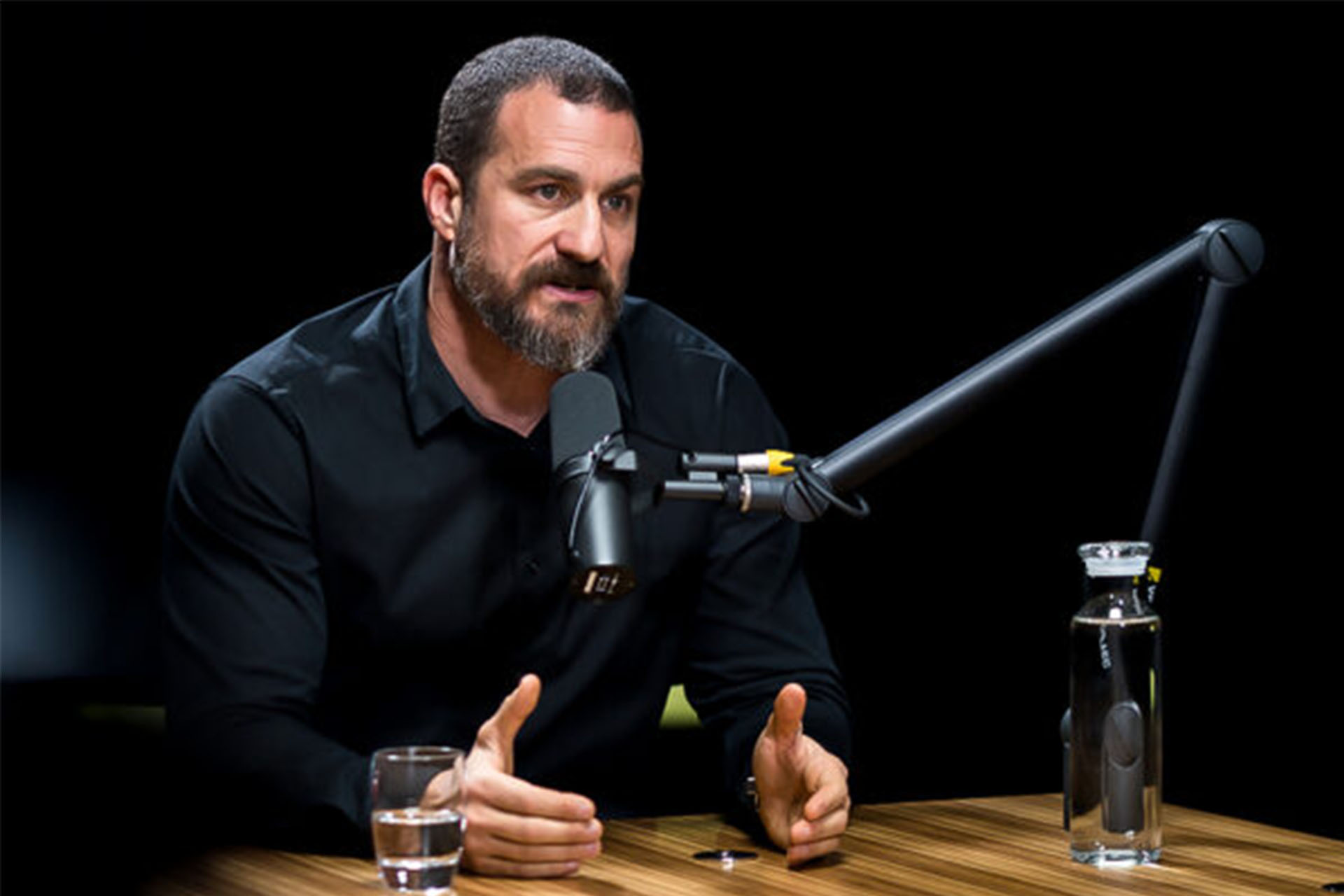
Dr. Andrew Huberman is a tenured Associate Professor in the Department of Neurobiology and, by courtesy, the Department of Ophthalmology at the Stanford University School of Medicine. His academic career at Stanford centers on visual system development, neural plasticity, optic nerve regeneration, and the brain circuits that govern stress, fear, and behavioral states.
Academic Education and Trajectory Leading to Stanford
To understand Dr. Andrew Huberman’s role at Stanford University, it is necessary to examine the academic foundation that preceded his faculty appointment. Huberman’s formal scientific training spans several major research institutions across California, focusing consistently on mammalian brain development, neural wiring, and sensory systems.
Huberman completed his undergraduate degree in Psychology at the University of California, Santa Barbara, before earning a Master of Arts in Psychology from the University of California, Berkeley. He pursued doctoral studies in neuroscience at the University of California, Davis, earning his Ph.D. in 2004. His doctoral dissertation investigated early visual system development, specifically examining how binocular visual pathways are wired during embryonic and postnatal growth under the guidance of neural activity and molecular cues.
Following his Ph.D., Huberman secured a competitive postdoctoral fellowship at Stanford University in the laboratory of the late Dr. Ben Barres, a pioneering neurobiologist who transformed the scientific community's understanding of glial cells (astrocytes, microglia, and oligodendrocytes) and their critical roles in synapse formation and neuronal survival. Working in the Barres laboratory allowed Huberman to deepen his expertise in mammalian visual circuit maintenance, glial-neuronal interactions, and optic nerve pathology.
In 2011, Huberman established his first independent research laboratory as an Assistant Professor of Neurobiology and Neuroscience at the University of California, San Diego (UCSD). During his tenure at UCSD, his lab gained recognition for mapping specific cell types within the retina and determining how discrete visual signals—such as motion, contrast, and directional orientation—are processed and transmitted to distinct subcortical targets in the brain. In 2016, Stanford University recruited Huberman back to Palo Alto, appointing him to the faculty of the School of Medicine.
Understanding the Stanford Appointment and Departmental Roles
Academic titles at major research universities carry precise structural and operational meanings. At the Stanford University School of Medicine, Huberman holds a primary appointment and a secondary "by courtesy" appointment, reflecting the interdisciplinary nature of his scientific work.
| Primary Department | Courtesy Department |
|---|---|
| Department of Neurobiology (Tenured Associate Professor) | Department of Ophthalmology (Faculty Member by Courtesy) |
Associate Professor of Neurobiology (Tenured)
Huberman’s primary academic home is the Department of Neurobiology at Stanford Medicine. Earning tenure at an institution like Stanford signifies that a scholar has demonstrated sustained, peer-reviewed excellence in original research, publication impact, external grant procurement, and institutional service. As an Associate Professor with tenure, Huberman possesses permanent faculty standing within the university.
Associate Professor of Ophthalmology (By Courtesy)
In academic medical centers, a "by courtesy" appointment is granted to a professor whose primary research heavily intersects with the clinical or scientific domain of another department. Because Huberman's laboratory specialized in the visual system—specifically retinal ganglion cells, optic nerve repair, and visual perception—the Department of Ophthalmology extended a courtesy appointment. This designation allows faculty members to collaborate on departmental research, co-advise graduate students, and participate in cross-departmental academic initiatives without drawing a separate salary line from that secondary department.
Primary Research Focus of the Huberman Laboratory at Stanford
The Huberman Laboratory at Stanford University operated with a core focus on central nervous system (CNS) repair, neuroplasticity, and the neural circuits controlling physiological stress responses. Historically, central nervous system neurons in adult mammals do not spontaneously regenerate after injury or disease. Huberman’s lab set out to challenge this dogma using the visual pathway as a model system.
Visual System Wiring and Retinal Ganglion Cell Diversity
The retina is an exposed extension of the central nervous system. It contains over 30 distinct subtypes of Retinal Ganglion Cells (RGCs), each specialized to detect specific features of the visual environment—such as broad daylight changes, fast-moving objects, or horizontal motion—and transmit that information to specific brain structures via the optic nerve.
Huberman’s lab at Stanford focused on cataloging these functional RGC subtypes and mapping their precise axonal projections into subcortical targets, such as the superior colliculus, the lateral geniculate nucleus (LGN), and the suprachiasmatic nucleus (SCN). Understanding these specific wiring diagrams provided foundational insights into how the mammalian brain processes raw sensory data to drive reflexive behaviors, circadian rhythms, and conscious perception.
Optic Nerve Regeneration and Neural Repair
One of the Huberman Lab's most cited contributions to cellular neuroscience involved stimulating adult mammalian optic nerve regeneration. Damage to the optic nerve—whether from glaucoma, physical trauma, or optic neuropathy—typically leads to permanent blindness because adult RGC axons fail to regrow once severed.
Research conducted by Huberman and his team established that adult RGCs could be induced to regenerate over long distances if two conditions were simultaneously met:
- Cellular Pathway Reactivation: Genetic or pharmacological reactivation of embryonic cell-growth pathways, specifically the mammalian target of rapamycin (mTOR) signaling pathway.
- Targeted Electrical/Visual Stimulation: Subjecting the eye to high-contrast visual stimulation (such as moving black-and-white bar patterns) to drive electrical activity within the retinal circuits.
When combined, these interventions caused damaged retinal ganglion cell axons to regenerate down the entire length of the optic nerve, pass through the optic chiasm, and reconnect to their correct visual targets in the brain, partially restoring visual function in animal models.
Neural Circuits of Threat, Fear, and Courage
Moving beyond sensory mechanics, Huberman’s lab expanded into behavioral and circuit neuroscience. The laboratory investigated how visual stimuli directly trigger internal emotional states, such as fear, anxiety, or confrontational behavior.
By examining subcortical structures like the ventral midline thalamus (vMT), Huberman’s team mapped specific circuits that evaluate incoming visual threats (e.g., an overhead predator silhouette). Their research identified distinct neural pathways within the vMT:
- One pathway projects to the basolateral amygdala, triggering behavioral freezing or retreat when a threat is detected.
- A parallel pathway projects to the insular cortex and medial prefrontal cortex, promoting a confrontational or "courageous" response to the same visual threat.
This work established a concrete neural framework for how the brain chooses between passive avoidance and proactive engagement when faced with environmental stressors.
Visuomotor and Respiratory Mechanisms of Stress Regulation
In collaboration with clinical departments at Stanford, including the Department of Psychiatry and Behavioral Sciences, Huberman investigated non-invasive tools to modulate autonomic arousal in humans. This research examined how intentional manipulations of visual field dynamics (e.g., transitioning from narrow focal vision to broad panoramic vision) and specific respiratory patterns alter autonomic nervous system state.
A major focus was the physiological mechanisms underlying the "cyclic sigh" (a pattern of deep double-inhalations followed by slow, extended exhalations). Huberman’s collaborative work evaluated how deliberate breathwork protocols engage the parasympathetic nervous system, lower heart rate, accelerate carbon dioxide clearance, and reduce subjective anxiety more effectively than non-structured mindfulness meditation.
Key Stanford Publications and Scientific Impact
The academic standing of any biomedical scientist is evaluated primarily through peer-reviewed literature published in recognized scientific journals. Huberman's work at Stanford generated high-impact papers across primary neurobiology, vision research, and state regulation.
| Research Area | Core Finding / Discovery | Major Journal & Year | Key Scientific Significance |
|---|---|---|---|
| Neural Regeneration | Combining mTOR pathway activation with high-contrast visual stimulation drives long-distance optic nerve axon regrowth. | Nature Neuroscience (2016) | Demonstrated that adult CNS neurons can regrow and reconnect to central visual targets following optic nerve damage. |
| Fear & Circuit Neuroscience | Identified ventral midline thalamic (vMT) circuits that dictate fight, flight, or freeze decisions in response to visual threats. | Nature (2018) | Mapped the neural architecture balancing fear avoidance versus confrontational behavior under stress. |
| Autonomic Control & Stress | Controlled cyclic sighing breathwork lowers physiological arousal and improves mood faster than traditional meditation. | Cell Reports Medicine (2023) | Validated brief, non-invasive physiological protocols for real-time autonomic state management in human subjects. |
| Visual Development | Cataloged subtype-specific retinal ganglion cell connections and their targeted projections into central visual nuclei. | Neuron / Journal of Neuroscience (Multiple) | Established foundational wiring maps for sensory processing across mammalian brain subcortical targets. |
These publications contributed substantially to vision restoration research, neuroplasticity frameworks, and autonomic physiology, consolidating Huberman’s reputation within academic neuroscience prior to his work in public science education.
Transition to Public Science Communication: Media vs. Academic Laboratory
Beginning around 2020, Dr. Andrew Huberman’s public footprint underwent a major expansion. While remaining a tenured Associate Professor at Stanford Medicine, he shifted a primary portion of his professional focus toward public science communication, launching the Huberman Lab Podcast in early 2021.
Science Translation and Public Education
The podcast was structured to provide zero-cost public education covering neuroscience, physiology, human behavior, and health-related protocols. Huberman leveraged his academic background at Stanford to review primary literature across fields such as neurobiology, endocrinology, sleep science, nutrition, and exercise physiology, translating complex academic studies into actionable advice for a general audience.
The Role of Academic Affiliation in Science Media
Huberman’s primary role at Stanford provides significant institutional credibility in the public health domain. However, it is essential to distinguish between a professor's independent media broadcasting and the formal research activities conducted within Stanford University laboratories:
- Peer-Reviewed Research: Involves empirical laboratory experiments, rigorous control groups, blind data collection, grant reviews, and peer review prior to publication in academic journals.
- Public Science Translation: Involves synthesizing broader scientific literature—often across disciplines outside a researcher's primary lab focus—and communicating general health principles, mechanisms, and experimental protocols to the lay public.
While Huberman remains an Associate Professor of Neurobiology at Stanford, his day-to-day work has largely transitioned from active benchwork in a physical laboratory setting to research synthesis, scientific communication, and educational outreach.
Frequently Asked Questions
Is Andrew Huberman still a tenured professor at Stanford?
Yes. Dr. Andrew Huberman is a tenured Associate Professor in the Department of Neurobiology at the Stanford University School of Medicine, holding a secondary appointment by courtesy in Ophthalmology. Tenure guarantees permanent faculty status within the university system.
What was Andrew Huberman's major scientific discovery at Stanford?
Huberman is best known in basic neuroscience for co-discovering that adult mammalian optic nerve axons can regenerate over long distances if mTOR cell-growth pathways are reactivated while the visual system receives continuous electrical stimulation. He also made key discoveries regarding how the ventral midline thalamus controls behavioral responses (freeze versus confront) to visual threats.
Does Andrew Huberman still run an active laboratory at Stanford?
While Huberman retains his tenured faculty appointment at Stanford, his active daily operations have shifted heavily toward science communication, synthesis, and media production. Much of his historical wet-lab experimental work on visual system regeneration was completed between 2011 and 2021.
What does "by courtesy" mean in his Stanford title?
A "by courtesy" title indicates an official secondary faculty appointment granted by a university department outside a professor's primary home. In Huberman's case, his primary appointment is in Neurobiology, while his courtesy appointment is in Ophthalmology, reflecting his research contributions to visual system biology and eye-to-brain pathways.
Where did Andrew Huberman complete his neurobiology training?
Huberman completed his undergraduate studies at UC Santa Barbara, earned a Master's degree at UC Berkeley, obtained his Ph.D. in Neuroscience from UC Davis, and completed five years of postdoctoral training at Stanford University School of Medicine in the laboratory of neurobiologist Dr. Ben Barres.
Verifying Scientific Publications and Academic Credentials
For researchers, students, and readers seeking to review Dr. Andrew Huberman’s verified scientific output, academic databases provide direct access to his peer-reviewed literature.
To review original research papers from the Huberman Laboratory, search primary biomedical index databases such as National Center for Biotechnology Information (NCBI) PubMed using the query author format Huberman BA. Formal faculty standing, academic departmental listings, and institutional biography details can also be confirmed directly via Stanford University Profiles.