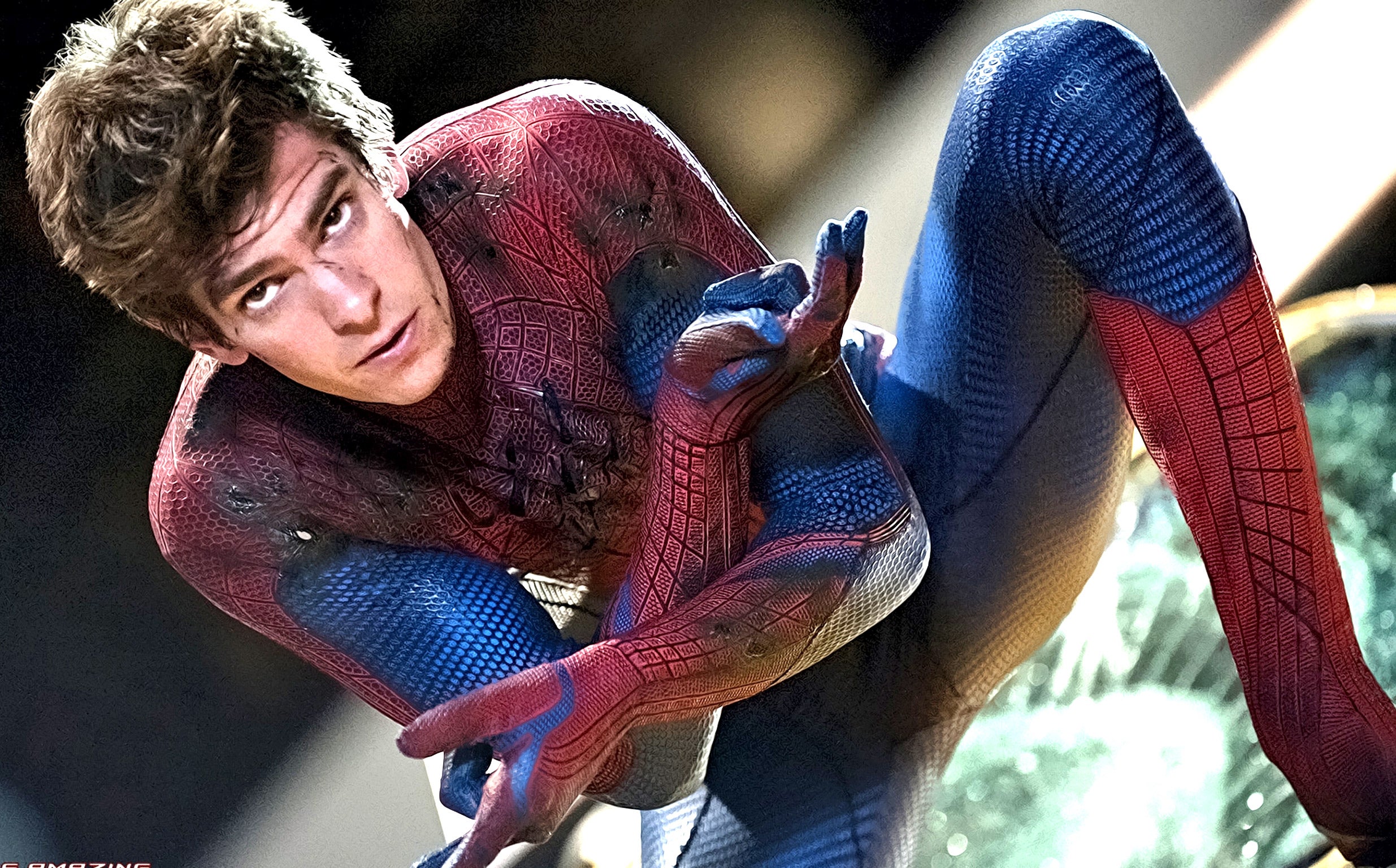
In the Spider-Man cinematic history, Andrew Garfield portrayed Peter Parker at various stages of his own life and the character's development. Garfield was 28 years old when The Amazing Spider-Man was released in 2012, 30 years old for The Amazing Spider-Man 2 in 2014, and 38 years old during his return in 2021’s Spider-Man: No Way Home.
The Casting of a Mature Peter Parker
When Sony Pictures announced the reboot of the Spider-Man franchise in 2010, the search for a new lead was exhaustive. Andrew Garfield, born on August 20, 1983, was already a critically acclaimed actor with roles in The Social Network and Never Let Me Go. When he was officially cast as Peter Parker in July 2010, he was nearly 27 years old. This casting choice followed the precedent set by Tobey Maguire, who was 26 when his first film was released, but it sparked discussions regarding the age gap between the actor and the character, who was scripted as a 17-year-old high school senior.
The decision to cast an older actor for a teenage role is a long-standing tradition in Hollywood, primarily driven by labor laws and the need for emotional depth. Casting a minor often limits filming hours due to strict child labor regulations, which can significantly inflate a blockbuster's production schedule and budget. By hiring Garfield, who was well into his twenties, the production gained an actor who could work adult hours and bring a nuanced, "indie-film" sensitivity to the role of a misunderstood, orphaned teenager.
During the pre-production phase of The Amazing Spider-Man, Garfield underwent rigorous physical training. Despite being nearly a decade older than the character he portrayed, his lean, lanky build helped him maintain the "teenage" aesthetic required for the role. His performance focused on the awkwardness of puberty combined with the newfound physical power of a superhero, a balance that benefited from his professional maturity.
The Amazing Spider-Man (2012): The High School Years
When The Amazing Spider-Man arrived in theaters in July 2012, Andrew Garfield was 28 years old. In the film’s narrative, Peter Parker is a 17-year-old student at Midtown Science High School. This created an 11-year age gap between the performer and the protagonist. This gap is one of the largest in the history of the character's live-action portrayals, yet Garfield’s portrayal is often cited for its authentic "teenage angst."
The film focuses on Peter's origin story, his relationship with Gwen Stacy (played by Emma Stone, who was 23 at the time of release), and his search for the truth about his parents. To bridge the age gap, the production utilized specific costume choices—such as hoodies, beanies, and a skateboard—to signal Peter’s youth and counterculture identity. The cinematography also played a role, often framing Garfield in ways that emphasized his slighter frame compared to the larger-than-life villains like the Lizard.
Physically, Garfield’s age actually provided an advantage in terms of the stunts. His background in gymnastics allowed him to perform many of his own movements, giving this version of Spider-Man a unique, jittery, and arachnid-like quality that had not been seen in previous iterations. While he was nearly 30, his ability to convey the vulnerability of a teenager dealing with the death of Uncle Ben was a hallmark of the 2012 reboot.
The Amazing Spider-Man 2 (2014): Graduation and Beyond
Released in May 2014, The Amazing Spider-Man 2 saw Garfield return to the role at the age of 30. The film begins with Peter Parker graduating from high school, placing the character at approximately 18 years old. By this point, the age gap had widened slightly to 12 years. Despite being three decades old, Garfield continued to embody the character’s youthful energy, though the sequel’s plot required him to face much more adult-oriented themes of loss and responsibility.
The sequel’s production, which took place throughout 2013, saw Garfield at age 29. The narrative weight of the film—particularly the iconic "Death of Gwen Stacy" storyline—required a performance that could handle profound grief. Many critics noted that Garfield’s age and experience were vital in these scenes, as he was able to project a level of devastation that a younger, less experienced actor might have struggled to convey convincingly.
During this era, there was significant discussion about the longevity of the franchise. With Garfield turning 30, plans were initially discussed for The Amazing Spider-Man 3 and 4, as well as various spin-offs. However, after the mixed critical reception of the second film and the subsequent deal between Sony and Marvel Studios, Garfield's tenure was temporarily cut short. At the time, it appeared that the 30-year-old actor had finished his journey as the wall-crawler.
Spider-Man: No Way Home (2021): The Multiversal Return
The most significant shift in the age dynamic occurred with the release of Spider-Man: No Way Home in December 2021. After a seven-year absence from the role, Andrew Garfield returned to play "Peter 3." Born in 1983, Garfield was 38 years old when the film hit theaters. Unlike his previous appearances, the film did not ask him to pretend to be a teenager. Instead, it leaned into the fact that his version of Peter Parker had aged and matured in his own universe.
While the film does not explicitly state the exact age of Garfield’s Peter Parker, it implies he is in his late 20s or early 30s. He mentions that after the death of Gwen Stacy, he became "bitter" and "stopped pulling his punches," suggesting years of crime-fighting and emotional struggle occurred off-screen. This narrative choice allowed Garfield to play a version of the character closer to his actual age, providing a "big brother" or "middle brother" dynamic to Tom Holland’s younger Peter Parker.
The return was a massive success, both critically and commercially. Audiences responded positively to seeing a more seasoned, weary, yet ultimately hopeful version of Garfield’s Spider-Man. The 38-year-old actor’s chemistry with Tobey Maguire (then 46) and Tom Holland (then 25) highlighted the different eras of the character's cinematic life. Garfield’s performance in No Way Home actually revitalized interest in his specific universe, leading to persistent fan campaigns for a third solo film, even as the actor entered his 40s.
Comparative Age Data for Andrew Garfield
The following table outlines the timeline of Andrew Garfield's age across his three Spider-Man film appearances, compared to the chronological age of the character he was portraying.
| Film Title | Release Year | Filming Year (Approx.) | Actor Age (at Release) | Character Age (Approx.) |
|---|---|---|---|---|
| The Amazing Spider-Man | 2012 | 2010–2011 | 28 | 17 |
| The Amazing Spider-Man 2 | 2014 | 2013 | 30 | 18 |
| Spider-Man: No Way Home | 2021 | 2020–2021 | 38 | Late 20s / Early 30s |
Why the Actor-Character Age Gap Exists in Hollywood
The phenomenon of "teenagers" being played by actors in their late 20s is not unique to Andrew Garfield. This trend is rooted in several logistical and creative necessities that continue to influence casting decisions in 2026.
1. Labor Regulations
In the United States, child labor laws strictly regulate how many hours a minor can spend on a film set. For a massive production like a Spider-Man film, which involves complex stunts, long makeup sessions, and night shoots, hiring a minor can be a liability. An actor over the age of 18 (and preferably over 21) can work the 12-to-16-hour days often required for blockbuster filming.
2. Emotional Maturity and Training
Playing a character like Spider-Man requires a massive amount of physical training and the ability to carry a multi-million-dollar franchise. Studios often prefer "known quantities"—actors who have already proven they can handle the pressure and the press tours. Garfield’s experience prior to 2012 made him a safer bet for Sony than an unknown 16-year-old.
3. Physical Consistency
Teenagers go through rapid physical changes. If a franchise is expected to last five to ten years, a 15-year-old actor may look drastically different by the third movie. Starting with an adult actor who has "settled" into their adult look provides more visual consistency across the sequels, even if they are playing a younger character.
The Physicality of Garfield’s Spider-Man
Despite the age gap, Andrew Garfield is often cited as the most "physically accurate" Spider-Man in terms of his movements. At age 28 and 30, his body was at a peak level of athletic flexibility. He worked closely with stunt coordinators to develop a movement style that was different from Tobey Maguire’s more "power-based" Spider-Man.
Garfield’s Spider-Man was agile, utilizing his long limbs to create a silhouette that mimicked a spider's legs. This was achieved through a combination of his own movement and high-level wirework. The fact that he was an adult during production meant he could withstand the grueling physical demands of the suit, which was notoriously uncomfortable and hot during the long production cycles in Los Angeles and New York.
By the time he returned for No Way Home at age 38, Garfield’s physicality had shifted. While still incredibly fit, his version of the character moved with a bit more deliberation, reflecting the "years of experience" the character had gained. This subtle change in movement helped differentiate the three "Spider-Men" on screen, showing the progression from the rookie (Holland) to the seasoned veteran (Maguire), with Garfield occupying the complex middle ground.
Frequently Asked Questions
Was Andrew Garfield the oldest actor to play Spider-Man?
No. While Andrew Garfield was 28 in his first appearance, Tobey Maguire was 46 when he returned for Spider-Man: No Way Home in 2021. However, Garfield holds the record for being the oldest actor to be originally cast to play a high school-aged Peter Parker in a debut film, as he was 26 during the casting process for The Amazing Spider-Man.
How much older is Andrew Garfield than Tom Holland?
Andrew Garfield was born in 1983, and Tom Holland was born in 1996, making Garfield approximately 13 years older than Holland. This age difference was utilized effectively in Spider-Man: No Way Home to create a sibling-like dynamic between their two versions of Peter Parker.
Did Andrew Garfield's age affect the cancellation of TASM 3?
While his age was not the primary factor, it did play a role in the long-term planning. By the time The Amazing Spider-Man 3 would have entered production, Garfield would have been in his mid-30s. Sony’s eventually realized that to integrate the character into the MCU, they needed a younger actor (Tom Holland) who could play the high school role for a longer duration of time across multiple crossover films.
How old was Andrew Garfield when he filmed No Way Home?
Garfield filmed his scenes for Spider-Man: No Way Home between late 2020 and early 2021. Born in August 1983, he was 37 years old during the majority of the production. He turned 38 shortly before the film was released in December 2021.
Why did Peter Parker look older in the Garfield films?
The "look" of Garfield's Peter Parker was a deliberate stylistic choice by director Marc Webb. They wanted a Peter Parker who felt more grounded in the "modern" (early 2010s) world. His older appearance, combined with a more fashion-forward wardrobe, was intended to make him a more relatable, albeit older-looking, teenager for the audience of that era.
Summary and Final Recommendation
Understanding the age of Andrew Garfield in his Spider-Man films provides a deeper appreciation for the technical and artistic choices made by the filmmakers. While the age gap between the actor and the character was significant during the 2012 and 2014 films, Garfield's ability to capture the essence of Peter Parker's spirit remains a high point of the franchise.
For fans and researchers looking to explore more about the history of Spider-Man, it is recommended to view the behind-the-scenes documentaries for The Amazing Spider-Man series. These features provide insight into how the production team used lighting, costume design, and Garfield's own background in physical theater to bridge the decade-long gap between the actor's reality and the character's fictional age.