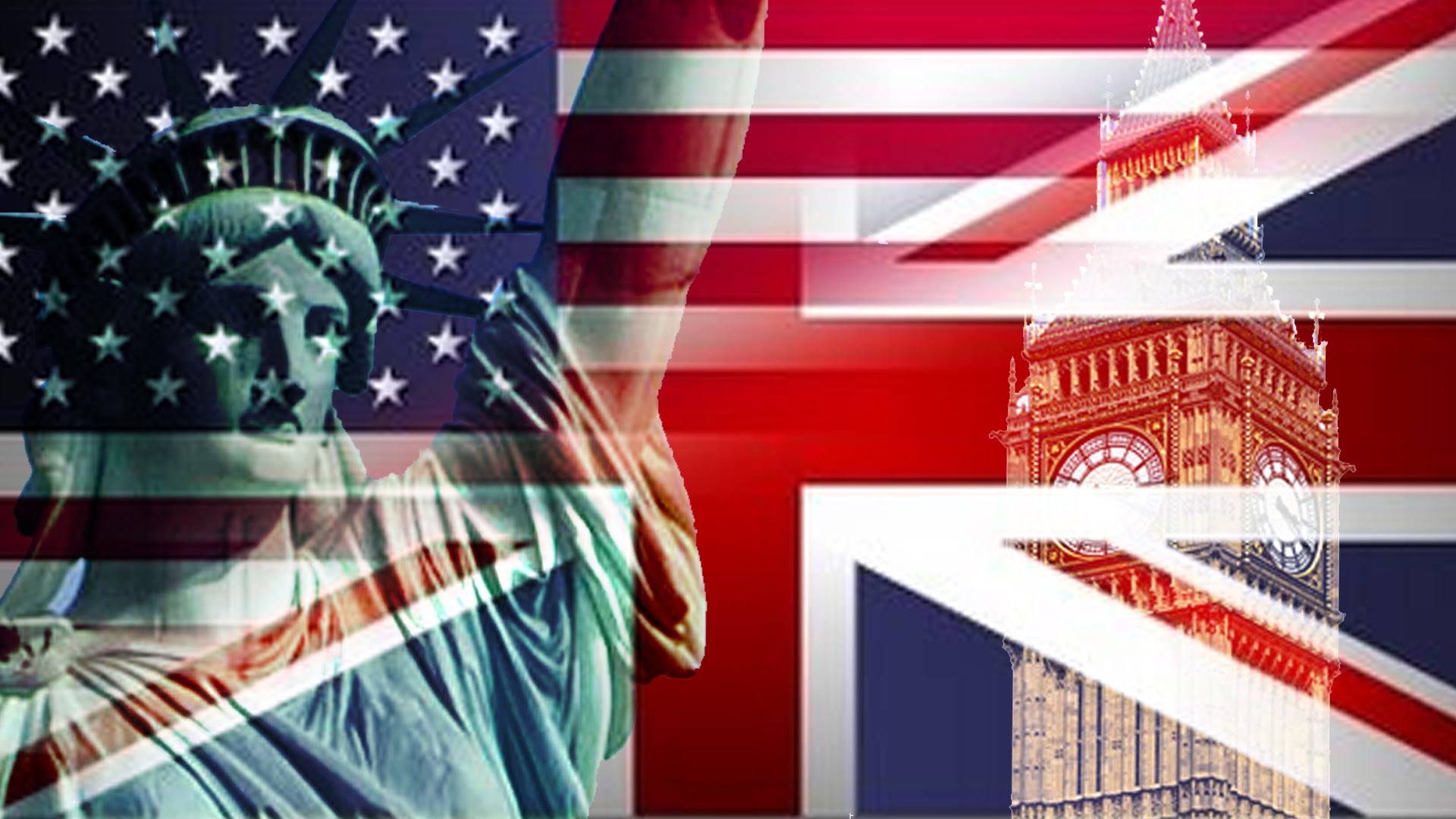
American English history began with 17th-century British colonization, evolving through contact with indigenous and immigrant languages. It diverged from British English through conscious reforms by figures like Noah Webster and natural isolation, eventually becoming a global standard shaped by cultural shifts, technology, and diverse regional influences across North America.
The Colonial Foundations and Early Divergence (1607–1776)
The roots of American English are firmly planted in the early 17th century, specifically starting with the settlement of Jamestown in 1607 and the Plymouth Colony in 1620. The English spoken by these early settlers was not a monolithic "standard" English but rather a collection of regional dialects from across the British Isles. Settlers from the West Country of England, East Anglia, and the Midlands brought distinct phonological and lexical traits that would eventually blend through a process known as dialect leveling.
During this period, American English began its first major divergence from the mother tongue. One of the most significant features of this era was rhoticity—the pronunciation of the /r/ sound at the end of syllables. In the early 17th century, most English dialects were rhotic. As the 18th century progressed, London and other urban centers in England began to drop the post-vocalic /r/, leading to the non-rhotic accents we now associate with Modern British English. However, because the American colonies were geographically isolated, they retained the older rhotic pronunciation, which remains a hallmark of General American English today.
Isolation also allowed for "linguistic fossilization," where words and phrases that fell out of favor in England persisted in the colonies. For example, the use of "fall" for autumn and "mad" for angry were common in 17th-century England but were eventually replaced or relegated to secondary meanings in Britain, while remaining standard in America.
Linguistic Contact: Native American and European Influences
As settlers moved inland, the English language was forced to adapt to a landscape, flora, and fauna entirely foreign to Europe. This necessitated the borrowing of words from indigenous languages, primarily from the Algonquian family. These borrowings were not merely decorative; they were essential for survival and description. Terms such as raccoon, skunk, moose, hickory, and succotash entered the lexicon during this formative stage.
The linguistic map was further complicated by the presence of other European powers. In the Northeast, Dutch settlers in New Amsterdam (now New York) contributed words like cookie, boss, stoop, and coleslaw. In the South and West, contact with Spanish speakers introduced terms related to ranching and geography, such as canyon, ranch, and stampede. Meanwhile, French influence in the Mississippi Valley and Louisiana gave us bayou, levee, and depot.
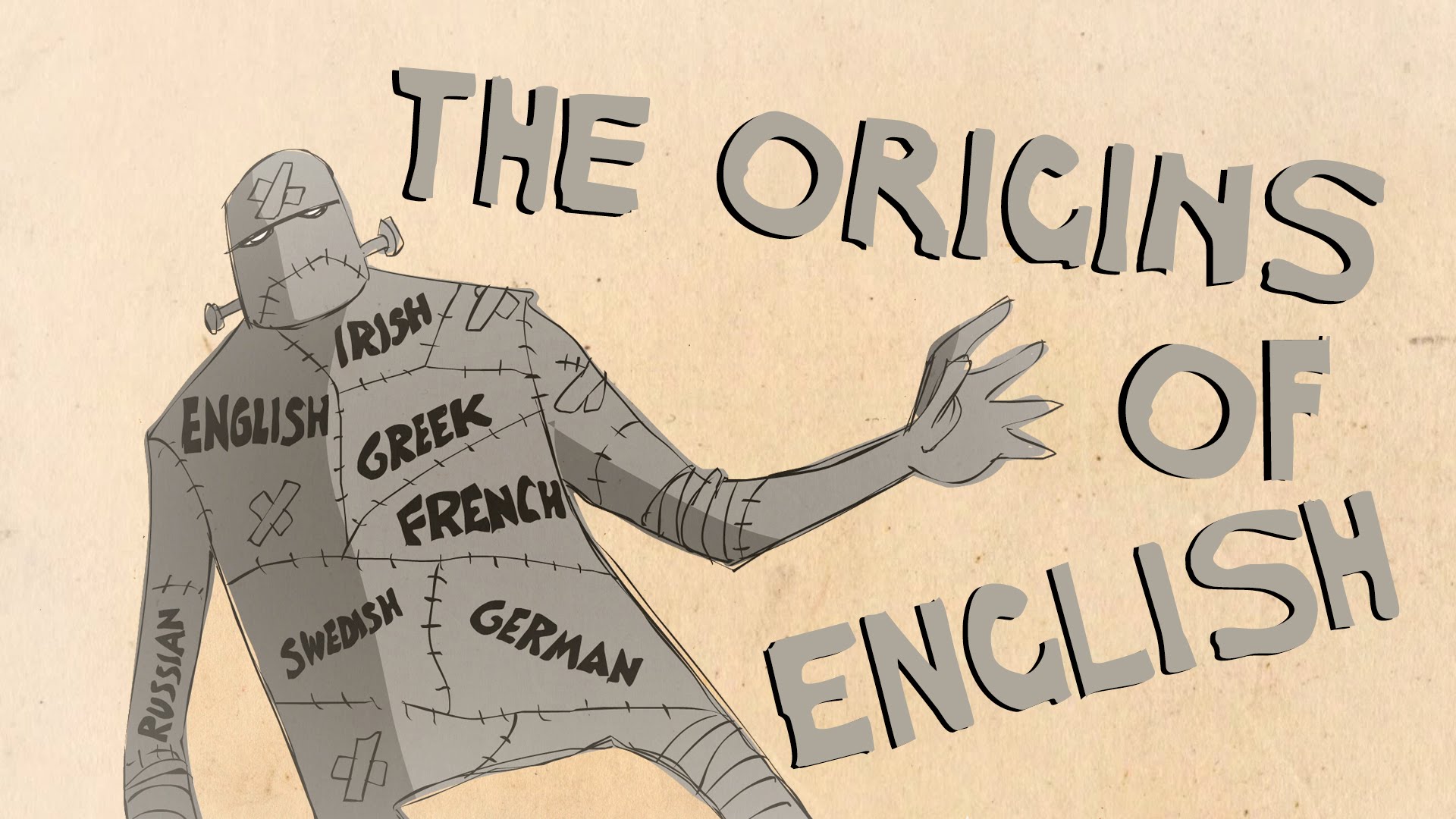
This multi-ethnic contact created a linguistic environment that was significantly more diverse than that of contemporary England. It established a precedent for American English as a "sponge" language, characterized by its willingness to absorb and domesticate foreign vocabulary to meet practical needs.
Noah Webster and the Movement for Linguistic Independence
Following the American Revolutionary War, there was a profound desire to establish a cultural identity distinct from Great Britain. No figure was more instrumental in this endeavor than Noah Webster. Webster believed that a uniform national language was essential for national unity and republican virtue.
In 1828, Webster published his seminal work, An American Dictionary of the English Language. This was not merely a list of definitions; it was a manifesto for spelling reform. Webster simplified spellings to reflect pronunciation more accurately and to distance American English from its British "aristocratic" roots. His changes included:
- Removing the 'u' from words like color (colour) and honor (honour).
- Changing the 're' to 'er' in words like center (centre) and theater (theatre).
- Replacing 'ce' with 'se' in words like defense (defence).
- Dropping the double 'l' in certain inflections, such as traveling (travelling).
Webster’s reforms were highly successful because they were adopted by the growing public school system. By the mid-19th century, these spelling conventions had become standard across the United States, creating a visual and structural divide between the two major branches of the English language.
Westward Expansion and Regional Dialect Development
As the United States expanded westward during the 19th century, the language continued to undergo significant changes. The movement of people from the East Coast toward the Pacific created a "dialect soup" that eventually settled into several distinct regional varieties.
The Scots-Irish immigrants, who settled heavily in the Appalachian Mountains, contributed a rugged, archaic syntax and vocabulary that laid the groundwork for Southern and South Midland dialects. Their influence is still heard today in the distinct cadence of rural Southern speech. In contrast, the settlement of the Upper Midwest by New Englanders and Scandinavian/German immigrants led to the "Inland Northern" dialect, characterized by specific vowel shifts.
The California Gold Rush and the subsequent settlement of the West Coast resulted in a more blended, "neutral" accent that eventually contributed to the development of the General American accent used by national broadcasters in the 20th century. This westward movement also introduced a wealth of frontier slang—terms like backwoods, landslide, and shanty—that reflected the rugged reality of American expansion.
The Impact of the African Diaspora and AAVE
One of the most profound influences on American English history is the linguistic legacy of the Atlantic slave trade. Enslaved Africans brought with them a variety of Niger-Congo languages. To communicate with one another and their captors, they developed creoles—languages that blend elements of several different tongues.
Over centuries, this evolved into what linguists call African American Vernacular English (AAVE). AAVE is a sophisticated, rule-governed dialect with its own unique grammatical structures, such as the "habitual be" (e.g., "he be working" to indicate a recurring action). AAVE has had a massive influence on mainstream American English, contributing countless terms and idiomatic expressions to the general lexicon, from jazz-age slang to contemporary popular culture.
The "Great Migration" of the 20th century, which saw millions of African Americans move from the rural South to Northern cities, facilitated the spread of these linguistic features, ensuring they became an integral part of the American linguistic tapestry rather than remaining isolated regionalisms.
The 20th Century: Mass Media and Standardization
The invention of the radio, followed by cinema and television, exerted a powerful homogenizing force on American English. During the mid-20th century, the "Mid-Atlantic" or "Transatlantic" accent—a cultivated blend of British and American sounds—was popular among the elite and in Hollywood. However, this gave way to the "General American" accent, which was perceived as being from "nowhere in particular" and therefore universally intelligible.
Mass media served two functions: it spread national slang and vocabulary rapidly, and it began to erode some of the most distinct regional markers. By 1950, a person in Seattle was using the same idioms as a person in Miami, thanks to national advertising and news broadcasts.
Despite this trend toward standardization, regional dialects did not disappear. In fact, some linguists noted the "Northern Cities Vowel Shift" occurring in the late 20th century, where accents in cities like Chicago and Detroit were actually moving away from the national standard, proving that local identity still plays a vital role in linguistic evolution.
American English in 2026: The Digital Age and Globalization
As of 2026, the history of American English is being written in digital spaces. The internet and social media have accelerated the pace of linguistic change to an unprecedented degree. Terms that once took decades to travel from one region to another now go global in a matter of hours.
The influence of American English globally—often referred to as "Linguistic Imperialism" by some and "Global English" by others—remains dominant. However, the language is also being shaped by "bottom-up" influences. Digital shorthand, emojis as grammatical markers, and the blending of Spanish and English (Spanglish) in high-population areas have created a more fluid and informal standard.
Linguists in 2026 observe that the rigid boundaries set by Noah Webster are softening. While formal writing remains standardized, the everyday spoken and typed "American" is more diverse than ever, reflecting a nation that continues to redefine itself through its immigrants, its technology, and its cultural exports.
Comparison of Linguistic Divergence
The following table highlights the key differences that emerged between American and British English as a result of the historical processes described above.
| Feature | American English (2026 Standard) | British English (Standard) | Historical Driver |
|---|---|---|---|
| Rhoticity | Pronounces /r/ in "car" and "hard" | Usually drops /r/ (non-rhotic) | Isolation/18th-century UK shift |
| Spelling | Color, Center, Defense, Catalog | Colour, Centre, Defence, Catalogue | Noah Webster's Reforms (1828) |
| Vocabulary | Apartment, Elevator, Truck, Fall | Flat, Lift, Lorry, Autumn | Geographic isolation and contact |
| Past Tense | Learned, Spelled, Dreamed | Learnt, Spelt, Dreamt | American preference for regularity |
| Collective Nouns | The team is playing (Singular) | The team are playing (Plural) | Notional vs. Formal agreement |
Frequently Asked Questions
Why do Americans have a different accent than the British?
The primary reason is that American English retained many features of 17th-century British speech, such as the "r" sound, while the accents in England changed significantly after the colonies were established. This process, combined with the influence of other immigrant groups (German, Dutch, Irish), created a unique phonetic profile over 400 years.
Did Noah Webster really change American English by himself?
While he didn't invent the changes, Webster was the primary catalyst for their adoption. He chose specific spellings that were already in occasional use and codified them in his dictionary. Because his books were used to teach millions of American children, his "simplified" versions became the national standard within a generation.
How did Native American languages change English?
Native American influence was primarily lexical. They provided names for things that didn't exist in Europe. Without these borrowings, Americans would have had to use cumbersome descriptions for animals like the opossum or plants like squash. These words are some of the oldest "Americanisms" in the language.
Is American English becoming more similar to British English because of the internet?
Actually, the trend is often the opposite. Because of the dominance of American media (streaming, social media, and tech platforms), British English is adopting many Americanisms. However, both varieties are influenced by a "Global English" that borrows from many cultures, making the two branches more mutually intelligible even as they retain distinct identities.
What is the "General American" accent?
General American is an umbrella term for an American accent that lacks distinct regional markers (like the Southern drawl or the New York "cawfee"). It evolved from the speech patterns of the Midwest and West and became the standard for national news and professional environments in the 20th century.
Recommended Next Steps for Research
To further understand the trajectory of American English, researchers should focus on the Sociolinguistic Significance of Regional Dialects. Exploring the "Dictionary of American Regional English" (DARE) provides a granular look at how specific counties and towns preserved unique terminologies that have survived since the colonial era. Additionally, studying the impact of Spanish-English bilingualism in the 21st century offers insight into the next major phase of American linguistic history, as the "Latino influence" is currently the fastest-growing contributor to modern American syntax and vocabulary.