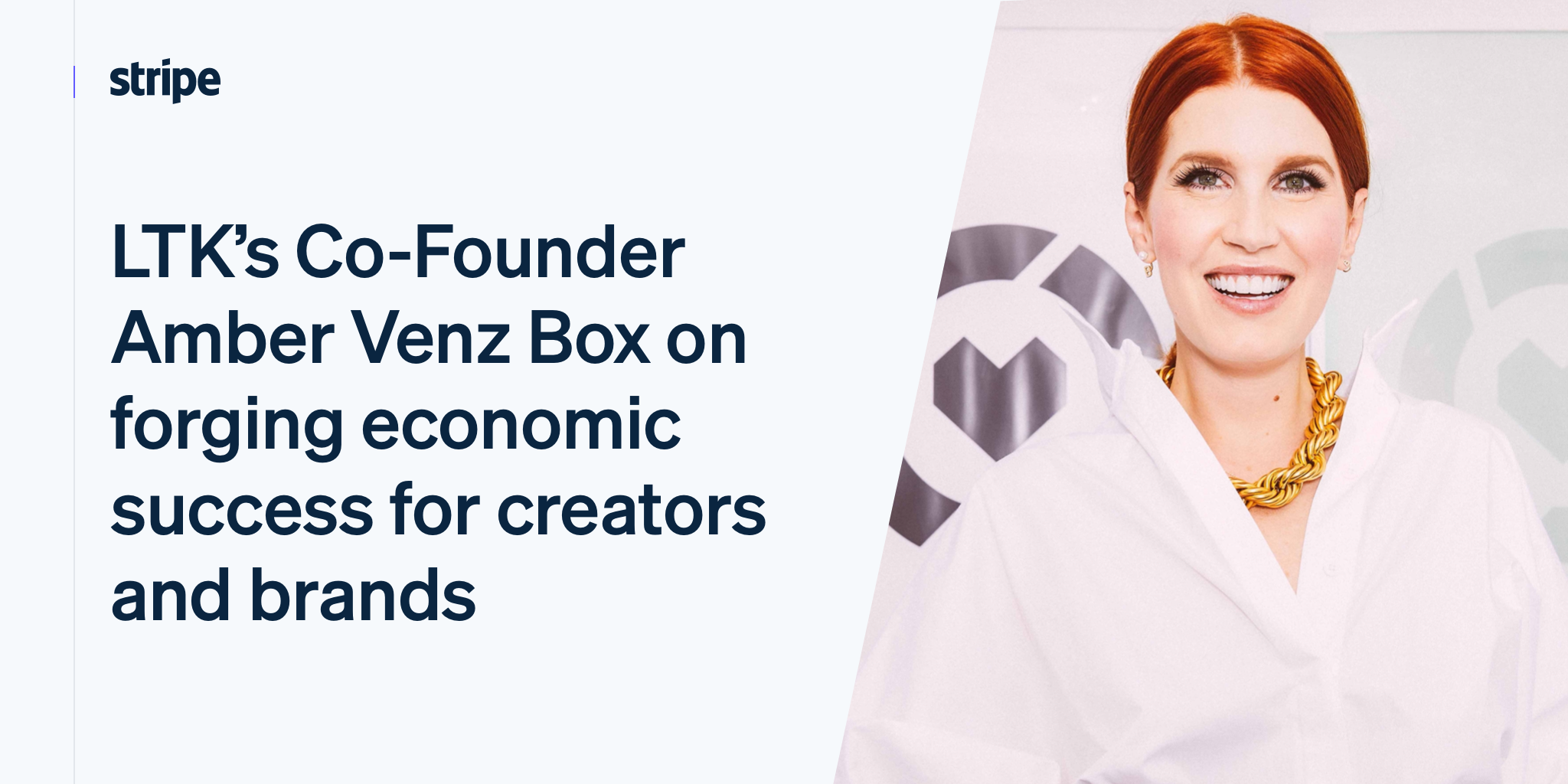
Amber Venz Box has an estimated net worth between $300 million and $500 million. The primary engine behind her wealth is her co-founder and executive equity stake in LTK (formerly known as rewardStyle and LikeToKnow.it), a creator-commerce platform valued at $2 billion following a landmark venture investment led by SoftBank Vision Fund 2.
Who Is Amber Venz Box? Career Origins and the Creation of rewardStyle
Before establishing one of the creator economy's most lucrative platforms, Amber Venz Box worked as a freelance personal stylist, jewelry designer, and fashion blogger in Dallas, Texas. In 2008, while managing her style blog, VenzEdits, she provided free fashion guidance, product recommendations, and styling tips to her readers.
However, Venz Box quickly realized a structural flaw in the early online publishing ecosystem: while her personal styling client sessions converted into direct store sales, her digital readers were buying the items she recommended online without Venz Box earning any referral commissions. When clients stopped booking paid in-person sessions because they could access her curated recommendations online for free, her traditional revenue stream dropped significantly.
To solve this monetization bottleneck, Venz Box partnered with her then-boyfriend (now husband), Baxter Box, who possessed a background in engineering and tech entrepreneurship. Together, they developed rewardStyle in 2011.
The original concept was simple yet revolutionary for the fashion industry: a private, invite-only affiliate marketing network designed specifically for lifestyle bloggers. The platform gave influencers a centralized portal to generate trackable commission links for thousands of retail brands. Rather than negotiating individual affiliate agreements with separate retailers, bloggers could use rewardStyle as a single clearinghouse for their affiliate earnings.
- Content Creator
- Recommends Products to Social Audience
- Uses LTK Tracking Links
- Social Audience
- Purchases Products
- Enterprise Brand
- Brands Pay Commission Fee
- LTK Network Platform
- Tracks conversions, settles commission payments
The Core Wealth Engine: How LTK Generates Billion-Dollar Revenue
To understand how Amber Venz Box built a multi-hundred-million-dollar fortune, it is necessary to examine the monetization mechanics of LTK. The platform operates at the intersection of enterprise digital advertising, affiliate marketing, and consumer software.
The Evolution from rewardStyle to LikeToKnow.it and LTK
In its early years, rewardStyle operated primarily on desktop web blogs. As consumer behavior shifted heavily toward mobile devices and social media platforms—specifically Instagram—influencers faced a new hurdle: Instagram did not permit hyperlinking within individual post captions.
In 2014, Venz Box and her team solved this by launching LikeToKnow.it. The technology initially allowed Instagram users to receive instantly shoppable emails whenever they liked a screenshot of a participating creator’s post. Later, this feature evolved into the native LTK mobile app, creating a standalone direct-to-consumer shopping platform.
Today, the unified LTK app allows millions of shoppers to browse curated style, beauty, home, and lifestyle feeds published by vetted creators. The platform serves three distinct user groups:
- Creators: Receive infrastructure, unified analytics, cross-retailer link generation, and guaranteed payment clearing.
- Retailers: Gain access to high-converting traffic driven by trusted digital personalities, paying only for completed purchases or structured campaign activations.
- Consumers: Get immediate, direct access to exact products featured in creator photos and videos.
Revenue Dynamics and Gross Merchandise Value (GMV)
LTK operates on a shared-revenue model. When a consumer purchases a product through an LTK referral link, the partner retailer pays a wholesale commission percentage (typically ranging between 5% and 20% of the gross sale price). LTK splits this revenue with the creator, retaining an intermediary platform fee for processing, tracking technology, and managing brand relationships.
By driving massive transaction volumes, LTK achieves significant scale:
- High Gross Merchandise Value (GMV): LTK has driven billions of dollars in annual sales for international brand partners, including Nordstrom, Sephora, Target, and Walmart.
- Brand Partnerships & Campaign Management: Beyond commission split revenues, LTK manages multi-million-dollar brand sponsorship campaigns, charging brands fees to run managed influencer marketing programs.
- High Retention & Network Effects: Creators rarely leave the platform due to the technical complexity of building independent affiliate networks, generating recurring, predictable cash flow for LTK.
Key Financial Milestones and LTK's $2 Billion Valuation
Unlike many Silicon Valley tech startups that raise successive rounds of venture capital at the expense of equity dilution, Amber Venz Box and Baxter Box prioritized capital efficiency early on. They bootstrapped rewardStyle into a profitable enterprise within its first year of operation.
- 2011: Launch of rewardStyle (Profitable within Year 1)
- 2014: Deployment of LikeToKnow.it Engine
- 2015: Strategic Capital Raising (Maverick Ventures Investment)
- 2021: SoftBank Vision Fund 2 Investment ($300M raised at $2B Valuation)
- 2026: Market Expansion & Creator Commerce Dominance
Strategic Financing and Capitalization
While LTK funded much of its initial expansion through internally generated cash flow, strategic investment rounds were executed to accelerate software development and global market expansion:
- 2015 Strategic Investment: rewardStyle accepted undisclosed minority capital from high-profile technology and retail investors, including Maverick Ventures and strategic media executives. This capital helped expand tech operations into European and Asian markets without stripping the founders of voting control.
- November 2021 SoftBank Investment: LTK closed a $300 million funding round from SoftBank Vision Fund 2. The round valued the private company at $2 billion, officially making LTK a technology unicorn.
Understanding the Co-Founders' Ownership and Liquidity
When a privately held technology firm achieves a $2 billion valuation, the founders' net worth rises accordingly based on their remaining equity stakes. Because Venz Box and her husband bootstrapped during the company's early growth phases, they retained an unusually large percentage of founder equity compared to typical tech co-founders who undergo multiple dilutive venture capital funding rounds.
Financial analysts estimate that the co-founding couple retained a substantial combined equity stake post-2021 funding. In venture capital transactions of this scale, secondary offerings frequently allow founders to convert a portion of their equity into liquid cash assets, enabling wealth diversification into real estate, traditional stock portfolios, and venture capital investments.
Financial Breakdown: Revenue Streams and Asset Portfolio
Amber Venz Box's total net worth is composed of several distinct asset classes, ranging from illiquid private company equity to real estate and personal liquid investments.
Amber Venz Box Estimated Wealth Portfolio:
- LTK Equity (~75-85%)
- Real Estate & Property (~10-15%)
- Cash Liquidity & Secondary Sales (~5-10%)
- Angel Investments & Portfolio Assets (~2-5%)
1. Private Equity in LTK
The dominant share of Venz Box's financial valuation remains tied to her ownership stake in LTK. Private equity valuations fluctuate based on broader market multiples for software-as-a-service (SaaS) and e-commerce platforms. Based on LTK's $2 billion market baseline set during its major institutional fundraise, her combined marital holding represents the centerpiece of her net worth.
2. Secondary Share Sales and Executive Compensation
As President and Co-Founder of LTK, Venz Box earns an executive salary alongside performance bonuses. During major equity funding rounds (such as the 2021 SoftBank round), founders often take partial liquidity via secondary share sales—selling a small fraction of existing shares to incoming institutional investors. This provides substantial personal cash reserves separate from the company's operational balance sheet.
3. Luxury Real Estate Holdings
Amber Venz Box and Baxter Box have accumulated a notable portfolio of residential real estate in Texas. Their primary residence in Dallas—a custom-designed, architecturally significant estate—alongside historical properties and vacation retreats, represents tens of millions of dollars in net real estate equity.
4. Angel Investments and Directorships
As an established technology executive, Venz Box acts as an angel investor in early-stage direct-to-consumer (DTC) brands, software startups, and fashion-tech platforms. She also earns advisory equity and sitting fees by serving on corporate advisory boards and speaking at enterprise tech conferences worldwide.
Detailed Financial Timeline: Amber Venz Box and LTK
The table below outlines the evolution of LTK's platform capabilities, fundraising milestones, estimated platform valuations, and their financial impact on Venz Box's overall net worth:
| Year | Company / Career Milestone | Estimated Company Valuation | Key Financial Impact & Wealth Dynamics |
|---|---|---|---|
| 2008 | Launches VenzEdits styling blog | N/A (Sole Proprietorship) | Relied on flat-fee personal styling services; zero digital affiliate leverage. |
| 2011 | Co-founds rewardStyle with Baxter Box | Self-funded / Bootstrapped | Achieved profitability within 12 months, retaining maximum founder equity. |
| 2014 | Launches LikeToKnow.it engine | $50M – $100M (Industry Est.) | Unlocked social media commerce; monetization accelerated rapidly. |
| 2015 | Accepts strategic investment (Maverick) | $200M – $290M (Reported) | Institutional backing secured; cash capital deployed for global team hiring. |
| 2017 | Launches native LikeToKnow.it mobile app | $400M – $600M | Consumer app adoption spiked, shifting revenue from web blogs to mobile feeds. |
| 2021 | Rebrands to LTK; raises $300M from SoftBank | $2,000,000,000 ($2 Billion) | Secured official tech unicorn status; established multi-hundred-million net worth. |
| 2026 | Enterprise expansion in creator commerce | $2.0B – $2.5B+ (Private Est.) | Expanded brand integrations, enterprise monetization, and international footprint. |
How Venz Box's Wealth Compares to Content Creators vs. Platform Owners
A striking aspect of Amber Venz Box’s net worth is how it highlights the economic difference between being a content creator versus owning the infrastructure platform that creators rely upon.
The Wealth Multiplier:
- Top-Tier Macro-Influencer
- Revenue: Sponsored posts, standard affiliate commissions
- Scalability: Bottlenecked by personal audience size & post count
- Net Worth Ceiling: $10 Million – $30 Million
- Platform Founder (Amber Venz Box / LTK)
- Revenue: Takes a micro-percentage fee on tens of thousands of links
- Scalability: Unlimited network effects across hundreds of thousands of active influencers worldwide
- Net Worth Ceiling: $300 Million – $500+ Million
While top-tier influencers earn substantial six- and seven-figure annual incomes via brand deals, their income remains tied to personal time, content volume, and social media algorithm updates.
In contrast, as the owner of the transaction technology layer:
- Venz Box earns platform fees from every transaction completed across hundreds of thousands of creator profiles.
- If an individual influencer's engagement declines, overall network revenue remains stable as new creators enter the LTK ecosystem.
- Her platform captures upside from macro trends in global e-commerce growth, giving her equity valuation software-firm multiples rather than talent-agency multiples.
Key Factors Influencing Future Net Worth Valuation
Because the vast majority of Amber Venz Box’s wealth is tied to LTK's corporate evaluation, several broader industry metrics directly influence her future net worth trajectory:
1. Potential Initial Public Offering (IPO) or Trade Sale
Should LTK pursue a public listing on an exchange like the NASDAQ or be acquired by a major technology enterprise (such as Adobe, Shopify, or Salesforce), public market demand will determine a clear, fully liquid value for her equity. A successful IPO could elevate her net worth well beyond current private estimates.
2. E-Commerce and Advertising Multiples
Technology enterprise valuations are sensitive to macroeconomic conditions, consumer interest rates, and overall retail spending. Fluctuations in how public markets value affiliate tech, digital advertising, and consumer software directly adjust the estimated value of her private shares.
3. Competition in Creator Monetization
As platforms like TikTok Shop, Amazon Influencer Program, and Instagram Shopping refine their built-in checkout capabilities, LTK must continually innovate to maintain its competitive moat. LTK's strategy of offering creators centralized analytics across multiple platforms—rather than locking them into a single social app—remains a major structural advantage.
Practical Key Takeaways for Entrepreneurs & Creators
Analyzing Amber Venz Box's net worth trajectory provides actionable strategic lessons for modern digital entrepreneurs, influencers, and software builders:
- Solve Personal Pain Points: rewardStyle was born directly out of Venz Box's operational frustration with monetizing digital styling advice. The most successful software ideas frequently solve immediate, practical workflow problems.
- Prioritize Equity & Capital Efficiency: By bootstrapping in the early years and delaying external funding until the product proved clear unit economics, Venz Box and her founding team preserved significant equity control.
- Build Infrastructure Over Audience Alone: While personal branding is valuable, long-term multi-generational wealth comes from owning scalable technology platforms, proprietary data networks, and customer acquisition channels.
Frequently Asked Questions
How much is Amber Venz Box currently worth?
Amber Venz Box has an estimated net worth between $300 million and $500 million. Her fortune is primarily based on her estimated equity stake in LTK (formerly rewardStyle), which was valued at $2 billion in late 2021 following a $300 million investment round from SoftBank Vision Fund 2.
Is LTK a publicly traded company?
No. LTK remains a privately held company co-founded by Amber Venz Box and Baxter Box. Because it is private, exact capitalization tables, individual shareholder breakdowns, and precise net worth figures are calculated using reported funding valuations, revenue estimates, and industry equity benchmarks.
How did Amber Venz Box make her money?
She accumulated her wealth as the co-founder and President of LTK. The platform generates revenue by facilitating commission-based sales between retail brands and content creators. LTK earns a fee on millions of e-commerce purchases driven through its app and tracking links.
Who owns LTK?
LTK is privately owned by its co-founders (Amber Venz Box and Baxter Box), key executive staff, and institutional investment firms. Major backers include SoftBank Vision Fund 2 and Maverick Ventures.
Did Amber Venz Box start rewardStyle by herself?
No. Amber Venz Box co-founded rewardStyle in 2011 alongside her husband, Baxter Box. While Amber brought deep domain expertise in fashion blogging and styling, Baxter provided technical architecture, business strategy, and engineering background necessary to build the software platform.