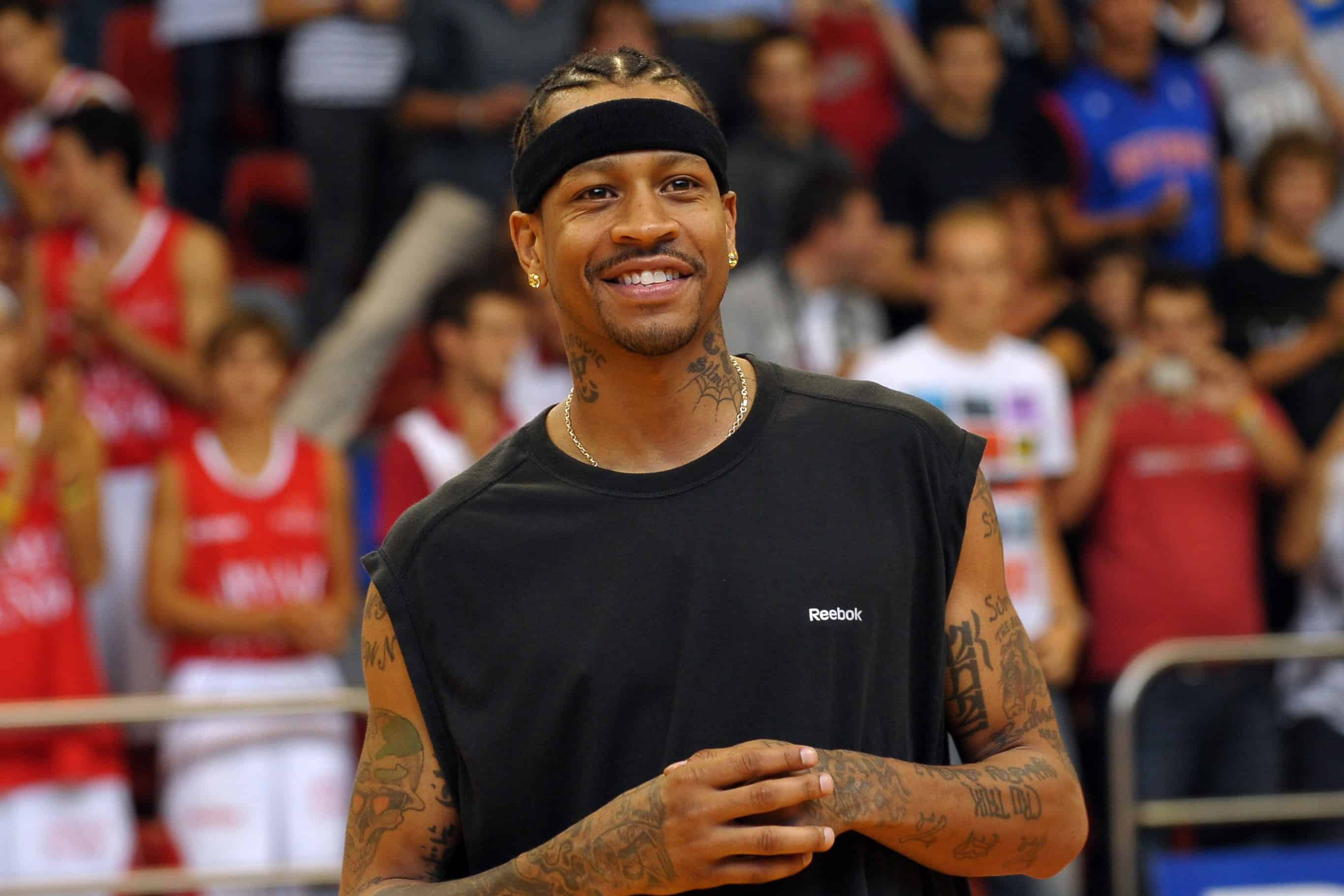
At the height of his career in the mid-2000s, Allen Iverson’s net worth was estimated to be between $50 million and $60 million. This valuation was driven by his record-breaking NBA contracts, a historic lifetime endorsement deal with Reebok, and various global marketing partnerships that established him as a cultural icon.
The financial journey of Allen "The Answer" Iverson is one of the most scrutinized narratives in professional sports. Beyond the highlights of his MVP season and his four scoring titles, Iverson’s wealth represents a complex intersection of massive earnings, unprecedented endorsement structures, and the challenges of managing a high-burn-rate lifestyle. To understand his peak net worth, one must look past the simple total of his NBA salaries and examine the timing of his liquid assets, his deferred compensation, and the unique "safety net" that remains a topic of fascination in 2026.
The Architecture of Iverson’s NBA Earnings
Allen Iverson’s primary wealth engine was his performance on the court, which translated into some of the most lucrative contracts of the late 1990s and early 2000s. Over his 14-season career in the NBA, Iverson earned approximately $154.5 million in cumulative salary. However, his peak "wealth window" occurred between 2003 and 2008, during which his annual salary consistently exceeded $13 million, reaching a career-high of over $20 million.
The Philadelphia 76ers Era
During his tenure with the Philadelphia 76ers, Iverson signed several contract extensions that reflected his status as the league's most unstoppable offensive force. His 1999 six-year, $70 million contract extension was the foundation of his peak wealth. This deal ensured that during his most productive years—including his 2001 MVP season—he was among the highest-paid players in the league. By the time he was traded to the Denver Nuggets in 2006, he was earning roughly $17 million per season.
The Peak Salary Years: 2008-2009
While Iverson’s cultural influence peaked in the early 2000s, his actual salary peak occurred toward the end of his prime. During the 2008-2009 season, split between the Denver Nuggets and the Detroit Pistons, Iverson earned $20,840,625. In the context of the NBA’s salary cap at the time, this was a monumental figure. When adjusted for inflation to 2026 values, this single-season earnings figure represents a significant portion of his lifetime liquidity.
The Reebok Lifetime Deal: A Unique Asset Structure
Perhaps the most critical component of Allen Iverson’s net worth—and the reason he avoided the total financial ruin that claimed many of his peers—is his "lifetime" partnership with Reebok. Signed in 2001 following his MVP campaign and the 76ers’ run to the NBA Finals, this deal was revolutionary for its time.
The Annual Stipend
Unlike standard endorsement deals that expire after a set term, Iverson’s Reebok contract was designed to support him long after his playing days ended. The agreement reportedly provides Iverson with an annual payment of $800,000 for life. During his peak, this served as supplementary income; today, it serves as a foundational salary that ensures a baseline of financial stability.
The $32 Million Trust Fund
The most famous element of the Reebok deal is the $32 million trust fund. This was a strategic financial move intended to protect Iverson from his own spending habits and the demands of his large entourage. Under the terms of the agreement, Iverson cannot access the principal of this fund until he turns 55.
As of 2026, Iverson is 51 years old, meaning he is only four years away from accessing this windfall. This "peak" asset has remained untouchable for decades, effectively acting as a forced retirement plan. It is important to note that during his divorce proceedings in 2012, it was revealed that his ex-wife, Tawanna, is entitled to half of this trust fund per their settlement, though Iverson will still receive a life-changing $16 million payout in 2030.
Estimating Peak Net Worth vs. Lifetime Earnings
There is often confusion between career earnings and peak net worth. While Iverson earned over $150 million in salary and likely an additional $50 million to $75 million in endorsements during his career, his net worth never hit those cumulative totals simultaneously due to taxes, agent fees, and significant overhead.
| Wealth Component | Estimated Value at Peak (2005-2008) | Description |
|---|---|---|
| Annual NBA Salary | $14M – $20.8M | His highest-earning years with Philly, Denver, and Detroit. |
| Reebok Stipend | $800,000 / year | Continuous cash flow from the lifetime endorsement. |
| Other Endorsements | $2M – $5M / year | Deals with brands like Gatorade and Sega (NBA 2K). |
| Reebok Trust Fund | $32,000,000 | The present value of the deferred trust established in 2001. |
| Liquid Assets & Real Estate | $15M – $25M | Value of homes in Villanova (PA) and Atlanta, plus luxury car fleets. |
| Total Estimated Peak Net Worth | $50M – $60M | Valuation including the trust fund and physical assets. |
The Financial Drain: High Burn Rate and Entourage Costs
To understand why Iverson’s net worth fluctuated so wildly, one must analyze his expenditure. Iverson was known for his incredible generosity, often traveling with an entourage of up to 50 people. This group, often referred to as "The Answer’s" inner circle, had their travel, housing, and lifestyle expenses fully covered by Iverson.
Lifestyle Expenditures
At his peak, Iverson’s monthly expenses were reportedly astronomical. Legal filings from his 2012 divorce indicated that during certain periods, his monthly spending reached $360,000. These costs included:
- Mortgages and Upkeep: Maintaining multi-million dollar estates in multiple states.
- Jewelry and Fashion: Iverson was a pioneer of the "bling" era in the NBA, spending millions on custom diamond chains, watches, and bracelets.
- Gambling: Frequent trips to casinos in Atlantic City and elsewhere were a regular part of his social life.
- Family Support: Iverson provided comprehensive financial support for his extended family and childhood friends from Newport News, Virginia.
Legal and Personal Challenges
The transition from his peak years to the end of his career was marked by financial volatility. The 2012 court case was a turning point, where Iverson famously shouted to his ex-wife during a hearing that he didn't even have money for a cheeseburger. While this was largely interpreted as a sign of bankruptcy, it was more accurately a reflection of a liquidity crisis. His wealth was tied up in the Reebok trust and real estate, leaving him with very little "cash on hand" to meet immediate demands after his NBA income ceased.
The Cultural Brand as a Financial Asset
Iverson’s peak net worth was bolstered by the fact that he was more than just a basketball player; he was a brand. He was the face of the NBA’s "hip-hop" era, influencing everything from the dress code to the way the game was marketed globally. This cultural capital allowed him to command high appearance fees and international tours long after his NBA prime.
Even after his retirement from the NBA in 2011, Iverson remained a top seller for Reebok. The "Question" and "Answer" sneaker lines continue to be retro-released to this day, providing ongoing relevance and supporting the brand's commitment to his lifetime payments. This enduring marketability is a rare feat in professional sports, where most players' endorsement value vanishes within 24 months of retirement.
Comparison with Modern NBA Wealth
To put Iverson’s peak net worth into perspective, it is useful to compare his earnings with the stars of 2026. Due to the massive increase in television rights deals, modern players often earn Iverson’s entire career salary in just three or four seasons. However, in the early 2000s, Iverson’s $20 million salary was the absolute ceiling of the market. His wealth represented the "old guard" of NBA superstardom, where individual endorsement deals like the Reebok contract were the primary way to build generational wealth outside of the team payroll.
Frequently Asked Questions
Did Allen Iverson actually go broke?
While Iverson faced significant liquidity issues around 2012, he was never truly "broke" in the sense of having zero assets. Most of his financial trouble stemmed from high monthly expenses and a lack of liquid cash. The $800,000 annual Reebok payment and the $32 million trust fund (accessible at age 55) ensured he would always have a source of wealth, even when his bank accounts were low.
How much does Reebok pay Allen Iverson today?
As of 2026, Iverson continues to receive $800,000 per year from Reebok as part of his lifetime endorsement deal. This payment is separate from the $32 million trust fund that he is scheduled to receive in 2030.
What was the highest salary Allen Iverson earned in a single season?
His highest single-season salary was $20,840,625, which he earned during the 2008-2009 NBA season. This was the final year of a major contract extension he had originally signed with the Philadelphia 76ers.
How did the Reebok trust fund work?
The trust fund was set up as part of his 2001 contract extension with the footwear giant. It was structured specifically as a "deferred compensation" vehicle. The $32 million principal was invested to grow over time, with the stipulation that Iverson could not touch the money until his 55th birthday. This was a protective measure suggested by his advisors and Reebok executives to ensure long-term solvency.
Does Iverson still own his peak-era mansions?
Most of the properties Iverson owned during his peak, including his famous Villanova estate and his Atlanta mansion, have been sold over the last decade. Many of these sales occurred during his period of financial restructuring between 2011 and 2015.
Practical Lessons from Iverson's Financial Journey
The story of Allen Iverson’s peak net worth serves as a vital case study in athlete wealth management. It highlights the importance of deferred assets and contractual safety nets. For fans and financial observers in 2026, the takeaway is clear: while high-burn rates can jeopardize even the largest fortunes, well-structured "lifetime" deals can provide a path to recovery.
If you are looking to understand the current value of retired athletes, always look for "structured settlements" or "trust provisions." In Iverson’s case, his peak net worth was a mixture of current earnings and a brilliantly designed future-proof contract that is finally nearing its maturity date. As he approaches his 55th birthday in 2030, his net worth is expected to see a significant jump, proving that his financial story is far from over.