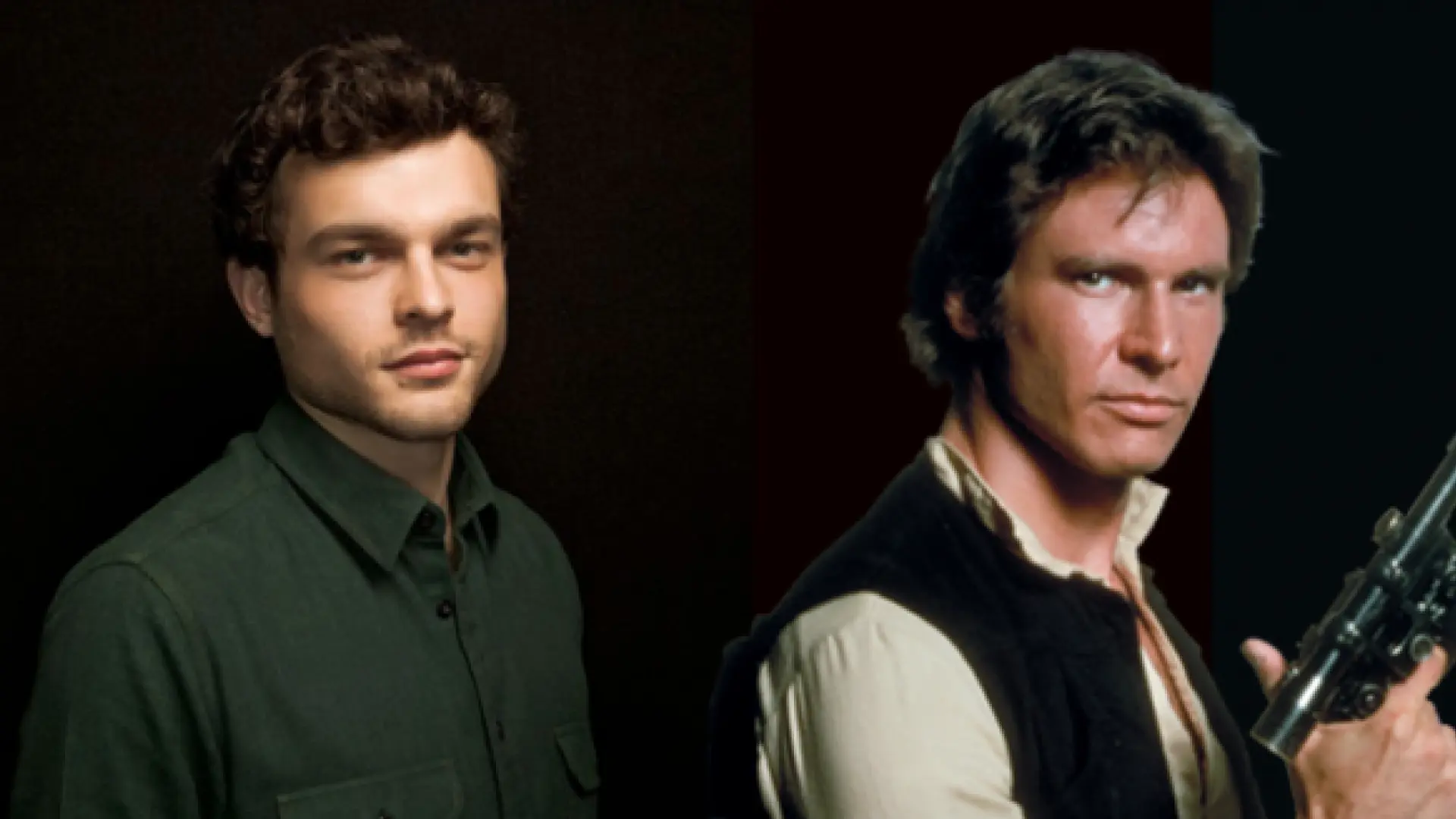
Alden Ehrenreich reimagined the iconic character of Han Solo by focusing on the character’s formative optimism and vulnerability rather than delivering a direct impersonation of Harrison Ford. In 2026, his performance is celebrated for humanizing the galaxy’s most famous smuggler, bridging the gap between a wide-eyed dreamer and the cynical hero of the original trilogy.
The Impossible Mantle: Stepping into Harrison Ford’s Boots
When Disney and Lucasfilm announced a standalone Han Solo prequel, the primary challenge was not the script or the special effects—it was the casting. Harrison Ford’s portrayal of Han Solo is one of the most indelible performances in cinematic history. Ford didn’t just play the character; he defined the "lovable rogue" archetype for generations. For any actor, stepping into that role was a high-risk endeavor that invited immediate comparison and inevitable scrutiny.
Alden Ehrenreich was selected after an exhaustive casting process that reportedly involved thousands of actors. The filmmakers weren't looking for a look-alike or a voice mimic. They were searching for someone who could capture the essence of Han Solo—the combination of swagger, insecurity, and underlying morality—while making the character their own. In the years since the 2018 release of Solo: A Star Wars Story, the consensus in 2026 has shifted to appreciate Ehrenreich’s restraint. He didn't give us a "Greatest Hits" version of Ford; he gave us a portrait of a young man who hadn't yet been hardened by the galaxy.
Character Deconstruction: The Psychology of a Young Scoundrel
Reimagining a classic character requires a deep dive into their psychological origins. The Han Solo we meet in A New Hope is a man who has seen too much. He is a skeptic who "doesn't believe in simple tricks and nonsense." To make that character arc meaningful, the younger version of Han needed to start from a place of genuine hope.
From Optimism to Cynicism
Ehrenreich’s Han is driven by a desire for freedom and a desperate need for belonging. Unlike the lone wolf of the later films, this Han is constantly looking for a crew, a mentor, or a partner. His relationship with Qi'ra (Emilia Clarke) provides the emotional stakes that explain his later reluctance to get involved in the Rebellion. By the end of the film, we see the first cracks in his armor. The betrayal he experiences throughout the narrative explains the defensive "shoot first" mentality that defines his later years.
The "Un-Ford" Mannerisms
Ehrenreich made specific choices to distance himself from a parody. While he incorporated certain classic Han gestures—the crooked smile, the way he holds a blaster, the slight slouch—he grounded them in a different energy. His Han is more impulsive and less refined. He makes mistakes, gets hit, and falls down. This vulnerability was a deliberate choice to show that Han Solo wasn't born a legend; he was a survivor who learned through trial and error.
The Creative Evolution: Navigating Production Shifts
The reimagining of Han Solo was also shaped by the turbulent production of the film itself. Originally helmed by Phil Lord and Christopher Miller, the project eventually transitioned to veteran director Ron Howard. This shift significantly impacted how Ehrenreich approached the character.
Under Lord and Miller, the tone was reportedly more improvisational and comedic. When Ron Howard took over, he brought a more classical, western-inspired sensibility to the film. This change required Ehrenreich to recalibrate his performance to fit a more structured narrative while maintaining the charismatic core of the character. The resulting performance is a hybrid of these two styles: it possesses a modern, playful energy while adhering to the timeless tropes of the "space western."
In 2026, film historians often point to this production transition as a key factor in why the character feels so grounded. Howard’s influence ensured that Han’s journey felt like a piece of the larger Star Wars tapestry, while Ehrenreich’s individual work ensured the character didn't feel like a museum piece.
Chemistry and Ensemble Dynamics
A character like Han Solo does not exist in a vacuum. A significant part of reimagining the classic role involved establishing new dynamics with existing characters and introducing new ones that would shape Han’s future.
- Chewbacca (Joonas Suotamo): The relationship between Han and Chewie is the heart of the franchise. Ehrenreich had to sell the "first meeting" and the development of a lifelong bond. Their chemistry was built on mutual necessity and eventually, deep-seated loyalty.
- Lando Calrissian (Donald Glover): Glover’s Lando provided a perfect foil for Ehrenreich. While Lando was all polish and poise, Han was grit and desperation. Their interactions at the Sabacc table are masterclasses in character contrast.
- Tobias Beckett (Woody Harrelson): As a mentor, Beckett represents the person Han might have become if he had fully embraced a life of crime without a moral compass. The lessons Han learns from Beckett—specifically, "trust no one"—are the final pieces of the puzzle that lead to the Han we meet in Mos Eisley.
Technical Artistry: Visualizing the Reimagining
The "reimagining" wasn't just in the acting; it was in the visual language of the character. The costume design and cinematography played a massive role in making Ehrenreich’s Han feel authentic yet fresh.
- Costume Design: Glyn Dillon and David Crossman designed Han’s wardrobe to reflect his status on the fringes of society. His jackets were shorter, his gear more mismatched, and his overall look more rugged. It suggested a character who was still "trying on" his identity.
- Cinematography: The use of naturalistic lighting and a de-saturated color palette (led by Bradford Young) gave the film a "dirty" look. This aesthetic supported Ehrenreich’s more grounded performance, moving away from the bright, operatic visuals of the main saga films.
Comparing Han Solo Portrayals
The following table outlines the key differences in characterization and narrative function between the classic 1977 portrayal and the 2018 reimagining.
| Feature | Han Solo (1977 - A New Hope) | Han Solo (2018 - Solo: A Star Wars Story) |
|---|---|---|
| Primary Motivation | Debt repayment and self-preservation | Freedom, adventure, and saving Qi'ra |
| Worldview | Hardened cynic, skeptical of the Force | Idealistic dreamer, looking for an "out" |
| Relationship Status | The lone wolf with one loyal companion | Searching for a crew and a place to belong |
| Combat Style | Precise, confident, and reactive | Scrappy, improvised, and often lucky |
| Connection to Chewbacca | Established, intuitive partnership | Developing trust and shared history |
| Iconic Gear | The pristine Millennium Falcon | The "clean" Falcon (prior to modifications) |
The 2026 Perspective: A Retrospective Re-evaluation
Looking back from 2026, Solo: A Star Wars Story and Alden Ehrenreich’s performance have aged remarkably well. In an era where digital de-aging and AI-generated performances (like the young Luke Skywalker in The Mandalorian) became commonplace, Ehrenreich’s physical performance stands as a testament to the value of human interpretation.
Audiences in 2026 have expressed a renewed interest in "recasting" as a more ethical and artistically satisfying way to handle legacy characters. Ehrenreich didn't just replace Harrison Ford; he expanded the lore of Han Solo. He provided context for Han’s pilot skills, his "Kessel Run" boast, and even his name. By providing these answers through a lived-in performance, he made the character more three-dimensional.
The "Make Solo 2 Happen" movement, which gained significant traction on social media between 2020 and 2025, finally culminated in Ehrenreich returning to the role in various spin-off media and guest appearances. This resurgence proves that his version of Han Solo successfully carved out its own space in the Star Wars mythos.
Navigating the Legacy: Practical Takeaways for Fans
For those revisiting the film or discovering it for the first time in 2026, understanding the context of the performance is key to appreciating the reimagining.
- Look for the "Pre-Cynical" Cues: Notice the moments where Han smiles genuinely or helps someone without a clear reward. These are the traits that define Ehrenreich’s version.
- Observe the Physicality: Pay attention to how Han handles the Millennium Falcon. He isn't as smooth as he will be later; he's still learning the quirks of the ship.
- The Sabacc Match: This scene is the perfect micro-study of the character’s reimagining. It’s about more than cards; it’s about Han’s transition from a gambler who hopes to a gambler who knows how to play the room.
FAQ
Was Alden Ehrenreich’s performance well-received initially?
Initial reactions were polarized. While many critics praised his charisma and ability to carry the film, some die-hard fans found it difficult to separate the character from Harrison Ford. However, over the years, the performance has been re-evaluated as a nuanced and successful reimagining that prioritized character depth over imitation.
Why didn't Solo: A Star Wars Story get an immediate sequel?
Despite positive reviews, the film underperformed at the box office compared to other Star Wars entries. Factors included a crowded release window (coming shortly after The Last Jedi and alongside Avengers: Infinity War) and production-related "bad press." However, the film’s high viewership on streaming platforms led to a cult following and the eventual return of several characters in other Disney+ series.
Is Alden Ehrenreich coming back as Han Solo?
As of 2026, Ehrenreich has reprised the role in voice-over work and has been involved in discussions for limited series projects. The actor has consistently expressed his love for the character and his willingness to explore Han’s "missing years" between Solo and A New Hope.
Did Harrison Ford like Alden Ehrenreich’s Han Solo?
Harrison Ford publicly supported Ehrenreich, even making a surprise appearance during a press interview to give him his "blessing." Ford reportedly told Ehrenreich, "You've made it your own," which remains the ultimate validation for the reimagining.
How does the 2018 film change the "Kessel Run" lore?
The reimagining provides a technical explanation for the "12 parsecs" claim, showing that Han took a dangerous shortcut through a gravity well. This turns what was once a potential script error or a Han Solo lie into a genuine feat of piloting, emphasizing the character's skill and bravery.
Practical Recommendation: The Prequel Lens
To fully appreciate Alden Ehrenreich’s reimagining of Han Solo, viewers should approach the film not as a replacement for the original trilogy, but as a "coming-of-age" story. Focus on the character's evolution from a runaway on Corellia to the man who wins the Falcon. By viewing it as a standalone character study within the larger Star Wars universe, the brilliance of the reimagining becomes clear: it isn't about how much he looks like Harrison Ford, but how much he feels like the man who will eventually become the legend.