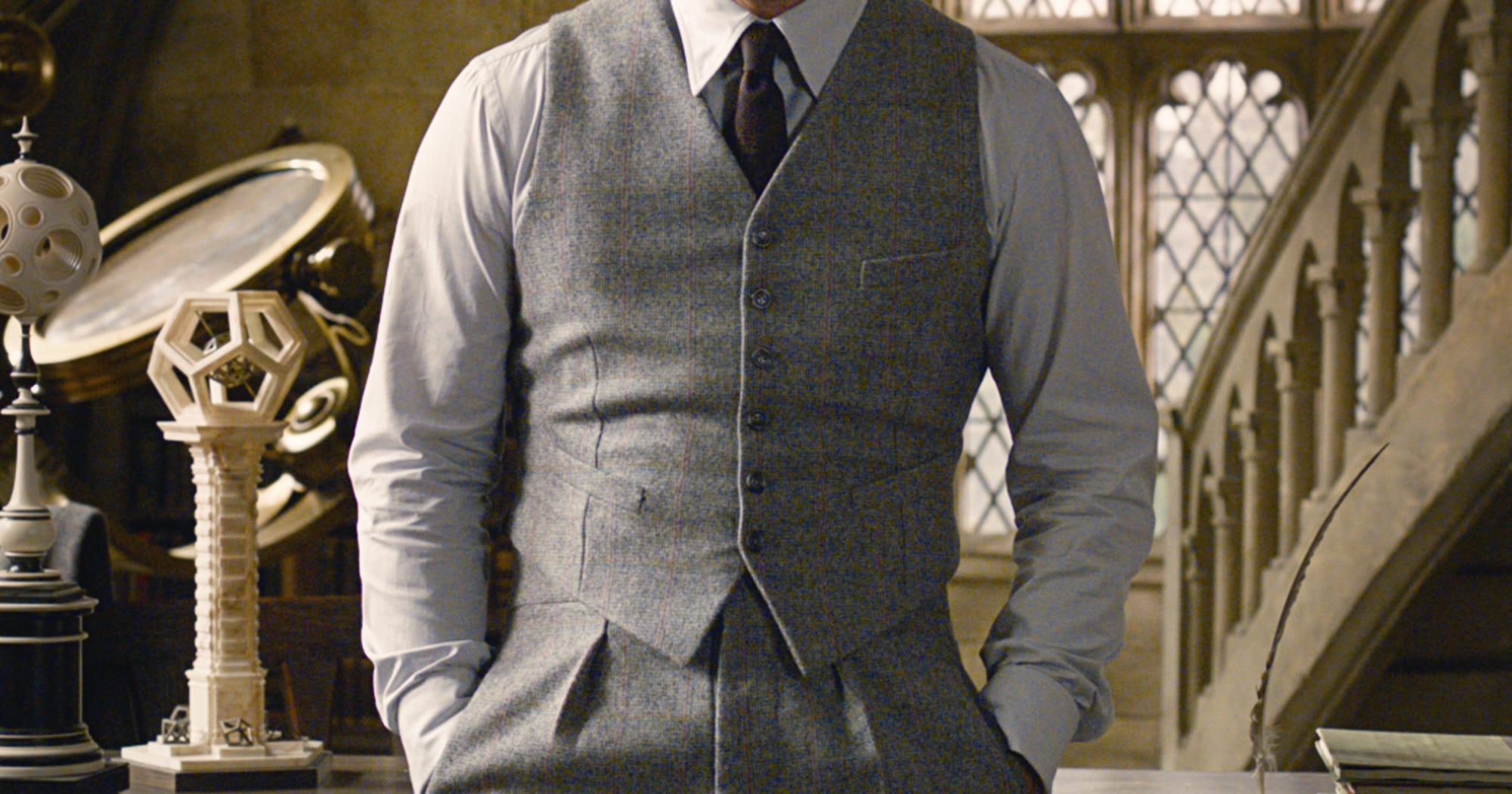
Albus Dumbledore is officially gay in J.K. Rowling’s canon. This fact was first established by the author during a 2007 press tour and was later explicitly confirmed in the 2022 film Fantastic Beasts: The Secrets of Dumbledore. His romantic feelings for Gellert Grindelwald serve as a primary catalyst for his character's historical background and personal tragedies.
The revelation of Albus Dumbledore’s sexual orientation remains one of the most discussed aspects of the Harry Potter franchise. For many readers and viewers, the transition of this information from "authorial intent" to "on-screen dialogue" represents a significant shift in how the Wizarding World handles its lore. As we look at the landscape in 2026, the inclusion of Dumbledore’s identity is no longer a matter of speculation but a foundational pillar of his character’s motivation and the broader history of the wizarding wars.
The Origin of the Revelation: The 2007 Carnegie Hall Announcement
The journey of Albus Dumbledore’s identity in the public consciousness began on October 19, 2007. During the "Open Book Tour" at Carnegie Hall in New York City, a young fan asked J.K. Rowling if Dumbledore had ever found "true love." Rowling’s response—"I always thought of Dumbledore as gay"—immediately became global news.
Rowling explained that Dumbledore had fallen in love with Gellert Grindelwald during their youth in Godric’s Hollow. This infatuation, she argued, was his "great tragedy" because it blinded him to Grindelwald’s burgeoning dark nature. At the time, this was a landmark moment in literature; arguably the most famous mentor figure in modern fiction was being identified as a queer man. However, because this information was shared after the final book, Harry Potter and the Deathly Hallows, had already been published, it sparked a decade-long debate regarding what constitutes "canon."
In literary theory, this is often referred to as "Word of God"—information provided by the creator that is not explicitly detailed within the primary text. For years, critics argued that if it wasn't on the page, it wasn't canon. This tension defined the fandom's relationship with the character for nearly fifteen years.
Textual Evidence in the Harry Potter Series
While the word "gay" never appears in the original seven Harry Potter books, many scholars and fans point to The Deathly Hallows as containing significant subtextual evidence. The chapters detailing Dumbledore’s teenage years with Grindelwald describe a relationship of intense, feverish intimacy.
The text notes that the two spent every waking hour together, sending owls back and forth even when separated by a few yards. Dumbledore is described as being "inflamed" by Grindelwald’s ideas. From a psychological perspective, Rowling’s 2007 revelation provided a "key" that unlocked these passages. Without the context of romantic attraction, Dumbledore’s decision to ignore Grindelwald’s anti-Muggle rhetoric and his subsequent abandonment of his younger sister, Ariana, seems like a massive character flaw rooted in mere intellectual arrogance. With the context of a first, consuming love, his actions become a more relatable—albeit tragic—human error.
The lack of explicit confirmation in the original books was often attributed to the era in which they were written (1997–2007) and the perspective of the narrator. The books are told primarily through Harry’s eyes. As a teenager, Harry rarely considered the romantic lives of his teachers, seeing Dumbledore only as a distant, near-omniscient figure.
The Transition to Screen: Fantastic Beasts and Explicit Confirmation
The debate over Dumbledore’s sexuality shifted from subtext to text with the release of the Fantastic Beasts prequel series. Initially, there was significant backlash when the director of the second film, The Crimes of Grindelwald (2018), stated that Dumbledore’s sexuality would not be "explicitly" addressed. Fans accused the production of "queerbaiting"—hinting at a queer relationship to attract an audience without actually portraying it.
However, the third film, The Secrets of Dumbledore (2022), finally crossed the threshold into explicit canon. In an early scene in a tea shop, Albus Dumbledore (played by Jude Law) tells Gellert Grindelwald (Mads Mikkelsen), "Because I was in love with you." Later in the film, he repeats this sentiment to his allies, explaining his past complicity in Grindelwald's rise.
By the standards of 2026, this dialogue is recognized as the definitive moment the character’s sexuality became an inseparable part of the cinematic and literary canon. It moved the information from the realm of "post-publication commentary" into "documented media."
The Psychological Profile of Albus Dumbledore
Understanding Dumbledore as a gay man is crucial for a technical analysis of his psychological profile. His character is built on the themes of secrets and lies. His sexuality, in the context of the late 19th century (when he was a young man), would have been a deeply private matter.
Dumbledore’s specific experience of love is intrinsically linked to his fear of power. He learned early in life that his feelings could make him vulnerable to manipulation and could cloud his judgment. This led to the stoic, emotionally distant version of Dumbledore that Harry Potter encounters. His "gayness" is not just a secondary trait; it is the source of the "Blood Pact" he made with Grindelwald—a magical manifestation of their commitment that prevented them from fighting one another for decades.
The Blood Pact as a Metaphor
In the Fantastic Beasts lore, the Blood Pact is a physical vial containing the combined blood of both Albus and Gellert. Mechanically, it serves as a plot device to explain why Dumbledore didn't simply stop Grindelwald earlier. Symbolically, it represents the binding nature of their youthful romance. In 2026's retrospective analysis of the films, the destruction of the Blood Pact is viewed as the final "coming out" of Dumbledore—the moment he finally releases his attachment to the past and his former lover to do what is right.
Timeline of Dumbledore’s Canonical Development
To understand how the "canon" evolved, it is helpful to look at the timeline of revelations and media releases.
| Year | Event | Canonical Status |
|---|---|---|
| 1997 | Philosopher's Stone published | No mention of sexuality. |
| 2007 | Deathly Hallows published | Strong subtext regarding Grindelwald. |
| 2007 | Carnegie Hall Q&A | J.K. Rowling states Dumbledore is gay. |
| 2018 | The Crimes of Grindelwald | Subtextual hints (The Mirror of Erised). |
| 2022 | The Secrets of Dumbledore | Explicit verbal confirmation: "I was in love with you." |
| 2024-2026 | New TV Series Development | Integration of identity from the outset. |
The "Retcon" Controversy and Representation
The term "retcon" (short for retroactive continuity) is frequently used in discussions about Dumbledore. Critics argue that Rowling added this detail to gain "diversity points" without doing the work of including it in the original text. This critique highlights a broader tension in media: the difference between an author’s intent and the audience’s experience.
From a technical SEO and editorial perspective, the "Dumbledore is gay" narrative is a case study in how intellectual property (IP) evolves. In 2026, the discussion has largely moved past the "is he or isn't he" stage and into an analysis of how his identity will be handled in the upcoming Max (formerly HBO Max) television adaptation. With the series aiming for a more faithful and expanded retelling of the books, there is significant expectation that Dumbledore’s history with Grindelwald will be integrated more naturally into the narrative rather than being a "reveal" at the end of the series.
Technical Nuances: The Definition of Canon in 2026
In the modern era of franchise management, "canon" is rarely a single, static source. It is composed of several layers:
- Primary Canon: The original seven novels.
- Secondary Canon: Scripts written by Rowling (Fantastic Beasts), and official stage plays (The Cursed Child).
- Tertiary Canon: Verified interviews, Pottermore/Wizarding World articles, and social media clarifications from the author.
Dumbledore’s sexuality has transitioned through all three layers. While it began as Tertiary Canon (the 2007 interview), it is now firmly Primary/Secondary Canon due to the Fantastic Beasts scripts. This makes it an immutable fact of the character, as valid as his prowess at Transfiguration or his ownership of the Elder Wand.
Common Misconceptions and Clarifications
Despite the clarity provided in recent years, several misconceptions persist in the fandom.
Did Dumbledore have other partners? According to Rowling’s established lore, no other romantic interests have been identified. Dumbledore is often portrayed as a celibate figure following the tragedy of his youth. His love for Grindelwald was singular and, in many ways, stunted his emotional growth in terms of seeking new relationships.
Is his sexuality relevant to the Harry Potter books? While not necessary for the basic plot of "defeating Voldemort," it is highly relevant to the character study of Albus Dumbledore. It explains his delay in confronting Grindelwald in 1945, which was previously a "plot hole" for some readers. It also adds a layer of irony to his advice to Harry that "love is the most powerful magic," given that his own experience with love led to his greatest failures.
What was the reaction of the voice actors and performers? Jude Law, who portrays the younger Dumbledore, has been vocal about the importance of playing the character with this truth in mind. In interviews leading up to 2022 and beyond, Law emphasized that Dumbledore’s sexuality is a key part of what makes him human and relatable, rather than just an abstract "great wizard."
Frequently Asked Questions
Is Albus Dumbledore gay in the Harry Potter books?
Not explicitly. The word "gay" is never used, and he has no romantic subplots in the present-day timeline of the books. However, his backstory with Gellert Grindelwald in The Deathly Hallows is written with heavy romantic subtext that J.K. Rowling later confirmed was intended to signify a gay relationship.
When did J.K. Rowling confirm Dumbledore's sexuality?
Rowling first confirmed it on October 19, 2007, at Carnegie Hall in New York. She was answering a fan's question about Dumbledore's love life during a tour promoting the final book.
In which movie does Dumbledore say he is gay?
He does not use the specific label "gay," but he explicitly states his romantic love for a man in Fantastic Beasts: The Secrets of Dumbledore (2022). He tells Grindelwald, "I was in love with you," and later explains to others that their youthful bond was fueled by his romantic feelings.
Why wasn't Dumbledore's sexuality mentioned in the original movies?
The original Harry Potter films (2001–2011) were produced while the books were still being written or shortly after their completion. At that time, the focus was on Harry’s journey, and the producers likely felt that Dumbledore’s private life was not central to the main plot of the war against Voldemort.
Does Dumbledore's sexuality change the story?
It does not change the events of the Harry Potter series, but it changes the interpretation of those events. It provides a deeper motive for Dumbledore's past actions, specifically his "blindness" toward Grindelwald's rise to power and his subsequent hesitation to fight him.
Summary of the Canonical Status
As of 2026, the status of Albus Dumbledore as a gay man is a settled fact within the Harry Potter universe. It has moved from a post-publication comment to a central element of the prequel films and is expected to be a key component of the character's portrayal in future adaptations.
For those engaging with the series for the first time, understanding this aspect of Dumbledore provides a more complex and tragic view of the Hogwarts Headmaster. He is no longer just a "wise old man" archetype; he is a survivor of a complicated, destructive love that shaped the course of wizarding history. Whether viewed through the lens of the 2007 interviews or the 2022 dialogue, the canon is clear: Albus Dumbledore's heart belonged to Gellert Grindelwald, and that love is the key to understanding his life's work.