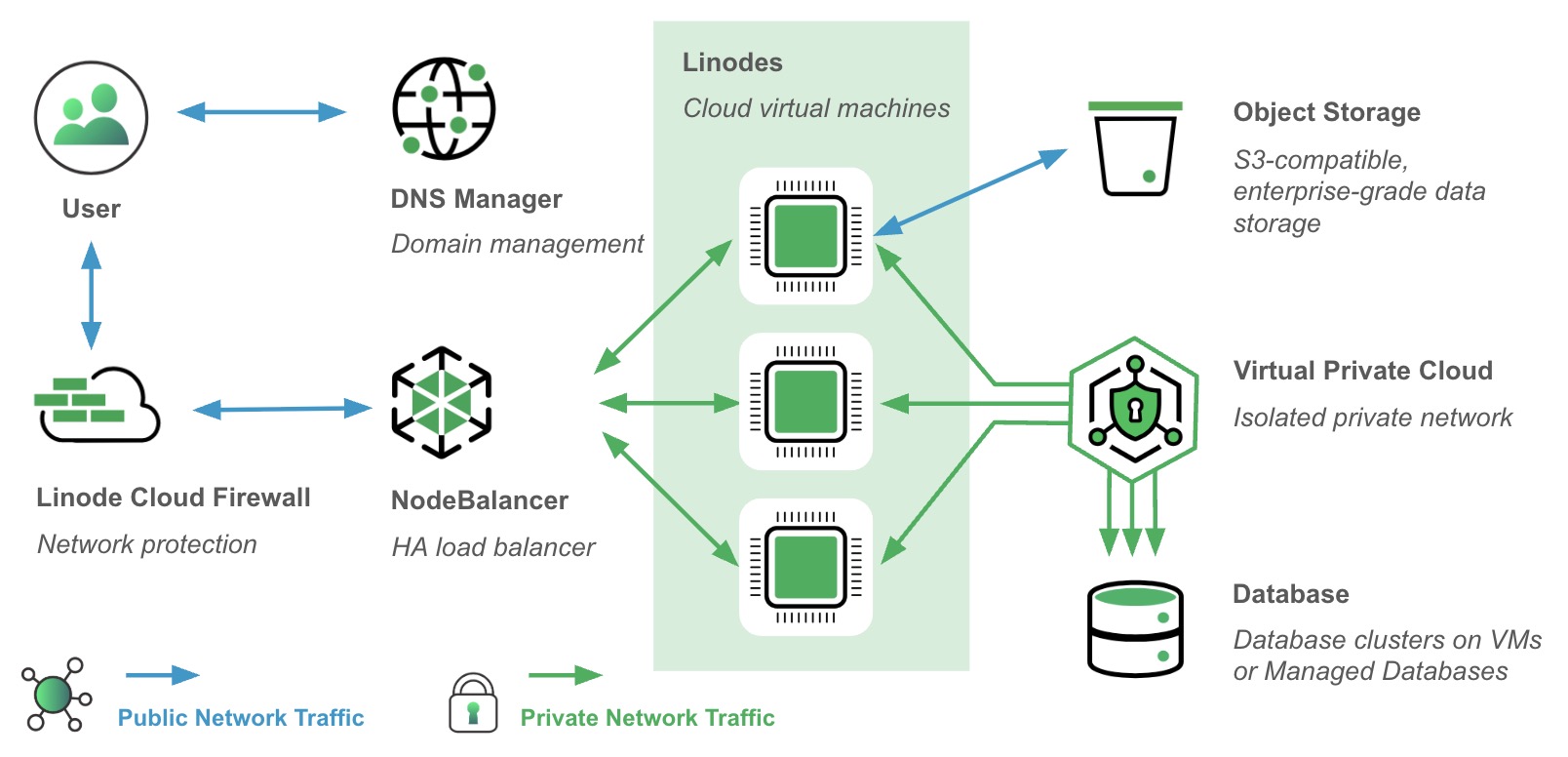
An Akamai cloud security brochure overview summarizes a multi-layered defense strategy that leverages the world’s largest edge distribution network to protect applications, APIs, and infrastructure. By shifting security functions to the edge, Akamai mitigates threats like DDoS, SQL injection, and credential stuffing before they reach the data center.
In 2026, the landscape of cyber threats has evolved into a highly automated, AI-driven environment. For enterprises, the traditional perimeter has effectively vanished, replaced by a distributed architecture where users, devices, and applications reside everywhere. Akamai has positioned its cloud security portfolio as a "security-first" edge platform, integrating the capabilities of a Content Delivery Network (CDN) with advanced threat intelligence and zero-trust principles. This overview examines the core components found in modern Akamai security documentation, detailing how these services function, the problems they solve, and how they integrate into a cohesive defense posture.
The Architectural Foundation: Security at the Edge
To understand the Akamai cloud security brochure, one must first grasp the concept of the "Edge." Unlike traditional cloud security that relies on centralized scrubbing centers or localized appliances, Akamai operates a massively distributed network of hundreds of thousands of servers. By placing security logic within one network hop of 95% of the world’s internet users, Akamai can identify and neutralize threats at the point of origin.
This distributed architecture provides two primary advantages: latency reduction and massive scale. When a Distributed Denial of Service (DDoS) attack occurs, the volume of traffic can easily overwhelm a private data center. Akamai’s edge capacity acts as a "shock absorber," distributing the malicious load across its entire global network. This ensures that even the largest recorded volumetric attacks—which in 2026 regularly exceed several terabits per second—do not impact the availability of the target application.
App & API Protector: The Flagship Defense
At the heart of the Akamai security suite is the App & API Protector. This solution represents the convergence of Web Application Firewall (WAF), API Security, Bot Mitigation, and DDoS protection into a single, integrated toolset. It is designed to be "set and forget" for most organizations, though it offers deep customization for security engineers.
Adaptive Security Engine
The brochure emphasizes the Adaptive Security Engine (ASE), which replaced older, signature-based WAF rules. The ASE uses machine learning to analyze every request in real-time. Instead of looking for a specific string that matches a known exploit, it looks at the intent and behavior of the traffic. This significantly reduces false positives, which have historically been the "Achilles' heel" of WAF implementations. In the 2026 environment, where applications change daily through CI/CD pipelines, the ASE automatically tunes its protections to match the evolving application profile without requiring manual rule updates from the SOC team.
API Discovery and Security
With the explosion of microservices, APIs have become the primary attack vector for modern enterprises. Many organizations suffer from "Shadow APIs"—endpoints created by developers that are not documented or monitored by the security team. Akamai’s integrated API security (bolstered by the Neosec acquisition) automatically discovers all API endpoints across the network. It analyzes traffic patterns to identify anomalies, such as an unusual sequence of calls that might indicate an attempt to scrape data or exploit a BOLA (Broken Object Level Authorization) vulnerability.
Bot Manager: Distinguishing Human from Machine
Bot traffic accounts for nearly half of all internet traffic in 2026. While some bots are beneficial (such as search engine crawlers), many are malicious, performing credential stuffing, inventory hoarding, and price scraping. The Akamai Bot Manager is a recurring highlight in any product overview because of its sophisticated detection capabilities.
The service uses a combination of client-side signals and server-side behavioral analysis. It examines how a user moves their mouse, types on a keyboard, and interacts with the browser to determine if the "user" is a human or an automated script. By applying "Bot Scores," administrators can choose different actions based on the certainty of the detection. For example:
- High-certainty bots can be blocked or redirected to a honeypot.
- Suspicious traffic can be challenged with a silent cryptographic proof-of-work (avoiding user-disturbing CAPTCHAs).
- Partner bots can be throttled to ensure they don't consume excessive resources.
Zero Trust and Workforce Security
As the workforce has become more mobile, Akamai has expanded its brochure to include internal security measures. This is centered on the principle of Zero Trust, which assumes that no user or device should be trusted by default, even if they are inside the network perimeter.
Guardicore Segmentation
Following the acquisition of Guardicore, Akamai became a leader in microsegmentation. This technology allows organizations to create granular security policies around individual workloads, virtual machines, or containers. In the event of a breach, microsegmentation prevents "lateral movement." If a single server is compromised, the attacker cannot hop to the database or the finance system because the internal network is segmented by software-defined policies rather than rigid hardware firewalls.
Enterprise Application Access (EAA)
EAA is Akamai’s Zero Trust Network Access (ZTNA) solution. It replaces traditional VPNs, which are often cumbersome and provide over-privileged access to the network. EAA allows users to access specific applications (like Jira, SAP, or internal wikis) through a browser-based portal. The user is never truly "on the network"; they are only connected to the specific application they are authorized to use, significantly reducing the attack surface.
Infrastructure Protection: Prolexic and Edge DNS
While App & API Protector focuses on Layer 7 (the application layer), Akamai also provides robust protection for the underlying infrastructure at Layers 3 and 4.
Prolexic
Prolexic is Akamai’s dedicated DDoS scrubbing service. It is designed to protect all IP-based applications, including those not delivered over HTTP/S (such as VOIP, SMTP, or proprietary gaming protocols). When an attack is detected, traffic is routed through one of Akamai's global scrubbing centers. Clean traffic is then returned to the customer’s origin via a GRE tunnel or Private Network Interconnect (PNI). This ensures that the core infrastructure remains operational even under the most intense network-level assaults.
Edge DNS
DNS is often the "forgotten" component of cloud security, yet it is a single point of failure. If an attacker takes down an organization's DNS, their entire digital presence disappears. Akamai Edge DNS is a recursive DNS service built on the Akamai Intelligent Edge Platform. It is architected specifically to withstand massive DDoS attacks, ensuring that domain resolution remains fast and available even when the primary name servers are targeted.
Comparison of Key Akamai Security Components
| Service Name | Primary Layer | Core Function | Target Threat |
|---|---|---|---|
| App & API Protector | Layer 7 | Web/API WAF & DDoS | OWASP Top 10, API Exploits |
| Bot Manager | Layer 7 | Behavioral Analytics | Credential Stuffing, Scraping |
| Prolexic | Layers 3 & 4 | Infrastructure Scrubbing | Volumetric DDoS, SYN Floods |
| Guardicore | Internal | Microsegmentation | Lateral Movement, Ransomware |
| Edge DNS | DNS | Authoritative DNS | DNS Hijacking, DNS DDoS |
| Enterprise App Access | Layer 7 | Zero Trust Access (ZTNA) | Unauthorized Internal Access |
Operationalizing Akamai Security
A common theme in Akamai’s technical documentation is the "ease of operations." In 2026, the shortage of cybersecurity talent means that tools must be manageable without a massive headcount. Akamai addresses this through:
- Managed Security Service (MSS): For organizations that prefer to outsource their security operations, Akamai provides a team of experts who monitor the network 24/7, respond to incidents, and fine-tune policies.
- Terraform Integration: All Akamai security configurations can be managed as code (Infrastructure as Code). This allows DevOps teams to integrate security checks directly into their deployment pipelines.
- Unified Visibility: The Akamai Control Center provides a "single pane of glass" where administrators can view real-time traffic statistics, attack logs, and security posture across the entire global footprint.
Cost and ROI Considerations
While Akamai is often positioned as a premium service, the brochure overview typically highlights the long-term Return on Investment (ROI). The cost of a single major data breach or a prolonged outage in 2026 can reach tens of millions of dollars. By consolidating WAF, Bot Management, and DDoS protection into a single platform, organizations can often reduce the licensing costs of multiple point solutions and lower the operational overhead of managing disparate security vendors.
Pricing is typically tiered based on:
- Traffic Volume: Measured in clean bits per second or requests per month.
- Number of Domains/APIs: The scale of the digital footprint being protected.
- Feature Modules: Add-ons such as Client-Side Protection (protecting against Magecart-style attacks) or advanced Managed Services.
Common Implementation Pitfalls to Avoid
Even with a robust platform like Akamai, implementation errors can lead to security gaps. Organizations should be aware of the following:
- Incomplete Discovery: Failing to identify all API endpoints can leave "backdoors" open for attackers. Utilizing Akamai's discovery tools is a prerequisite for a full defense.
- Over-Reliance on Default Rules: While the Adaptive Security Engine is powerful, unique application behaviors may still require manual exceptions or custom rules to prevent legitimate users from being blocked.
- Ignoring the "Origin": Attackers will often try to bypass Akamai and attack the "Origin IP" directly. It is essential to configure the origin firewall to only accept traffic from Akamai's IP ranges.
Frequently Asked Questions
Does Akamai cloud security work with other cloud providers like AWS or Azure?
Yes, Akamai is cloud-agnostic. In fact, many enterprises use Akamai as a consistent security layer across a multi-cloud environment. This allows them to apply the same security policies to applications running in AWS, Azure, Google Cloud, and on-premises data centers simultaneously, avoiding the "policy fragmentation" that occurs when using cloud-native tools from different providers.
How does Akamai handle encrypted (HTTPS) traffic?
Akamai can terminate SSL/TLS connections at the edge. This allows the platform to inspect the decrypted payload for threats before re-encrypting it for delivery to the origin. Akamai manages the SSL certificates and ensures that the latest encryption standards and ciphers are utilized, relieving the customer of the burden of certificate management.
Can Akamai protect against zero-day vulnerabilities?
While no solution can guarantee 100% protection, Akamai’s Adaptive Security Engine is designed to identify suspicious behaviors rather than just specific signatures. This means that a zero-day exploit—which might use a new delivery method but still attempts a familiar action like a SQL injection or command execution—is likely to be caught by the behavioral analysis engines.
How long does it take to deploy Akamai security?
A basic deployment for Web Application and DDoS protection can be completed in a few days by changing DNS records and configuring the Akamai Control Center. However, a full enterprise rollout involving Zero Trust, microsegmentation, and deep API integration typically takes several weeks to ensure all policies are tuned correctly for the specific business environment.
What is the impact of Akamai security on website performance?
Because Akamai is also a Content Delivery Network, the security features are integrated into a system designed for speed. In most cases, moving security to the Akamai edge actually improves performance because it offloads the processing power from the origin servers and brings the content closer to the end-user, while simultaneously filtering out the "noise" of malicious bot traffic.
Strategic Recommendation
For organizations evaluating the Akamai cloud security brochure, the first step should be a comprehensive traffic and API audit. Understanding what you are protecting is the prerequisite for choosing the right modules. Smaller organizations should focus on the App & API Protector as a baseline, while larger enterprises with complex internal networks should prioritize Guardicore Segmentation to defend against the rising threat of lateral-movement ransomware.
Akamai's transition into a "Connected Cloud" in 2026 means that security is no longer an "add-on" but an intrinsic part of the infrastructure. Engaging with an Akamai solutions architect for a proof-of-concept (PoC) is the most effective way to see how the edge architecture handles your specific traffic patterns and threat profile.