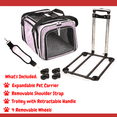
An airplane dog carrier is a specialized, airline-approved enclosure designed to safely transport pets in the cabin or cargo hold. To be compliant in 2026, a carrier must meet specific dimensional requirements set by individual airlines and safety standards dictated by the International Air Transport Association (IATA), ensuring adequate ventilation, security, and space for the animal.
Understanding the Necessity of a Specialized Airplane Dog Carrier
Traveling with a canine companion involves far more than simply placing them in a bag. An airplane dog carrier serves as your pet’s primary safety device and living space during the duration of a flight. Whether you are flying domestic or international, airlines have stringent regulations regarding the materials, size, and security features of these carriers. These rules are not arbitrary; they are designed to ensure that the pet remains contained during turbulence, has enough oxygen in pressurized environments, and does not interfere with the safety of other passengers.
In 2026, the distinction between a standard "travel bag" and a certified "airplane dog carrier" is sharper than ever. Budget airlines and major carriers alike have digitized their check-in processes, often requiring pet owners to upload photos or specifications of their carriers for pre-approval. Failure to meet these specific criteria—even by an inch—can result in a denied boarding at the gate, leading to significant travel disruptions and added costs.
Technical Specifications: Cabin vs. Cargo Carriers
The first decision any pet owner must make is whether the dog will travel in the cabin (under the seat in front of you) or in the cargo hold (as checked baggage). The requirements for the airplane dog carrier differ drastically between these two scenarios.
In-Cabin Carriers (Soft-Sided)
For small dogs, typically under 15 to 20 pounds (including the weight of the carrier), in-cabin travel is the preferred method. These carriers are almost always soft-sided, allowing for a degree of "squish" to fit under various seat configurations.
Key technical requirements for cabin carriers in 2026 include:
- Waterproof Bottoms: Most airlines require a leak-proof bottom with absorbent padding to manage any accidents during flight.
- Ventilation: At least two, and often three, sides of the carrier must feature high-density mesh for airflow.
- Security Zippers: Many modern carriers now include self-locking zippers to prevent "escape artist" dogs from poking their heads out during the flight.
- Dimensions: While they vary by airline, a standard maximum size is often around 18 x 11 x 11 inches (45 x 28 x 28 cm).
Cargo Carriers (Hard-Sided)
For larger breeds that cannot fit under a seat, a hard-sided, IATA-compliant crate is mandatory. These are engineered to withstand the rigors of the cargo loading process and the atmospheric changes in the hold.
Technical requirements for cargo crates include:
- Material: Must be made of high-impact plastic, metal, or wood (though plastic is the industry standard).
- Fasteners: The top and bottom halves must be secured with metal bolts and nuts. Plastic "snap" latches are generally prohibited for long-haul flights.
- Door Integrity: The door must be made of heavy-gauge metal and feature a secure, spring-loaded locking mechanism.
- Ventilation Holes: These must be present on all four sides of the crate to ensure constant air circulation even if the crate is positioned against other luggage.
Measuring Your Dog for the Perfect Fit
The most common reason for being turned away at the airport is a carrier that is too small for the dog. Even if the carrier fits the airline's dimensions, the dog must also fit the carrier according to specific welfare standards.
- The "Turn Around" Rule: The dog must be able to stand up, turn around completely, and lie down in a natural position within the carrier. If their head touches the top while standing, the carrier is too small.
- Length Measurement: Measure your dog from the tip of the nose to the base of the tail. Add 2 to 4 inches to this measurement to determine the minimum length of the carrier.
- Height Measurement: Measure from the floor to the top of the dog’s head (or the tips of the ears for prick-eared breeds). This determines the minimum interior height needed.
In 2026, many airline agents use visual "fit checks" during check-in. If a pet appears cramped or cannot easily reposition itself, the airline reserves the right to refuse transport for the animal's safety.
Comparison of Airplane Dog Carrier Types
Choosing the right model depends on your dog's size, temperament, and your specific flight path. The following table compares the most common configurations available in 2026.
| Carrier Type | Best For | Typical Weight Limit | Pros | Cons |
|---|---|---|---|---|
| Soft-Sided Standard | Small dogs in-cabin | 15 lbs / 7 kg | Lightweight, fits under seats easily. | Not suitable for chewers; less protection. |
| Expandable Soft-Sided | Long layovers / In-cabin | 18 lbs / 8 kg | Sides unzip to create "porch" space. | Can be bulky; extra zippers are failure points. |
| Hard-Sided Plastic | Cargo or high-anxiety dogs | 100+ lbs / 45 kg | Maximum protection; easy to clean. | Cannot be compressed; heavy to carry. |
| Rolling Carriers | Senior owners / Long terminals | 20 lbs / 9 kg | Eases physical strain on the owner. | Wheels take up interior height; some airlines ban them. |
| Backpack Carriers | Small, active dogs | 12 lbs / 5 kg | Hands-free transport. | Often too tall for under-seat storage. |
Material Quality and 2026 Safety Innovations
The evolution of the airplane dog carrier has seen significant material improvements in recent years. In 2026, high-end manufacturers are moving away from cheap polyesters toward ballistic nylon and reinforced "claw-proof" micro-mesh.
Claw-Proof Mesh
Traditional mesh screens were easily torn by anxious dogs attempting to dig their way out. Modern airplane dog carriers utilize vinyl-coated polyester or stainless steel integrated mesh. These materials maintain high visibility and airflow while resisting the sharpest claws, ensuring the pet remains contained throughout the journey.
Integrated Tracking and Health Monitoring
A significant trend in 2026 is the integration of smart technology. High-end cargo crates now often feature built-in slots for GPS trackers (like AirTags or proprietary airline trackers) and even ambient temperature sensors. These sensors can alert an owner via a smartphone app if the temperature in the holding area or cabin exceeds safe limits, providing peace of mind during the "loading gap"—the time when the pet is on the tarmac before being loaded into the climate-controlled hold.
Eco-Friendly Materials
Sustainability has influenced carrier manufacturing. Many of the top-rated carriers in 2026 are constructed from recycled ocean plastics or PFC-free fabrics. These materials are tested to be non-toxic, which is crucial because dogs often lick or chew on their carriers when stressed.
Preparation: Acclimating Your Dog to the Carrier
Purchasing a high-quality airplane dog carrier is only half the battle; the other half is psychological. A carrier should be a "safe haven," not a "prison."
- Introduction: Introduce the carrier at least four weeks before your flight. Leave it open in your living room with a familiar blanket and treats inside.
- Meals in the Carrier: Start feeding your dog their meals inside the carrier. This creates a positive association with the space.
- Short Trips: Once the dog is comfortable sitting inside, close the door and carry them around the house, then take them on short car rides.
- Scent Familiarity: Do not wash the carrier's internal padding right before the flight. Your dog will be comforted by their own scent and the scent of their home during the high-stress environment of an airport.
Airline-Specific Nuances and "Gotchas"
Even within the standard framework of 2026 aviation, individual airlines have specific quirks regarding the airplane dog carrier.
- Delta and United: These carriers often have strict "total weight" limits, where the dog and the carrier combined cannot exceed 20 pounds for cabin travel.
- Lufthansa and KLM: International carriers frequently require "all-around" ventilation for cargo crates, meaning even the back wall of the plastic shell must have holes drilled into it.
- Budget Carriers (Frontier/Spirit): These airlines often have smaller under-seat clearances. A carrier that fits on a Boeing 737 might not fit on an Airbus A320 used by a low-cost carrier. Always check the specific aircraft type in your booking details.
Frequently Asked Questions
Can I use a backpack as an airplane dog carrier?
While some dog backpacks are marketed as "airline approved," they are often too tall to fit under the seat when placed upright. If the backpack can be laid on its side and meets the 18 x 11 x 11-inch requirement without collapsing on the dog, it may be accepted. However, standard horizontal carriers are generally a safer bet for cabin approval.
Do I need a specialized carrier for a service dog?
Service animals are usually exempt from the requirement to stay in a carrier and can sit on the floor at the handler's feet. However, many handlers still use a "settle mat" or a lightweight, collapsible carrier for smaller service dogs to provide them with a defined space and protection from foot traffic in the cabin.
What happens if my dog’s carrier is slightly over the size limit?
If you have a soft-sided carrier, you may be able to compress it slightly to fit. However, if the carrier is hard-sided or significantly too large, the airline gate agent can deny boarding. In 2026, many airports use laser-sizing bins for carry-on luggage, and pet carriers are increasingly being subjected to the same automated scrutiny.
Does the airplane dog carrier need to be IATA certified?
For cabin travel, there is no official "IATA Certification" for specific brands, though many claim "IATA Compliance." For cargo travel, the crate must strictly adhere to IATA Container Requirement 1 (CR1) standards. This includes specific locking mechanisms, ventilation percentages, and the presence of "Live Animal" labels.
Should I put water in the carrier?
For cabin travel, you should not leave a water bowl inside as it will likely spill. Instead, offer water during layovers. For cargo travel, IATA requires two fixed bowls (one for food, one for water) attached to the inside of the door, which can be filled from the outside without opening the crate.
Final Recommendation for 2026 Travelers
When selecting an airplane dog carrier, prioritize structural integrity and ventilation over aesthetics. For cabin travel, look for a soft-sided model with a spring-wire frame that allows the bag to conform to under-seat spaces without collapsing on your pet. For cargo, do not settle for "store-brand" plastic crates; invest in a heavy-duty professional transport crate with metal hardware.
Always verify your carrier's dimensions against your specific flight's aircraft 48 hours before departure, as equipment changes can alter under-seat clearance. Taking the time to properly size the carrier and acclimate your pet will ensure a safer, more comfortable journey for both you and your canine companion.