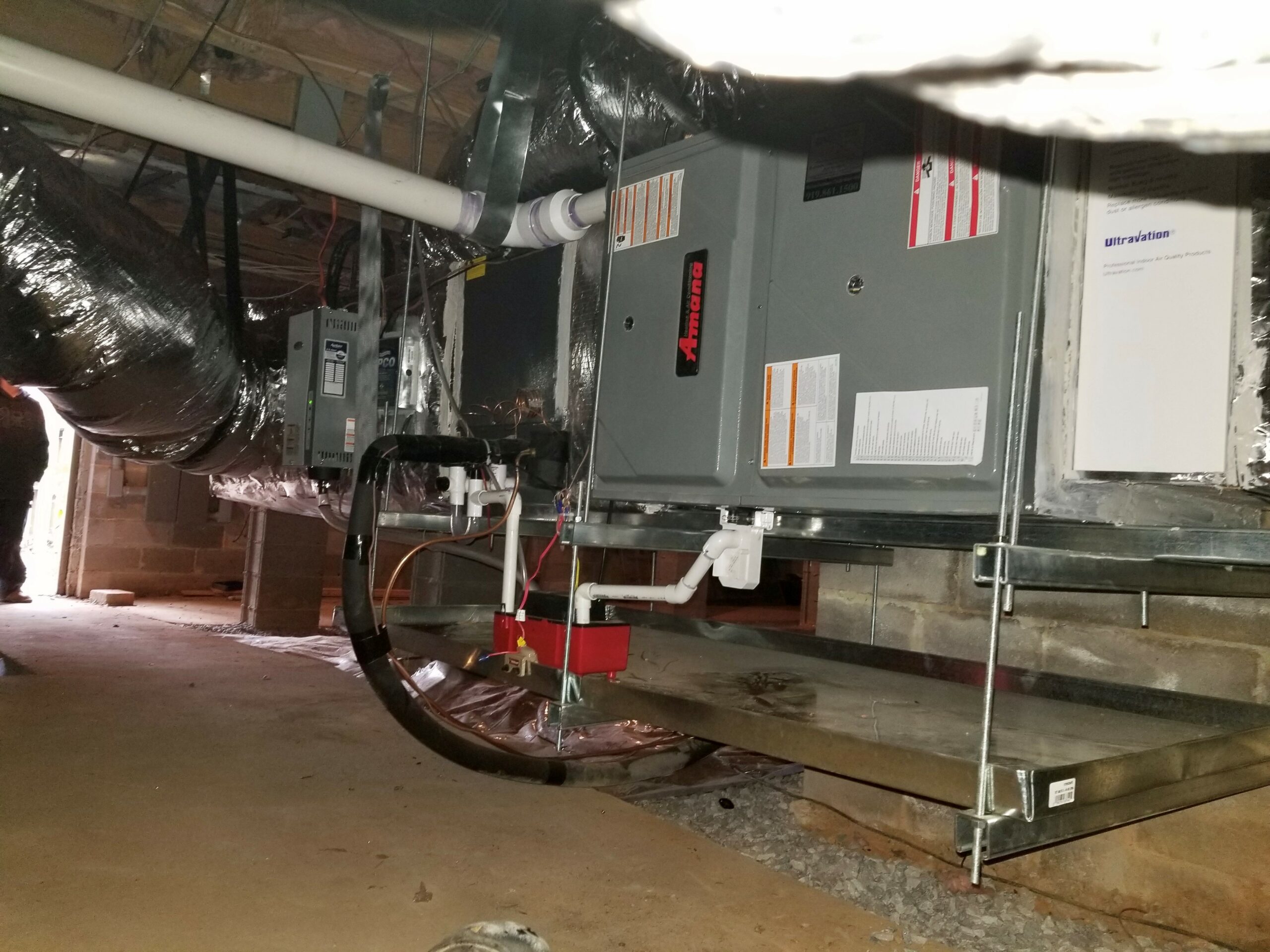
In Raleigh, North Carolina, maintaining a functional air conditioning system is a necessity due to the region's high humidity and peak summer temperatures that frequently exceed 90°F. For 2026, homeowners must navigate updated SEER2 efficiency standards and the industry-wide transition to A2L refrigerants. Selecting the right system involves calculating specific cooling loads for the Piedmont climate, securing City of Raleigh or Wake County permits, and leveraging available local utility rebates to offset rising equipment costs.
Understanding Raleigh’s Climate Impact on HVAC Performance
The Raleigh-Durham area is situated in a humid subtropical climate zone. This geography presents unique challenges for air conditioning systems that differ from those in arid or northern climates. In Raleigh, the primary task of an AC unit is not just lowering the dry-bulb temperature, but also managing latent heat—the moisture suspended in the air.
The Humidity Factor
High dew points in North Carolina mean that an oversized AC unit can actually be detrimental. If a system is too powerful for the space, it will reach the thermostat's set point quickly and shut off before it has had enough run time to effectively dehumidify the air. This leads to a "cold and clammy" environment and increases the risk of biological growth within ductwork and on evaporator coils. Proper "Manual J" load calculations are essential to ensure the system is sized to run long enough to pull gallons of water out of the indoor air daily.
Design Temperatures and Seasonal Stress
HVAC engineers design systems for Raleigh based on outdoor design temperatures—typically around 94°F for summer cooling. While Raleigh experiences days hotter than this, systems are designed to maintain a 75°F indoor temperature at these peak loads. As we move through 2026, the increasing frequency of "heat dome" events in the Southeast has led many contractors to recommend systems with variable-speed compressors, which can scale their output up or down depending on the immediate demand, providing better comfort during extreme North Carolina heatwaves.
2026 Cooling Standards: SEER2 and the A2L Refrigerant Transition
The landscape of air conditioning in Raleigh has shifted significantly due to federal regulations. As of 2026, all new installations must adhere to the SEER2 (Seasonal Energy Efficiency Ratio 2) standards, which use a more rigorous testing protocol that accounts for the external static pressure of ductwork.
SEER2 Requirements in the Southeast
North Carolina falls under the Southeast region for Department of Energy (DOE) enforcement. For 2026, split-system air conditioners must meet a minimum of 14.3 SEER2 (equivalent to the old 15 SEER). However, many Raleigh homeowners are opting for 18 to 22 SEER2 systems to combat rising energy costs and take advantage of federal tax credits.
The Shift to A2L Refrigerants
The year 2026 marks a pivotal point in the phase-out of R-410A, the long-standing refrigerant used in residential cooling. Under the AIM Act, manufacturers have transitioned to A2L refrigerants, such as R-454B and R-32. These refrigerants have a significantly lower Global Warming Potential (GWP).
- Safety Standards: A2L refrigerants are classified as "mildly flammable." Modern units installed in Raleigh now include integrated sensors and mitigation boards that can shut down the system and activate the blower fan if a leak is detected, ensuring that refrigerant concentrations never reach a level that could pose a safety risk.
- Serviceability: Homeowners should be aware that older R-410A systems can still be repaired, but the cost of R-410A refrigerant has increased as production quotas tighten. If your pre-2025 system develops a major leak, a full system replacement to an A2L-compatible unit is often more cost-effective than a recharge.
Choosing the Right AC System for North Carolina Homes
Raleigh’s housing stock ranges from historic homes in Oakwood to modern developments in Brier Creek. The architecture of the home often dictates the best cooling solution.
Central Air Conditioning
Standard central AC remains the most common choice for homes with existing ductwork. In the Triangle area, these are typically paired with a gas furnace (a "split system"). For 2026, high-efficiency models with two-stage or inverter-driven compressors are the gold standard for Raleigh, as they provide superior dehumidification.
Air Source Heat Pumps
Heat pumps have seen a massive surge in popularity in Raleigh. Since North Carolina winters are relatively mild, modern heat pumps can efficiently heat a home even when temperatures drop into the 20s, eliminating the need for a gas line. Dual-fuel systems (a heat pump paired with a gas furnace backup) are also common for those who want the best of both worlds.
Ductless Mini-Splits
For Raleigh’s older homes or "bonus rooms" over garages, ductless mini-splits are an ideal solution. They allow for individual zone control and are incredibly efficient because they avoid the energy losses associated with ductwork. They are also frequently used in ADUs (Accessory Dwelling Units), which have become more common following Raleigh’s recent zoning changes to increase housing density.
Cost Analysis for Air Conditioning in Raleigh (2026)
Investing in a new air conditioning system in Raleigh involves equipment costs, labor, permitting fees, and potential ductwork remediation. Prices have stabilized somewhat in 2026 following the supply chain volatility of previous years, but the transition to new refrigerants has added a premium to new equipment.
| System Type | Typical Capacity | Efficiency (SEER2) | Estimated Installed Cost (2026) |
|---|---|---|---|
| Standard Central AC | 3 Tons | 14.3 - 16 | $6,500 – $9,500 |
| High-Efficiency AC | 3 Tons | 18 - 22 | $10,000 – $15,000 |
| Air Source Heat Pump | 3 Tons | 15 - 20 | $8,000 – $13,000 |
| Ductless Mini-Split | 1 Zone (12k BTU) | 20 - 28 | $3,500 – $5,500 |
| Multi-Zone Mini-Split | 3 Zones | 18 - 22 | $9,000 – $14,000 |
Note: Costs are estimates and can vary based on the complexity of the installation, electrical upgrades, and specific brand choices.
Factors Influencing Price in the Triangle
- Ductwork Condition: Many Raleigh homes built in the 1980s and 90s have "flex duct" that may be restricted or leaking. Replacing or sealing ductwork can add $2,000 to $5,000 to a project.
- Electrical Requirements: Newer, high-efficiency units (especially heat pumps) may require a 200-amp electrical panel upgrade if the existing service is insufficient.
- Indoor Air Quality (IAQ) Add-ons: Due to local pollen counts and humidity, many residents opt for whole-home dehumidifiers or UV light systems, which add $1,500–$3,000 to the total.
Local Regulations, Permitting, and Building Codes
The City of Raleigh and Wake County have strict enforcement regarding HVAC installations to ensure safety and energy efficiency.
The Permitting Process
In Raleigh, a mechanical permit is required for any HVAC system replacement. This ensures that:
- The system is installed according to the North Carolina Mechanical Code.
- Electrical connections meet the National Electrical Code (NEC).
- The outdoor unit is placed according to local setback requirements.
A final inspection by a city official is mandatory. Homeowners should verify that their contractor has pulled the necessary permits, as unpermitted work can complicate home sales and may lead to insurance claim denials.
Manual J, S, and D Requirements
To comply with North Carolina building codes, contractors must perform a Manual J load calculation. This calculation takes into account the square footage, insulation levels, window types, and orientation of the house to determine exactly how much cooling is needed. A Manual S is then used to select the specific equipment, and Manual D is used if new ductwork is being designed. In 2026, reputable Raleigh contractors provide these reports as part of their proposal process.
Maintenance and Troubleshooting for Raleigh Homeowners
Given the workload placed on AC systems in the South, preventative maintenance is the difference between a 15-year lifespan and a 7-year failure.
Clearing the Primary Condensate Line
The most common "no-cool" call in Raleigh is a clogged drain line. Because the AC removes so much moisture, algae and "sludge" can build up in the PVC drain pipe. If the line clogs, the safety float switch will trip, cutting power to the condenser to prevent water damage to your ceiling. Homeowners should flush the line with vinegar or use a specialized drain cleaner every six months.
Managing the "Pollen Season"
Raleigh is famous for its "pollen-pocalypse." Yellow pine pollen can coat outdoor condenser coils, acting as a blanket that prevents heat transfer. This forces the compressor to run hotter and longer. A gentle rinse of the outdoor coils with a garden hose (with the power off) after the spring pollen season can significantly improve efficiency.
Air Filter Selection
For most Raleigh HVAC systems, a MERV 8 to MERV 11 filter is the "sweet spot." While MERV 13 filters remove more allergens, they can be too restrictive for older blowers, leading to frozen evaporator coils and reduced airflow.
Energy Efficiency and Rebates in North Carolina
Reducing the cost of cooling is a priority for most residents. Several programs exist in 2026 to help Raleigh homeowners invest in higher-efficiency technology.
Duke Energy Progress Programs
As the primary utility provider in Raleigh, Duke Energy Progress offers various incentives. These often include:
- Smart Thermostat Credits: Incentives for installing Wi-Fi-enabled thermostats that allow the utility to make minor adjustments during peak demand events.
- HVAC Rebates: Rebates for upgrading to high-efficiency heat pumps or central AC units that exceed minimum SEER2 standards.
Federal Tax Credits (Energy Efficient Home Improvement Credit)
Under current federal guidelines, homeowners can claim a tax credit of 30% of the cost for high-efficiency HVAC equipment, capped at $2,000 per year for heat pumps. Central AC units that meet the highest efficiency tiers may also qualify for a credit of up to $600.
FAQ
How do I know if I need a 2-ton or 3-ton AC unit for my Raleigh home?
Capacity should never be guessed based on square footage alone. A professional must perform a Manual J calculation. Generally, Raleigh homes require roughly one ton of cooling per 500–700 square feet, but factors like high ceilings, large windows facing west, and attic insulation levels can drastically change this requirement. An oversized unit will cause humidity problems, while an undersized unit will fail to keep the home cool on 95°F days.
Why is my AC running constantly but the house isn't getting cooler?
In Raleigh's climate, this is often caused by a dirty outdoor condenser coil, a refrigerant leak, or an aging compressor that can no longer pump efficiently. However, it can also be a sign of "duct gain," where cool air is leaking into your hot attic before it reaches your living space. Have a technician check the "temperature split"—the difference between the air going into the return and the air coming out of the vents—which should be between 16 and 20 degrees.
Are heat pumps actually effective in Raleigh's winter?
Yes. Modern "cold climate" heat pumps or even standard high-efficiency heat pumps are exceptionally effective in the Raleigh area. Because our temperatures rarely stay below freezing for extended periods, heat pumps operate at high efficiency (COP) for the vast majority of the heating season. They are often more cost-effective than propane or electric resistance heating and comparable to natural gas.
What is the average lifespan of an AC unit in North Carolina?
In the Raleigh area, the average lifespan is 12 to 15 years. The high humidity and long cooling season (often from April through October) mean units here run more hours per year than those in northern states. Regular biannual maintenance can extend this lifespan, while neglecting coil cleaning or filter changes can result in compressor failure by year 10.
Should I repair or replace my R-410A system in 2026?
If your system is more than 10 years old and requires a major repair (like a compressor replacement or evaporator coil swap), replacement is usually recommended. With R-410A being phased out, the cost of that refrigerant will continue to climb. Moving to a new A2L system in 2026 ensures you have access to affordable parts and refrigerant for the next two decades.
Practical Recommendation for Raleigh Residents
If you are facing an AC replacement or major repair in Raleigh, the first step is to request a load calculation from a licensed HVAC contractor. Do not accept a quote based solely on the size of your existing unit, as your home’s needs may have changed due to new windows, insulation, or additions. Given Raleigh's humidity, prioritize a system with a variable-speed blower or a multi-stage compressor. These features are specifically designed to remove moisture more effectively than standard "single-stage" units. Finally, always verify the contractor’s license through the North Carolina State Board of Examiners of Plumbing, Heating and Fire Sprinkler Contractors to ensure your investment is protected and your installation is code-compliant.