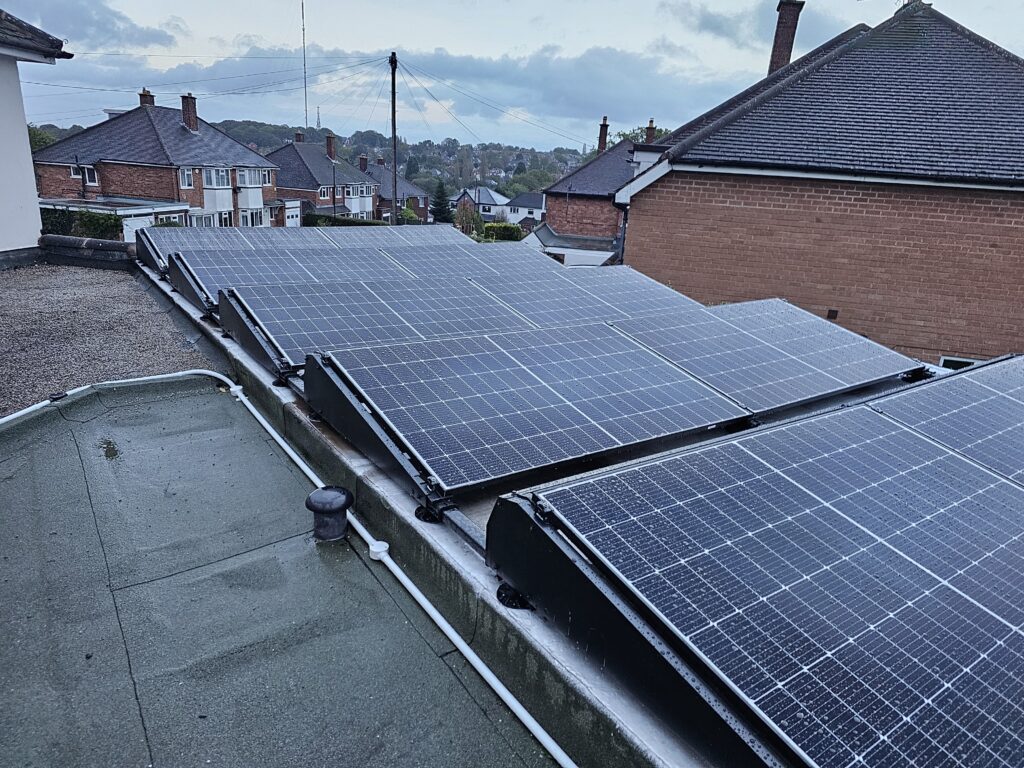
In 2026, agricultural solar panel installation in the West Midlands typically costs between £850 and £1,150 per kWp for mid-to-large scale systems. The regional market is currently shaped by high demand for energy independence, the widespread adoption of agrivoltaics, and significant grid-connection challenges managed by National Grid Electricity Distribution.
The State of Agricultural Solar in the West Midlands (2026)
As we move through 2026, the agricultural sector in the West Midlands—encompassing the productive landscapes of Shropshire, Staffordshire, Herefordshire, Worcestershire, and Warwickshire—has reached a pivotal point in its energy transition. No longer viewed as a speculative diversification tactic, solar PV (photovoltaic) integration is now a core operational requirement for farms aiming to mitigate the volatility of the UK’s wholesale energy markets.
The market in 2026 is characterized by a "dual-use" philosophy. Farmers are increasingly moving away from traditional ground-mounted arrays that occupy productive soil in favor of agrivoltaics—systems designed to allow crops to grow or livestock to graze beneath elevated panels. This shift is partly driven by updated National Planning Policy Framework (NPPF) guidelines which place stricter scrutiny on the use of "Best and Most Versatile" (BMV) agricultural land for non-food purposes.
Furthermore, the West Midlands serves as a critical hub for the UK’s food supply chain. Large-scale cold storage facilities, dairy operations, and intensive poultry units across the region have become the primary adopters of roof-mounted solar. These enterprises consume vast amounts of electricity during daylight hours, allowing for a high rate of self-consumption, which remains the most effective way to maximize the Return on Investment (ROI).
Cost Breakdown of Agricultural Solar Installations
Understanding the cost structure of a 2026 solar project requires looking beyond the price of the panels themselves. While hardware costs have stabilized following the supply chain fluctuations of the early 2020s, labor, professional fees, and specialized balance-of-system (BoS) components represent a larger share of the total expenditure.
Capital Expenditure (CAPEX) Components
- Solar Modules: High-efficiency N-type TOPCon and Heterojunction (HJT) panels are the standard in 2026. While more expensive than older PERC technology, their superior degradation rates and better performance in low-light conditions (common in the West Midlands) justify the premium.
- Inverters and Power Electronics: For agricultural environments, "ruggedized" string inverters or central inverters with high IP ratings are essential to withstand dust and moisture.
- Mounting Structures: On-roof installations on farm sheds require specialized "trapezoidal" or "seam" clamps. Ground-mounted systems require pile-driven or ballasted racking, which varies in cost depending on the soil composition of the specific West Midlands sub-region (e.g., the heavy clays of Warwickshire versus the lighter soils of Herefordshire).
- Grid Connection (G99): This is often the most variable cost. If the local network requires reinforcement to handle the export capacity, costs can escalate from a few thousand pounds to tens of thousands.
Estimated Costs by System Size (2026)
| System Size (kWp) | Typical Application | Estimated Cost (Total) | Cost per kWp |
|---|---|---|---|
| 50kW | Small Dairy / Poultry Farm | £55,000 - £65,000 | £1,100 - £1,300 |
| 100kW | Medium Arable / Cold Storage | £95,000 - £110,000 | £950 - £1,100 |
| 250kW | Large Agricultural Estate | £225,000 - £260,000 | £900 - £1,040 |
| 500kW+ | Industrial Scale / Agrivoltaics | £425,000+ | £850 - £950 |
Note: Prices include installation, G99 application fees, and commissioning but exclude VAT (which may be reclaimable for VAT-registered businesses) and battery storage.
The Impact of Battery Energy Storage Systems (BESS)
In 2026, the conversation around agricultural solar is incomplete without mentioning battery storage. Many farms in the West Midlands are now installing "behind-the-meter" storage to capture excess generation during the day for use during morning or evening milking cycles or to power automated grain drying systems overnight.
The cost of BESS has decreased significantly by 2026, with industrial-grade Lithium Iron Phosphate (LFP) batteries being the preferred choice for safety and longevity. Integrating a 100kWh battery system typically adds between £35,000 and £50,000 to the project cost. However, the ability to engage in "peak shaving" and "arbitrage" (buying cheap grid energy at night and using it during expensive day rates) can reduce the overall system payback period by 1–2 years.
Planning Permission and Regulatory Landscape
The West Midlands contains several Areas of Outstanding Natural Beauty (AONB) and significant Green Belt land. Navigating the planning process is a critical step for any agricultural solar project.
Roof-Mounted vs. Ground-Mounted
Most roof-mounted installations on agricultural buildings fall under Permitted Development Rights (PDR), provided they meet certain criteria regarding height and proximity to the roof edge. This significantly simplifies the timeline and reduces costs.
Ground-mounted systems, however, usually require full planning permission. In 2026, local planning authorities (LPAs) in counties like Worcestershire and Shropshire have become more receptive to solar, provided the developer can demonstrate a "Biodiversity Net Gain" (BNG). This often involves planting wildflower meadows under the panels or installing nesting boxes, adding roughly 1–3% to the total project cost.
Grid Connection Challenges in the West Midlands
The West Midlands grid is managed primarily by National Grid Electricity Distribution. Due to the high volume of renewable projects commissioned between 2022 and 2025, many "nodes" on the network are reaching capacity.
Before committing to an installation, a formal G99 connection application is mandatory. In some cases, the DNO (Distribution Network Operator) may issue an "Export Limitation" offer, which allows the farm to install a large solar array for internal use but restricts how much excess power can be sent back to the grid. This makes smart energy management systems and on-site batteries even more vital in the 2026 market.
Financial Returns and Incentives
While direct government grants for solar have evolved, the primary financial drivers in 2026 are self-consumption savings and the Smart Export Guarantee (SEG).
- Energy Bill Savings: This remains the primary motivator. With commercial energy rates for farms often exceeding 25p/kWh in 2026, every unit of solar electricity consumed on-site represents a direct saving.
- Smart Export Guarantee (SEG): Licensed electricity suppliers are required to pay for excess energy exported to the grid. While rates vary, many West Midlands farmers are securing 10p–15p per kWh through competitive PPA (Power Purchase Agreement) contracts with specialist green energy suppliers.
- Capital Allowances: Agricultural businesses can often take advantage of the Full Expensing tax relief or the Annual Investment Allowance (AIA), allowing them to deduct the full cost of the solar installation from their taxable profits in the first year.
Technical Considerations for Farm Environments
Agricultural environments are harsher than residential or standard commercial sites. When reviewing quotes in 2026, West Midlands farmers should look for the following technical specifications:
- Ammonia Resistance: Panels and mounting frames must be certified against ammonia corrosion, particularly for installations on or near livestock housing (poultry and pigs).
- DC String Optimization: Large farm roofs often have varying orientations or shading from silos and trees. Power optimizers or micro-inverters can ensure that a single shaded panel does not bottleneck the entire string’s performance.
- Bird Deterrents: In the rural West Midlands, pigeons and other birds are a significant nuisance. Professional installers now include mesh skirting around roof-mounted arrays as a standard part of the scope of work to prevent nesting and cable damage.
- Monitoring and Maintenance: Modern systems include O&M (Operations and Maintenance) software that provides real-time alerts to the farmer’s smartphone if a string goes offline or an inverter faults, minimizing downtime during peak harvest seasons.
Choosing an Installer in the West Midlands
The surge in demand has led to a crowded marketplace. It is essential to vet installers based on their experience with three-phase agricultural systems rather than just domestic installations.
- MCS Certification: While MCS is traditionally for smaller systems, it remains a hallmark of quality and is often required for SEG eligibility.
- RECC or HIES Membership: These organizations provide consumer protection and ensure installers adhere to a strict code of conduct.
- Local Knowledge: An installer familiar with the West Midlands DNO (National Grid) will have a better understanding of the local grid constraints and the likely success of a G99 application.
FAQ
How long does the installation process take for a medium-sized farm?
From the initial site survey to final commissioning, a 100kW project typically takes 4 to 6 months. The physical installation usually only takes 1 to 2 weeks, but the G99 grid application and planning permission (if required) account for the majority of the timeline.
Is my old barn roof strong enough for solar panels?
A structural survey is a mandatory prerequisite. Many older agricultural buildings in the West Midlands utilize "portal frame" construction. While generally robust, the additional "dead load" of the panels and the "wind load" (uplift) must be calculated. In some cases, minor structural reinforcing is required.
What is the typical ROI for agricultural solar in 2026?
For farms with high self-consumption (e.g., dairy or refrigerated storage), the ROI is typically between 15% and 22%, with a "payback period" of 4 to 6 years. For arable farms with lower summer demand, the payback may extend to 7 or 8 years unless battery storage is utilized to shift energy use.
Do I need to clean the panels regularly?
In agricultural settings, dust from harvesting and bird droppings can reduce efficiency by 5–10%. In the West Midlands, annual or bi-annual cleaning is recommended. Many farmers now use automated robotic cleaners or local specialist contractors who use deionized water to prevent scale buildup.
Can I still graze sheep under ground-mounted panels?
Yes. This is a common form of agrivoltaics in the West Midlands. Ground-mounted racking can be designed with a higher "leading edge" (typically 0.8m to 1.2m) to allow sheep to graze freely, providing them with shade and reducing the farmer’s need for mechanical grass topping.
Practical Recommendations for 2026
If you are considering an agricultural solar installation in the West Midlands this year, your first step should not be buying panels, but rather conducting a 12-month energy audit. Understanding exactly when your farm consumes power—down to the hour—will determine whether a system is a financial success or a stranded asset.
Once you have your load profile, engage with a specialized agricultural solar consultant to submit a G99 enquiry to National Grid. Securing your "place in the queue" for grid capacity is the most time-sensitive part of the process in 2026. Avoid installers who pressure you to sign contracts before grid feasibility has been confirmed, as reinforcement costs can fundamentally change the project's viability.