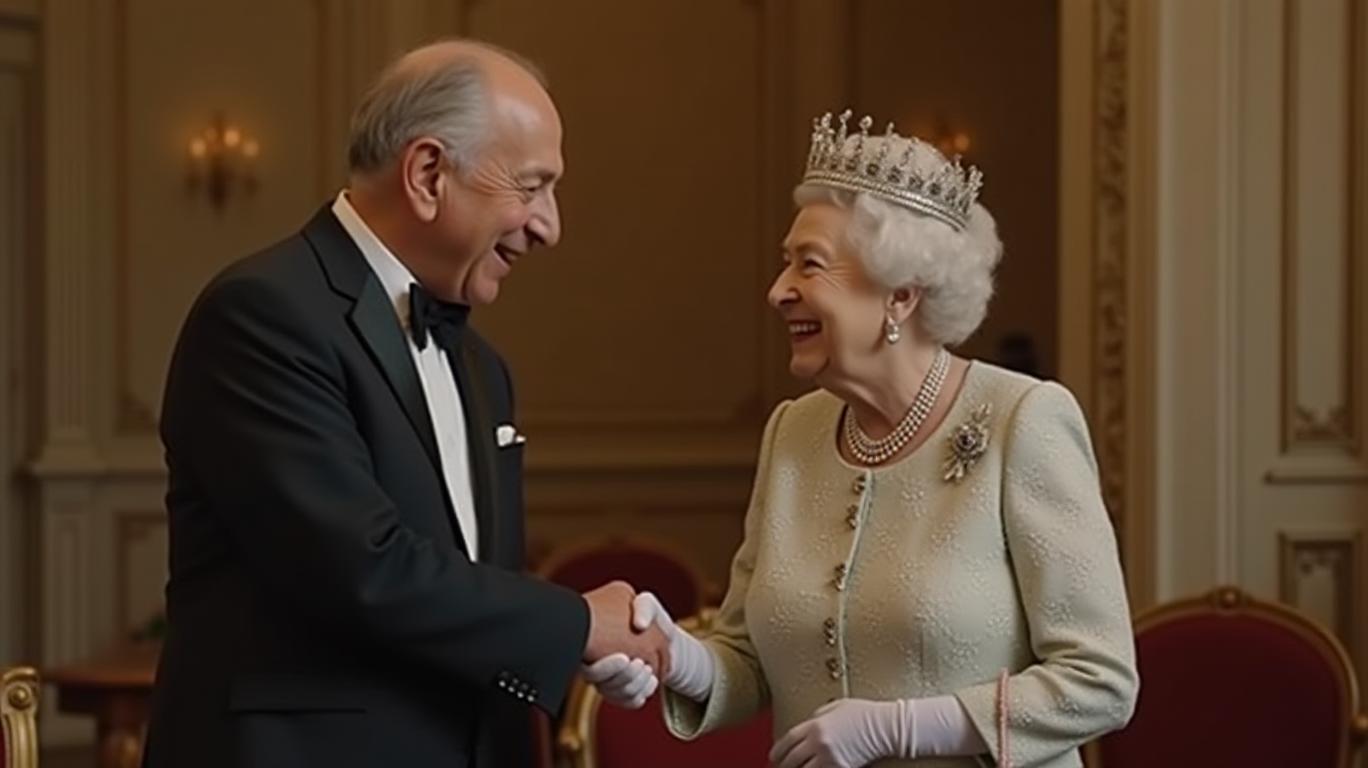
Sir Sultan Muhammed Shah, Aga Khan III, was widely recognized as one of the wealthiest individuals of the 20th century. While exact historical estimates vary, his personal fortune at its peak was estimated at tens of millions of pounds in contemporary mid-20th-century currency—equivalent to several billion dollars today when adjusted for inflation and asset appreciation.
His extraordinary wealth stemmed from personal investments, international real estate holdings, a world-renowned thoroughbred racing empire, and financial contributions from the global Ismaili Muslim community. Understanding the net worth of Aga Khan III requires separating his private personal assets from the institutional and developmental funds managed for the public good during his 72-year leadership as the 48th Hereditary Imam of the Shia Imami Ismaili Muslims.
Historical Estimates and Modern Valuation
Evaluating the net worth of historical figures presents distinct financial challenges. During the height of his prominence between the 1920s and 1950s, international press reports regularly ranked Aga Khan III alongside global titans of industry, European royalty, and Indian maharajas. Contemporary accounts in major publications frequently cited his personal fortune in the range of £20 million to £50 million during the mid-20th century.
To understand what these numbers mean today, financial historians analyze both general price inflation and the specific appreciation rates of prime international real estate, gold, and fine arts. When calculated using modern asset appreciation models, a mid-20th-century estate of that magnitude translates into a modern net worth estimated between $1.5 billion and $3 billion.
- Historical Valuation (c. 1940s–1950s): £20M – £50M
- Adjusted Asset Value Equivalent: $1.5B – $3.0B USD
- Primary Asset Classes: Thoroughbred Stud Farms, Global Real Estate, Equities, Precious Metals
However, broad public perception was often inflated by sensationalized coverage of his ceremonial events. Headlines frequently conflated the spiritual offerings presented by his followers with his private bank account. In reality, Aga Khan III maintained a strict division between personal capital derived from private enterprise and institutional revenues dedicated to social welfare, education, and health networks across South Asia and East Africa.
Primary Sources of Aga Khan III's Fortune
The financial footprint of Aga Khan III was diversified across multiple continents and investment vehicles. Unlike traditional landed aristocrats whose wealth remained tied to a single country's agricultural yield, Sir Sultan Muhammed Shah operated as an early pioneer of global asset allocation.
1. Religious Tithes and Community Contributions (Dasond)
As the 48th Imam of the Ismaili Muslims, Aga Khan III served as the spiritual leader of millions of followers worldwide. In accordance with centuries-old Ismaili traditions, community members offered voluntary religious tithes (often called Dasond or Zakat) to the Imam.
These contributions provided the financial foundation for the Imamat's extensive administrative and charitable initiatives. While a portion of religious offerings historically supported the maintenance of the Imamat and the Imam's household, Aga Khan III systematically channeled vast sums of these funds back into the community. He established housing cooperatives, schools, hospitals, and micro-finance institutions throughout India, Pakistan, Kenya, Uganda, and Tanzania.
2. International Real Estate and Equities
Aga Khan III invested heavily in prime European and Asian real estate. His holdings included luxury villas, estates, and agricultural land in key locations:
- France: Extensive properties in Paris and Normandy, including elite breeding farms.
- Switzerland: High-value residential estates in Geneva, where he spent considerable time in his later years.
- India: Palatial residences, most notably the famous Aga Khan Palace in Pune (built in 1892), which featured 19 acres of grounds and played a historic role in Indian independence when Mahatma Gandhi was interned there.
- United Kingdom: High-end residential properties in central London and surrounding rural estates.
Beyond physical property, he maintained portfolio investments in blue-chip international stocks, sovereign bonds, and banking institutions in London, Paris, and Zurich.
3. The Thoroughbred Racing and Breeding Empire
Perhaps the most commercially lucrative of Aga Khan III’s private ventures was his thoroughbred horse racing and breeding operation. Established in the early 1920s in partnership with expert bloodstock advisers, his stables became some of the most successful in the history of international horse racing.
His stud farms in England and France produced legendary racehorses, earning millions in prize money, breeding fees, and syndicate sales. The financial returns from selling elite stallions and broodmares provided a massive, independent stream of personal income that was entirely separate from his religious role.
The Jubilee Weighings: Wealth Myth vs. Reality
One of the main reasons Aga Khan III’s net worth became a topic of intense public fascination was the series of extravagant Jubilee celebrations held to mark significant anniversaries of his leadership. During these ceremonies, community members symbolically weighed the Imam against precious commodities.
While popular media presented these events as evidence of personal indulgence, the actual financial mechanism was rooted in public philanthropy and community development.
| Jubilee Event | Year | Location(s) | Commodity Used | Institutional Outcome / Legacy |
|---|---|---|---|---|
| Golden Jubilee | 1936 | Bombay & Nairobi | Gold Bar Equivalent | Established local development trusts, schools, and early banking units. |
| Diamond Jubilee | 1946 | Bombay & Dar es Salaam | Diamonds | Founded Jubilee Insurance Company and extensive community housing funds. |
| Platinum Jubilee | 1954 | Karachi | Platinum | Financed micro-finance initiatives, health clinics, and scholarship funds. |
The 1936 Golden Jubilee (Gold)
Marking 50 years of his Imamat, Aga Khan III was weighed against gold bullion in Bombay (now Mumbai) and Nairobi. The monetary value of the gold used in the ceremony was collected by community members and presented to the Imam. Aga Khan III immediately directed these funds into social welfare trusts, establishing schools, health centers, and financial assistance programs across South Asia and East Africa.
The 1946 Diamond Jubilee (Diamonds)
For his 60th anniversary, ceremonial weighings took place in Bombay and Dar es Salaam using diamonds provided by international merchants. The public value of the diamonds was immense—estimated at over £600,000 at the time. Rather than pocketing the capital, Aga Khan III used the proceeds to establish major institutional projects, including the Diamond Jubilee Investment Trust and the Jubilee Insurance Company, which provided low-interest loans and financial services to small business owners across East Africa.
The 1954 Platinum Jubilee (Platinum)
Marking 70 years of leadership, the Platinum Jubilee ceremony took place in Karachi, Pakistan. Due to the high cost and scarcity of platinum, symbolic weights were used alongside financial pledges. The capital raised during this final jubilee funded community housing schemes, educational scholarships, and public health initiatives in newly independent Pakistan.
The Economics of the Thoroughbred Racing Empire
Aga Khan III transformed thoroughbred racing from an expensive aristocratic hobby into a highly profitable international business venture. In the early 1920s, he systematically acquired top-tier bloodlines from established British and French nurseries.
Championship Success and Financial Returns
His horses achieved unprecedented success on the track, winning the prestigious Epsom Derby five times:
- Blenheim (1930)
- Bahram (1935) – Winner of the English Triple Crown
- Mahmoud (1936)
- My Love (1948)
- Tulyar (1952)
Winning major classic races dramatically increased the commercial value of his stallions. For instance, after winning the Triple Crown, Bahram was sold to an American syndicate for a record sum, generating substantial liquid cash returns. Similarly, Tulyar was sold in 1953 to the Irish National Stud for £250,000—one of the highest prices ever paid for a racehorse at that time.
Major Sales & Valuations (Mid-20th Century): • Sale of Tulyar (1953): £250,000 (Irish National Stud record) • Syndication of Stallions: Generated consistent annual high-margin revenues • Breeding Rights: Multiplied baseline investment by orders of magnitude
By reinvesting these profits into broodmare bands in Normandy and Ireland, Aga Khan III built a self-sustaining equestrian business that generated millions in profits independent of any religious offerings. This racing empire was later expanded by his successor, Aga Khan IV, who maintained its reputation as one of the world's premier bloodstock operations.
Division of Assets, Estate Planning, and Succession
When Aga Khan III passed away on July 11, 1957, at his villa in Versoix, Switzerland, his will created a historic shift in both spiritual leadership and financial stewardship.
The Imamat Succession
In a departure from tradition, Aga Khan III did not name either of his surviving sons—Prince Aly Khan or Prince Sadruddin Aga Khan—as his successor. Instead, his will named his 20-year-old grandson, Prince Shah Karim (who became Aga Khan IV), as the 49th Imam.
In his will, Sir Sultan Muhammed Shah explained his reasoning:
"In view of the fundamentally altered conditions in the world... I am convinced that it is in the best interest of the Shia Muslim Ismaili Community that I should be succeeded by a young man who has been brought up and developed during recent years and in the midst of the new age."
Distribution of Personal Estates vs. Institutional Assets
The execution of Aga Khan III's estate required a precise legal division between private wealth and communal assets:
- Institutional Imamat Assets: Real estate, developmental trusts, community reserves, and charitable funds were transferred directly to the office of the Imamat to ensure the continuous operation of schools, hospitals, and economic development agencies.
- Private Personal Wealth: His private estate—including personal residences, liquid investment portfolios, personal jewelry, and portions of his racehorse breeding stock—was distributed among his family members according to his legal will and relevant civil jurisdictions in Switzerland, France, and the UK.
His widow, Begum Om Habibeh Aga Khan (the Mata Salamat), received rights to personal residences such as the Villa YAKIMOUR in Cannes, along with lifetime financial provisions. His sons received substantial personal inheritances, while Aga Khan IV assumed control of the Imamat's vast institutional resources and the core bloodstock enterprise.
Historical Context: Wealth Comparison Table
To put the net worth of Aga Khan III into broad financial perspective, it helps to look at contemporary historical figures during his peak wealth years in the mid-20th century.
| Historical Figure | Estimated Mid-20th Century Wealth | Primary Source of Fortune |
|---|---|---|
| Aga Khan III | £20M – £50M ($1.5B – $3.0B modern) | Real Estate, Racing, Investments |
| Mir Osman Ali Khan (Nizam of Hyderabad) | $2 billion (c. 1937) | State Revenues, Jewels, Land |
| John D. Rockefeller Jr. | $400M – $1 billion | Oil (Standard Oil), Real Estate |
| J. Paul Getty | $1 billion (c. 1950s) | Getty Oil, Energy Exploration |
While independent rulers like the Nizam of Hyderabad held absolute state fortunes, Aga Khan III’s financial standing was unique because it operated across sovereign borders, integrating modern international portfolio management with ancient institutional leadership.
Frequently Asked Questions
What was Aga Khan III’s estimated net worth at the time of his death?
At the time of his death in 1957, Aga Khan III’s personal wealth was estimated at tens of millions of British pounds, which equates to roughly $1.5 billion to $3 billion in modern inflation-adjusted terms. This estimate excludes communal and developmental assets managed by the Imamat for public benefit.
Did Aga Khan III keep the money from the Jubilee weighings?
No. The funds raised during the Golden (1936), Diamond (1946), and Platinum (1954) Jubilee weighings were largely gifted back to the community by Aga Khan III. He used these monies to establish major development trusts, schools, hospitals, housing schemes, and financial institutions like the Jubilee Insurance Company across East Africa and South Asia.
How did Aga Khan III make his money outside of his religious role?
Aga Khan III accumulated significant private wealth through astute international real estate investments, global stock and bond portfolios, and a highly profitable thoroughbred horse breeding and racing enterprise. His stud farms produced five Epsom Derby winners, generating substantial revenues from prize money and stallion sales.
Who inherited Aga Khan III’s wealth?
His estate was split according to his will and legal regulations across European jurisdictions. The office of the Imamat and its institutional assets passed to his grandson and successor, Aga Khan IV (Prince Shah Karim Al-Husseini). Private personal assets, villas, and secondary inheritances were distributed among his widow, Begum Om Habibeh, and his sons, Prince Aly Khan and Prince Sadruddin Aga Khan.
Is the current Aga Khan wealthier than Aga Khan III was?
In absolute monetary terms, his successor, Aga Khan IV, managed a vastly larger portfolio of social development assets through the Aga Khan Development Network (AKDN). While Aga Khan III held immense private wealth relative to his era, the modern Imamat has expanded its institutional reach across dozens of countries, managing non-profit development programs alongside private commercial assets.
Evaluating the Legacy of Aga Khan III's Wealth
Analyzing the net worth of Aga Khan III requires looking beyond simple monetary totals. While he lived a luxurious lifestyle consistent with top international elites of the early-to-mid 20th century, his approach to financial management set a precedent for modern institutional development.
For researchers and financial historians evaluating historical wealth, Aga Khan III represents a unique case study:
- Separation of Portfolios: He clearly demarcated personal business ventures (such as bloodstock breeding) from community-funded development initiatives.
- Reinvestment in Infrastructure: The capital raised during public celebrations was systematically redirected into sustainable social institutions, many of which continue to operate today.
- Pioneering Modern Philanthropy: The institutions built during his 72-year leadership provided the structural template for the modern Aga Khan Development Network (AKDN), which today oversees billions of dollars in international development, educational, and healthcare assets worldwide.
Understanding Aga Khan III's wealth ultimately highlights how personal enterprise, strategic asset management, and religious stewardship combined to build a lasting global economic legacy.