Finding affordable car insurance options for you involves balancing state-mandated coverage minimums, deductible levels, and insurer-specific discounts to secure a policy that protects your financial well-being without straining your monthly budget. Because auto insurance rates fluctuate based on a complex matrix of risk factors—ranging from your driving record and geographic location to your credit history and the make and model of your vehicle—systematically comparing quotes and exploring lesser-known discount programs is essential for uncovering the most cost-effective protection available.
Understanding the Fundamentals of Car Insurance Costs
To secure affordable car insurance, you must first understand how insurance companies calculate premiums. Insurers use actuarial tables and statistical models to assess the likelihood that a driver will file a claim. The higher the perceived risk, the higher the premium. Conversely, drivers who demonstrate low-risk behaviors or profile characteristics generally enjoy access to lower rates.
Key Risk Factors Influencing Your Rates
- Driving Record: Clean driving records free of at-fault accidents, speeding tickets, and moving violations are the single most powerful tool for keeping insurance costs low. Conversely, a single driving under the influence (DUI) conviction or multiple minor infractions can double or triple your annual premium.
- Location: Urban areas with high traffic congestion, higher rates of vehicle theft, and frequent vandalism typically command much higher insurance rates than rural or suburban areas. State-specific regulations and minimum coverage requirements also dictate baseline costs.
- Credit History: In most jurisdictions, insurers utilize a credit-based insurance score to predict claim frequency. Studies consistently demonstrate a statistical correlation between lower credit scores and a higher propensity for filing claims.
- Vehicle Characteristics: The cost to repair or replace your vehicle, its safety ratings, its engine size, and its theft rates directly impact comprehensive and collision coverage pricing. Economy sedans generally cost less to insure than high-performance sports cars or luxury SUVs.
- Coverage Levels and Deductibles: Choosing higher deductibles (the amount you pay out-of-pocket before insurance kicks in) and lower liability limits reduces the insurer's potential payout, thereby lowering your monthly premium. However, this increases your out-of-pocket exposure in the event of an accident.
Types of Car Insurance Coverage: Balancing Cost and Protection
When shopping for affordable car insurance, cutting costs should never compromise the legal and financial protection you need. Every state except New Hampshire and Virginia mandates some form of financial responsibility or liability insurance, but relying solely on the legal minimum can leave you financially vulnerable after a severe accident.
Core Coverage Categories
- Liability Coverage: Divided into bodily injury liability and property damage liability, this coverage pays for injuries and property damage you cause to other parties in an accident. Opting for higher liability limits provides vital protection against lawsuits, though it raises your premium slightly.
- Collision Coverage: This pays for damage to your own vehicle resulting from a collision with another vehicle or a stationary object, regardless of fault.
- Comprehensive Coverage: This protects your vehicle against non-collision incidents, including theft, fire, vandalism, animal strikes, and weather-related damage such as hail or floods.
- Uninsured/Underinsured Motorist Coverage: This steps in if you are hit by a driver who lacks any insurance or possesses insufficient liability limits to cover your medical bills and vehicle repairs.
| Coverage Type | What It Protects | Is It Mandatory? | Recommended Minimum for Budget-Conscious Drivers |
|---|---|---|---|
| Bodily Injury Liability | Medical expenses and legal fees of other drivers/pedestrians you injure | Yes (in almost all states) | 50/100 ($50k per person / $100k per accident) |
| Property Damage Liability | Repair or replacement costs for other people's property | Yes (in almost all states) | At least $25,000 to $50,000 |
| Collision Coverage | Damage to your own car from accidents | No (Required by lenders if financed) | Recommended if your car is worth more than the deductible plus annual premium |
| Comprehensive Coverage | Non-collision damage (theft, weather, glass) | No (Required by lenders if financed) | Recommended for newer vehicles or high-risk areas |
| Personal Injury Protection (PIP) | Your medical bills and lost wages regardless of fault | Varies by state (No-fault states) | Match state minimum or higher if health insurance has high deductibles |
Proven Strategies to Lower Your Car Insurance Premiums
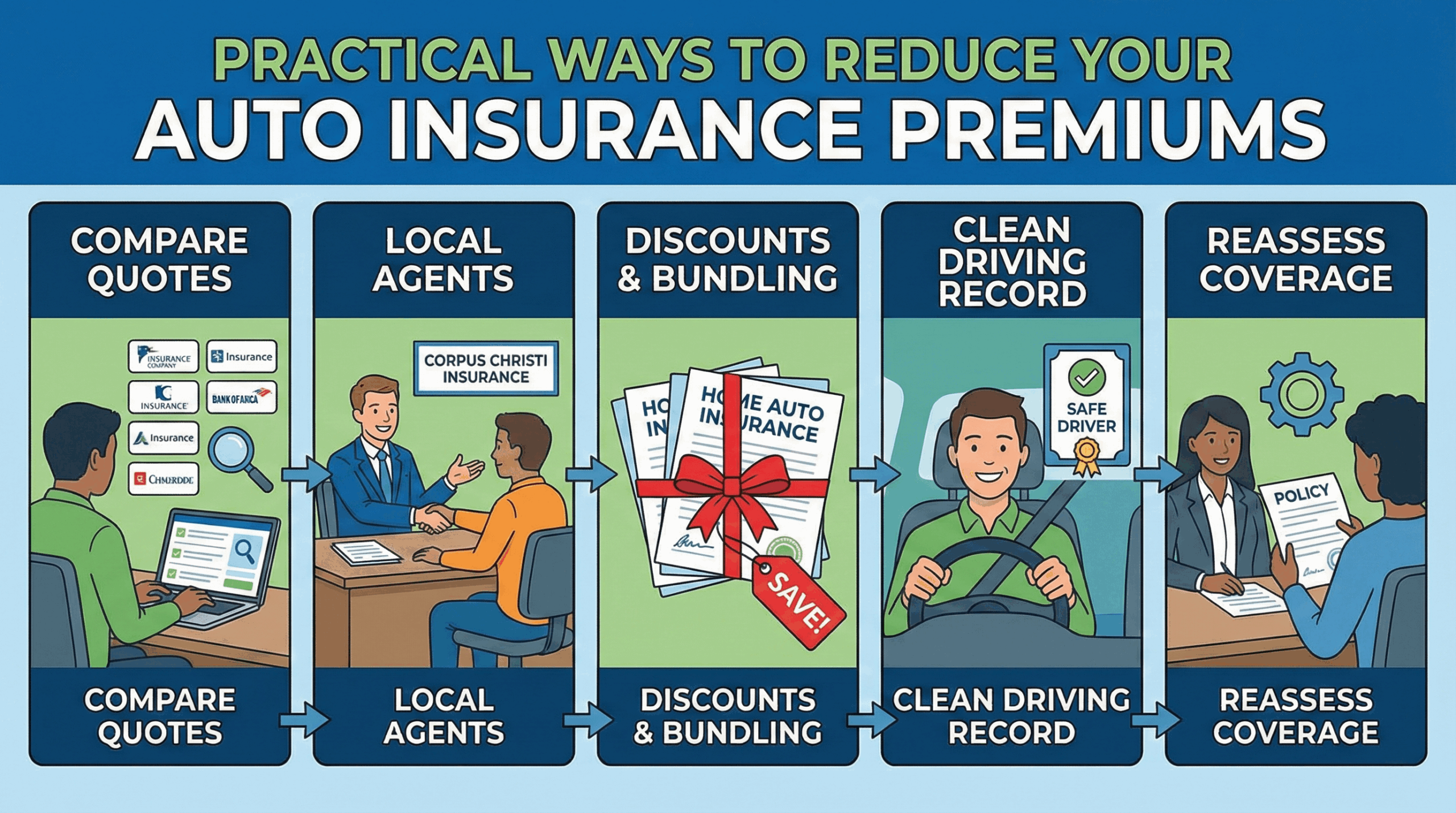
Achieving long-term affordability requires active management of your policy and utilization of every available discount. Insurers offer numerous price breaks that many drivers overlook during the quoting process.
Maximizing Discounts
- Multi-Policy Bundling: Purchasing your homeowners, renters, or umbrella insurance from the same company that insures your vehicle typically triggers a policy discount ranging from 5% to 25%.
- Safe Driver Telematics Programs: Many national carriers offer smartphone applications or plug-in tracking devices that monitor your driving habits—specifically speed, rapid acceleration, hard braking, and mobile phone usage. Good driving behavior tracked through these programs can yield substantial discounts upon renewal.
- Good Student and Affinity Discounts: Young drivers can qualify for good student discounts by maintaining a B average or higher in high school or college. Additionally, many insurers offer professional, military, or alumni association discounts.
- Pay-in-Full and Paperless Billing: Setting up automatic monthly deductions (EFT) and opting out of physical paper bills eliminates administrative fees and often earns you a dedicated billing discount.
Optimizing Deductibles and Vehicle Usage
- Increase Deductibles Wisely: Raising your collision and comprehensive deductibles from $500 to $1,000 can reduce your premium by 10% to 30%. Ensure you maintain an emergency savings fund capable of covering that higher deductible if an accident occurs.
- Evaluate Mileage Tiers: If you work remotely, use public transportation, or drive significantly fewer miles than the national average (typically 12,000 to 15,000 miles per year), notify your insurer. Low-mileage drivers qualify for reduced rates or per-mile insurance models.
Step-by-Step Guide to Shopping and Comparing Quotes
Finding the most affordable car insurance options for you requires a methodical approach. Rates for the exact same coverage profile can vary by hundreds or even thousands of dollars between competing carriers.
- Gather Your Documentation: Before requesting quotes, compile your driver's license number, Vehicle Identification Number (VIN), current odometer reading, and a history of your driving infractions or claims over the past three to five years.
- Determine Your Coverage Needs: Assess the current market value of your vehicle. If you drive an older car with a low resale value, dropping comprehensive and collision coverage entirely may save more money than any deductible adjustment.
- Obtain Quotes from Multiple Carriers: Solicit quotes from at least three different sources, including major national insurers, regional mutual companies, and direct-to-consumer digital platforms. Ensure that every quote uses identical coverage limits and deductibles for an accurate, apples-to-apples comparison.
- Verify Financial Stability and Customer Service: A cheap policy provides little value if the company fails to pay out claims fairly or efficiently. Check financial strength ratings from agencies such as A.M. Best and review consumer complaint indices published by your state's department of insurance.
- Complete the Switch Seamlessly: Once you select a new policy, bind the coverage and ensure your new insurance card is active before formally canceling your previous policy. This prevents coverage gaps, which can trigger higher rates and legal penalties in states that track electronic insurance databases.
Frequently Asked Questions
How can I get affordable car insurance if I have a poor driving record?
Drivers with accidents or tickets on their record can still find affordable car insurance by shopping non-standard auto insurers that specialize in high-risk drivers, maintaining continuous coverage to avoid lapses, and taking defensive driving courses. Over time, as violations age off your motor vehicle record (typically after three to five years), your rates will begin to decrease.
Does my credit score really affect how much I pay for car insurance?
In most states, insurance companies use a credit-based insurance score as one factor in determining premiums. While it is not the sole factor, improving your credit score by paying down revolving debt, correcting reporting errors, and making consistent on-time payments can significantly lower your insurance rates over time. California, Hawaii, Massachusetts, and Michigan prohibit insurers from using credit scores for rating purposes.
Is it cheaper to pay for car insurance monthly or all at once?
Paying for your entire six-month or annual policy upfront is almost always cheaper. Monthly installment plans almost universally include installment fees, convenience charges, or interest charges that add up over the course of the year. Paying in full eliminates these extra costs entirely.
Should I drop comprehensive and collision coverage on an older car?
A general rule of thumb in the insurance industry is to evaluate whether the cost of comprehensive and collision coverage, plus your deductible, exceeds 10% to 15% of your car's actual cash value. If you drive an older vehicle worth less than $3,000 to $4,000, paying for collision coverage may cost more than the insurer would ever pay out in a total loss settlement.
What should I do if my insurance rates increase unexpectedly?
Insurance companies routinely adjust rates across entire geographic zones or demographic pools to account for rising inflation, repair costs, and accident frequencies, even if you have a clean driving record. If your rates spike, contact your agent to review your policy for missed discounts, verify your annual mileage estimate, or shop around with competing carriers to find a more competitive rate.
Next Actions for Securing Your Policy
Begin your search today by listing your current coverage limits and pulling a copy of your motor vehicle record to ensure accuracy. Use online comparison tools or contact an independent insurance agent who represents multiple carriers to review your profile and generate tailored quotes. By balancing robust liability protection with targeted discounts and higher deductibles, you can secure affordable car insurance that provides absolute peace of mind on the road.