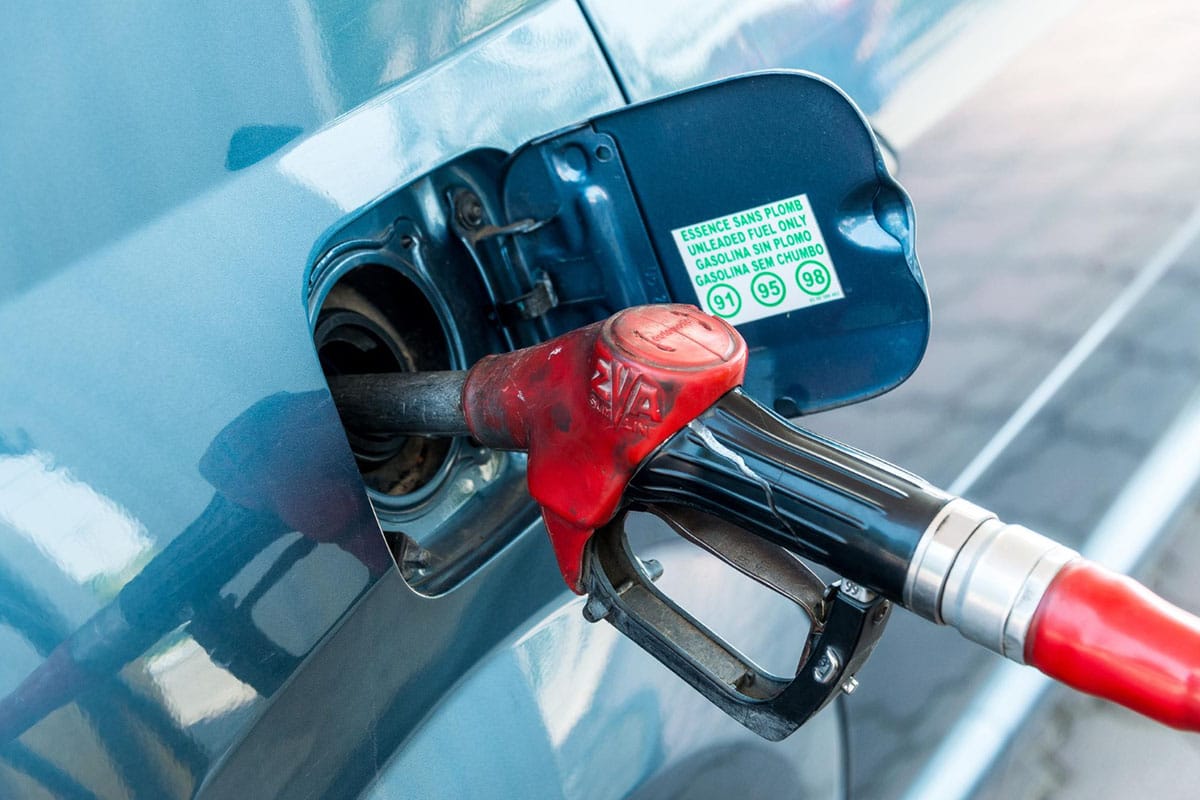
AdBlue is a high-purity aqueous urea solution used in modern diesel vehicles equipped with Selective Catalytic Reduction (SCR) technology to significantly reduce harmful nitrogen oxide ($\text{NO}_x$) emissions and comply with strict international environmental standards.
Introduction to AdBlue and Diesel Emission Standards
The global automotive and industrial sectors face increasingly stringent environmental regulations governing exhaust emissions from internal combustion engines. Nitrogen oxides ($\text{NO}_x$), which contribute heavily to smog, acid rain, and respiratory illnesses, are a primary target of these regulations. To comply with environmental frameworks such as the European Union’s Euro 6 standards—and similar mandates established worldwide—manufacturers adopted Selective Catalytic Reduction (SCR) systems. At the heart of most automotive SCR systems lies AdBlue, a standardized fluid that transforms invisible, toxic exhaust gases into harmless nitrogen and water vapor before they exit the tailpipe.
Understanding AdBlue requires looking beyond its simple appearance. While it looks and feels like water, it is a precisely engineered chemical reagent. It is odorless, colorless, non-toxic, and non-flammable, yet it demands careful handling and storage. This overview explores the chemical composition of AdBlue, the mechanics of the SCR system, vehicle maintenance practices, storage guidelines, and the economic and operational factors fleet managers and everyday drivers must consider.
Chemical Composition and Standardization
AdBlue is not merely water mixed with household fertilizer; it is a strictly regulated industrial product manufactured to international standards. Formally known as AUS 32 (Aqueous Urea Solution 32%) in international standards, its chemical formulation and purity are governed globally by ISO 22241.
The Chemistry of AUS 32
The fluid consists of 32.5% high-purity urea ($\text{CO(NH}_2)_2$) and 67.5% deionized water. The 32.5% concentration is critical because it represents the eutectic point—the specific mixture ratio that yields the lowest possible freezing point for a water-urea solution, which is $-11^\text{}^\circ\text{C}$ ($12.2^\text{}^\circ\text{F}$). If the concentration were significantly higher or lower, the freezing point would rise, causing the fluid to solidify prematurely in cold weather or leading to unbalanced chemical reactions in the exhaust stream.
Purity and Quality Control
The purity requirements outlined in ISO 22241 are exceptionally strict. Even minute trace elements—such as calcium, magnesium, iron, copper, and phosphorus—can permanently poison or destroy the expensive precious-metal catalysts housed inside the vehicle's SCR converter. Because of this sensitivity, AdBlue manufacturers use exclusively pure, crystal-grade urea derived from industrial ammonia and carbon dioxide production, combined with demineralized water that meets stringent conductivity limits. Using uncertified liquids or substituting AdBlue with homemade urea mixtures invariably leads to catastrophic failure of the emission control system, resulting in expensive component replacements that are rarely covered under standard vehicle warranties.
How Selective Catalytic Reduction (SCR) Works
The primary purpose of AdBlue is to act as the chemical reducing agent in an SCR catalyst system. The process relies on precise fluid injection coupled with high-temperature exhaust chemistry.
The Injection Phase
When a diesel engine runs, high combustion temperatures cause atmospheric nitrogen and oxygen to bond, forming $\text{NO}_x$ gases. As the exhaust gases travel down the exhaust pipe, an electronic dosing module injects a fine mist of AdBlue upstream of the SCR catalytic converter. The rate of injection is carefully modulated by the engine control unit (ECU) based on real-time data from various sensors measuring engine load, exhaust temperature, and $\text{NO}_x$ levels.
The Thermal Decomposition and Chemical Reaction
Once injected into the hot exhaust stream (typically at temperatures above $200^\circ\text{C}$ or $392^\circ\text{F}$), the water in the AdBlue solution rapidly evaporates. The remaining urea undergoes a two-step thermolysis and hydrolysis process, breaking down into ammonia ($\text{NH}_3$) and carbon dioxide ($\text{CO}_2$):
$$\text{CO(NH}_2)_2 \rightarrow \text{NH}_3 + \text{HNCO}$$ $$\text{HNCO} + \text{H}_2\text{O} \rightarrow \text{NH}_3 + \text{CO}_2$$
The generated ammonia then enters the SCR catalyst. Here, it reacts selectively with the nitrogen oxides in the exhaust gas over a metal-oxide catalyst bed. This reaction converts the toxic $\text{NO}_x$ compounds into harmless nitrogen gas ($\text{N}_2$) and water vapor ($\text{H}_2\text{O}$):
$$4\text{NO} + 4\text{NH}_3 + \text{O}_2 \rightarrow 4\text{N}_2 + 6\text{H}_2\text{O}$$ $$6\text{NO}_2 + 8\text{NH}_3 \rightarrow 7\text{N}_2 + 12\text{H}_2\text{O}$$
| Process Stage | Primary Action | Operating Environment | Byproducts |
|---|---|---|---|
| Dosing | Fluid injected into exhaust stream | Exhaust temps $> 200^\circ\text{C}$ | Aerosolized urea mist |
| Thermolysis | Water evaporation and urea breakdown | High-temperature exhaust | Ammonia ($\text{NH}_3$) & Isocyanic acid |
| Hydrolysis | Conversion of intermediate compounds | Catalyst face | Ammonia ($\text{NH}_3$) & Carbon dioxide |
| Reduction | Neutralization of nitrogen oxides | SCR Catalyst bed | Nitrogen ($\text{N}_2$) & Water vapor ($\text{H}_2\text{O}$) |
Vehicle Implementation, Consumption, and Refilling
Modern diesel cars, vans, trucks, and heavy-duty machinery incorporate dedicated AdBlue tanks, which are entirely separate from the fuel tank. Recognizing how the system operates and managing consumption prevents unexpected vehicle immobilization.
Consumption Rates
AdBlue consumption is not tied directly to engine fuel efficiency in a fixed ratio, though it generally scales with fuel usage. For passenger cars, AdBlue consumption typically ranges from 1 to 3 liters per 1,000 kilometers (approx. 0.6 to 1.8 quarts per 620 miles), depending on driving style, load weight, terrain, and vehicle emission calibration. Heavy commercial trucks consume considerably more, often scaling up to 4% to 6% of total diesel fuel consumption under heavy highway loads.
Dashboard Warnings and Interlocks
Because operating an SCR-equipped diesel vehicle without AdBlue violates environmental certification limits, modern vehicles feature strict dashboard warning systems.
- Initial Warning: A digital message appears on the instrument cluster when the driving range drops below a specific threshold (e.g., 2,400 km or 1,500 miles remaining).
- Escalated Warning: As the fluid level diminishes, warnings become persistent, often accompanied by audible chimes and flashing indicator lights.
- No-Start Interlock: If the AdBlue tank empties completely, or if the system detects a critical fault in the injection mechanism, modern legal regulations prevent the engine from restarting once it is switched off. This is a mandatory electronic safeguard designed to prevent unmitigated high-emission driving.
Refilling Procedures
Refilling AdBlue can be performed by service technicians during scheduled maintenance or directly by the vehicle operator. Passenger cars typically feature an AdBlue filler neck located either next to the diesel fuel filler cap, inside the trunk, or beneath the engine hood.
- Handling Precautions: AdBlue has a high crystallization rate when exposed to air. If fluid spills onto vehicle paintwork, trim, or clothing, it should be rinsed immediately with clean water to prevent white, crusty deposits or fabric staining.
- Nozzle Compatibility: Standardizing pump nozzles at commercial truck stops allows heavy fleets to refill rapidly, while passenger vehicle owners frequently purchase sealed, specialized bottles equipped with drip-free adapter spouts.
Storage, Shelf Life, and Handling Guidelines
Maintaining the chemical integrity of AdBlue requires strict adherence to storage and handling parameters. Improperly stored fluid degrades quickly, rendering it useless for emission control applications.
Temperature Sensitivity
AdBlue freezes at $-11^\text{}^\circ\text{C}$ ($12.2^\text{}^\circ\text{F}$). When stored in cold climates, the fluid will solidify in containers or vehicle tanks without damaging the storage vessel, because the solution expands only marginally upon freezing. Modern vehicles incorporate electric heating elements inside the AdBlue tank and supply lines to thaw the fluid quickly upon engine startup. However, continuous exposure to extreme heat—specifically temperatures exceeding $30^\text{}^\circ\text{C}$ ($86^\text{}^\circ\text{F}$) over extended periods—accelerates the thermal breakdown of urea into ammonia and biuret, degrading the fluid concentration and altering its chemical balance.
Shelf Life Guidelines
Under optimal storage conditions (temperatures between $0^\text{}^\circ\text{C}$ and $25^\text{}^\circ\text{C}$, kept away from direct sunlight in sealed, vented containers made of approved materials such as high-density polyethylene or stainless steel), AdBlue maintains its chemical integrity for up to 12 to 18 months. Storing containers in hot environments drastically shortens this shelf life. Using expired or degraded fluid can trigger sensor faults or coat the catalyst with chemical byproducts, leading to dashboard error codes.
Common Misconceptions and Troubleshooting
Misunderstandings regarding AdBlue can lead to expensive mistakes, vehicle downtime, and unnecessary repair bills.
Can You Mix AdBlue with Diesel Fuel?
No. Pouring AdBlue directly into the diesel fuel tank is a critical error that causes severe engine damage. Diesel fuel systems operate under extreme pressure and temperature tolerances; introducing an aqueous urea solution into fuel lines and high-pressure fuel pumps destroys fuel injectors, corrodes metal components, and clogs the fuel filter. If AdBlue is accidentally introduced into the fuel tank, the engine must not be started, and the entire fuel system must be professionally drained, flushed, and inspected.
Dealing with "Quality Fault" Warnings
Sometimes vehicle operators fill the tank with certified AdBlue, yet the dashboard continues to display an error message reading "AdBlue Quality Poor" or "SCR System Fault." This usually happens when:
- Fluid is added in small, intermittent top-up volumes rather than a substantial fill, confusing the vehicle's fluid-level and concentration algorithms.
- Low-grade or contaminated fluid was purchased from an unverified source.
- The NOx sensors or SCR injector are fouled with soot or crystallized urea buildup.
Resolving these issues often requires diagnostic scanning tools to reset the fluid sensors, driving the vehicle at highway speeds to allow exhaust temperatures to clear minor crystallization, or replacing faulty sensors and dosing modules.
Frequently Asked Questions
What happens if my car runs out of AdBlue while driving?
If your vehicle's AdBlue tank empties while the engine is running, the car will not shut down immediately; safety regulations prohibit sudden engine stalling on highways. However, once you reach your destination and turn off the ignition, the vehicle will refuse to restart until fresh AdBlue is added to the tank.
Is AdBlue harmful to human skin or the environment?
AdBlue is non-toxic, non-flammable, and biodegradable. If it contacts your skin, it will not cause chemical burns, though it may cause mild irritation or dryness. Rinsing the affected area with water is sufficient. It is classified as a non-hazardous fluid for transport and environmental storage.
Can I make my own AdBlue at home using water and agricultural urea?
No. Homemade mixtures cannot match the exact 32.5% concentration ratio and lack the extreme chemical purity required by ISO 22241 standards. Trace minerals and impurities in tap water or agricultural-grade fertilizers will immediately foul the vehicle's SCR catalyst and ruin the injection system.
How long does a full tank of AdBlue typically last?
AdBlue tank sizes vary widely by vehicle type, ranging from 8 to 25 liters in passenger cars and up to 100+ liters in heavy commercial trucks. For a standard passenger car, a full tank typically lasts between 5,000 and 15,000 kilometers (approx. 3,100 to 9,300 miles), depending heavily on driving habits and payload weight.
Does cold winter weather damage stored AdBlue?
Freezing does not permanently damage AdBlue. When the temperature rises above $-11^\text{}^\circ\text{C}$, the fluid thaws completely back into a homogeneous solution without losing its chemical properties or effectiveness.
Conclusion and Next Actions
AdBlue is an essential operational consumable for modern diesel vehicles relying on Selective Catalytic Reduction to meet global emission targets. Maintaining a reliable supply of certified ISO 22241 fluid, protecting containers from extreme heat, and respecting dashboard refilling prompts ensures smooth, uninterrupted driving performance. For vehicle operators and fleet managers, adopting proactive fluid-management habits prevents costly no-start interlocks and extends the operating lifespan of delicate emission control hardware. Next actions include checking your vehicle manual for specific tank capacities, locating reputable local fluid suppliers, and keeping a sealed refill bottle or designated container on hand for long journeys.