Account based marketing (ABM) vendors provide specialized software platforms that allow B2B organizations to identify, engage, and convert high-value accounts rather than individual leads. In 2026, these vendors focus on "Revenue AI" to unify sales and marketing data, offering predictive insights that signal exactly when a target account is ready to purchase.
The landscape of B2B marketing has shifted fundamentally from broad-spectrum demand generation to a precision-based model. This transition is powered by Account Based Marketing (ABM) vendors who provide the infrastructure for identifying "buying groups" within organizations. In 2026, the distinction between a simple marketing tool and a true ABM platform lies in the ability to bridge the gap between anonymous intent data and actionable sales intelligence.
Choosing the right vendor requires an understanding of how these platforms aggregate third-party signals, manage first-party data, and orchestrate multi-channel campaigns. Whether you are a mid-market firm looking to scale or an enterprise seeking to optimize a complex global sales motion, the current market offers a variety of solutions tailored to specific technical requirements and budgetary constraints.
The Evolution of ABM Platforms into Revenue AI
By 2026, the term "ABM vendor" has largely been subsumed by the broader category of Revenue AI or Go-to-Market (GTM) platforms. The core functionality has evolved from basic IP-based advertising to sophisticated orchestration engines. Modern vendors now prioritize "buying group" identification, recognizing that B2B decisions are rarely made by a single individual but by a committee of stakeholders.
The integration of generative AI within these platforms has also matured. It is no longer just about predicting which accounts might buy; it is about automating the creation of personalized content, tailored landing pages, and specific ad copy for every member of the target account's buying committee. This level of scale was previously impossible without significant manual labor.
Furthermore, the "Dark Funnel"—the untracked research buyers do on third-party sites, social media, and peer reviews—has become more transparent. Leading vendors have invested heavily in proprietary data networks to capture these signals, giving marketers a clearer picture of the buyer’s journey before a form is ever filled out.
Top Account Based Marketing Vendors Analyzed
The following vendors represent the leaders in the space for 2026, categorized by their primary strengths and market positions.
1. 6sense: The Predictive Powerhouse
6sense remains a dominant force in the ABM space due to its robust predictive modeling and "Revenue AI" capabilities. The platform excels at unmasking the Dark Funnel, using historical data and current intent signals to categorize accounts into "buying stages" (Awareness, Consideration, Decision, and Purchase).
For technical teams, 6sense offers deep integrations with CRM and Marketing Automation Platforms (MAP), allowing for seamless data flow. Its acquisition of various data providers over the years has resulted in one of the most comprehensive intent data sets in the industry.
- Best For: Enterprise organizations with complex sales cycles and a need for high-accuracy predictive analytics.
- Key Strength: Identifying anonymous research behavior and alerting sales teams at the precise moment of intent.
2. Demandbase: The Unified GTM Platform
Demandbase has positioned itself as the "One" platform for B2B. Since its acquisition of InsideView and DemandMatrix, it has combined firmographic data, technographic data, and intent signals into a single source of truth. In 2026, Demandbase is highly regarded for its "Account Intelligence," which feeds into every aspect of the sales and marketing stack.
The platform's orchestration features are particularly strong, allowing marketers to trigger specific actions—like LinkedIn ads or direct mail—based on account-level changes.
- Best For: Companies looking for an all-in-one solution that covers data, advertising, and sales intelligence.
- Key Strength: Comprehensive data hygiene and a unified view of the account for both sales and marketing teams.
3. Terminus: The Orchestration Specialist
Terminus has historically focused on the "engagement" pillar of ABM. Its platform is designed to make multi-channel execution as simple as possible. Terminus offers a dedicated "Account Cloud" that helps marketers segment their target account lists and deploy highly targeted advertising, email, and web personalization campaigns.
In 2026, Terminus is often chosen for its user-friendly interface and its ability to measure the impact of ABM efforts through its "Opportunity Journey" reporting, which visualizes how accounts move through the pipeline.
- Best For: Mid-market to enterprise firms that prioritize ease of execution and multi-channel campaign management.
- Key Strength: High-quality ad targeting and clear attribution reporting for account-level engagement.
4. RollWorks: The Mid-Market Leader
A division of NextRoll, RollWorks has carved out a significant share of the mid-market by offering an accessible yet powerful ABM platform. It utilizes a vast pool of data to help smaller teams identify their Ideal Customer Profile (ICP) and launch automated ad campaigns.
RollWorks is known for its strong integration with HubSpot and Salesforce, making it a favorite for RevOps teams that want to enhance their existing CRM data with external intent signals without a million-dollar price tag.
- Best For: Small to mid-sized B2B companies looking for an efficient way to start and scale an ABM program.
- Key Strength: Excellent ROI for display advertising and tight integration with standard CRM systems.
5. HubSpot: Integrated ABM for Existing Users
While not a "pure-play" ABM vendor in the traditional sense, HubSpot has built significant ABM functionality directly into its Marketing Hub (Professional and Enterprise tiers). For organizations already utilizing HubSpot as their CRM and MAP, the built-in ABM tools offer a friction-free way to implement account-based strategies.
Features include account-level scoring, collaborative tools for sales and marketing, and pre-built ABM dashboards. While it may lack the deep third-party intent data of a 6sense, its ease of use is unmatched for existing customers.
- Best For: Organizations already on the HubSpot ecosystem that want to align sales and marketing under one roof.
- Key Strength: Seamless collaboration between departments and no need for additional data syncing.
Comparison of Key ABM Vendors
The following table compares the leading vendors based on the core capabilities required for a successful ABM strategy in 2026.
| Vendor | Primary Focus | Ideal Business Size | Key Integration Strengths | Core Feature |
|---|---|---|---|---|
| 6sense | Predictive AI | Enterprise | Salesforce, Marketo, Slack | Dark Funnel visibility & Buying Stage prediction |
| Demandbase | Unified GTM Data | Enterprise/Mid-Market | Microsoft Dynamics, Oracle | Comprehensive Account Intelligence |
| Terminus | Multi-channel Engagement | Mid-Market/Enterprise | Outreach, Salesloft, LinkedIn | Orchestration and specialized ABM ads |
| RollWorks | High-Velocity ABM | SMB/Mid-Market | HubSpot, Salesforce | Automated ICP identification & Ad scaling |
| HubSpot | CRM-Led ABM | SMB/Enterprise | Native Ecosystem | Native sales/marketing alignment |
| Madison Logic | Content Syndication | Enterprise | Marketing Cloud, Eloqua | Multi-channel content engagement & measurement |
Critical Features to Evaluate When Selecting a Vendor
When vetting an ABM vendor, it is easy to get lost in flashy dashboards. However, the success of your program depends on four technical pillars.
Intent Data Quality and Source
Not all intent data is created equal. Some vendors rely solely on "bid-stream" data, which can be noisy and inaccurate. Others use "publisher-coop" data, which comes from direct partnerships with B2B websites. In 2026, the most effective vendors use a combination of both, plus "first-party" data (what accounts do on your own site). Ask vendors specifically about their data sources and how they filter out "false positives" (e.g., a student researching a topic vs. a buyer).
Account-to-Lead Matching (ALM)
One of the biggest technical hurdles in ABM is "mapping" individual leads to the correct parent account. If a lead from "Google" signs up with a Gmail address, can the vendor recognize them as part of the Google buying group? Robust ALM algorithms are essential for accurate reporting and ensuring that your sales team has the full context of an account's activity.
Orchestration and Automation Capabilities
Orchestration is the ability to trigger a series of events across different channels. For example, if an account moves from "Awareness" to "Consideration," the platform should automatically:
- Increase the ad budget for that account.
- Add the key stakeholders to a specific email sequence.
- Alert the assigned Account Executive via Slack or CRM. The depth of these "if-then" workflows determines how much manual effort your team will need to expend.
Measurement and Attribution
ABM requires a shift in how you measure success. Traditional metrics like MQLs (Marketing Qualified Leads) are less relevant than "Account Engagement Scores" or "Pipeline Velocity." A high-quality vendor should provide "Lift" reports—showing how accounts targeted with ABM performed compared to a control group—and "Influence" reports—showing how marketing touchpoints contributed to closed-won revenue.
Common Implementation Mistakes to Avoid
Even with the best vendor, an ABM strategy can fail if the foundational elements are missing.
- Garbage In, Garbage Out: If your CRM data is messy, your ABM platform will struggle to match accounts and leads. Data hygiene is a prerequisite for ABM success.
- Lack of Sales Alignment: ABM is not just a marketing initiative; it is a business strategy. If sales teams are not following up on the "intent alerts" provided by the platform, the investment is wasted.
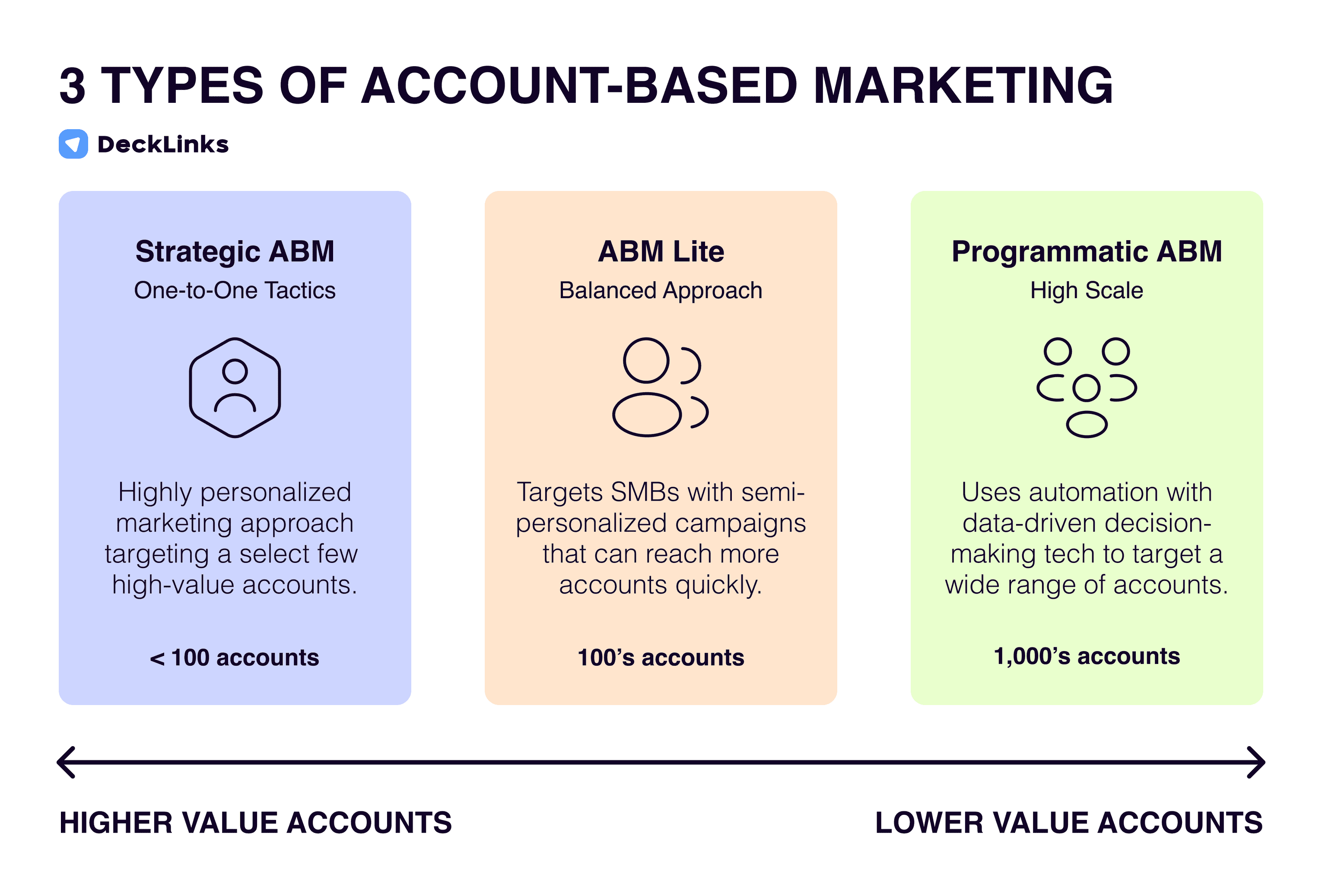
- Over-Segmentation: Many teams try to target too many accounts at once. It is often better to start with a "Tier 1" list of 50-100 high-value accounts and perfect the execution before scaling to thousands.
- Ignoring the Content Strategy: A vendor can get your ads in front of the right people, but if the content is generic and boring, they won't engage. ABM requires personalized, high-value content for different stages of the funnel.
The Role of Professional Services in ABM
Because ABM platforms are complex, many vendors offer professional services or partner with specialized agencies. In 2026, these services are often focused on "Strategy Design" rather than just technical setup. This includes helping you define your ICP, building your account tiers, and mapping out the content journey for each persona within the buying group.
If your team is new to account-based strategies, it may be worth budgeting for a 3-to-6-month implementation engagement to ensure the platform is tuned correctly to your specific business model.
Frequently Asked Questions
What is the average cost of an ABM vendor in 2026?
Pricing varies significantly based on the number of accounts you are targeting and the level of data access required. For mid-market solutions like RollWorks, entry-level plans may start around $25,000–$35,000 per year. For enterprise-grade platforms like 6sense or Demandbase, annual contracts often range from $60,000 to well over $150,000.
Can I do ABM without a dedicated vendor?
Technically, yes. You can manually identify accounts, use LinkedIn Campaign Manager for targeting, and track engagement in your CRM. However, this is difficult to scale. A dedicated vendor automates the data collection and orchestration, which is necessary for managing more than a handful of accounts effectively.
How does ABM software handle GDPR and CCPA?
Leading ABM vendors have adapted to strict privacy laws by moving away from individual tracking and toward "account-level" aggregation. They typically use anonymized IP data to identify the organization rather than the specific person, ensuring compliance while still providing valuable insights into account behavior.
How long does it take to see results from an ABM platform?
ABM is a long-term play. While you may see "leading indicators" (like increased website traffic from target accounts) within the first 30–60 days, the impact on "lagging indicators" (like closed-won revenue) usually follows your standard sales cycle length, which in B2B is often 6 to 18 months.
What is "Intent Data" exactly?
Intent data is a collection of signals that suggest a company is in the market for a specific solution. This includes searching for relevant keywords, visiting competitor websites, reading white papers on industry portals, and engaging with related content on social media.
Strategic Recommendation for 2026
To choose the right vendor, begin by auditing your current "data maturity." If your CRM is disorganized and you lack a clear Ideal Customer Profile, start with a platform like RollWorks or use the native tools in HubSpot to build your foundation.
If you are an established enterprise with a sophisticated RevOps function, 6sense or Demandbase offer the deep predictive analytics and data unification needed to dominate a competitive market. Regardless of the vendor, prioritize sales and marketing alignment above all else; the most powerful AI in the world cannot close a deal if the human teams are not in sync.