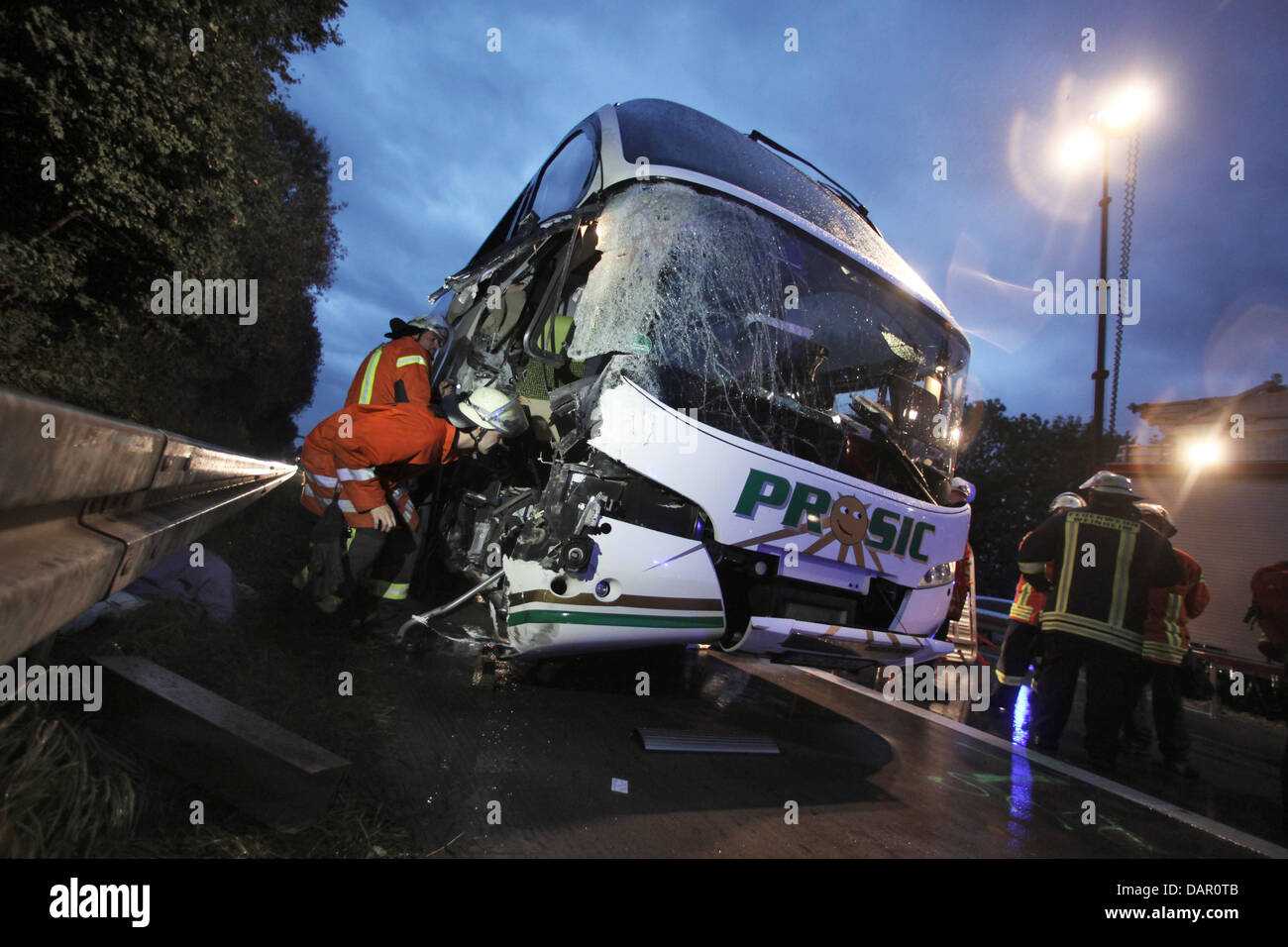
If you are involved in an accident on the German Autobahn, your primary responsibility is to secure the scene, ensure personal safety, and contact emergency services immediately by dialing 112. Because traffic speeds on the Autobahn can be significantly higher than on standard roads, strict adherence to established safety protocols—such as activating hazard lights, deploying a warning triangle, and exiting the vehicle to a safe area—is critical to preventing secondary collisions.
The German Autobahn network is renowned for its lack of a general speed limit on many sections, which contributes to a unique driving environment. While the system is statistically among the safest highway networks in the world per kilometer traveled, the high-velocity nature of the traffic means that accidents, when they do occur, often involve complex dynamics and severe consequences. Understanding how to handle an incident is not just a matter of legal obligation; it is a fundamental survival skill for anyone operating a vehicle in Germany.
The Immediate Response: Safety Protocols
The first few minutes following a collision on the Autobahn are the most dangerous. Vehicles remain at risk of being struck by oncoming traffic, which may be traveling at speeds exceeding 200 km/h.
Securing the Scene
The moment a vehicle becomes involved in an accident or experiences a breakdown, the driver must move the vehicle to the shoulder (Standstreifen) if possible. If the vehicle is immobile and blocking a lane, safety takes absolute precedence over property.
- Hazard Lights: Immediately switch on your hazard warning lights to signal to oncoming drivers that you are in distress.
- Safety Vests: German law mandates that drivers carry a high-visibility reflective vest. Put this on before exiting the vehicle, regardless of the time of day.
- The Warning Triangle: This is a legal requirement. You must place a warning triangle at a sufficient distance behind your vehicle. On the Autobahn, the recommended distance is at least 150 to 200 meters.
- Evacuation: Once the scene is marked, all passengers should exit the vehicle via the doors facing away from traffic (the passenger side) and move behind the crash barrier (Leitplanke). Never remain inside the car or stand on the road surface.
Notifying Emergency Services
Dialing 112 is the universal emergency number for fire and rescue services throughout the European Union. In Germany, the dispatchers are highly trained to handle highway incidents. When you call, provide the following information:
- Where: The exact location (e.g., the Autobahn number, the direction of travel, and the nearest kilometer marker). Kilometer markers are found on the small white posts (Notrufsäulen-Orientierungstafeln) along the side of the road.
- What: The nature of the accident, including the number of vehicles involved and whether there are injuries.
- Who: Your name and contact information.
Legal Requirements and Administrative Duties
Germany enforces strict legal requirements for drivers involved in traffic incidents. Failure to comply can result in severe penalties, including criminal charges for "hit and run" (Unerlaubtes Entfernen vom Unfallort) under Section 142 of the German Criminal Code (StGB).
Documentation of the Incident
Even in minor "fender benders," you must exchange information. If the other party is present, you are legally required to provide your name, address, and insurance details. If you strike a parked, unoccupied vehicle, you are required to wait a reasonable amount of time (typically 30–60 minutes) for the owner to appear. If they do not, you must report the accident to the nearest police station immediately.
When to Call the Police
While it is common practice to handle minor property-damage-only incidents between drivers, you should call the police (110) if:
- There are injuries.
- The other driver refuses to provide information or appears to be under the influence of alcohol or drugs.
- One of the vehicles is blocking traffic and cannot be moved.
- It is a hit-and-run incident.
- Significant uncertainty exists regarding fault or the identity of the involved parties.
Comparative Dynamics of Autobahn Safety
The nature of driving on the Autobahn differs from highway driving in other jurisdictions due to the interplay between the Richtgeschwindigkeit (advisory speed of 130 km/h) and the Freigabe (sections without a speed limit).
| Incident Type | Standard Risk Factor | Mitigation Strategy |
|---|---|---|
| High-Speed Rear-end | Extreme kinetic energy | Maintain strict following distances; use "anticipatory driving." |
| Congestion Tail | High (Stop-and-go) | Use hazard lights when braking hard; watch mirrors for approaching vehicles. |
| Lane Change | Moderate | Check blind spots frequently; use signal early; observe speed differentials. |
| Shoulder Breakdown | High (Environment) | Exit vehicle from passenger side; remain behind guardrails. |
The Role of the "Rettungsgasse"
One of the most critical legal mandates for all drivers on the Autobahn is the formation of the Rettungsgasse (emergency corridor). When traffic slows to a crawl or comes to a standstill due to an accident, drivers are legally obligated to create a lane for emergency vehicles.
If you are in the left-most lane, you must move to the far left. If you are in any other lane, you must move as far to the right as possible. This creates a clear path through the center of the road for ambulances, fire engines, and police. Failing to form this lane is a punishable offense in Germany, carrying fines and potential points on your license.
Managing the Aftermath: Insurance and Reporting
Once immediate safety is addressed, the process of navigating insurance claims begins. German motor vehicle insurance is mandatory.
Insurance Claims
If you are insured in Germany, notify your provider as soon as possible after the incident. They will provide a claim form (Unfallbericht). It is highly advisable to keep a European Accident Statement form (a standardized document used across the EU) in your glove box. This form ensures that all necessary information—such as the time, date, location, vehicle descriptions, and insurance details—is collected systematically.
Professional Legal Assistance
If an accident involves complex legal disputes, significant personal injury, or disagreement regarding fault, it is advisable to consult a Fachanwalt für Verkehrsrecht (specialist lawyer for traffic law). The German legal system heavily emphasizes documentation, and having a lawyer can protect your interests, especially when dealing with foreign insurance companies or complex police reports.
Common Mistakes to Avoid
- Staying in the vehicle: Many fatalities on the Autobahn occur when occupants remain in a damaged car on the shoulder and are struck by another vehicle. Always exit and wait behind the crash barrier.
- Attempting DIY repairs: Do not attempt to fix your vehicle on the Autobahn. Call a professional towing service (e.g., ADAC or your specific insurance provider’s roadside assistance).
- Rubbernecking: "Gaffing" (taking photos or videos of accident sites) is not only insensitive but is a criminal offense in Germany, punishable by significant fines. Focus on the road and continue driving.
- Ignoring signs: Electronic variable speed limit signs (the illuminated signs above the lanes) often activate in response to accidents ahead. These are mandatory, not advisory.
Frequently Asked Questions
1. Is it legal to walk on the Autobahn after an accident? Pedestrians are strictly prohibited from the Autobahn. However, in the event of an accident or breakdown, you may walk to the nearest emergency phone (Notrufsäule), which are located every two kilometers, or walk to a safe location behind the guardrail. You must never cross the main traffic lanes.
2. What happens if I don't have a warning triangle or vest? You can be fined during a police check, but more importantly, you risk being unable to properly secure the scene of an accident. Carrying these items is a basic equipment requirement for all vehicles registered or driven in Germany.
3. Do I have to move my car if it’s drivable? If the vehicle is drivable and you are in a dangerous position, you should move it to the nearest exit or the next Parkplatz (rest area). If the vehicle is disabled, leave it on the shoulder and wait for professional recovery.
4. How do emergency vehicles get to the scene if traffic is blocked? Emergency vehicles utilize the Rettungsgasse (emergency corridor). This is why it is vital to keep this space clear at all times, even if you do not see an emergency vehicle approaching yet.
5. Are dashcams allowed in Germany? Yes, dashcams are permitted, and their footage is increasingly used as evidence in traffic accident litigation, provided they operate in a loop-recording mode and do not violate privacy rights of other individuals.
Final Recommendations for Drivers
Preparation is the best defense against the chaos of an Autobahn accident. Before your next trip, ensure that your vehicle is stocked with at least two high-visibility vests (one for the driver and passengers) and a functional warning triangle. Keep your insurance documentation and a copy of the European Accident Statement form easily accessible.
Most importantly, practice "anticipatory driving." By maintaining a significant distance from the vehicle in front and scanning the horizon for brake lights, you reduce the likelihood of being involved in the stop-and-go collisions that frequently plague busy sections of the Autobahn. If you are involved in an incident, stay calm, prioritize human life over vehicle damage, and remain behind the crash barrier until help arrives.