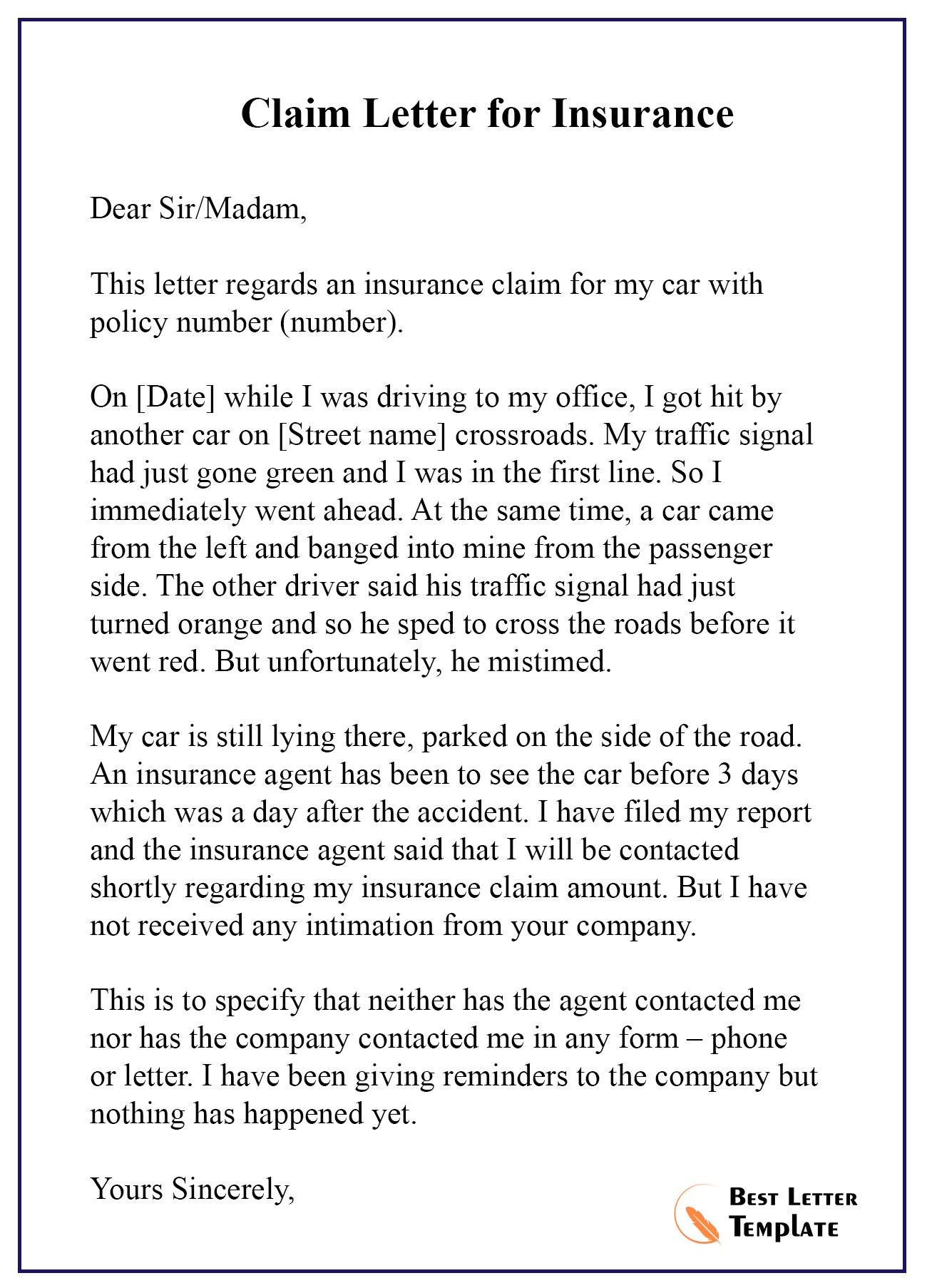
An accident loss of life insurance letter is a formal document used to initiate a claim for Accidental Death and Dismemberment (AD&D) benefits or a life insurance policy's accidental death rider. This letter serves as the official notice to an insurer that a policyholder has died due to a covered accident, triggering the payout of the death benefit to the designated beneficiaries.
In the complex landscape of 2026 insurance regulations, filing a claim requires more than just a simple notification. Because "accidental death" is a specific legal and contractual definition, the letter and the supporting documentation must prove that the cause of death was purely accidental and not related to illness, suicide, or excluded activities. Understanding how to structure this letter—and how to respond to the insurer's subsequent correspondence—is critical for securing the financial support intended for survivors.
Understanding the "Accident Loss of Life" Definition
Before drafting a letter, it is essential to understand what qualifies as an accident in the eyes of an insurance carrier. While a standard life insurance policy pays out for death by almost any cause (after the contestability period), an accident loss of life benefit—often part of an AD&D policy or a "double indemnity" rider—only pays if the death resulted directly from an external, violent, and accidental event.
As of 2026, most policies define an accident as a sudden, unforeseen, and unexpected event. This typically includes motor vehicle accidents, falls, drownings, or equipment malfunctions. It generally excludes deaths caused by medical procedures, heart attacks, strokes, or any underlying physical or mental illness, even if an accident triggered the final event. The "accident loss of life insurance letter" acts as the gateway to proving that the event meets these narrow criteria.
The Two Perspectives of the Insurance Letter
The term "accident loss of life insurance letter" generally refers to one of two distinct documents:
- The Beneficiary’s Letter of Intent (Claim Notice): This is the letter you write to the insurance company to start the claim process. It provides the policy details and a preliminary account of the accident.
- The Insurer’s Determination Letter: This is the formal response from the insurance company after they have investigated the claim. It will either confirm the benefit amount or explain why a claim has been denied or delayed.
1. Drafting the Beneficiary’s Claim Letter
When a loved one passes away in an accident, the primary beneficiary or a legal representative must notify the insurer. While many companies now offer online portals in 2026, a formal written letter is often still required to establish a legal paper trail, especially for high-value AD&D claims.
Essential Components of the Letter
Your letter should be concise, professional, and factual. Avoid emotional language; focus on the data the claims adjuster needs to open the file.
- Policyholder Information: Include the full legal name, date of birth, and Social Security number of the deceased.
- Policy Identification: Clearly state the policy number or group plan number (common in employer-sponsored coverage).
- Date and Location of the Accident: Be specific about where and when the event occurred.
- Brief Description of the Event: State the nature of the accident (e.g., "single-vehicle automobile accident" or "accidental fall at a construction site").
- Beneficiary Contact Information: Provide the current address, phone number, and email for all listed beneficiaries.
2. The Insurer’s Response and Requirement Letter
Once the insurer receives your initial notice, they will send a "Requirement Letter." This document outlines the specific evidence they need to verify that the death was truly accidental. In 2026, insurers are increasingly rigorous about this phase to prevent fraud and ensure the death does not fall under standard exclusions like intoxication or hazardous hobbies.
Required Documentation for Accidental Death Claims
The letter alone is not enough to secure a payout. The insurer will demand a packet of verified evidence. The following table compares the requirements for a standard life insurance claim versus an accidental loss of life claim.
| Document Type | Standard Life Insurance | Accident Loss of Life (AD&D) |
|---|---|---|
| Certified Death Certificate | Required (shows cause of death) | Required (must show "Accident" as manner of death) |
| Claimant’s Statement | Required | Required (more detailed version) |
| Police Report | Rarely required | Mandatory for most accidents |
| Autopsy/Toxicology Report | Not usually required | Mandatory to rule out exclusions |
| Coroner’s Report | Rarely required | Required to confirm circumstances |
| News Clippings/Public Records | Not required | Often requested for verification |
The Critical Role of the Death Certificate
The most important piece of evidence accompanying your letter is the certified death certificate. In accidental death cases, the "Manner of Death" section must be checked as "Accident." If it is marked "Pending Investigation" or "Undetermined," the insurance company will put the claim on hold. If the manner of death is "Natural," the AD&D portion of the insurance will likely be denied, even if an accident was a contributing factor.
Common Exclusions and Challenges in 2026
When you receive a letter regarding an accident loss of life claim, it may contain "exclusions." These are specific scenarios where the company is not obligated to pay. Understanding these is vital for anyone drafting a claim or preparing for a legal appeal.
The "90-Day Rule" (and its 2026 variations)
Many AD&D policies state that death must occur within a specific timeframe following the accident—traditionally 90 days, though some modern policies have extended this to 180 or 365 days. If the deceased was in a coma for 14 months following an accident and then passed away, the insurer might send a letter denying the claim because the death occurred outside the "accidental window."
Toxicological Exclusions
In 2026, toxicology screening is standard in almost all fatal accident investigations. If the insurer's letter indicates that the deceased had a Blood Alcohol Content (BAC) above the legal limit or had non-prescribed controlled substances in their system, the "accident" may be reclassified as a result of an illegal act or self-inflicted harm, leading to a claim denial.
The "Sickness and Disease" Exclusion
If an accident was caused by a medical emergency—for example, a driver has a heart attack, loses consciousness, and then hits a tree—the insurer will often argue that the "proximate cause" of death was the heart attack (a natural cause), not the accident. This often leads to a complex legal battle where the beneficiary must prove that the trauma of the accident was the primary driver of the loss of life.
Step-by-Step Guide: Filing the Accident Loss of Life Letter
If you are tasked with managing this process, follow these steps to ensure the claim is handled efficiently.
Step 1: Secure the Policy
Locate the physical policy or digital certificate of insurance. Read the section titled "Accidental Death Benefits" or "AD&D Rider." Note the specific definition of "accident" used by that provider.
Step 2: Obtain the Initial Police and Coroner Reports
Do not wait for the insurer to ask for these. Requesting them early from the local precinct or the county medical examiner’s office can save weeks of delays. Ensure you have the case number ready to include in your initial letter.
Step 3: Write the Initial Notification Letter
Using the guidelines above, draft a formal letter. Send it via Certified Mail with Return Receipt Requested. This provides legal proof that the insurer received your notice of loss, which starts the clock on their state-mandated timeline to respond.
Step 4: Complete the Insurer's Formal Claim Forms
The company will respond to your letter with a "Claimant’s Statement." This is a multi-page form asking for detailed history. In 2026, many companies require this to be notarized or digitally signed through a secure legal platform.
Step 5: Review the Determination
Within 30 to 60 days (depending on the jurisdiction and the complexity of the accident), you will receive a final letter. If it is an approval, it will outline the payment method (lump sum or structured settlement). If it is a denial, the letter must legally state the specific policy language and evidence used to reach that decision.
The Significance of the "Time of Loss" Clause
In 2026, insurers are paying closer attention to the "time of loss" vs. the "time of death." Your letter should be very clear about the chronology. For instance, if an accidental injury occurred on January 1st, but the individual did not pass away until January 15th, all medical records from that two-week period become part of the accident loss of life file. The insurer will look for any "intervening causes" that might shift the liability away from the accident.
When to Seek Legal Assistance
If you receive a letter denying an accident loss of life claim, do not assume it is the final word. AD&D claims are among the most frequently litigated areas of insurance law because the definition of "accident" is so subjective. If the insurer claims a "pre-existing condition" contributed to the death, or if they cite a "hazardous occupation" exclusion that you believe is inapplicable, consulting an ERISA (Employee Retirement Income Security Act) attorney or a life insurance specialist is recommended.
Frequently Asked Questions
What should I do if the death certificate says "Pending"?
If the death certificate is pending a toxicology or autopsy report, you can still send your initial accident loss of life insurance letter to notify the company. The insurer will open a "pending" file. However, they will not issue a payment until the final, amended death certificate is submitted with a definitive manner of death.
Can a suicide be considered an "accident" for insurance purposes?
No. Virtually all insurance policies explicitly exclude suicide or self-inflicted injuries from accidental death coverage. If the insurer's investigation (via the police or coroner’s report) suggests the event was intentional, they will issue a letter of denial for the accident portion of the policy.
What if the accident happened years ago, but the death happened recently?
Most policies have a "Time Limitation" clause. If the death occurs more than 90 to 365 days after the accident, it generally does not qualify for an accident loss of life benefit. You would still receive the base life insurance amount (if a standard policy exists), but the additional accidental death benefit would likely be denied.
Does "Accident Loss of Life" cover death during surgery?
Generally, no. Most policies have a "Medical Malpractice" or "Medical Procedure" exclusion. Even if a surgeon makes a fatal error, insurance companies typically classify this as a medical complication rather than an "accidental death" in the context of AD&D.
How long does it take to get a payout after sending the letter?
In 2026, once all documents (death certificate, police reports, and toxicology) are received, most states require insurers to process the claim within 30 days. However, because accidental death investigations are thorough, it can take 3 to 6 months to gather all the necessary evidence before the final determination letter is issued.
Practical Recommendation for Beneficiaries
When dealing with an accident loss of life insurance letter, meticulous record-keeping is your best defense. Keep a log of every phone call, the name of every adjuster you speak with, and copies of every document you submit. If you are drafting the initial letter, keep it strictly factual. If the insurer requests a recorded statement, you may want to provide a written statement instead—prepared with care—to ensure that your words are not misinterpreted during the investigation of the "accidental" nature of the event.