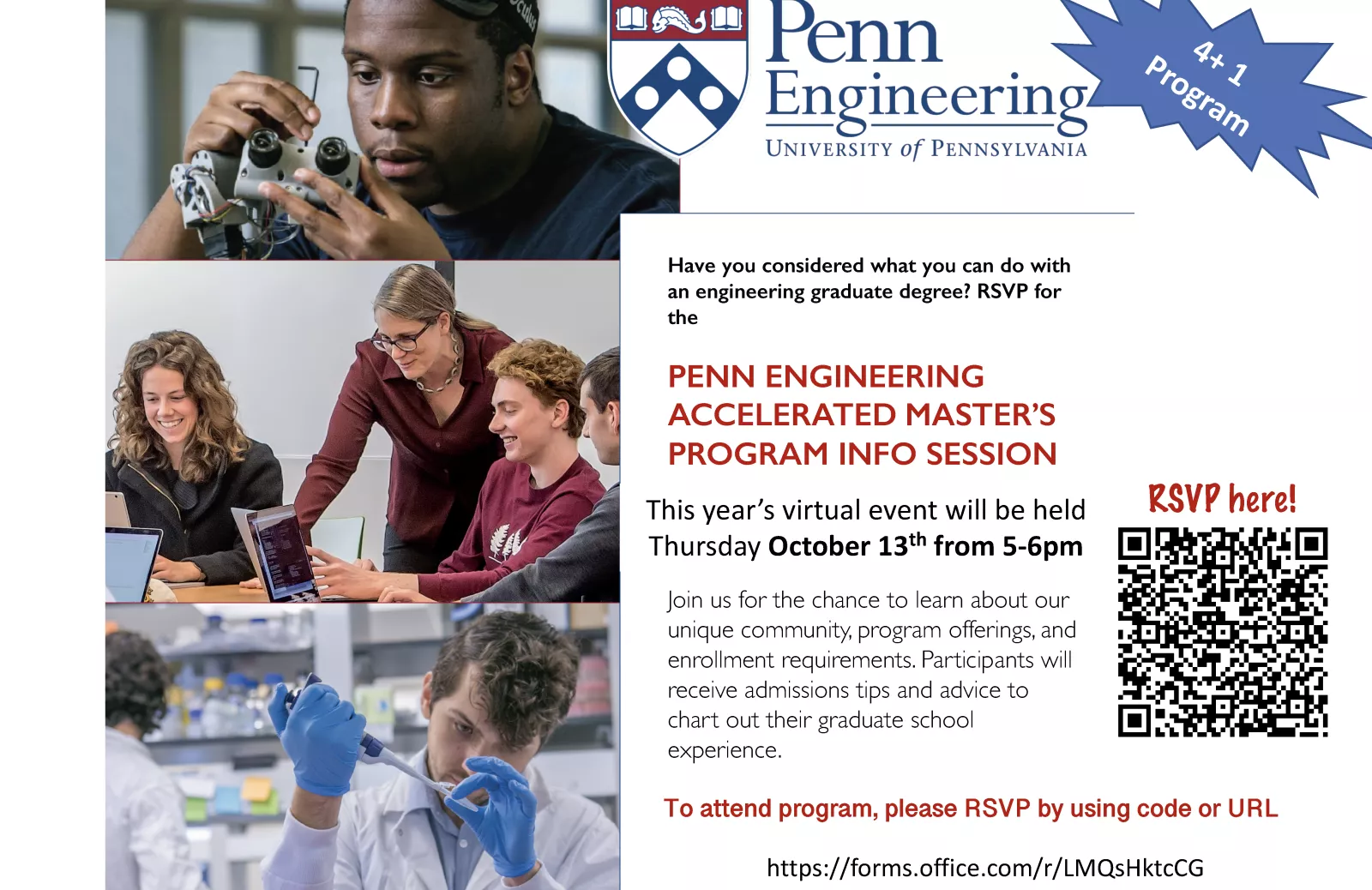
An accelerated engineering program is an intensive academic pathway designed to reduce the time required to earn a professional degree, most commonly through a "4+1" model that grants both a Bachelor of Science (BS) and a Master of Science (MS) in five years. By utilizing summer sessions, advanced placement credits, and overlapping graduate-level coursework, these programs allow high-achieving students to enter the workforce with advanced credentials ahead of their peers.
Understanding the Accelerated Engineering Framework
In 2026, the landscape of engineering education has shifted toward efficiency and specialized depth. The "accelerated" label typically refers to two distinct academic structures. The first and most prevalent is the Integrated Master’s Program, often called a 4+1 or BS/MS program. This path does not necessarily speed up the undergraduate portion but rather compresses the graduate portion by allowing senior-year students to "double-count" specific credits toward both degrees.
The second model is the Fast-Track Bachelor’s, which aims to complete a traditional four-year degree in three or three-and-a-half years. This is achieved through year-round enrollment and the heavy use of prior learning assessments, such as Advanced Placement (AP) or International Baccalaureate (IB) scores. Both models serve a singular purpose: reducing the opportunity cost of education and accelerating the transition into high-stakes industries like aerospace, renewable energy, and artificial intelligence.
The technical depth of these programs is significant. Unlike a standard degree, an accelerated track leaves little room for academic exploration outside the core discipline. Students must commit to their specialty early—often by the end of their freshman year—to ensure they meet the rigorous prerequisite chains required for upper-division engineering labs and design sequences.
The Mechanisms of Time Compression
The primary "engine" behind an accelerated engineering program is credit overlapping. In a traditional setting, a Bachelor’s might require 120-128 credit hours, and a Master’s requires an additional 30-36. In an accelerated 4+1 program, the university may allow 6 to 12 credits of 500-level or 600-level courses to satisfy both the technical elective requirements of the BS and the core requirements of the MS.
Furthermore, these programs leverage summer bridge sessions. Instead of taking a three-month hiatus, students in accelerated tracks often complete foundational mathematics (such as Differential Equations or Linear Algebra) or introductory physics during the summer between their first and second years. This clears the "bottleneck" courses early, allowing the student to begin junior-level design work while their peers are still finishing prerequisites.
Another critical component is Prior Learning Assessment (PLA). In 2026, universities have become more standardized in how they accept high school credits. A student entering with a "5" on the AP Calculus BC and AP Physics C exams can effectively bypass the entire first semester of an engineering curriculum, providing a natural "buffer" that makes acceleration feasible without requiring a 21-credit-hour semester load.
Admission Requirements and Eligibility Criteria
Gaining entry into an accelerated engineering program is a multi-stage process. Most students are not "admitted" to the accelerated track directly from high school, although some elite institutions offer direct-entry options for top-tier candidates. Instead, students typically apply for the accelerated status during their sophomore or junior year of undergraduate study.
Minimum Academic Benchmarks
Universities generally require a cumulative GPA of 3.3 to 3.5 on a 4.0 scale to be considered for the 4+1 track. Because the program involves taking graduate-level coursework while still an undergraduate, the department must be confident that the student can handle the increased rigor. In 2026, many programs have also eliminated the GRE (Graduate Record Examinations) requirement for their internal accelerated students, viewing their undergraduate performance as a more reliable indicator of success.
Prerequisite Coursework
Before being formally accepted into the "Master's portion" of the program, students must typically complete the "Engineering Core." This includes:
- Calculus Sequence: Calculus I, II, III, and Differential Equations.
- Physical Sciences: Calculus-based Physics (Mechanics and Electromagnetism) and General Chemistry.
- Discipline-Specific Basics: For example, Statics and Dynamics for Mechanical Engineers, or Circuit Analysis for Electrical Engineers.
Faculty Recommendations and Research Interest
Because the MS portion of these programs often requires a capstone project or a thesis, students must identify a faculty advisor early. A successful application usually requires one to three letters of recommendation from professors within the engineering department who can vouch for the student's technical proficiency and maturity.
Structural Comparison: Traditional vs. Accelerated Tracks
The following table illustrates the typical progression and requirements for different engineering pathways as they exist in 2026.
| Feature | Traditional BS | Accelerated 4+1 (BS/MS) | Fast-Track BS (3-Year) |
|---|---|---|---|
| Total Duration | 4 Years | 5 Years | 3 Years |
| Degrees Awarded | BS | BS and MS | BS |
| Typical Credit Load | 15 credits/semester | 15–18 credits/semester | 18–21 credits/semester |
| Summer Enrollment | Optional | Required (1-2 summers) | Required (All summers) |
| Double Counting | No | Yes (6–12 credits) | No |
| Career Entry Level | Entry-level Engineer | Specialist/Research Engineer | Entry-level Engineer |
| Cost Efficiency | Standard | High (Saves 1 year tuition) | Moderate (Higher per-term cost) |
Financial Implications and Cost-Benefit Analysis
The financial appeal of an accelerated engineering program is one of its strongest selling points. By condensing a two-year Master's degree into a single additional year, students save a full year of tuition, fees, and living expenses. Furthermore, in many 4+1 programs, the graduate-level courses taken during the fourth year are charged at the undergraduate tuition rate, which is historically lower than graduate tuition.
However, there is an opportunity cost to consider regarding internships. A traditional four-year student has three summers to pursue paid internships or co-ops. A student on a three-year fast-track might only have one or two, and their summer courses might prevent them from taking a full-time internship.
In 2026, the starting salary for an engineer with a Master's degree is approximately 10% to 20% higher than for those with only a Bachelor's. By entering the workforce a year early with a Master's, the "lifetime earnings" advantage can be substantial. For example, if a starting BS salary is $85,000 and an MS salary is $100,000, the accelerated student gains not only the $15,000 annual difference but also the "extra" year of $100,000 salary that the traditional MS student misses while still in school.
The Role of ABET Accreditation
A critical factor for any student is ensuring the program is accredited by ABET (the Accreditation Board for Engineering and Technology). For those pursuing a fast-track Bachelor's, ABET accreditation is straightforward. However, for 4+1 programs, the accreditation usually applies to the Bachelor's degree.
In the United States, professional licensure as a Professional Engineer (PE) requires a degree from an ABET-accredited program. While some Master's programs are also accredited, it is less common. Students must ensure that their accelerated track does not bypass the core engineering design requirements that ABET mandates for the undergraduate degree. If the "acceleration" cuts too many corners in the foundational design sequences, the student may find themselves ineligible for the NCEES Fundamentals of Engineering (FE) exam, which is the first step toward licensure.
Academic Rigor and Potential Risks
The intensity of an accelerated engineering program is not to be underestimated. Engineering is already considered one of the most demanding undergraduate majors; compressing it further increases the risk of burnout.
The "Credit Crunch"
Students in these programs often carry 18 or more credits per semester. In a technical field, this equates to roughly 50 to 60 hours of work per week, including labs and study time. This leave little room for extracurricular activities, varsity sports, or part-time employment.
Depth vs. Speed
Critics of accelerated programs argue that students may lack the "soak time" needed to truly internalize complex concepts. In fields like Structural Engineering or Chemical Process Design, the intuition developed over four years of steady study is invaluable. Accelerated students must be exceptionally disciplined to ensure they are not just passing exams but actually building the mental models required for professional practice.
Restricted Flexibility
Once a student enters an accelerated track, switching majors becomes nearly impossible without losing a significant amount of time. The curriculum is a "tightly coupled" system where one missed prerequisite can delay graduation by a full year because certain high-level courses are only offered once annually.
Top Universities Offering Accelerated Programs in 2026
Several leading institutions have refined their accelerated offerings to meet the high demand for specialized engineers.
- Georgia Institute of Technology (Georgia Tech): Known for its "BS/MS" programs across almost all engineering disciplines, Georgia Tech allows students to apply up to 6 credit hours of graduate coursework to both degrees, provided they maintain a high GPA.
- Stanford University: Stanford’s "Coterminal Degree Program" is a gold standard for acceleration, allowing students to study for a Master’s degree while simultaneously finishing their Bachelor’s.
- Purdue University: Purdue offers several "4+1" pathways, particularly in Industrial and Mechanical Engineering, focusing on moving students quickly into professional practice.
- University of Michigan: Their "Sequential Undergraduate/Graduate Study" (SUGS) program is highly structured and requires early planning, often starting in the student's junior year.
Career Outcomes and Professional Licensing
Graduates of accelerated programs are highly sought after in 2026, particularly in sectors that require a mix of foundational knowledge and specialized research skills. Employers in the defense, biotech, and semiconductor industries often prioritize candidates with an MS because it indicates a level of technical specialization that a BS lacks.
Regarding professional licensing, the path remains mostly the same. Students should take the Fundamentals of Engineering (FE) exam in their final year of undergraduate study (Year 4). After graduating with the MS and completing four years of qualifying work experience, they can sit for the Professional Engineer (PE) exam. Interestingly, in many jurisdictions, a Master’s degree counts as one year of "work experience" toward the PE requirement, meaning an accelerated 4+1 graduate can actually become a licensed Professional Engineer a full two years earlier than a traditional BS graduate (one year saved in school, one year credited for the MS).
How to Determine if an Accelerated Program is Right for You
Choosing an accelerated path requires an honest assessment of your academic history and professional goals. Consider the following checklist:
- Academic Record: Do you consistently perform in the top 10% of your math and science classes?
- Clear Goals: Do you already know which sub-discipline (e.g., Embedded Systems, Fluid Dynamics) you want to specialize in?
- Financial Situation: Is saving a year of tuition a primary motivator?
- Resilience: Can you maintain a high level of performance during 8-week intensive summer sessions?
- Licensure Needs: Does your career path require a PE license, and does the accelerated program protect your ABET status?
If the answer to these questions is "Yes," the accelerated route offers a streamlined, cost-effective, and prestigious entry into the engineering profession.
Frequently Asked Questions
Can I transfer into an accelerated program from a community college?
It is possible but challenging. Most accelerated programs require a specific sequence of "residency" credits—courses taken at the university granting the degree. If you transfer from a community college, you must ensure that your foundational credits (Calculus, Physics) are accepted immediately so you can begin the upper-division "acceleration" on time. You will likely need to attend summer sessions immediately upon transferring.
Do I have to write a thesis in a 4+1 program?
This depends on the university and the specific "track" you choose. Many 4+1 programs offer a "Professional MS" (non-thesis), which replaces the research requirement with additional advanced coursework or a comprehensive project. If you intend to pursue a PhD later, you should opt for the "Research MS" (thesis) track, although this may be harder to finish within the 5-year window.
Will employers think a 3-year degree is "lesser" than a 4-year degree?
Generally, no. As long as the degree is from an ABET-accredited institution, employers value the result. In fact, completing a rigorous engineering curriculum in three years can be seen as evidence of exceptional time management, discipline, and intelligence.
Is financial aid available for the "fifth" year?
This is a critical distinction. Once you are classified as a "graduate student" (usually in the fifth year), you are no longer eligible for undergraduate federal grants like the Pell Grant. However, you become eligible for graduate-level loans and potential Research Assistantships (RA) or Teaching Assistantships (TA), which can often cover tuition and provide a stipend.
What happens if my GPA drops below the requirement?
Most programs have a "probation" period or a strict cutoff. If your GPA falls below the 3.3 or 3.5 threshold, you may be removed from the accelerated track and moved back to the traditional 4-year BS path. You would still keep the credits you earned, but you would not be able to "double-count" them toward a Master’s.
Practical Recommendation
If you are a high school student or an early undergraduate interested in an accelerated engineering program, your first action should be to maximize your AP/IB credits in mathematics and physics. These credits are the "currency" that buys you the time needed for acceleration. Once on campus, meet with the Departmental Advisor during your first semester to map out a "Plan of Study" that identifies exactly which graduate courses you will take in your fourth year. Early planning is the only way to avoid scheduling conflicts that could derail an accelerated timeline.