The AARP Life Insurance Program, exclusively underwritten by New York Life Insurance Company, currently holds an A+ rating from the Better Business Bureau (BBB). This rating reflects the program's commitment to resolving customer complaints and maintaining transparent business practices. While AARP provides the branding and marketing, New York Life manages the underwriting, claims, and daily policy administration for millions of American seniors.
Understanding the Relationship Between AARP and New York Life
To accurately evaluate the AARP Life Insurance Program, it is essential to distinguish between the two entities involved. AARP (formerly the American Association of Retired Persons) is a non-profit interest group focused on issues affecting those over the age of 50. AARP does not issue insurance policies. Instead, it "endorses" products from third-party providers.
Since 1994, New York Life Insurance Company has been the exclusive provider of life insurance for AARP members. When a consumer looks for "AARP Life Insurance BBB ratings," they are essentially looking for the performance record of New York Life's specialized AARP operation. This partnership is one of the largest of its kind in the United States, designed to provide simplified underwriting—meaning many policies do not require a physical medical exam—tailored to the needs of older adults.
For a consumer in 2026, this distinction is vital. Any legal or financial obligation associated with a policy is held by New York Life, not AARP. Therefore, the financial strength and customer service reputation of New York Life are the primary factors in determining the reliability of the coverage.
BBB Ratings and Customer Satisfaction Metrics
The Better Business Bureau (BBB) is a private, non-profit organization that rates businesses based on their reliability and performance in handling consumer disputes. As of 2026, New York Life Insurance Company maintains an A+ rating with the BBB, which is the highest grade possible.
What the A+ Rating Signifies
A BBB rating is not an endorsement of a product's quality or value; rather, it is an evaluation of the company's "trustworthiness" in its interactions with the public. To maintain an A+ rating, New York Life must demonstrate:
- Prompt Response to Complaints: The company must acknowledge and attempt to resolve customer grievances filed through the BBB portal.
- Transparency: Clearly stating the nature of the business and providing accurate contact information.
- Longevity: New York Life has been in operation for over 180 years, contributing significantly to its high score.
- Honest Advertising: Adhering to BBB standards for truthful marketing practices.
Common Complaints in the BBB Files
Despite the high rating, consumer reviews on the BBB website often highlight specific points of friction. In the life insurance sector, complaints frequently center on the "graded death benefit" of guaranteed acceptance policies. Some beneficiaries express frustration when a claim is denied or limited because the policyholder passed away within the first two years of coverage. Another common issue involves premium increases in term life policies, which some members find unexpected as they age. Understanding these nuances before purchasing a policy can prevent the dissatisfaction reflected in these public reviews.
Core Products in the AARP Life Insurance Portfolio
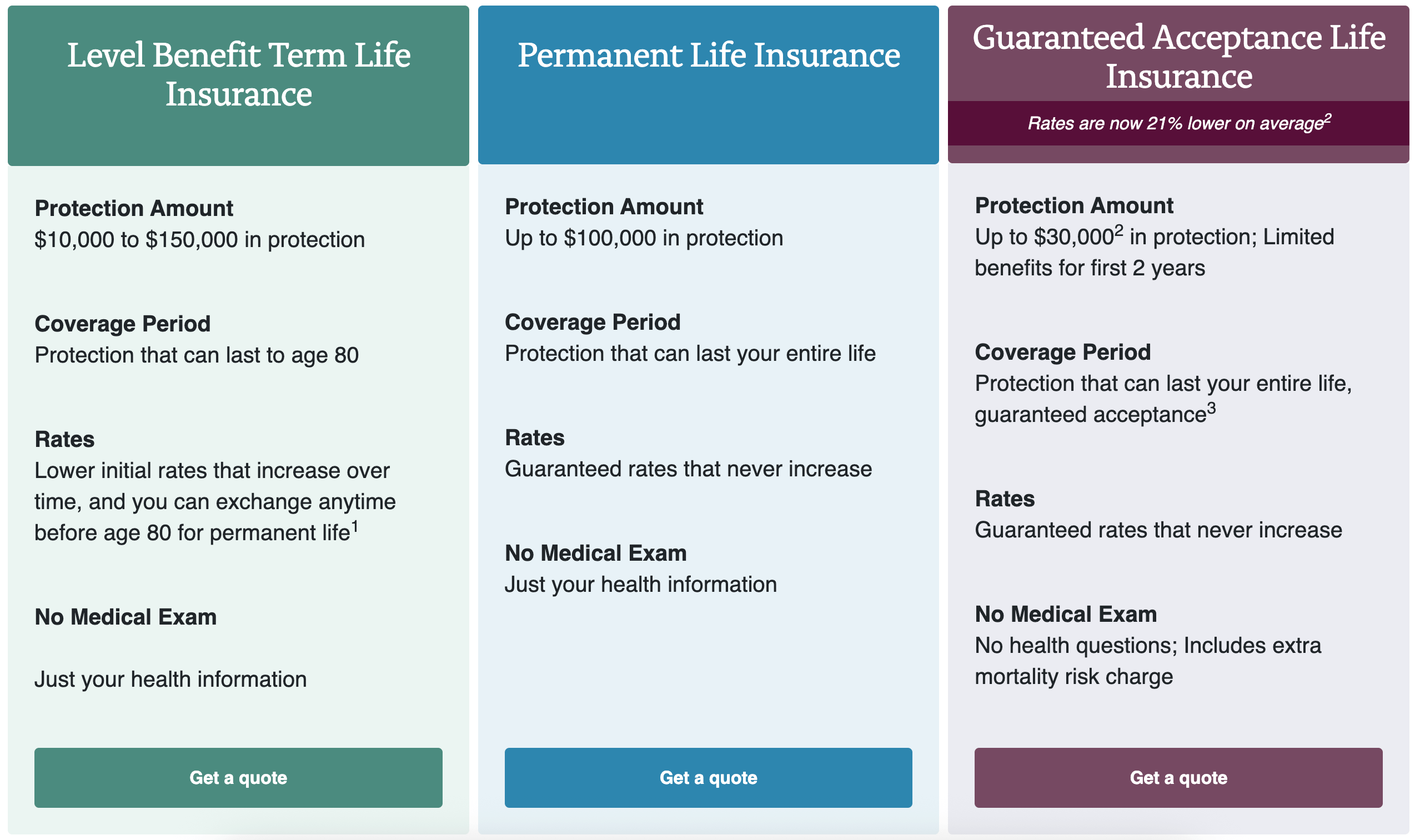
The AARP Life Insurance Program is structured into three primary categories, each catering to different health profiles and financial goals. In 2026, these products remain the cornerstone of the program's offerings.
AARP Level Benefit Term Life Insurance
Term life insurance provides coverage for a specific period, or "term." For AARP members, this coverage typically remains available until age 80.
- Simplified Underwriting: Applicants must answer several health-related questions, but a medical exam is generally not required.
- Benefit Structure: The "Level Benefit" means the death benefit stays the same throughout the life of the policy.
- Premium Structure: Unlike some term policies, AARP term life premiums are "step-rated." This means the cost increases every five years as the policyholder enters a new age bracket. This is a critical detail for long-term budget planning in 2026.
AARP Permanent Life Insurance (Whole Life)
This is a whole life insurance policy designed to provide coverage for the remainder of the insured's life, provided premiums are paid.
- Cash Value Accumulation: Over time, these policies build a small amount of cash value that the owner can borrow against if necessary.
- Fixed Premiums: Once the policy is issued, the monthly or annual premium never increases, regardless of changes in health or age.
- Death Benefit: The payout is guaranteed and does not decrease over time. This makes it a popular choice for "final expense" planning, such as covering funeral costs.
AARP Guaranteed Acceptance Life Insurance
This product is specifically designed for individuals who may have significant health issues that would disqualify them from traditional coverage.
- No Health Questions: There are no medical exams and no health questions. Acceptance is "guaranteed" for AARP members within the eligible age range (typically 50 to 80).
- Graded Death Benefit: This is a crucial limitation. If the insured dies of natural causes within the first two years of the policy, the beneficiaries do not receive the full face value. Instead, they receive the premiums paid plus a small percentage of interest (usually 10%). After the two-year "waiting period," the full benefit is active.
- Accidental Death: The two-year waiting period does not apply to accidental deaths; the full benefit is typically paid from day one in such cases.
Beyond the BBB: Financial Strength Ratings
While the BBB measures customer service, financial strength ratings from independent agencies measure the company's ability to pay out claims in the future. For life insurance, which may not be triggered for decades, these ratings are arguably more important than a BBB score.
As of 2026, New York Life continues to receive the highest possible financial strength ratings from the major rating agencies:
- AM Best: A++ (Superior)
- Fitch Ratings: AAA (Exceptionally Strong)
- Moody’s Investors Service: Aaa (Highest Quality)
- Standard & Poor’s (S&P): AA+ (Very Strong)
These ratings indicate that New York Life is one of the most financially stable insurance companies in the world. For AARP members, this provides peace of mind that the company has the capital reserves necessary to fulfill its obligations to beneficiaries, even during periods of economic volatility.
Comparison of AARP Life Insurance Options (2026)
| Feature | Level Benefit Term Life | Permanent (Whole) Life | Guaranteed Acceptance |
|---|---|---|---|
| Eligible Ages | 50–74 (Varies by State) | 50–80 | 50–80 |
| Max Coverage | Up to $150,000 | Up to $50,000 | Up to $25,000 |
| Medical Exam? | No | No | No |
| Health Questions? | Yes | Yes | No |
| Premiums | Increase every 5 years | Fixed for life | Fixed for life |
| Cash Value | No | Yes | Yes (after several years) |
| Waiting Period | Immediate coverage | Immediate coverage | 2-year graded benefit |
Cost Considerations and Value Assessment
The cost of AARP Life Insurance is often viewed as higher than "fully underwritten" policies from other carriers. This is because AARP and New York Life take on more risk by skipping the medical exam. In 2026, the convenience of applying online or via mail without a nurse visit remains the primary selling point.
However, consumers should be aware of the "Step-Rate" premium structure for term policies. A policy that seems affordable at age 55 may become significantly more expensive at age 70. For those looking for long-term stability, the Permanent Life Insurance option—while having lower maximum coverage limits—often provides better value over a 20-year period because the rates are locked in.
It is also worth noting that AARP membership is a prerequisite for these policies. The annual membership fee should be factored into the total cost of ownership.
Pros and Cons of the AARP Life Insurance Program
Pros
- Brand Trust: The AARP name carries significant weight and trust among seniors.
- Ease of Application: The lack of medical exams makes the process fast and accessible for those with minor health issues.
- Financial Security: Policies are backed by New York Life, a top-tier financial institution with "Superior" ratings.
- Exclusive Member Benefits: Some policies include "waiver of premium" options if the policyholder becomes confined to a nursing home.
Cons
- Coverage Limits: Maximum death benefits (up to $150,000) are lower than what is available through many other providers.
- Price: Healthy individuals may find lower premiums by opting for a fully underwritten policy elsewhere.
- Graded Benefits: The two-year waiting period on guaranteed acceptance plans can be a surprise to beneficiaries if not clearly explained.
- Age Limits: Coverage options diminish significantly once a member passes age 80.
Navigating the Application and Claims Process
The application process for AARP Life Insurance is streamlined for the 2026 digital environment. Most members can apply online through the AARP/New York Life portal.
- Selection: Choose the plan type based on your health and coverage needs.
- Questionnaire: For Term or Whole Life, answer the health questions honestly. Misrepresentation can lead to a denial of claims later.
- Beneficiary Designation: Clearly name your beneficiaries and provide their contact information to ensure a smooth claim process.
- Payment Setup: Most members opt for automatic bank drafts to ensure coverage does not lapse.
The Claims Process: When a policyholder passes away, the beneficiary must contact New York Life directly. The BBB files indicate that New York Life generally processes straightforward claims within 7 to 10 business days after receiving the death certificate and the completed claim forms. Delays usually occur if the death happens within the "contestability period" (the first two years of the policy), during which the insurer may investigate the original application for accuracy.
Frequently Asked Questions
Does the AARP Life Insurance Program require a medical exam?
No, none of the standard AARP life insurance plans underwritten by New York Life require a physical medical exam or blood work. Eligibility is determined through a series of health questions (for Term and Permanent plans) or is guaranteed (for the Guaranteed Acceptance plan).
Can I keep my AARP life insurance if I cancel my AARP membership?
Generally, you must be a member of AARP to apply for the insurance. However, once the policy is in force, most contracts allow you to maintain the coverage as long as you continue to pay the premiums, even if you do not renew your AARP membership. You should verify the specific language in your policy document.
Is the BBB rating for AARP or New York Life?
The BBB maintains separate profiles for the AARP organization and New York Life Insurance Company. When evaluating the life insurance program's reliability, the New York Life BBB profile is the more relevant metric, as they are the ones who manage the policy and pay the claims.
What happens if I die during the two-year waiting period?
If you have a Guaranteed Acceptance policy and die of natural causes within the first two years, your beneficiaries will receive the premiums you paid plus interest (usually 10%). If the death is accidental, the full benefit is typically paid. After the two-year period, the full benefit is paid for any cause of death.
Why do my AARP term life insurance rates keep going up?
AARP term life insurance uses a "step-rated" premium structure. Your rates are based on your age and increase as you move into new five-year age brackets (e.g., at age 55, 60, 65, etc.). This is common for simplified-issue term insurance but differs from "Level Premium" term insurance where rates remain the same for the entire duration.
Final Recommendations for 2026
The AARP Life Insurance Program remains a robust and reliable option for seniors who prioritize convenience and brand reputation over the lowest possible price. The A+ BBB rating and Superior financial strength of New York Life provide a high level of consumer protection.
If you are in relatively good health, it is advisable to compare AARP's rates with a fully underwritten policy from another provider, as you may qualify for higher coverage at a lower cost. However, for those with moderate health concerns or those who simply wish to avoid the hassle of medical exams, the AARP program offers a trustworthy solution for final expense and legacy planning. Always read the "Contestability" and "Graded Benefit" clauses carefully to ensure your beneficiaries are protected exactly as you intend.