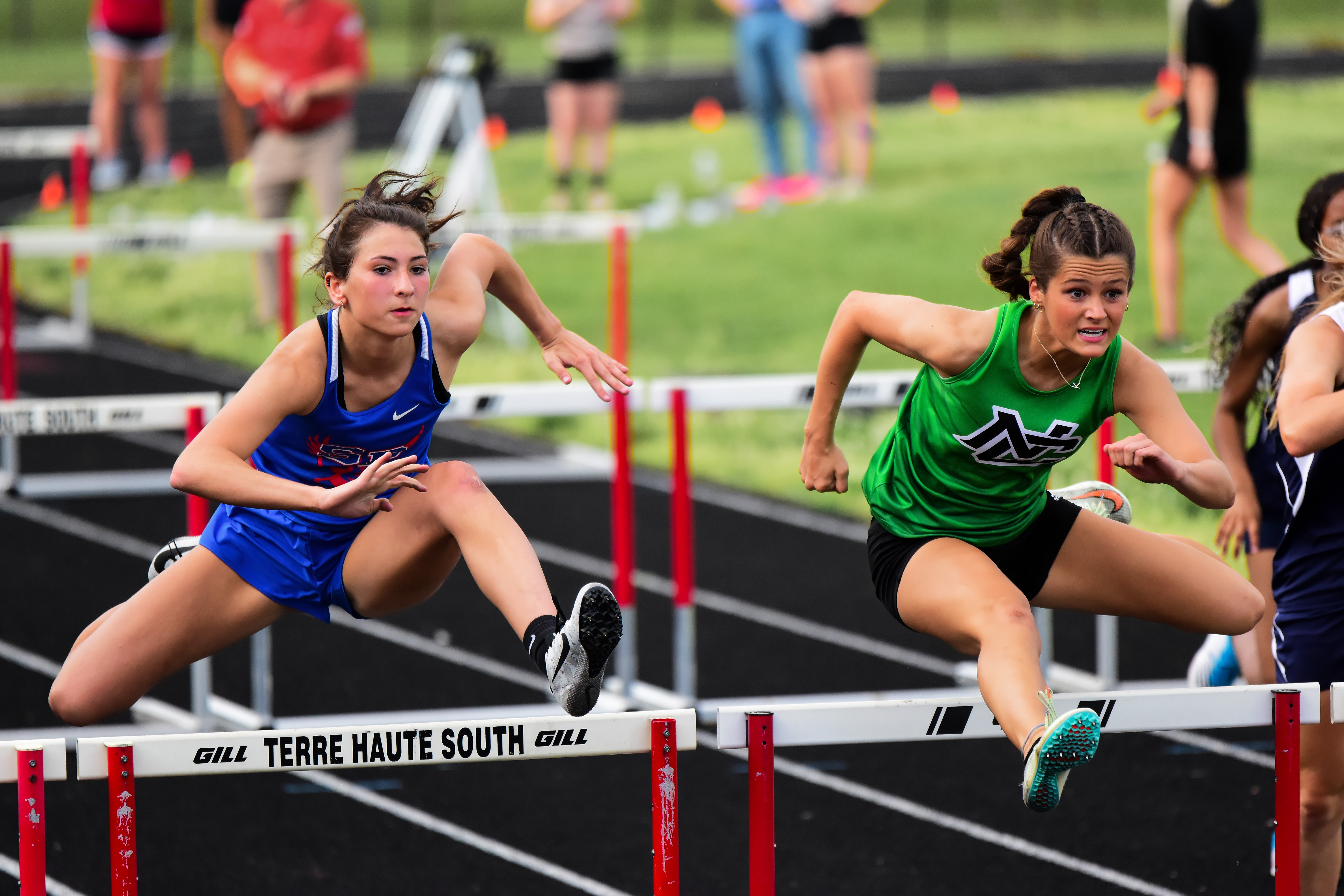
Aaliyah Bailey is an elite American track and field athlete who rose to prominence as a standout hurdler for Mississippi State University. Specializing in both the 100-meter and 400-meter hurdles, she became a key competitor in the Southeastern Conference (SEC), known for her technical precision, explosive starts, and versatile sprinting ability.
Early Athletic Development and High School Success
The foundation of Aaliyah Bailey’s career was built in Georgia, a state renowned for producing world-class sprinting talent. Competing for Rockdale County High School, Bailey established herself as one of the premier dual-threat hurdlers in the region. Her high school tenure was defined by a rapid progression in the short hurdles, where she consistently lowered her times to meet the standards of Division I recruiters.
During her time at Rockdale County, Bailey was not merely a participant but a dominant force in the GHSA (Georgia High School Association) championships. Her ability to maintain composure under the pressure of state-level finals set her apart from her peers. High school track in Georgia serves as a high-intensity proving ground, and Bailey’s success there provided the necessary springboard for her transition to the collegiate level. Scouts noted her aggressive "attack" of the first hurdle and her ability to maintain a consistent three-step rhythm between barriers, a technical requirement for any athlete looking to compete at the highest levels of the NCAA.
The Mississippi State University Era
Transitioning from high school success to the Southeastern Conference (SEC) is widely considered one of the most difficult leaps in athletics. The SEC is arguably the most competitive conference in collegiate track and field, often producing faster times than many national championships worldwide. Aaliyah Bailey joined the Mississippi State Bulldogs, bringing her talents to a program known for its rigorous developmental environment.
At Mississippi State, Bailey expanded her repertoire. While many athletes specialize strictly in the 100m hurdles (sprint hurdles) or the 400m hurdles (long hurdles), Bailey’s coaches recognized her unique combination of raw speed and aerobic capacity. In the SEC circuit, she faced off against future Olympians and national record holders, which forced an evolution in her training. Her collegiate career was marked by consistent scoring in major meets, including the SEC Outdoor Championships and various NCAA regional qualifiers.
Adapting to the Indoor Season
Collegiate track also requires mastery of the indoor circuit, which focuses on the 60-meter hurdles. For a tall, powerful hurdler like Bailey, the indoor season is a test of "twitch" fibers and explosive acceleration. She recorded personal bests in the 60mH that placed her among the top competitors in Mississippi State history. The indoor season is critical because it builds the strength and snap required for the outdoor 100m hurdles later in the spring.
Technical Analysis of Aaliyah Bailey’s Hurdling Style
To understand Aaliyah Bailey the hurdler, one must look at the mechanics that allowed her to compete at the elite level. Hurdling is often described as "sprinting over obstacles" rather than jumping, and Bailey’s form exemplifies this philosophy.
The 100m Hurdles: Sprint Mechanics
In the 100m hurdles, the distance between barriers is only 8.5 meters for women. This requires a precise three-step pattern. Bailey’s strength lies in her lead leg efficiency. A common mistake in hurdling is "floating" over the barrier, which wastes time in the air. Bailey’s technique involves a fast, aggressive lead leg that snaps down toward the track immediately after clearing the hurdle. This allows her to resume sprinting mechanics as quickly as possible.
Furthermore, her trail leg tuck is a study in flexibility. By keeping the trail leg tight and parallel to the hurdle, she minimizes the risk of clipping the barrier while maintaining a narrow profile, which reduces wind resistance and keeps her center of gravity stable.
The 400m Hurdles: Rhythm and Endurance
The 400m hurdles is often cited as the most grueling event in track and field. It requires the speed of a sprinter, the endurance of a middle-distance runner, and the technical skill of a hurdler. Bailey’s approach to the 400mH involves a sophisticated stride pattern management. Early in the race, she typically utilizes a 15-stride pattern between hurdles, transitioning to 16 or 17 strides as fatigue sets in during the "home stretch" (the final 100 meters).
Her ability to maintain her hurdle form while under extreme lactic acid buildup is what made her a valuable asset for the Bulldogs in the 4x400m relay and individual long hurdle events.
Performance Metrics and Personal Bests
The following table outlines the key performance markers established by Aaliyah Bailey during her competitive peak. These figures represent the benchmarks that define her status in the NCAA and the broader track and field community.
| Event | Performance/Time | Context/Venue |
|---|---|---|
| 100m Hurdles | 13.91 seconds | Mississippi State Bulldog Invitational |
| 400m Hurdles | 59.97 seconds | SEC Outdoor Championships |
| 60m Hurdles (Indoor) | 8.52 seconds | Tiger Paw Invitational |
| 200m Sprint | 24.85 seconds | Crimson Tide Invitational |
| 4x400m Relay (Split) | ~54.5 seconds | NCAA East Preliminary |
Note: Times are based on verified collegiate records and regional qualifying results.
Training and Conditioning Philosophy
Aaliyah Bailey’s success was not merely a product of natural talent but a result of a highly structured training regimen common at Mississippi State. Elite hurdling requires a balance of three distinct training pillars:
- Plyometric Power: To clear hurdles without losing speed, Bailey engaged in extensive plyometric training (box jumps, depth jumps, and hurdle hops). This builds the "elasticity" in the tendons required for a quick "snap-down" after each barrier.
- Mobility and Flexibility: Hurdling puts immense strain on the hip flexors and hamstrings. A significant portion of Bailey's routine involved dynamic stretching and mobility drills to ensure her hips could open wide enough for the trail leg to clear the 33-inch (100mH) or 30-inch (400mH) barriers efficiently.
- Speed Endurance: Especially for the 400m hurdles, training involves "over-distance" runs. This might include 500-meter or 600-meter repeats at 80% intensity to ensure that when she hits the tenth and final hurdle in a race, she has the cognitive and physical strength to clear it safely.
Impact on Georgia and Mississippi Track
Beyond her individual times, Aaliyah Bailey represents a specific pipeline of talent. By moving from a high-achieving Georgia high school to a top-tier SEC program, she served as a blueprint for younger athletes in the Rockdale County area. Her journey underscores the importance of the student-athlete balance; as a representative of Mississippi State, she had to navigate the dual pressures of elite athletic performance and academic requirements.
In the context of 2026, Bailey’s legacy is seen in the continued recruitment of Georgia hurdlers to the SEC. Her career highlights the "multi-event" capability that modern coaches look for—athletes who can score points in the short hurdles, long hurdles, and the relay.
Challenges and Resilience in Elite Athletics
Like many high-level athletes, Bailey’s career was not without its hurdles—both literal and figurative. The transition to the 400m hurdles involves a steep learning curve regarding "pacing." In her early collegiate years, finding the right energy distribution was a primary focus. Running too fast in the first 200 meters can lead to a "wall" in the final 50 meters, while being too conservative can leave an athlete too far back to catch the leaders.
Her resilience was best demonstrated in her senior seasons, where she consistently improved her "finish" in the 100m hurdles, shaving hundredths of a second off her time through meticulous film study and adjustment of her block starts. In the world of sprinting, the difference between a podium finish and the middle of the pack is often less than the blink of an eye.
Frequently Asked Questions
Where did Aaliyah Bailey go to college?
Aaliyah Bailey competed for Mississippi State University (MSU). She was a prominent member of the Bulldogs' track and field program, competing in the Southeastern Conference (SEC), which is considered one of the most competitive athletic conferences in the United States.
What are Aaliyah Bailey's primary track events?
She is primarily a hurdler, specializing in the 100-meter hurdles (outdoor), 400-meter hurdles (outdoor), and the 60-meter hurdles (indoor). Additionally, she has contributed to the 4x400-meter relay and competed in open sprint events like the 200-meter dash.
What is Aaliyah Bailey's personal best in the 100m hurdles?
Her collegiate personal best in the 100-meter hurdles is approximately 13.91 seconds. This time reflects her capability as a sub-14 second hurdler, a benchmark that distinguishes elite collegiate athletes from the general field.
Did Aaliyah Bailey win any state championships in high school?
Yes, while attending Rockdale County High School in Georgia, she was a top-ranked athlete in the Georgia High School Association (GHSA) and earned multiple accolades at the state level in the 100m and 300m hurdles, which eventually earned her a scholarship to Mississippi State.
Is Aaliyah Bailey still competing in 2026?
As of 2026, Aaliyah Bailey has completed her collegiate eligibility at Mississippi State. While some athletes of her caliber pursue professional circuits (USATF), many transition into coaching or professional careers. Her influence remains prominent in the Mississippi State alumni records and within the Georgia track community.
Practical Recommendations for Aspiring Hurdlers
For athletes looking to emulate the success of Aaliyah Bailey, the focus should be on technical consistency rather than just raw speed. Many young hurdlers try to run as fast as possible but lose their form at the fifth or sixth barrier.
- Master the Three-Step: If you are a short hurdler, your primary goal is to achieve a consistent three-step rhythm. This may require shortening your stride slightly to ensure you don't "crowd" the hurdle.
- Focus on the Trail Leg: The lead leg gets you over the hurdle, but the trail leg gets you back to the ground. A slow trail leg acts like an anchor. Practice "trail leg circles" against a wall or over low hurdles to build the necessary hip strength.
- Film Your Races: Bailey and her coaches at Mississippi State utilized video analysis to look at "touchdown times" (the time it takes from leaving the ground to hitting the ground on the other side of the hurdle). Aspiring athletes should use slow-motion video to identify where they are losing time in the air.