The integer 7 is expressed as the decimal 7.0. In the decimal positional number system, any whole number can be represented by appending a decimal point followed by a zero or a series of zeros, confirming that its value remains exactly seven units without any fractional remainder.
The Nature of Integers in the Decimal System
The decimal system, or base-10, is the standard global system for denoting integer and non-integer numbers. At its core, the number 7 is an integer, meaning it is a counting number that represents a complete quantity. When we discuss expressing 7 as a decimal, we are essentially exploring how the representation of a value changes based on the format used, while the underlying mathematical magnitude remains constant.
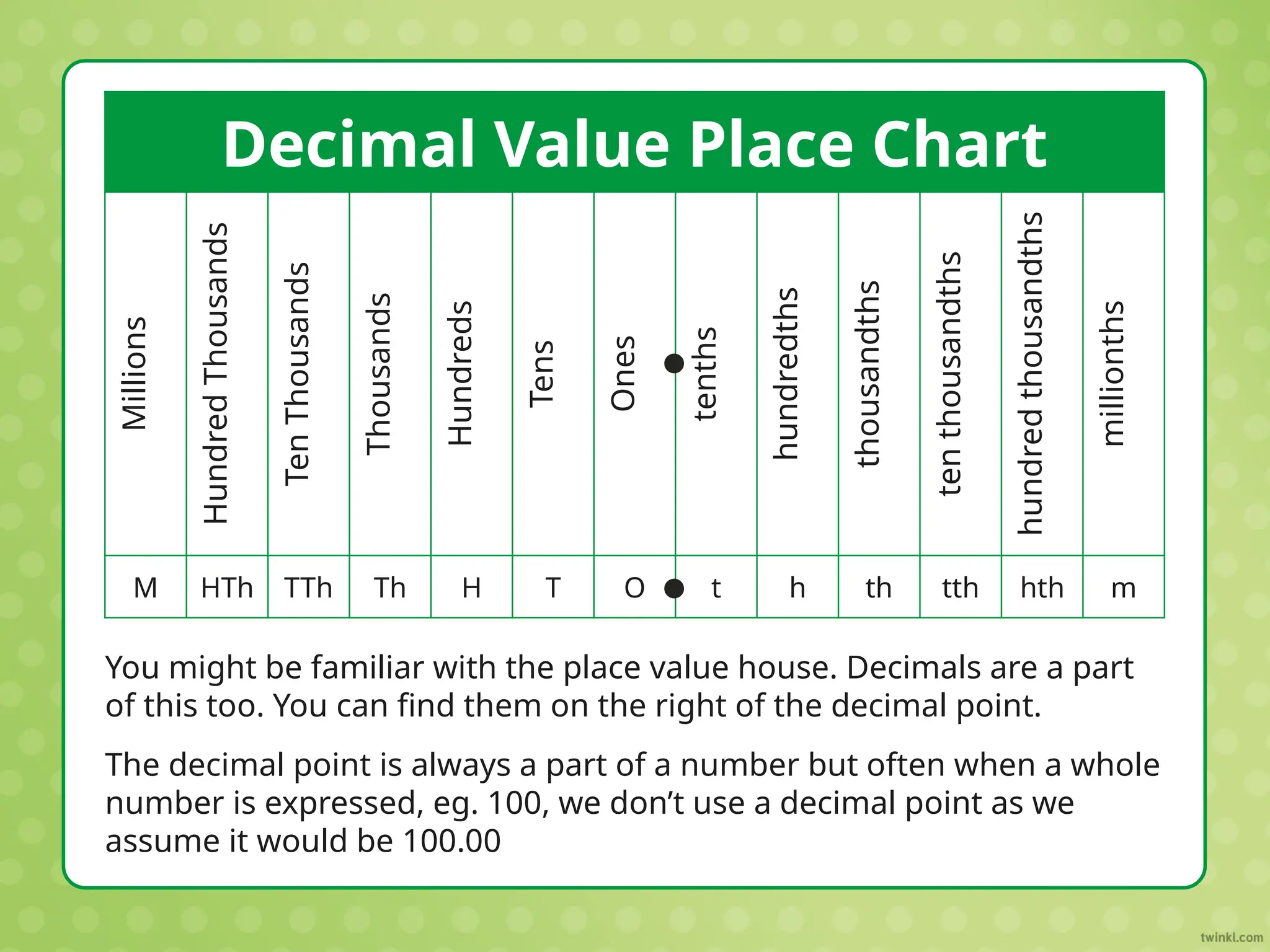
In the Hindu-Arabic numeral system, digits are assigned values based on their position relative to the decimal point. The number 7 occupies the "ones" column. When we write 7.0, we indicate that there are zero tenths, zero hundredths, and zero thousandths associated with that integer. While adding a decimal point and a zero may seem redundant in casual conversation, it serves a critical purpose in technical, scientific, and financial contexts where precision and significant figures are monitored.
Why Precision Matters in Decimal Notation
In mathematics and various applied sciences, the distinction between 7 and 7.0 is not merely aesthetic. It frequently conveys information about the precision of a measurement.
- Significant Figures: In physics and engineering, writing 7.0 implies that a measurement was taken with a device capable of detecting values to the tenths place, and the result was verified to be exactly seven. If a measurement is stated simply as 7, it may imply an integer count (exactly seven items), whereas 7.0 suggests a measured value where the level of certainty is higher.
- Computational Consistency: Computer programming languages often distinguish between integer data types and floating-point data types. An integer
7is stored differently in memory than a float7.0. When performing calculations that involve division or scientific functions, a system may require the input to be in a decimal (floating-point) format to ensure the output maintains the necessary precision. - Financial Standardization: In accounting and currency systems, amounts are often normalized to two decimal places. Representing seven dollars as 7.00 ensures that the data aligns with the standard format used for cents, preventing errors in summation and automated ledger balancing.
Conversion and Representation Methods
The process of expressing an integer as a decimal is straightforward because integers are already a subset of the set of all real numbers. Mathematically, any integer $n$ is equal to $n.0, n.00, n.000$, and so on, to infinity.
Step-by-Step Representation
To represent 7 in decimal form, follow these logical steps:
- Identify the Integer: Start with the whole number 7.
- Place the Decimal Point: Position the decimal point immediately to the right of the ones column.
- Append Zeros: Add the required number of zeros based on the desired level of precision.
The following table demonstrates how 7 changes appearance based on the requested decimal precision level:
| Precision Level | Decimal Representation | Context of Use |
|---|---|---|
| Integer | 7 | Counting discrete objects |
| Tenths | 7.0 | Basic scientific measurement |
| Hundredths | 7.00 | Currency and standard bookkeeping |
| Thousandths | 7.000 | High-precision engineering |
| Ten-thousandths | 7.0000 | Laboratory instrumentation |
Historical Context of the Decimal System
The development of decimal notation was a monumental shift in human history. The shift from Roman numerals—which lacked a positional decimal point—to the Hindu-Arabic system allowed for the development of modern algebra and calculus. By the time the system reached Europe in the late Middle Ages, the ability to express fractions as decimals (and integers as decimals) allowed mathematicians to perform complex arithmetic without relying on cumbersome fractions.
Representing 7 as 7.0 is a direct beneficiary of the invention of the zero and the positional value system. Without the concept of the decimal separator (often a point or a comma, depending on the locale), the distinction between whole numbers and parts of a whole would remain strictly separated. Today, international standards bodies like the International Bureau of Weights and Measures (BIPM) provide guidelines on how these numbers should be documented in technical communications to ensure universal clarity.
Common Misconceptions
A frequent point of confusion for students and those transitioning into technical fields is the belief that 7 and 7.0 represent different values. They do not. In a purely arithmetic sense, they are equivalent. The error arises when people assume that the extra zeros add "value."
- Equivalence: 7 = 7.0 = 7.00. Adding zeros to the right of the decimal point after an integer does not change its mathematical value.
- Formatting vs. Value: In spreadsheet software (like Microsoft Excel or Google Sheets), you might see "7" formatted to look like "7.00". The underlying data remains the same, but the visual display changes. It is vital to distinguish between how data is stored and how it is formatted for the user.
Practical Applications
When should you use 7.0 instead of 7? The answer depends on your environment:
- Academic/Scientific Writing: If you are reporting experimental data, use the precision consistent with your measurement tools. If your scale measures to the nearest tenth, use 7.0.
- Programming: Use 7.0 when the function requires a "float" or "double" data type to prevent integer division truncation (where 7 divided by 2 would otherwise yield 3 instead of 3.5).
- General Documentation: In most casual or professional business documents, 7 is preferred unless the context involves currency, high-precision technical specs, or data sets requiring uniform column alignment.
Related Mathematical Concepts
To understand 7 in decimal form, it is helpful to look at how other numbers behave in the same system:
- Terminating Decimals: Numbers like 7.5 or 7.25 are terminating decimals. They end after a certain number of digits.
- Repeating Decimals: Some numbers, such as 7 divided by 3, result in 2.333... The "..." indicates that the pattern repeats indefinitely.
- Significant Digits: This rule governs how many digits are kept in calculations. When multiplying 7 by 2.1, the result should respect the precision of the inputs.
Frequently Asked Questions
Is 7.0 different from 7? Mathematically, no. The value is identical. However, in technical and scientific contexts, 7.0 is used to indicate a specific level of measurement precision or to satisfy the requirements of a particular data type in computing.
Why would I ever write 7.000? You would write 7.000 in fields like chemistry, engineering, or manufacturing. This indicates that the measurement is precise to the thousandth of a unit, showing that the value was verified as "exactly 7" with a high degree of rigorous checking.
Does a decimal point change the value of 7? No, a decimal point is a notation marker used to separate the integer part of a number from its fractional part. Because there is no fractional part in 7, the decimal point simply serves as a signifier of the decimal system's structure.
How do I represent 7 in binary or other bases? Binary (base-2) represents 7 as 111. The conversion to decimal (base-10) is a separate process. Expressing 7 as a decimal is unique to the base-10 system, where it is written as 7.0.
Is 7.0 considered an irrational number? No. 7.0 is a rational number. Rational numbers are those that can be expressed as a fraction $p/q$, where $p$ and $q$ are integers. Since 7.0 can be written as 7/1, it is clearly rational.
Recommendations for Proper Usage
If you are working in a professional or technical setting, consistency is the primary rule. Choose a standard for the number of decimal places—for instance, two decimal places—and apply it uniformly throughout your document or data set. This practice, known as maintaining consistent significant figures, prevents confusion for the reader and ensures that your data appears professional and reliable. When entering data into computational systems, prioritize the format requested by the software (e.g., ensuring a float is entered as 7.0) to avoid processing errors.