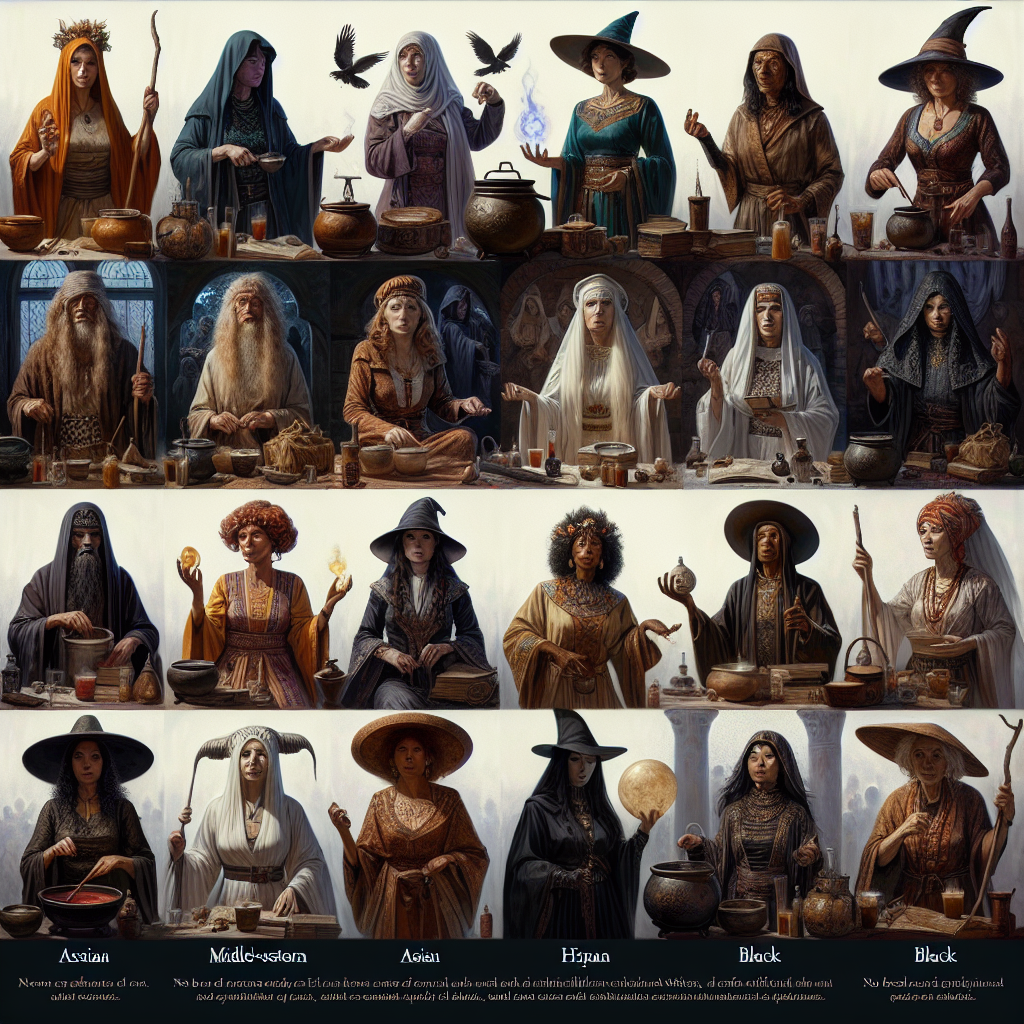
Five of the most notable examples of witches who have shaped cultural narratives include the Greek goddess Circe, the biblical Witch of Endor, the Irish noblewoman Alice Kyteler, the English prophetess Mother Shipton, and the New Orleans Voodoo Queen Marie Laveau. These figures represent the evolution of witchcraft from divine sorcery to historical persecution and modern legend.
The concept of the "witch" has undergone a profound transformation over the millennia. In the year 2026, our understanding of these figures is informed by a blend of archaeological evidence, historical records, and literary analysis. Whether viewed as dangerous heretics, powerful deities, or marginalized victims of social hysteria, these women (and the myths surrounding them) provide essential insights into how societies define power, gender, and the supernatural.
The Evolution of the Witch Archetype
To understand these five notable examples, one must first recognize that the definition of a "witch" was never static. In antiquity, the lines between religion, medicine, and magic were often blurred. Figures like Circe were not considered "witches" in the modern, pejorative sense but were instead viewed as divine or semi-divine beings with the specialized knowledge of pharmaka (herbs and potions).
By the Middle Ages and the early modern period, the narrative shifted toward a darker, more conspiratorial view. The publication of the Malleus Maleficarum (The Hammer of Witches) in 1486 institutionalized the belief that witchcraft was a form of heresy involving a pact with the devil. This transition is critical when analyzing figures like Alice Kyteler, whose trial in the 14th century served as a precursor to the massive witch hunts of the 16th and 17th centuries.
In the contemporary context of 2026, scholarship focuses on the intersectionality of these figures—how their status as "witches" was often a reflection of their social standing, wealth, or ethnic background.
1. Circe: The Divine Enchantress of Greek Mythology
Circe is perhaps the most enduring figure of the "witch" in Western literature. Appearing prominently in Homer’s Odyssey, she is the daughter of the sun god Helios and the ocean nymph Perse. Unlike later historical witches, Circe’s power was inherent and divine, yet she used it in ways that would define the "sorceress" archetype for centuries.
The Power of Transformation
In the Odyssey, Circe is famous for transforming Odysseus’s crew into swine after feeding them a mixture of wine and magical herbs. This act highlights the ancient connection between women and the domestic sphere of food preparation, subverted into a tool of malevolent control. Her mastery over the natural world—turning wild lions and wolves into docile pets—further cements her status as a figure who can override the natural order.
Literary Significance
Circe represents the "dangerous feminine" that Greek heroes had to overcome. However, modern reinterpretations, such as Madeline Miller's Circe, have reframed her not as a villain, but as an independent woman exiled for her power. In the context of 2026 literature and mythic studies, she is viewed as a foundational character who demonstrates that the earliest "witches" were essentially gods who chose to live among mortals.
2. The Witch of Endor: The Biblical Medium
The Witch of Endor appears in the First Book of Samuel (Chapter 28) in the Hebrew Bible. Her story is pivotal because it marks one of the earliest recorded instances of necromancy—the practice of communicating with the dead.
The Encounter with King Saul
King Saul, facing a devastating battle against the Philistines and feeling abandoned by God, seeks out a medium to summon the spirit of the prophet Samuel. Despite his own decree banishing all mediums and spiritists from the land of Israel, Saul visits the woman at Endor in disguise. She successfully summons Samuel, who delivers a prophecy of Saul's impending death and the fall of Israel.
Theological and Historical Impact
The Witch of Endor has long been a subject of debate among theologians. Did she truly have the power to summon a holy prophet, or was she a charlatan? For centuries, her story was used during the European witch hunts to prove that "witches" were real and that their powers, even if demonic in origin, could manifest in the physical world. She remains a primary example of the "medium" or "necromancer" variant of the witch.
3. Alice Kyteler: Ireland’s First Condemned Witch
Alice Kyteler is a unique figure in the history of witchcraft because she was an aristocrat. Her 1324 trial in Kilkenny, Ireland, is one of the earliest recorded cases that linked witchcraft with the concept of heresy and the "devil’s pact."
The Accusations
Alice was a wealthy woman who had been married four times. When her fourth husband fell ill and his children from previous marriages grew suspicious of their diminished inheritance, they accused Alice of using poison and sorcery. The charges brought against her by Bishop Richard de Ledrede were elaborate: they included denying Christ, sacrificing animals to demons, and possessing a "magic powder" made from the remains of unbaptized infants.
The Legal Precedent
Unlike the peasants usually targeted in later hunts, Alice used her wealth and political connections to fight the charges. While her servant, Petronilla de Meath, was tortured and eventually burned at the stake—becoming the first person in Ireland to be executed for witchcraft—Alice herself managed to escape to England or the European mainland and was never heard from again. Her case is a stark example of how witchcraft accusations were often used as tools for economic and political gain.
4. Mother Shipton: The Prophetic Crone
Ursula Southeil, better known as Mother Shipton, is a figure of English folklore who reportedly lived in the 16th century. Unlike the "heretical" witches of the Inquisition, Mother Shipton fits the archetype of the "cunning woman" or the prophetic crone.
The Prophecies
Living in a cave in Knaresborough, she was said to have predicted major historical events, including the Great Fire of London in 1666 and the defeat of the Spanish Armada. While many of the prophecies attributed to her were likely written by publishers long after her death to boost sales, the legend of the "deformed" but brilliant prophetess persisted.
Cultural Legacy
Mother Shipton represents the social role of the village witch—a woman who lived on the fringes of society but was consulted for her wisdom and foresight. In 2026, the cave where she allegedly lived remains a significant tourist site, highlighting the enduring human fascination with those who claim to see beyond the veil of time.
5. Marie Laveau: The Voodoo Queen of New Orleans
Marie Laveau (1801–1881) is perhaps the most influential figure in American occult history. A free woman of color in 19th-century New Orleans, she blended Roman Catholicism with African spiritual traditions to create a powerful form of Voodoo that commanded respect across all social strata.
Spiritual and Social Power
Laveau was not a "witch" in the European sense, but she was often branded as such by outsiders who feared her influence. She held massive public ceremonies at Congo Square and private consultations for the city's elite. Her power was not just spiritual; she was a skilled nurse during yellow fever outbreaks and a formidable community leader.
Modern Veneration
In 2026, Marie Laveau is recognized more as a religious leader and a cultural icon than a "witch." However, she remains a notable example of the "witch" label being applied to women of color who wielded spiritual authority outside of traditional patriarchal structures. Her tomb in Saint Louis Cemetery No. 1 remains one of the most visited sites in New Orleans, where people still leave offerings in hopes of her intervention.
Comparative Overview of Notable Witches
The following table compares the key attributes of these five figures to illustrate the diversity of the "witch" label throughout time.
| Name | Period/Origin | Primary Classification | Key Attribute or Feat | Source of Power |
|---|---|---|---|---|
| Circe | Ancient Greece (Myth) | Divine Sorceress | Transforming men into animals | Divine lineage (Helios) |
| Witch of Endor | Ancient Israel (Biblical) | Necromancer | Summoning the spirit of Samuel | Mediumship/Spirits |
| Alice Kyteler | 14th Century Ireland | Heretical Witch | Wealth and alleged demon pacts | Rituals/Heresy |
| Mother Shipton | 16th Century England | Prophetess/Crone | Predicting the Great Fire of London | Clairvoyance |
| Marie Laveau | 19th Century USA | Voodoo Queen | Spiritual leadership and healing | Voodoo/Syncretism |
The Socio-Political Impact of the "Witch" Label
The history of these figures reveals that the term "witch" was frequently a tool of marginalization. During the peak of the European witch trials (roughly 1450–1750), an estimated 40,000 to 60,000 people were executed. The vast majority were women, often those who were widowed, elderly, or possessed of property that others desired.
Economic Factors
As seen in the case of Alice Kyteler, witchcraft accusations were often tied to inheritance disputes. In a society where women had limited legal rights, accusing a wealthy widow of sorcery was an effective way to seize her assets.
Cultural Syncretism
In the case of Marie Laveau, the "witch" label was a byproduct of racial and religious prejudice. Practitioners of Voodoo and Hoodoo were often vilified by the white, Christian establishment, yet the efficacy of their herbal remedies and psychological counsel was sought after in secret. This duality—public condemnation and private reliance—is a recurring theme in the lives of notable witches.
Frequently Asked Questions
What is the difference between a historical witch and a mythological witch?
Mythological witches, like Circe, are often portrayed as having innate, god-like powers that do not rely on a "pact" with a higher evil. Historical witches, particularly those from the Middle Ages onward, were usually ordinary people accused of gaining supernatural abilities through forbidden religious or demonic alliances.
Were any of these "witches" real people?
Yes. Alice Kyteler, Mother Shipton, and Marie Laveau were real historical figures, though their lives have been heavily embellished by folklore and legend. The Witch of Endor is a scriptural figure whose historical existence is a matter of religious belief, while Circe is entirely mythological.
Why were women primarily targeted as witches?
Historical scholarship suggests that the persecution of witches was a way to enforce social and religious conformity. Women who lived independently, practiced midwifery, or held property were seen as threats to the patriarchal structure of the Church and the State.
What is the significance of the "Malleus Maleficarum"?
The Malleus Maleficarum, published in 1486, was a legal and theological treatise that provided the framework for identifying and prosecuting witches. It argued that witchcraft was a predominantly female crime and that torture was a legitimate means of extracting confessions.
How are these figures viewed in 2026?
Today, many of these figures are viewed through the lens of "reclamation." They are often celebrated as symbols of female autonomy, resistance to oppression, and the preservation of ancient knowledge that was nearly lost to history.
Practical Recommendations for Further Study
For those interested in the authentic history of witchcraft and its notable figures, it is essential to distinguish between popular fiction and primary historical sources.
- Examine Primary Documents: If researching Alice Kyteler, look for records of the Proceedings Against Dame Alice Kyteler, edited by Thomas Wright. These provide a direct look at the 14th-century legal mind.
- Visit Historical Sites: Sites like Mother Shipton's Cave in Yorkshire or the New Orleans Historic Voodoo Museum offer contextual evidence of how these legends are maintained and commercialized.
- Consult Academic Journals: Resources like the Journal of Witchcraft Studies provide peer-reviewed analysis of how the "witch" archetype has changed in response to shifting political climates.
- Read Classical Literature: To understand the mythological roots, read Book X of Homer's Odyssey (for Circe) or Ovid’s Metamorphoses.
By studying these five notable examples, we gain a clearer picture of how the "witch" has served as a mirror for human fears, desires, and the eternal struggle for power.