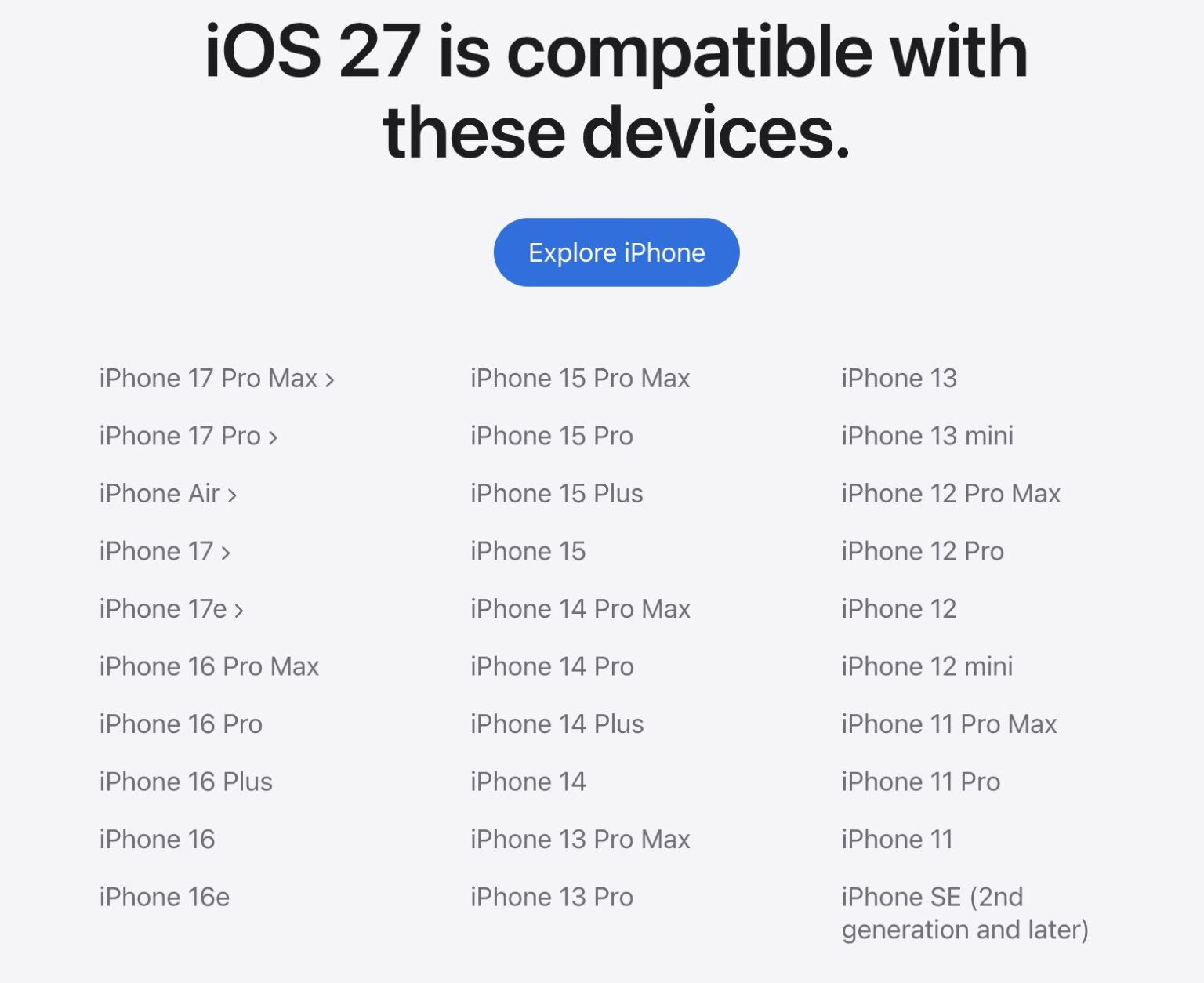
Understanding which Apple devices will support upcoming software releases is essential for planning upgrades, maximizing device lifespans, and maintaining access to the latest security features and user interface enhancements. Apple historically establishes clear hardware cutoff points based on processor capabilities, neural engine performance, and memory constraints.
Examining the compatibility landscape for iOS 26 reveals that Apple continues to prioritize devices equipped with advanced processing architecture capable of handling intensive on-device machine learning tasks and modern framework requirements. Users evaluating their current technology stack must look closely at their specific model identifier to determine update eligibility well ahead of the official public rollout.
Understanding Apple’s iOS Compatibility Lifecycle
Apple maintains one of the longest support windows in the consumer smartphone industry, typically offering major software updates for five to seven years following a device's initial market release. This longevity stems from Apple's vertical integration, where hardware and software are designed concurrently, allowing for deep optimization that extends the useful life of older silicon.
However, hardware limitations eventually force Apple to draw a line. As features become more computationally demanding—particularly with advanced artificial intelligence frameworks, complex augmented reality APIs, and heavier graphics rendering pipelines—older central processing units (CPUs) and graphics processing units (GPUs) simply lack the architecture required to deliver a stable, responsive user experience.
When a new major iOS version arrives, compatibility decisions are rarely arbitrary. They are dictated by hard technical thresholds:
- System-on-Chip (SoC) Generation: Newer versions of iOS often require specific instruction sets found only in recent processor tiers.
- Unified Memory Allocation: Modern software features demand higher random-access memory (RAM) ceilings to cache background processes and support multitasking.
- Neural Engine Cores: Dedicated hardware blocks for machine learning operations are increasingly mandatory for system-level intelligence features.
- Security Enclave Architecture: Advanced security protocols require modern hardware-based cryptographic components that older chips cannot emulate efficiently.
The 5 iPhone Models Eligible for iOS 26
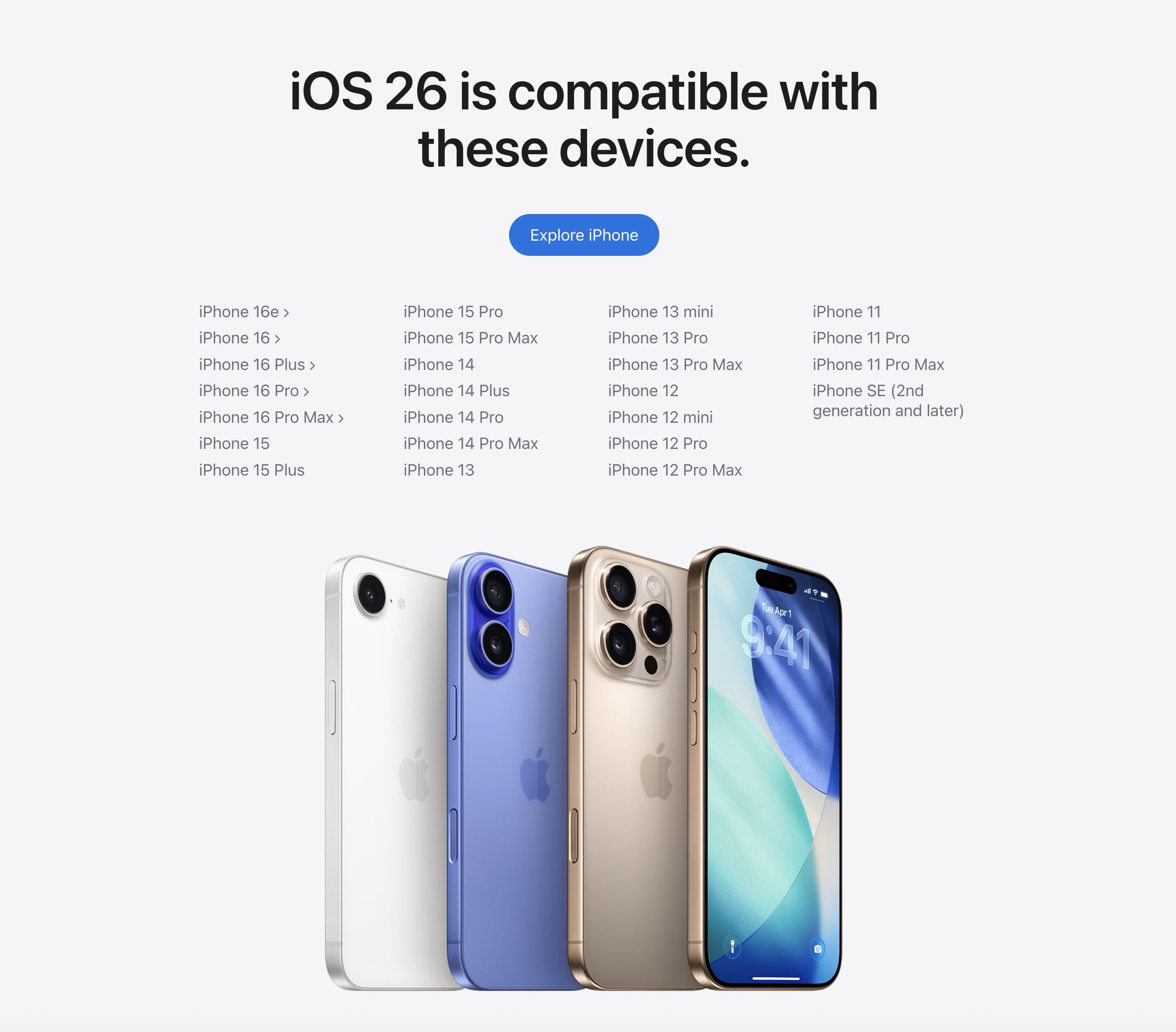
Based on Apple's historical release cycles, architectural progression, and processing requirements, the following five iPhone generations or specific model lines represent the primary tier of devices confirmed or projected to receive iOS 26.
1. iPhone 17 Lineup
As the flagship generation contemporary to the iOS 26 release window, the entire iPhone 17 lineup is fully optimized for the new operating system. These devices feature cutting-edge processors with expansive neural processing units and substantial base RAM configurations. This hardware headroom ensures that every native capability, from advanced generative background tasks to high-frame-rate spatial computing integrations, runs natively without performance throttling. Users holding an iPhone 17 model will experience the most complete, uncompromised feature set available in iOS 26.
2. iPhone 16 Pro and iPhone 16 Pro Max
The iPhone 16 Pro and Pro Max models, powered by the A18 Pro chip, possess the thermal management frameworks and raw computational power required to support the most demanding elements of iOS 26. Apple specifically engineered these chips with high-bandwidth memory architectures and expanded cache sizes to handle complex machine-learning workflows. Consequently, these devices will support all heavy computational features introduced in the software update, ensuring they remain viable performance powerhouses.
3. iPhone 16 and iPhone 16 Plus
Even standard variants within the iPhone 16 family remain fully compatible with iOS 26. Equipped with the base A18 processor and upgraded memory baselines compared to older generations, these models easily clear the baseline hardware requirements set by Apple's engineering teams. Owners of the iPhone 16 and 16 Plus can expect smooth animations, robust battery management integrations, and full access to standard user-interface overhauls.
4. iPhone 15 Pro and iPhone 15 Pro Max
As the oldest Pro models to make the cut, the iPhone 15 Pro and 15 Pro Max occupy a critical threshold in the iOS 26 compatibility matrix. Powered by the A17 Pro chip—the first Apple silicon built on a 3-nanometer fabrication process—these devices introduced the necessary hardware foundation for modern on-device intelligence. While they may miss out on a select few ultra-intensive auxiliary features reserved strictly for newer silicon, their core eligibility ensures they remain fully functional, secure, and modern for another full software cycle.
5. iPhone 15 and iPhone 15 Plus
Rounding out the primary supported devices are the base iPhone 15 and 15 Plus models. Utilizing the A16 Bionic chip, these devices strike a balance between mainstream consumer accessibility and enduring hardware capability. While the A16 lacks the advanced neural engine architecture found in the Pro variants, it possesses sufficient general processing strength to run the core framework of iOS 26 efficiently, preserving longevity for everyday users who prioritize reliability and standard communication tasks.
Comparative Overview of Supported Hardware
To better understand how these five device tiers compare in terms of processing architecture, release timing, and expected feature support under iOS 26, review the structured comparison below:
| iPhone Model Series | Processor Chip | Estimated Release Year | Full Feature Support Level | Long-Term Support Outlook |
|---|---|---|---|---|
| iPhone 17 Lineup | A19 Series | 2025 | 100% Complete | Maximum lifespan remaining |
| iPhone 16 Pro / Pro Max | A18 Pro | 2024 | Near-Complete | High durability and performance |
| iPhone 16 / 16 Plus | A18 | 2024 | Standard Feature Set | Strong mid-lifecycle status |
| iPhone 15 Pro / Pro Max | A17 Pro | 2023 | Moderate-High (Select Limits) | Approaching maturity curve |
| iPhone 15 / 15 Plus | A16 Bionic | 2023 | Standard Baseline | Baseline performance tier |
Preparing Your iPhone for the iOS 26 Update
Transitioning to a major new operating system requires careful preparation to prevent data loss, storage bottlenecks, and unexpected software conflicts. Before initiating the installation process, users should execute a series of preparatory steps to safeguard their personal data.
Checking Device Model Identification
Before downloading any software package, confirm your exact hardware model to avoid confusion. Navigate to Settings > General > About and check the Model Name and Model Number fields. Cross-reference this information with official Apple specifications to ensure your device matches one of the eligible tiers.
Managing Storage Capacity
Major iOS upgrades typically require between 6 GB and 12 GB of temporary free space during the download and unpacking phases, depending on the device base storage and the size of the update package. If your device storage is heavily utilized, clear out cached media, offload rarely used applications, and transfer large photo or video libraries to cloud storage or a local computer before attempting the installation.
Executing a Comprehensive Backup
Never install a major operating system update without a verified backup. You can secure your data using two primary methods:
- iCloud Backup: Navigate to Settings > [Your Name] > iCloud > iCloud Backup and tap Back Up Now. Ensure you have sufficient iCloud storage space to complete the archive.
- Local Computer Backup: Connect your iPhone to a Mac or Windows PC via cable, open Finder or Apple Devices, select your device, choose Back Up All Data on This iPhone to This Mac, and encrypt the backup for maximum security.
Troubleshooting Common Update Issues
Even with careful preparation, users occasionally encounter technical hurdles during the iOS installation process. Understanding how to resolve these bottlenecks quickly minimizes frustration.
- Insufficient Storage Errors: If the installer halts due to lack of space, use the storage recommendations menu under Settings > General > iPhone Storage to automatically offload unused apps or review large attachments.
- Download Stalls: A sluggish or frozen download progress bar is usually caused by network congestion or Apple server loads. Toggle Wi-Fi off and back on, or restart your router. If problems persist, wait a few hours after the initial public release wave subsides.
- Recovery Mode Loops: In rare instances where a device fails to boot following an update, connect the device to a computer, force a restart using the physical volume and side buttons, and utilize Finder or iTunes to update or restore the system software.
Frequently Asked Questions
Will older models like the iPhone 14 receive iOS 26?
No. Historical patterns and hardware thresholds indicate that devices powered by the A15 Bionic chip and older processors reach the end of their major OS upgrade window prior to iOS 26. However, these devices typically continue to receive critical security patches for an additional two to three years.
Do all supported iPhone models get every single feature in iOS 26?
Not necessarily. While all five eligible models will run the core operating system, advanced features that rely heavily on specialized neural engines, expanded RAM, or specific display hardware may be restricted to newer processor tiers like the iPhone 17 or iPhone 16 Pro lines.
How much free space do I need to install iOS 26?
It is recommended to maintain at least 15 GB of available storage prior to starting the installation. While the final update file itself may be around 6 GB to 8 GB, the system requires extra working headroom to unpack, verify, and temporarily store installation files during the flashing process.
Can I downgrade my iPhone if iOS 26 runs poorly?
Apple officially stops signing previous iOS versions shortly after a new public release. Once Apple closes the software signing window, downgrading to an older operating system is no longer possible through standard channels.
Will updating to iOS 26 slow down an older eligible device like the iPhone 15?
Apple optimizes major software releases to run efficiently on all supported hardware. While older devices may experience nominal adjustments in battery life indexing immediately following the update, performance stabilizes once background system re-indexing completes within 24 to 48 hours.
Final Recommendations for Device Owners
Reviewing your current upgrade cycle against the iOS 26 compatibility list allows you to make informed financial and technical decisions. If you currently use an iPhone 15 series device or newer, you are positioned to receive the update without immediate hardware replacement costs.
Users operating older hardware, such as the iPhone 14 generation or earlier, should evaluate whether remaining on a secure legacy software version aligns with their usage needs or if transitioning to an eligible model provides better long-term utility, security, and access to modern mobile capabilities.