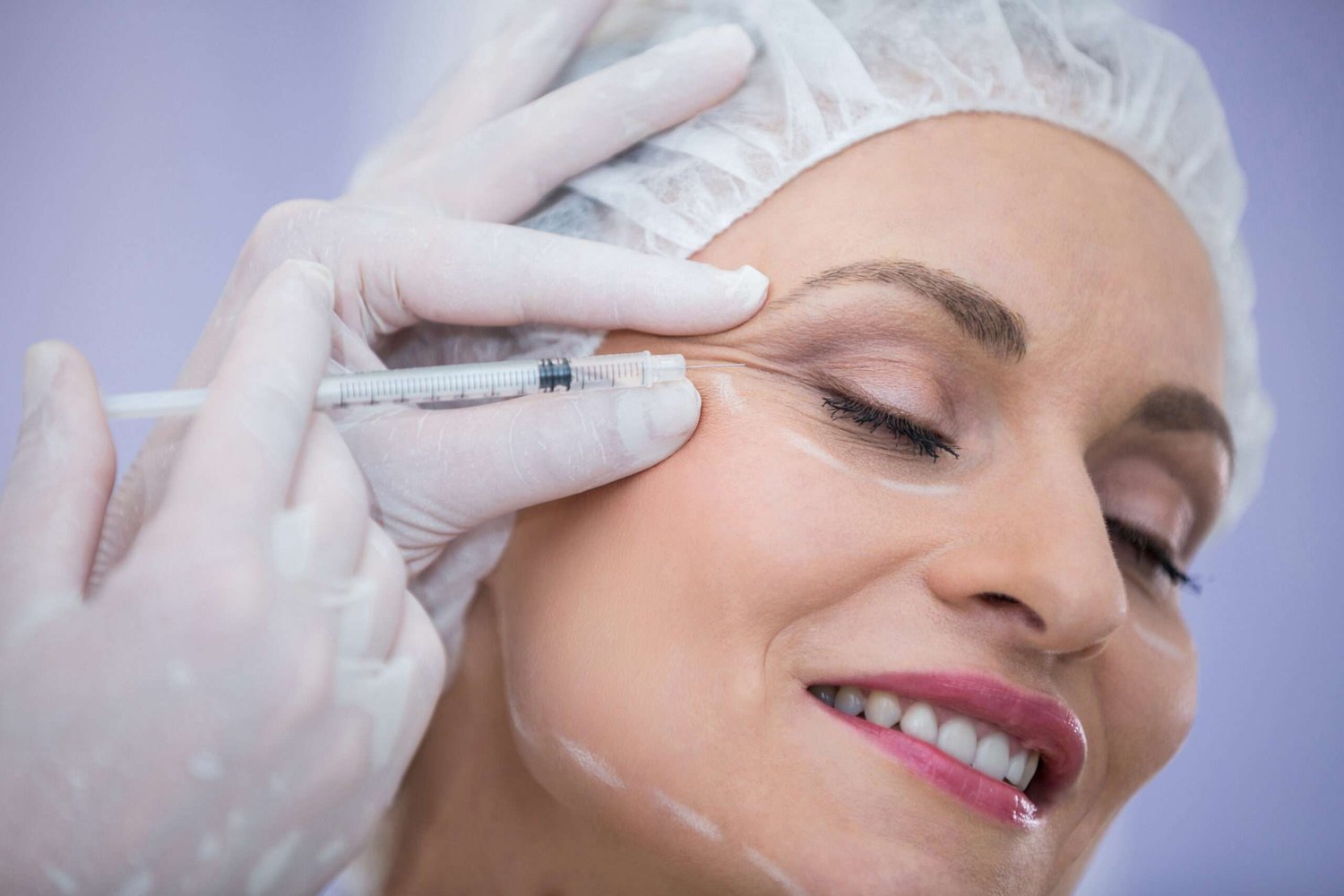
Tear trough rejuvenation requires specialized hyaluronic acid dermal fillers like Restylane-L, Restylane Silk, Juvederm Volbella XC, Belotero Balance, and Revanesse Versa, chosen based on skin thickness, depth of the hollow, and risk of lymphatic swelling.
Rejuvenating the periorbital region—commonly known as the tear trough or under-eye area—is one of the most advanced and technically demanding procedures in aesthetic medicine. The skin surrounding the eyes is exceptionally thin, often measuring less than 0.5 millimeters in thickness, which means any product placed beneath it must integrate seamlessly with local tissues. Poor product selection or improper injection technique can lead to visible lumps, persistent bluish discoloration known as the Tyndall effect, or chronic fluid retention and puffiness. Navigating the choices available on the market requires a clear understanding of rheology—the science of how gels flow, stretch, and resist compression—as well as an accurate assessment of an individual’s anatomical structure, skin laxity, and underlying bone resorption.
Understanding the Anatomy of the Tear Trough and Why Product Selection Matters
The periorbital area undergoes significant structural changes as part of the natural aging process. Fat pads beneath the eye descend or atrophy, the orbital bone reabsorbs and recedes, and the orbicularis oculi muscle thins, resulting in dark shadows and hollows that make individuals look perpetually fatigued. Treating these changes with dermal fillers is vastly different from augmenting cheeks or defining jawlines.
Dermal fillers used in this region must possess specific physical properties. They generally require a low G-prime (measuring elasticity and firmness), high cohesivity (the ability of the gel to hold together as a single unit), and low water affinity (hydrophilicity) to minimize post-treatment swelling. A product that absorbs too much water will expand over the days following the injection, creating an unnatural puffy appearance beneath the lower eyelid. Furthermore, because blood vessels and lymphatic channels are densely packed around the eyes, the chosen material must be pliable enough to move naturally with facial expressions without migrating from the initial placement plane.
1. Restylane-L: The Gold Standard for Structural Support
Restylane-L is a hyaluronic acid dermal filler composed of Non-Animal Stabilized Hyaluronic Acid (NASHA) technology, formulated with 0.3% lidocaine for patient comfort. It features a firmer gel consistency with higher particle strength compared to finer, smoother formulations.
Who Should Choose Restylane-L
Restylane-L is ideal for individuals with thick to moderate skin thickness who present with deep structural tear trough hollows or a distinct tear trough ligament tethering the skin down. Patients who need actual structural lift rather than just surface hydration benefit most from its firmer matrix. It is also a preferred option for practitioners seeking predictable, long-lasting projection that resists early degradation in areas of moderate mechanical movement.
Advantages and Limitations
The primary advantage of Restylane-L is its longevity and structural integrity; it holds its shape well and provides reliable correction for deep hollows. However, because of its firmer consistency, it carries a higher risk of contour irregularities if placed too superficially. It should strictly be administered in a deep supraperiosteal plane by an experienced injector. Patients with very thin, translucent skin may experience the Tyndall effect if Restylane-L is placed improperly.
2. Restylane Silk: The Specialist for Ultra-Thin Skin and Fine Lines
Restylane Silk is also part of the Restylane family but is manufactured with smaller, smoother hyaluronic acid particles designed specifically for delicate areas and fine lines.
Who Should Choose Restylane Silk
Restylane Silk is tailored for patients with delicate, crepey, or remarkably thin under-eye skin where firmer products would show through as visible bumps or bluish discoloration. It is well-suited for younger patients addressing early-stage hollows or those requiring fine surface-level smoothing rather than deep volumetric replacement.
Advantages and Limitations
The micro-particle structure of Restylane Silk allows for extremely precise, superficial placement without creating heavy lumps. It integrates smoothly into thin tissue planes. The trade-off for this delicate consistency is reduced longevity; because the particles are smaller and more easily broken down by the body, results typically do not last as long as those achieved with firmer structural gels. It also has a slightly higher tendency to attract water, requiring conservative dosing to avoid localized swelling.
3. Juvederm Volbella XC: Smooth Integration for Natural Expression
Juvederm Volbella XC utilizes proprietary Vycross technology, which blends low- and high-molecular-weight hyaluronic acid to create a tightly cross-linked, smooth gel. It is formulated with lidocaine and is engineered to have low water-binding capacity.
Who Should Choose Restylane Alternatives Like Volbella
Volbella XC is an excellent choice for individuals prone to under-eye puffiness or chronic fluid retention, as its low hydrophilicity significantly reduces the risk of delayed swelling. It is also recommended for patients seeking a very soft, natural-looking transition from the cheek to the lower eyelid, particularly when dynamic facial expressions are a primary concern.
Advantages and Limitations
Volbella's smooth, cohesive formulation spreads evenly and moves fluidly with the orbicularis oculi muscle. Patients appreciate the soft feel and natural look. However, because it is a softer gel, it provides minimal structural lift. Individuals with severe volume loss or deep skeletal recession will find Volbella insufficient for complete correction and may require a combination of a firmer cheek filler paired with a lighter tear trough product.
4. Belotero Balance: The Master of Superficial Micro-Correction
Belotero Balance is a cohesive polydensified matrix (CPM) hyaluronic acid filler. Its unique manufacturing process creates a multi-layered gel structure that allows the product to spread evenly and integrate seamlessly into the dermis.
Who Should Choose Belotero Balance
Belotero Balance suits individuals dealing with superficial shadowing, fine lines, and thin-skinned hollows where traditional fillers risk creating visible ridges. It is frequently selected by practitioners for treating the very edge of the tear trough where it transitions smoothly onto the cheek.
Advantages and Limitations
The standout characteristic of Belotero Balance is its exceptional integration capability, which virtually eliminates the risk of surface lumping or the Tyndall effect when used correctly. Its softness allows for placement closer to the skin surface than most other fillers. The limitation is its lower relative longevity and lack of firm lifting capacity; it acts more as a skin conditioner and fine-filler than a robust structural support agent.
5. Revanesse Versa: Versatile Softness and Minimal Swelling
Revanesse Versa is a hyaluronic acid filler manufactured using a proprietary wet-milling technology that produces exceptionally spherical and uniform particles. It is known for its smooth texture and predictable behavior upon injection.
Who Should Choose Revanesse Versa
Revanesse Versa is suitable for individuals seeking a balanced profile of softness, smoothness, and controlled swelling. It is a reliable option for patients with moderate tear trough hollows who want a predictable healing process with minimal initial downtime or inflammatory response.
Advantages and Limitations
Versa’s spherical particle design allows for smooth extrusion and easy molding by the injector, resulting in a clean, even surface contour. Clinical observations suggest that Versa often triggers less immediate post-procedure edema compared to other HA formulations. On the downside, while durable, it may require slightly higher volumes to achieve the same degree of structural correction as firmer legacy products.
| Filler Name | Technology / Base | Primary Strengths | Ideal Patient Profile | Key Consideration |
|---|---|---|---|---|
| Restylane-L | NASHA (Firm Gel) | High structural lift, durability | Thick skin, deep hollows | Must be placed deep; risk of Tyndall effect if superficial |
| Restylane Silk | Small-particle HA | Precision smoothing, delicate integration | Ultra-thin skin, fine superficial lines | Shorter duration, higher water attraction |
| Juvederm Volbella XC | Vycross Technology | Low water absorption, smooth movement | Puffy-prone eyes, dynamic expressions | Minimal lifting capacity for severe volume loss |
| Belotero Balance | Cohesive Polydensified Matrix | Exceptional integration, zero ridging | Superficial shadowing, fine skin transitions | Lower longevity, limited structural support |
| Revanesse Versa | Spherical Uniform Particles | Low post-injection swelling, smooth finish | Moderate hollows, sensitive to swelling | May require precise volume titration |
Critical Factors in Choosing the Right Under-Eye Filler
Selecting the ideal product involves much more than comparing brand names; it requires a comprehensive clinical evaluation conducted by a board-certified dermatologist, plastic surgeon, or experienced oculoplastic specialist.
Anatomical Assessment
Before any product is chosen, the practitioner must evaluate whether the patient has true volume loss (hollowness) or merely hyperpigmentation and skin laxity. Dermal fillers cannot correct dark circles caused by thin, translucent skin revealing underlying blood vessels or genetic pigmentation; placing filler under pigmented skin without volume loss will yield disappointing cosmetic results and can create unnatural shadows.
Injection Technique and Depth
The plane of injection dictates product safety and efficacy. Deep placement (directly onto the bone or beneath the orbicularis oculi muscle) is generally favored for structural products like Restylane-L to prevent surface irregularities. Superficial placement requires specialized micro-cannulas or fine needles and is restricted to products engineered for tissue integration, such as Belotero Balance or Restylane Silk. Precision is paramount to avoid major vascular structures such as the angular artery.
Managing Risks and Potential Complications
While hyaluronic acid fillers are reversible using an enzyme called hyaluronidase, periorbital treatments carry unique risks that require careful navigation.
- Edema and Malar Mounds: Chronic swelling can occur if a filler attracts excessive water or obstructs delicate lymphatic drainage pathways in the cheek and eye junction.
- The Tyndall Effect: A bluish discoloration caused by light scattering when translucent hyaluronic acid is placed too superficially in the dermis.
- Vascular Occlusion: Although rare in the tear trough compared to the glabella or nose, accidental intravascular injection can compromise blood flow, necessitating immediate emergency dissolution.
Patients must disclose their complete medical history, including allergies, history of autoimmune conditions, and previous periorbital surgeries or laser treatments, to ensure safe procedural planning.
Frequently Asked Questions
How long do tear trough fillers typically last?
Periorbital fillers generally last between 9 to 18 months. Because the eye area experiences constant movement from blinking, squinting, and facial expressions, metabolic breakdown of hyaluronic acid can occur slightly faster here than in static areas like the cheeks or chin.
Can under-eye fillers fix dark circles?
They correct dark circles only when those shadows are caused by anatomical hollowing that casts a shadow over the lower lid. If dark circles are caused by hyperpigmentation, thin skin, or prominent blood vessels, fillers will not eliminate the discoloration and may require complementary treatments like lasers or topical regimens.
What is the difference between using a needle and a cannula for eye fillers?
A needle is sharp and allows for precise depth placement, but carries a higher risk of bruising by piercing blood vessels. A blunt-tip micro-cannula pushes vessels aside rather than puncturing them, reducing bruising and lowering the risk of intravascular injection, though it requires advanced tactile skill from the practitioner.
Why do some people look puffy after getting tear trough filler?
Puffiness usually results from either product hydrophilicity (attracting excess water post-procedure), over-correction of the tear trough volume, or underlying pre-existing lower eyelid herniated fat pads that were misdiagnosed as simple hollows prior to treatment.
How should I prepare for a tear trough filler appointment?
Patients are generally advised to avoid blood-thinning medications, supplements such as aspirin, ibuprofen, fish oil, and vitamin E for at least one week prior to treatment to minimize the risk of bruising and localized bleeding.
Next Actions for Prospective Patients
If you are considering under-eye rejuvenation, your most crucial first step is scheduling a formal consultation with a qualified medical professional who specializes in facial anatomy and periorbital aesthetics. Request to see a portfolio of their unretouched, healed tear trough cases, and discuss your specific anatomical challenges to determine which product aligns safely with your skin type and aesthetic goals.