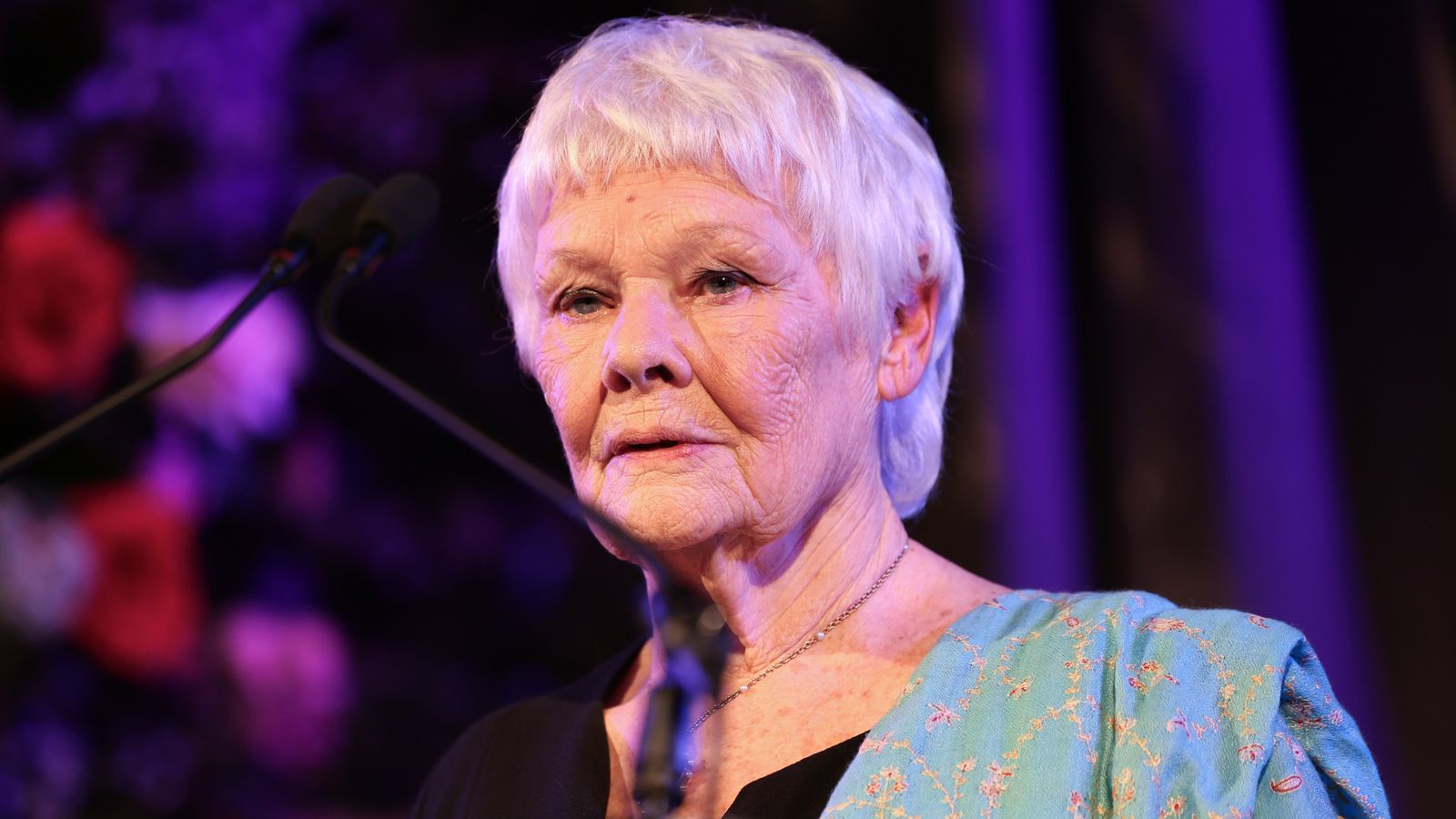
Dame Judi Dench’s legacy stands as a defining cornerstone of modern British theatre, global cinema, and television. Evaluated through 2025 retrospectives, archival preservation projects, and critical re-examinations, her career demonstrates how classical theatrical discipline can seamlessly adapt to cinematic storytelling, leaving an indelible imprint on performance arts standards worldwide.
The Evolution of Dame Judi Dench’s Artistic Career
Understanding how Dame Judi Dench’s legacy was reimagined requires examining the foundation of her multi-decade career. Born in York in 1934, Dench developed her craft within the rigorous discipline of British repertory theatre. Unlike actors who achieve sudden screen stardom, Dench established her authority through classical stage performances before becoming a household name in television and an international film star in her sixties.
The Shakespearean Bedrock and Repertory Foundations
Dench’s professional debut occurred in 1957 with the Old Vic Company, performing as Ophelia in Hamlet. Her early work quickly established her technical precision, vocal resonance, and emotional clarity. Joining the Royal Shakespeare Company (RSC) in 1961, she took on landmark roles including Lady Macbeth, Titania in A Midsummer Night's Dream, and Viola in Twelfth Night.
Theatre critics consistently noted her ability to convey complex psychological states without relying on theatrical bombast. Her performance as Lady Macbeth alongside Ian McKellen in Trevor Nunn’s 1976 production remains a benchmark in Shakespearean staging. Recorded for television, that production demonstrated how Dench could scale down stage intensity for intimate screen framing—a skill that later defined her film career.
Television Prominence and Cultural Familiarity
While theatre critics celebrated Dench throughout the 1960s and 1970s, television introduced her to broader national audiences. Roles in sitcoms like A Fine Romance (alongside her late husband, Michael Williams) and the long-running BBC romantic comedy As Time Goes By (opposite Geoffrey Palmer) proved her exceptional comedic timing.
These series established her public persona as sharp, empathetic, and relatable. Her television success demonstrated that dramatic depth and light comedic charm were not mutually exclusive, cementing her position as one of the United Kingdom's most trusted performers.
Global Cinema and the Redefinition of Blockbuster Character Work
Dench’s transition to international cinema in the late 1980s and 1990s altered Hollywood’s perception of mature female actors. Her portrayal of Queen Victoria in Mrs Brown (1997) earned her an Academy Award nomination and critical acclaim for capturing regal isolation and personal grief.
In 1995, Dench took on the role of 'M', head of MI6, in the James Bond film GoldenEye. Casting a acclaimed classical actress as the traditionally male authority figure revitalized the franchise. Across eight films—spanning Pierce Brosnan’s era through Daniel Craig’s tenure culminating in Skyfall (2012)—Dench transformed M from a functional authority figure into a deeply compelling character whose dynamic with Bond formed the emotional core of the series.
Critical Milestones Across Stage, Television, and Film
The following table summarizes key performances, awards, and historical contributions that define how Dench's body of work is organized and studied in modern dramatic archives.
| Era / Medium | Key Works / Projects | Major Honors & Achievements | Artistic & Cultural Significance |
|---|---|---|---|
| Classical Stage (1950s–1980s) | Hamlet (1957), Macbeth (1976), Antony and Cleopatra (1987) | Record-holding 8 competitive Olivier Awards; Olivier Special Award | Set modern performance standards for female Shakespearean leads; emphasized intimacy over declamation. |
| Television (1980s–2000s) | A Fine Romance, As Time Goes By, Cranford (2007) | Multiple BAFTA TV Awards; Broadcasting Press Guild Awards | Bridged high-culture theatrical reputation with widespread, accessible public affection. |
| Early Cinema Breakthroughs (1980s–1990s) | A Room with a View (1985), Mrs Brown (1997), Shakespeare in Love (1998) | Academy Award for Best Supporting Actress (Shakespeare in Love); BAFTA Film Awards | Demonstrated that supporting roles could command narrative control; launched global film stardom past age 60. |
| Modern Blockbuster Era (1995–2015) | GoldenEye (1995), Casino Royale (2006), Skyfall (2012) | Global box-office success; Saturn Award nominations; Evening Standard British Film Awards | Reinvented the 'M' character in James Bond; redefined older female authority in action franchises. |
| Late Career & Retrospectives (2010s–2020s) | Notes on a Scandal (2006), Philomena (2013), Belfast (2021) | 8 total Oscar nominations; BAFTA Fellowship (2001); AFI Tributes | Highlighted vulnerable, complex portrayals of aging, memory, and personal resilience. |
Reimagining the Legacy: 2025 Archival and Retrospective Initiatives
The 2025 critical re-evaluations of Dame Judi Dench moved past simple career summaries to examine her fundamental contributions to performance theory, digital preservation, and institutional accessibility.
Digital Archiving and Performance Scholarship
A major development in preserving Dench's work involved the digitisation of performance archives across major theatrical bodies, including the Royal National Theatre and the Royal Shakespeare Company. Advanced high-definition scans of prompt books, audio recordings, and rare stage footage were cataloged for academic institutions worldwide.
These archives allow drama students and theatre historians to analyze Dench’s character preparation. Annotations reveal her meticulous attention to script rhythms, pause lengths, and spatial awareness on stage. By making these working materials accessible, educational institutions have reframed Dench not just as a celebrated star, but as a primary practitioner of text-based acting mechanics.
The Reassessment of Gender Roles in Genre Cinema
Film studies programs expanded their analysis of Dench’s work in mainstream cinema. Her 17-year tenure as M provided a framework for scholars studying how gender, age, and authority operate in action cinema.
Rather than adopting masculine tropes to portray executive power, Dench brought her own distinct balance of maternal pragmatism and uncompromising bureaucracy to the screen. Film historians point to Skyfall—where M's home, past choices, and eventual death serve as the narrative catalyst—as a milestone where a legacy character transformed standard blockbuster conventions.
- Judi Dench's Acting Methodology
- Vocal & Textual Rigor
- Shakespearean scansion rules
- Rhythmic pause placement
- Unwavering projection
- Micro-Expressive Cinema
- Sub-textual gaze control
- Minimal facial displacement
- Screen intimacy over spectacle
- Vocal & Textual Rigor
Craft and Technique: Why Dench’s Approach Endures
The longevity of Dench’s career stems from a consistent technical philosophy. Unlike method actors who immerse themselves in psychological realignments outside the workspace, Dench relies on rigorous script reading, spatial awareness, and direct emotional presence.
Micro-Expressions and Vocal Control
Dench’s theatrical background emphasizes the voice as a primary instrument. Her vocal control allows her to convey sarcasm, grief, or authority through minimal shifts in tone and inflection.
When performing in front of a camera, Dench translated this vocal precision into visual restraint. In films like Notes on a Scandal (2006) and Philomena (2013), her performances rely on micro-expressions—a slight shift in eye direction, a hardened jawline, or a suppressed smile. This restraint forces audiences to engage actively with the character's internal thoughts, creating deeper emotional connection.
Refusal to Idealize Characters
A defining characteristic of Dench’s work is her refusal to sanitize or idealize the women she portrays. Whether playing historic figures like Queen Victoria and Queen Elizabeth I, or fictional characters like Barbara Covett in Notes on a Scandal, she embraces their unpleasant traits, stubbornness, and moral ambiguities.
This commitment to authenticity keeps her performances from aging into dated melodrama. By honoring human flaw alongside nobility, Dench ensured her characters remained believable across changing cultural contexts.
Creative Resilience: Navigating Aging and Sensory Loss in the Arts
In her later years, Dench became an outspoken advocate for artists managing age-related physical challenges. Her openness regarding macular degeneration—a progressive eye condition that severely limited her vision—sparked important industry discussions on accessibility within creative fields.
Adapting Technique to Physical Changes
Rather than retiring when reading scripts became impossible, Dench adapted her working methods. She relied on friends, family, and colleagues to read scripts aloud to her, using her exceptional auditory memory to memorize lines phonetically and rhythmically.
- Script Acquisition via Auditory Reading
- Phonetic & Rhythmic Memorization
- Spatial Mapping with Directors
- Performance Execution
This adaptation demonstrated remarkable mental flexibility and highlighted the need for performing arts companies to adjust production workflows for disabled and older artists. Her continued work in film (Belfast) and stage retrospectives established a clear model for creative resilience.
Impact on Disability Representation in Performing Arts
Dench’s public handling of visual impairment helped dismantle industry stigmas around aging and physical limitations. Her advocacy encouraged arts organizations to adopt inclusive practices, such as providing auditory script support, flexible rehearsal spaces, and accessible set designs.
Through this, Dench expanded her impact beyond her artistic roles, demonstrating that age and physical changes do not diminish an actor's capacity to deliver commanding, world-class performances.
Frequently Asked Questions
What made Dame Judi Dench’s portrayal of 'M' in James Bond historic?
Casting Dame Judi Dench as M in 1995's GoldenEye marked the first time a woman played the head of MI6 in the James Bond franchise. Inspired by real-life MI6 chief Stella Rimington, Dench brought severe intellectual authority and emotional depth to the role, shifting the character from a simple background figure to a central element of the modern Bond narrative.
How many Academy Awards has Dame Judi Dench won?
Dame Judi Dench has won one Academy Award: Best Supporting Actress for her eight-minute performance as Queen Elizabeth I in Shakespeare in Love (1998). Over her career, she has earned a total of eight Oscar nominations across Best Actress and Best Supporting Actress categories.
How did Dame Judi Dench continue acting after experiencing vision loss?
Diagnosed with age-related macular degeneration (AMD), Dench adapted by having trusted colleagues, friends, and family read scripts aloud to her. Relying on her trained auditory memory from decades of theatre work, she memorized her lines completely by ear before stepping onto sets or stages.
What is Dame Judi Dench’s record with the Olivier Awards?
Dame Judi Dench holds the record for the most competitive Laurence Olivier Awards won by an individual, with eight wins across her stage career. She was also awarded the Special Olivier Award in 2004 in recognition of her contributions to British theatre.
Which 2025 projects highlighted Judi Dench’s legacy?
Retrospectives in 2025 focused on high-definition digital restorations of her 1970s and 1980s stage work with the Royal Shakespeare Company, along with academic retrospectives examining her impact on modern screen acting and accessible performance techniques for senior actors.
Recommended Resources for Studying Judi Dench’s Work
For actors, theatre historians, and film enthusiasts looking to analyze Dame Judi Dench’s technique and historical impact, the following steps offer structured ways to engage with her work:
- Examine Archival Stage Recordings: Access the digitized archives of the Royal Shakespeare Company and the National Theatre Archives to study her classical vocal control and blocking in mid-20th-century theatre productions.
- Analyze Screen Technique Transitions: Compare her performance in the filmed 1979 stage production of Macbeth directly against her film work in Mrs Brown or Notes on a Scandal to see how she scaled down vocal projection for intimate camera work.
- Review Oral History and Technique Interviews: Read primary interviews hosted by the British Film Institute (BFI) detailing her rehearsal habits, auditory line-memorization techniques, and collaborative approach with directors.