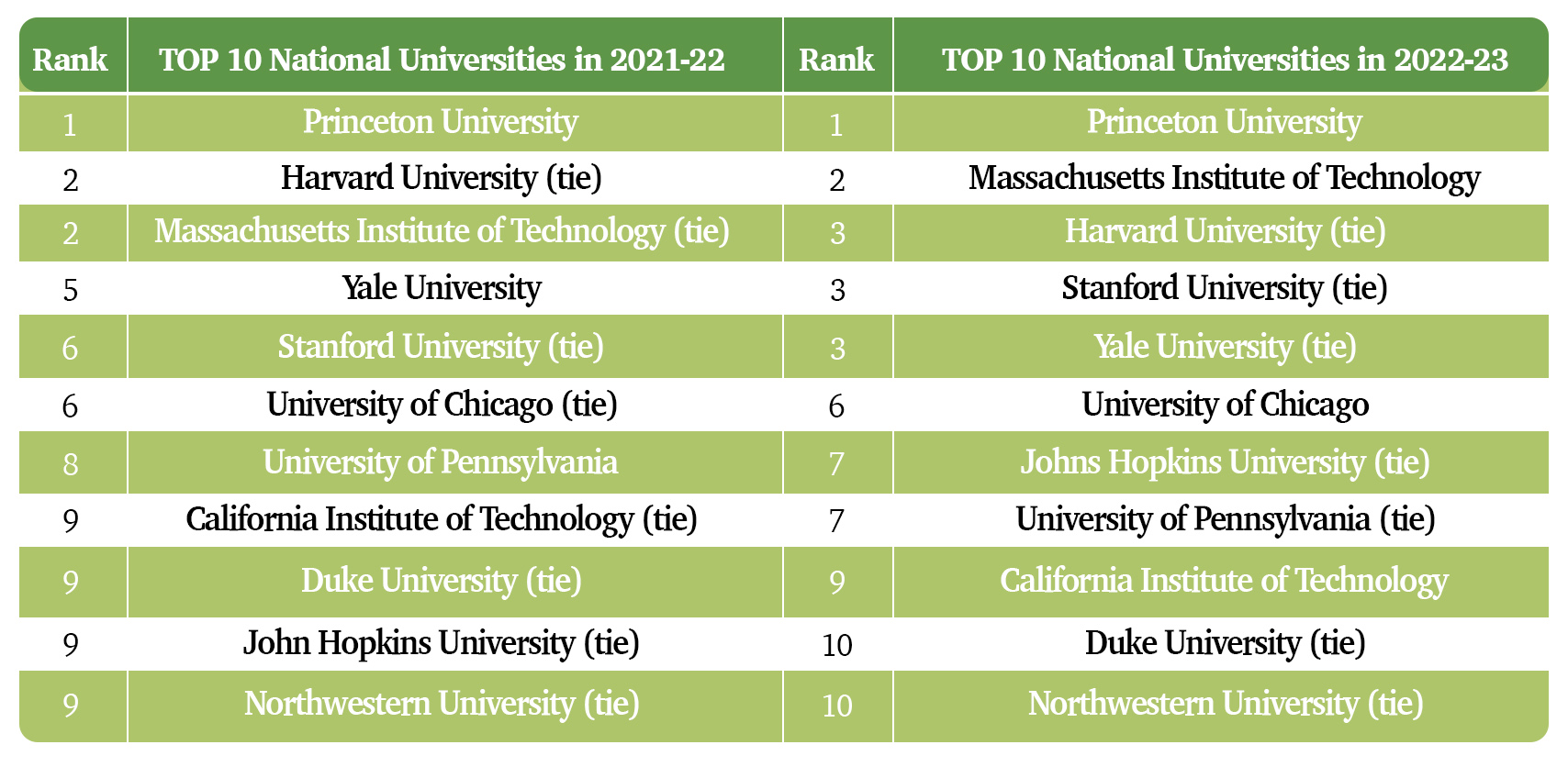
The 2024 rankings of best public universities published by U.S. News & World Report serve as a definitive benchmark for evaluating the academic quality, resource allocation, and student outcomes of state-funded higher education institutions in the United States. These rankings utilize a multi-factor methodology to compare schools based on graduation rates, faculty resources, peer assessment, and financial aid availability.
The Methodology Behind the U.S. News Rankings
The U.S. News & World Report methodology for ranking public universities is a composite model designed to distill complex institutional data into a single, comparative framework. The 2024 iteration of these rankings underwent significant revisions to emphasize social mobility and post-graduate success, reflecting a shift in higher education priorities toward inclusivity and return on investment.
To understand why a university holds a specific rank, it is essential to examine the weighting of the factors involved. The primary components include graduation and retention rates, which account for a substantial portion of the score. High retention rates signal that a university provides a supportive environment that encourages students to persist through their degree programs. Conversely, low graduation rates may indicate systemic issues regarding student support services or academic rigor.
Furthermore, the "Social Mobility" metric measures how effectively a university graduates students who receive federal Pell Grants. Since Pell Grant recipients are typically from households with lower family incomes, this metric highlights the institution’s commitment to providing equitable opportunities. Other components include "Peer Assessment," which involves surveys conducted among academic leaders at other institutions, and "Faculty Resources," which examines class sizes and student-to-faculty ratios.
Interpreting the 2024 Rankings
When analyzing the 2024 list, it is critical to distinguish between "National Universities" and "Regional Universities." U.S. News classifies institutions based on the scope of their research, the breadth of their degree offerings, and their geographic focus. The "Best Public Universities" list typically refers to the national category, which includes flagship state universities that grant a wide range of undergraduate, master's, and doctoral degrees.
Students and parents should avoid viewing the numerical rank as an absolute indicator of the "best" education for every individual. Instead, the rank should serve as a starting point for deeper investigation. For instance, a university ranked fifth on the list might prioritize massive research output, while a school ranked fiftieth might provide a more intimate, undergraduate-focused teaching experience with smaller class sizes and more direct access to professors.
Comparative Metrics for Public Institutions
To effectively use these rankings, applicants should evaluate specific data points rather than relying solely on the final index number. The following table illustrates the categories of data provided in the 2024 report and how they impact a prospective student's decision-making process.
| Metric | Focus Area | Why It Matters |
|---|---|---|
| Graduation/Retention | Institutional Stability | Measures student success and long-term academic support. |
| Pell Grant Graduation | Inclusivity | Reflects support systems for low-income student populations. |
| Peer Assessment | Academic Reputation | Gauges how the broader academic community views the program. |
| Faculty Resources | Learning Environment | Indicates class sizes and potential for mentorship. |
| Borrowing Rates | Financial Health | Shows how much debt typical graduates carry after departure. |
The Role of Research and Academic Infrastructure
One of the defining characteristics of high-ranking public universities is their status as research powerhouses. Many of the institutions appearing at the top of the 2024 U.S. News list are land-grant universities or major state flagship schools with significant funding from federal and private sources.
For a student, this translates into unique opportunities: undergraduate research, access to state-of-the-art laboratories, and connections to high-level industry partners. However, these benefits often come with trade-offs. Large research universities may rely heavily on teaching assistants for introductory-level coursework, and students may find that navigating the administrative bureaucracy of a large campus requires significant self-advocacy.
When evaluating these schools, prospective students should look into the "Undergraduate Research" support programs. Top-tier public universities are often better equipped to provide grants, specialized seminars, and summer research fellowships compared to smaller institutions.
Financial Considerations and Return on Investment
Public universities are generally more affordable for in-state residents than private counterparts, but the "sticker price" can be misleading. The 2024 rankings should be contextualized alongside the institution's net price calculators. A high-ranking public university might be cost-effective for a resident of that state but prohibitively expensive for out-of-state applicants.
Furthermore, the value proposition includes post-graduate salary data. Many states now provide longitudinal studies tracking the earnings of graduates from their public systems. By cross-referencing the U.S. News ranking with actual earnings data and loan default rates, students can form a realistic expectation of their potential return on investment.
Common Misconceptions Regarding Rankings
A frequent mistake among applicants is the "halo effect," where the prestige of a university’s ranking causes students to overlook department-specific strengths. A university may hold an overall high rank due to its engineering or medical programs while simultaneously having lesser-funded humanities or arts departments.
It is also vital to note that rankings are historical snapshots. They represent a composite of data from previous years. When using the 2024 data, remember that administrative changes, shifts in state funding, or the departure of key faculty can alter the day-to-day reality of an institution faster than its ranking can adjust.
Next Steps for Prospective Students
After reviewing the 2024 rankings, your next action should be to create a "shortlist" of three to five public universities that align with your specific academic goals and financial situation. Visit the official website of each university and locate the "Common Data Set," a document that provides standardized, transparent information on admissions, enrollment, and student life.
Compare the specific programs of interest at these universities, look for the availability of internships within the surrounding region, and contact the admissions office to ask about opportunities for campus visits. By treating the U.S. News & World Report rankings as a research tool rather than a final authority, you ensure that your college selection process remains grounded in your personal objectives.
Frequently Asked Questions
How frequently are these rankings updated? U.S. News & World Report releases its rankings annually. The 2024 rankings reflect data compiled and analyzed throughout the preceding academic cycles, ensuring that the information represents a multi-year trend rather than a single year of anomalous data.
Should I choose a private school over a top-ranked public university? The choice depends on your specific financial aid package and academic focus. Many top public universities provide a broader social experience and more diverse course offerings than smaller private colleges, but private schools may offer larger merit-based financial aid packages that bridge the cost gap for out-of-state students.
Do these rankings measure the quality of online programs? No, the general "Best Public Universities" rankings primarily evaluate on-campus undergraduate experiences. U.S. News publishes separate, dedicated lists for "Best Online Programs" that utilize entirely different criteria, such as faculty credentials for remote instruction and virtual student support services.
What is the significance of the "Social Mobility" category? Social mobility tracks how well a university helps students from disadvantaged backgrounds graduate and achieve professional success. It is a vital metric for evaluating whether a university is a catalyst for socioeconomic improvement for its student body.
Can I use these rankings for international student applications? Yes, but international students should also consider factors not measured by the rankings, such as the availability of International Student Services (ISS), visa support, and the density of global communities on campus.
Does a higher rank guarantee better job placement? While highly ranked universities often have robust career service centers and strong alumni networks, job placement is highly dependent on individual initiative, local industry demand, and the strength of the specific department or major you choose to pursue.