The 2017 Nissan Altima uses three original equipment tire sizes across its trim lineup: 215/60R16 for base and 2.5 S models, 215/55R17 for 2.5 SV and 2.5 SL trims, and 235/45R18 for the sporty 2.5 SR, 3.5 SR, and top-tier 3.5 SL variants. Factory cold tire inflation pressure is typically 32 PSI for 16-inch and 17-inch fitments, and 33 PSI for 18-inch wheels, though owners should always confirm exact pressure requirements on the driver-side door jamb placard.
2017 Nissan Altima Tire Sizes by Trim Level
The fifth-generation Nissan Altima (L33 series) received a major mid-cycle refresh for the 2016 model year, which carried directly into 2017. As part of this update, Nissan tuned suspension dampening, revised front and rear fascia designs, and adjusted wheel-and-tire packages across the trim hierarchy.
Because tire width, sidewall height, and wheel diameter vary significantly by trim, identifying your exact trim level is the critical first step before purchasing replacement tires. Installing an incorrect tire dimension can alter your speedometer accuracy, reduce fuel efficiency, compromise anti-lock braking (ABS) calibration, or cause rubbing against internal wheel wells.
Below is the complete factory equipment matrix for every 2017 Nissan Altima variant.
| Trim Level | Factory Tire Size | Wheel Diameter & Width | Recommended Cold PSI | Factory Speed / Load Rating |
|---|---|---|---|---|
| 2.5 (Base) | 215/60R16 | 16 x 7.0 inches | 32 PSI | 95H |
| 2.5 S | 215/60R16 | 16 x 7.0 inches | 32 PSI | 95H |
| 2.5 SV | 215/55R17 | 17 x 7.5 inches | 32 PSI | 94V |
| 2.5 SL | 215/55R17 | 17 x 7.5 inches | 32 PSI | 94V |
| 2.5 SR | 235/45R18 | 18 x 7.5 inches | 33 PSI | 94V |
| 3.5 SR | 235/45R18 | 18 x 7.5 inches | 33 PSI | 94V |
| 3.5 SL | 235/45R18 | 18 x 7.5 inches | 33 PSI | 94V |
Base and 2.5 S Trims (16-Inch Fitment)
Entry-level 2.5 and 2.5 S models prioritize ride compliance, fuel economy, and lower long-term replacement costs. Fitted with 215/60R16 tires on steel or basic aluminum alloy wheels, these vehicles feature a taller sidewall (approximately 5.08 inches high). The additional rubber cushion absorbs potholes and road expansion joints effectively, making it an ideal setup for urban commuting and high-mileage driving.
2.5 SV and 2.5 SL Trims (17-Inch Fitment)
Mid-tier SV and luxury-oriented SL models step up to a 215/55R17 setup on aluminum alloy wheels. This configuration strikes a balanced middle ground between comfort and handling response. The slightly wider contact patch and shorter sidewall (around 4.66 inches) reduce body roll during cornering while preserving a smooth highway ride.
2.5 SR, 3.5 SR, and 3.5 SL Trims (18-Inch Fitment)
The performance-styled 2.5 SR, V6-powered 3.5 SR, and range-topping 3.5 SL configurations come equipped with 235/45R18 tires mounted on 18-inch machine-finished alloy wheels. The 235mm tread width provides the largest contact patch of the lineup, improving dry grip, steering feel, and high-speed stability. However, the shorter 4.16-inch sidewall provides less impact damping over harsh pavement and requires vigilant pressure management to protect the alloy rims from bend damage.
Decoding Nissan Altima Tire Markings
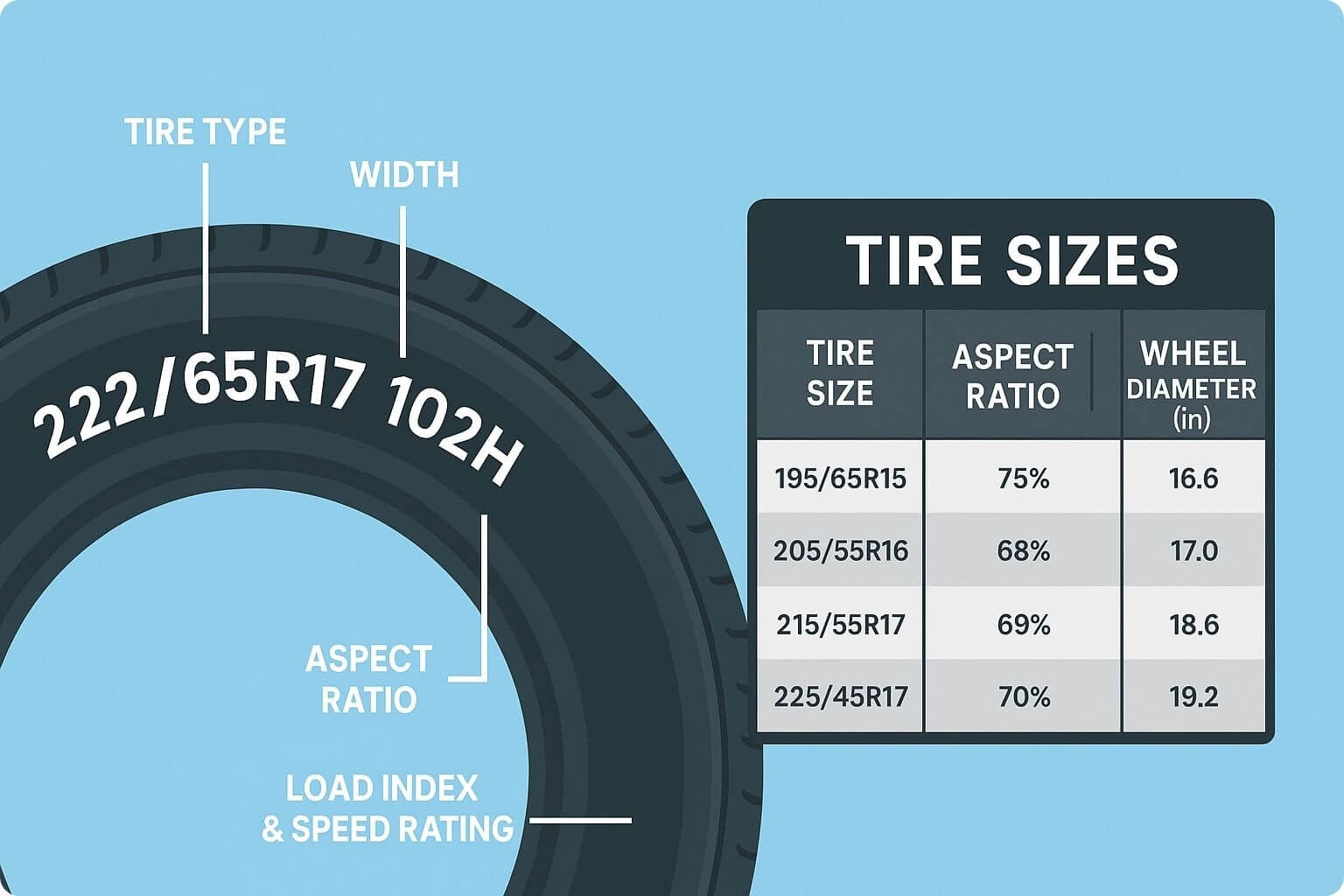
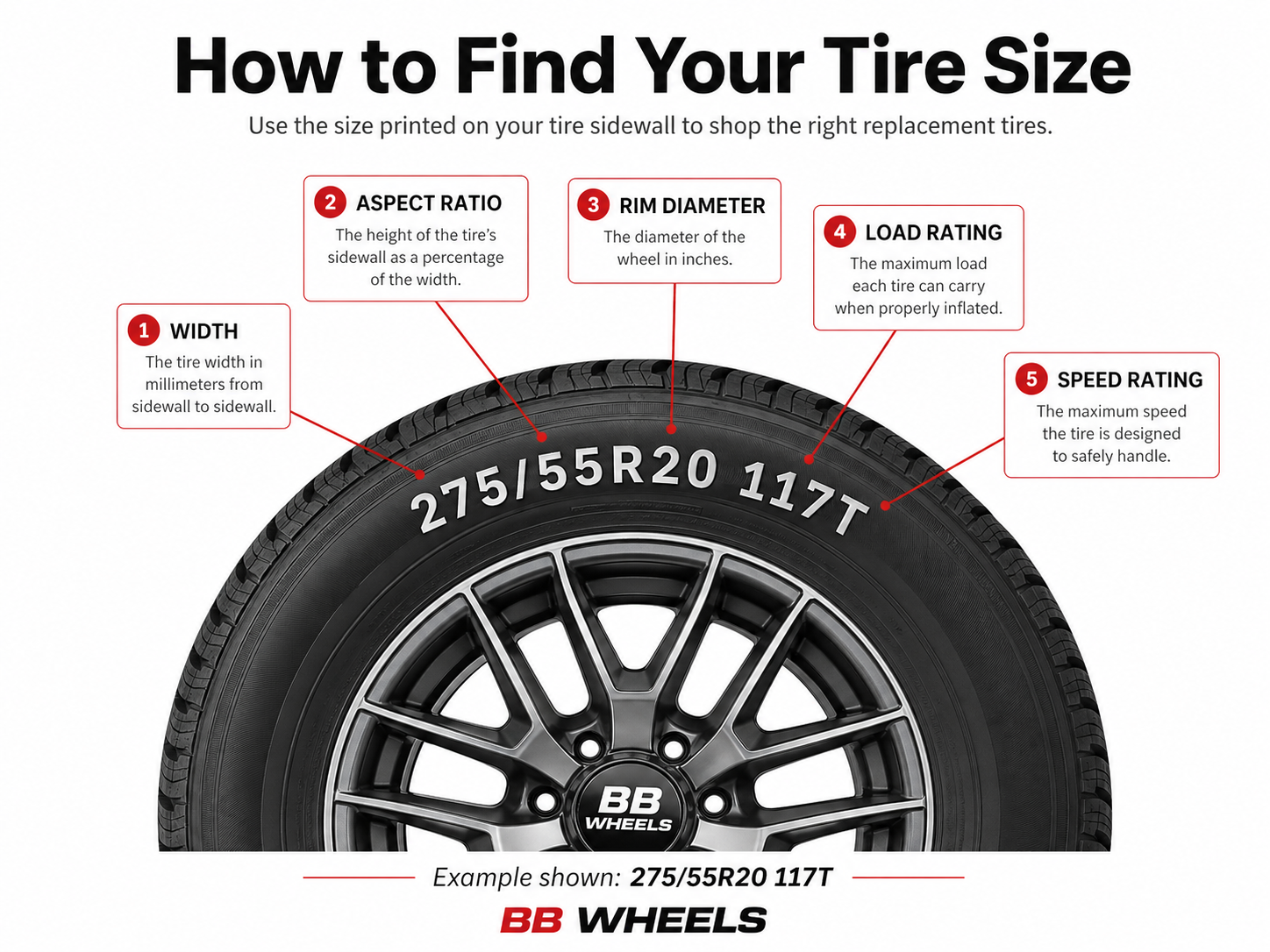
Understanding standard ISO metric tire codes allows you to evaluate replacement options accurately beyond just the numbers printed on the sidewall. Take the mid-range size 215/55R17 94V as a primary example:
- 215: Section Width (215 millimeters)
- 55: Aspect Ratio (Sidewall height is 55% of 215mm)
- R: Radial Construction
- 17: Rim Diameter (17 inches)
- 94: Load Index (94 = 1,477 lbs per tire)
- V: Speed Rating (V = up to 149 mph)
Section Width (215)
The first three-digit number indicates the nominal tire width in millimeters from sidewall edge to sidewall edge when mounted on its ideal rim width. A 215mm tire measures approximately 8.46 inches across.
Aspect Ratio (55)
The two-digit number following the slash represents the aspect ratio—the sidewall profile height expressed as a percentage of section width. On a 215/55R17 tire, the sidewall height is 55% of 215mm, equal to 118.25mm (4.66 inches). Lower numbers denote low-profile tires designed for crisp handling, while higher numbers indicate taller sidewalls engineered for absorption and comfort.
Internal Construction (R)
The letter R stands for Radial construction, which is standard on virtually all modern passenger vehicle tires. Radial tires feature internal ply cords running perpendicular to the direction of travel, offering flexibility, lower rolling resistance, and structural longevity.
Wheel Diameter (17)
The final two-digit integer specifies the wheel diameter in inches measured across the rim flange. A tire built for a 17-inch wheel cannot be stretched or compressed to fit a 16-inch or 18-inch rim under any safe operating condition.
Load Index and Speed Rating (94V)
The service description located after the size designation details the tire's maximum load-carrying capacity and top safe speed capability:
- Load Index (94): Represents a maximum weight rating of 1,477 pounds (670 kg) per tire under maximum inflation pressure. Multiplying this across four tires provides a combined load capacity well above the 2017 Altima's Gross Vehicle Weight Rating (GVWR) of approximately 4,200 to 4,400 lbs. Never install tires with a load index lower than your vehicle's factory specification (95 for 16-inch; 94 for 17-inch and 18-inch).
- Speed Rating (H or V): The letter H signifies a continuous speed rating of up to 130 mph (210 km/h), standard on 16-inch models. The letter V indicates a rating of up to 149 mph (240 km/h), standard on 17-inch and 18-inch models. Replacement tires must meet or exceed the original speed rating to maintain factory handling performance and vehicle stability system parameters.
Factory Wheel Specifications and Hardware Details
If you plan to purchase aftermarket wheels, winter tire rim packages, or replacement lug nuts for your 2017 Nissan Altima, matching factory wheel geometry is critical to prevent suspension interference or hub failure.
- Bolt Pattern (PCD): 5x114.3 mm (also known as 5x4.5 inches). This five-lug pattern is standard across fifth-generation Altimas.
- Center Bore Diameter: 66.1 mm. The central hole of the wheel must fit precisely over the axle hub. Aftermarket wheels with larger center bores (such as 73.1 mm) require hub-centric rings measuring 73.1mm OD to 66.1mm ID to eliminate high-speed wheel vibration.
- Thread Size and Pitch: M12 x 1.25. Nissan vehicles use metric fine threads on wheel studs. Installing standard M12 x 1.50 hardware will cross-thread and destroy the wheel studs.
- Wheel Lug Torque Spec: 83 lb-ft (113 N·m). Lug nuts should be torqued in a crisscross pattern using a calibrated torque wrench on clean, dry threads. Over-tightening can warp brake rotors, while under-tightening risks wheel separation.
- Wheel Offset: Range of +40mm to +50mm (Factory wheels typically feature a +45mm or +50mm offset depending on width).
Selecting Replacement Tires by Driving Need
Selecting the ideal tire category depends on your climate, driving style, annual mileage, and performance expectations. The 2017 Altima chassis responds differently based on tread compound stiffness and pattern architecture.
- 2017 Nissan Altima Drivers
- Daily Commuting / Long Treadlife
- Grand Touring All-Season
- Fuel Efficient (Low Rolling Resistance)
- Performance / Winter Driving
- Ultra-High Performance
- Dedicated Winter / Snow
- Daily Commuting / Long Treadlife
Grand Touring All-Season (Best for Daily Comfort)
Grand Touring all-season tires represent the ideal replacement choice for 2.5, 2.5 S, 2.5 SV, and 2.5 SL owners who prioritize tread life, low cabin noise, and smooth highway tracking. These tires feature silica-infused compounds optimized for wet traction and flexible tread blocks designed to dissipate road vibration.
- Characteristics: Long treadwear warranties (60,000 to 80,000 miles), symmetric or subtle asymmetric tread patterns, refined ride quality.
- Key Considerations: Excellent overall versatility in dry, wet, and light winter conditions; however, they lack sharp steering response for aggressive driving.
Ultra-High Performance (UHP) All-Season (Best for SR and 3.5 Models)
For owners of the Altima SR or 3.5 SL seeking to maximize cornering response, steering feedback, and high-speed stability without swapping to dedicated summer tires, UHP all-season options are recommended.
- Characteristics: Reinforced sidewalls, wider shoulder blocks, continuous center ribs for directional tracking, and high speed ratings (V or W).
- Key Considerations: UHP tires deliver short braking distances on dry and wet asphalt, but trade away some ride compliance and tread life (typically 40,000 to 50,000-mile warranties).
Dedicated Winter Tires (Best for Snow and Ice Belts)
While all-season tires remain functional in mild climates, their rubber compounds harden when ambient temperatures drop below 45°F (7°C). If you operate your 2017 Altima in severe winter regions with frequent ice and deep snow, dedicated winter tires marked with the 3-Peak Mountain Snowflake (3PMSF) symbol are essential.
- Characteristics: Hydrophilic tread compounds that remain soft in sub-zero temperatures, thousands of high-density sipes to create bite on pack snow and glare ice, wide directional grooves to evacuate slush.
- Downsizing Strategy: Owners of 18-inch SR/SL models living in snowy climates often choose to "downsize" to 16-inch or 17-inch winter wheel and tire packages (e.g., 215/60R16 on steel rims). A narrower tire exerts higher contact pressure per square inch, slicing through snow rather than floating over it.
Tire Maintenance, Pressure, and TPMS Management
Proper tire maintenance ensures balanced wear, protects suspension component health, and maintains optimal fuel efficiency on your 2017 Altima.
Proper Pressure Management and Nissan Easy-Fill Tire Alert
Maintaining correct inflation pressure is the single most effective way to extend tire life and prevent failures. Check cold tire pressure at least once a month using a reliable digital gauge. "Cold" defined means the vehicle has been parked for at least three hours or driven less than one mile.
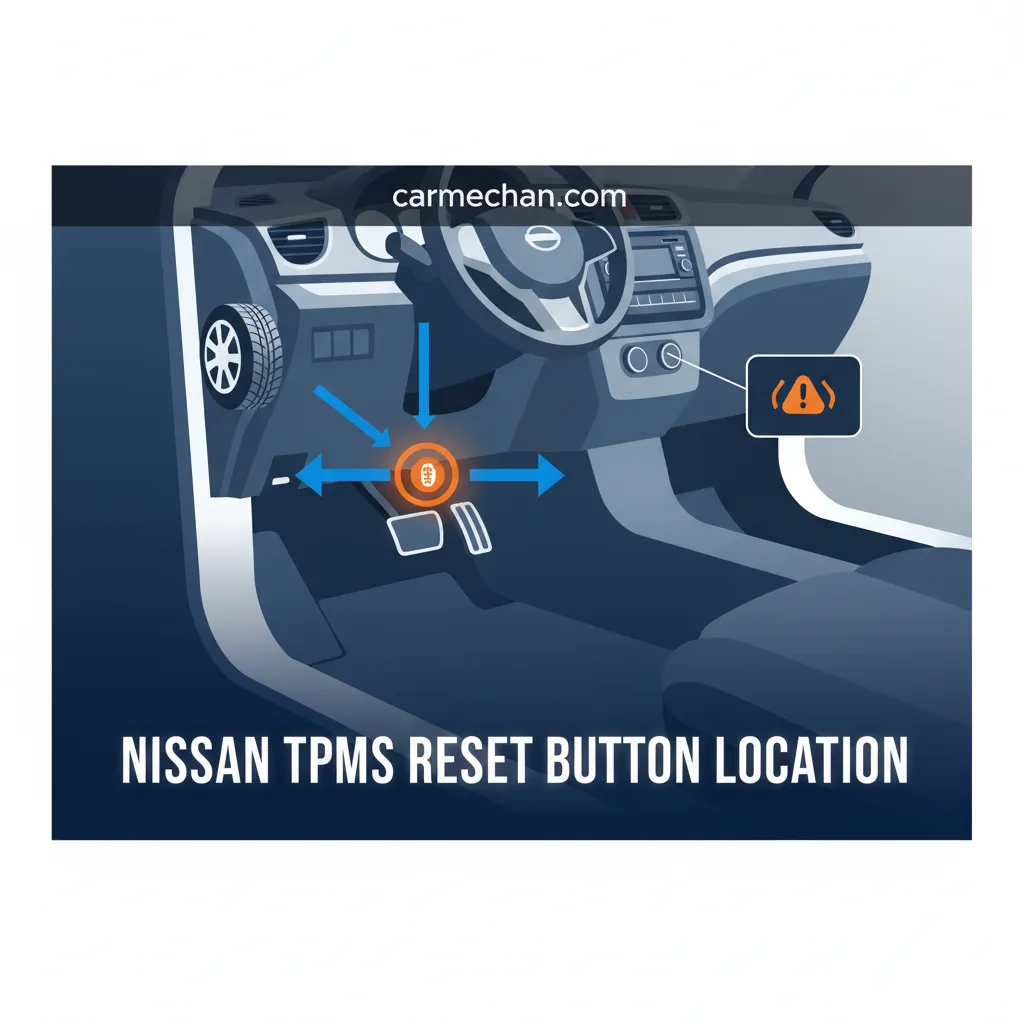
The 2017 Nissan Altima features Nissan's Easy-Fill Tire Alert system linked to its Tire Pressure Monitoring System (TPMS). When inflating a low tire:
- Park the vehicle safely on a level surface and engage the parking brake with the engine running (in Park).
- Attach the air hose nozzle to the tire valve stem.
- The hazard indicators will flash to confirm the system is actively monitoring pressure.
- When the factory-recommended cold tire pressure is reached, the vehicle horn will sound once.
- If you over-inflate the tire, the horn will sound again and the hazard lights will flash three times. Bleed air slowly until the horn beeps once to signal target pressure.
Nissan Easy-Fill Tire Alert Sequence:
- Connect air hose: Hazard lights flash (monitoring active)
- Reaches target PSI: Horn beeps ONCE (inflation correct)
- Over-inflated: Horn sounds, hazards flash 3x (bleed air)
Tire Rotation Schedules and Patterns
Front-wheel-drive vehicles put significantly more stress on the front tires due to engine weight, drive torque, and steering friction. As a result, front tires typically wear down two to three times faster than rear tires if left unrotated.
- Rotation Interval: Perform a tire rotation every 5,000 to 7,500 miles, or at every oil change interval.
- Recommended Rotation Pattern: Use the Forward Cross pattern for non-directional front-wheel-drive tires.
- Move the front tires straight back to the rear (Left Front to Left Rear; Right Front to Right Rear).
- Cross the rear tires as they move to the front (Left Rear to Right Front; Right Rear to Left Front).
- Directional Tires: If your replacement tires have arrow markings indicating single-direction rotation, move front tires straight to the rear and rear tires straight to the front on the same side of the vehicle.
FORWARD CROSS PATTERN (Non-Directional FWD):
- FRONT OF ALTIMA:
- Left Front [ LF ] moves straight to Left Rear [ LR ]
- Right Front [ RF ] moves straight to Right Rear [ RR ]
- Cross Rear Tires to Opposite Front:
- Left Rear [ LR ] moves to Right Front [ RF ]
- Right Rear [ RR ] moves to Left Front [ LF ]
Alignment Considerations
The 2017 Altima uses an independent strut front suspension and a multi-link rear setup. Both front and rear wheels feature adjustable alignment parameters (toe and camber).
If you notice uneven shoulder wear (feathering or inner edge wear), centered steering wheel misalignment while driving straight, or vehicle drift, request a four-wheel computerized alignment. Misaligned suspension settings can destroy a new set of tires within 10,000 miles.
Frequently Asked Questions
Can I put 18-inch wheels on a 2017 Nissan Altima 2.5 S that came with 16-inch wheels?
Yes. Because higher 2017 Altima trims (such as the 2.5 SR) factory-equip 18x7.5-inch wheels wrapped in 235/45R18 tires, this setup fits lower trims without suspension modifications or fender rubbing. The overall rolling diameter remains nearly identical (26.2 inches for 215/60R16 vs. 26.3 inches for 235/45R18), ensuring speedometer accuracy remains within safe tolerances (under a 0.5% variance).
What is the precise cold tire pressure for a 2017 Nissan Altima?
Factory specifications call for 32 PSI (220 kPa) cold pressure on 16-inch and 17-inch fitments (215/60R16 and 215/55R17). For models equipped with 18-inch wheels (235/45R18), the recommended spec is 33 PSI (230 kPa). Always verify the placard located on your vehicle's driver-side B-pillar inside the door jamb.
What is the lug nut torque specification for the 2017 Nissan Altima?
The factory lug nut torque specification is 83 lb-ft (113 N·m). Use a 21mm socket and tighten in a star pattern to prevent hub distortion and rotor warping.
What causes inner edge wear on 2017 Altima rear tires?
Excessive negative toe or negative camber in the rear multi-link suspension often causes inner edge wear. Weak or sagging rear coil springs over time can alter rear camber geometry, while worn control arm bushings cause toe settings to shift out of spec under load. Performing a complete four-wheel alignment during tire installation resolves this issue.
Will changing my tire size affect the Tire Pressure Monitoring System (TPMS)?
Changing tire dimensions will not disrupt TPMS function as long as you reuse your factory pressure sensors or transfer compatible 315 MHz TPMS sensors into your new wheel assembly. If new aftermarket sensors are installed, a technician must register their unique sensor IDs to the Altima's electronic control unit (ECU) via the OBD-II port.
Next Steps for Replacing Your 2017 Altima Tires
When preparing to replace the tires on your 2017 Nissan Altima:
- Verify Your Current Sidewall Markings: Confirm whether your car runs 215/60R16, 215/55R17, or 235/45R18 by inspecting the sidewall of the tires currently mounted on your vehicle, as previous owners may have modified the wheel setup.
- Inspect the Build Date Code: Check the DOT serial number on the sidewall of any prospective new tire. The last four digits indicate the week and year of manufacture (e.g., "1225" means the 12th week of 2025). Avoid buying tires with build dates older than two years, even if sold as new stock.
- Budget for Full-Set Installation Services: When purchasing tires, include dynamic wheel balancing, new rubber valve stems (or replacement TPMS service kits), tire disposal fees, and a four-wheel alignment check in your estimate.
- Re-Torque Lug Nuts: After having new tires installed, re-check the torque of all lug nuts to 83 lb-ft after driving the initial 50 to 100 miles to account for hardware settling.