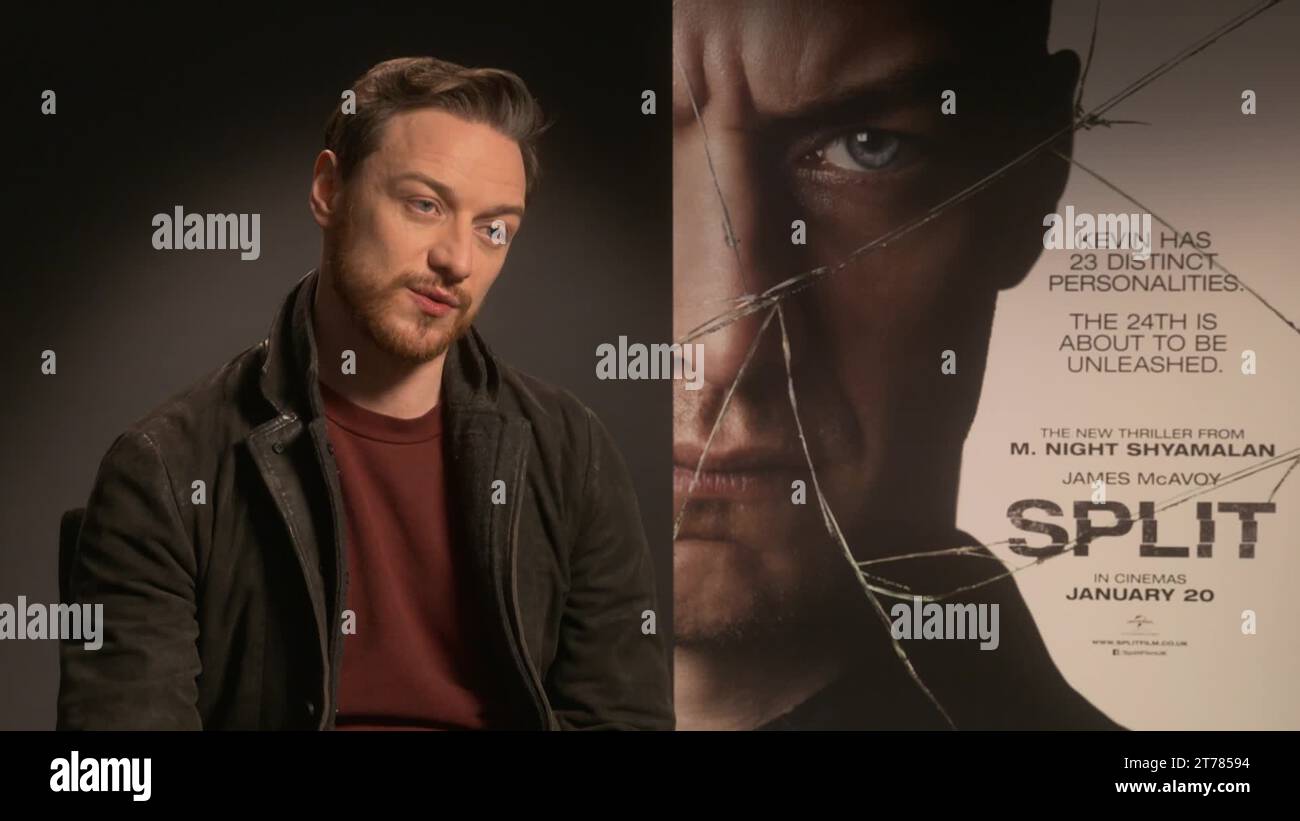
The 2016 split personalities timeline refers to the chronological sequence of events involving Kevin Wendell Crumb and his 24 distinct alters in M. Night Shyamalan’s psychological thriller, Split. This timeline encompasses Kevin’s early childhood trauma, the internal power struggle known as "The Horde," the three-day abduction of Casey Cooke, and the eventual emergence of the supernatural 24th personality, "The Beast."
The Origins of Kevin Wendell Crumb: The Pre-2016 Backstory
To understand the events of 2016, one must first look at the foundational trauma that created Kevin’s Dissociative Identity Disorder (DID). Kevin Wendell Crumb was born in Philadelphia, Pennsylvania. His childhood was marked by a pivotal tragedy: his father, Clarence Wendell Crumb, boarded the Eastrail 177 train and never returned. It was later revealed (in the 2019 sequel Glass) that this train was the same one involved in the 2000 David Dunn incident, orchestrated by Elijah Price.
Following his father's disappearance, Kevin was left in the care of his mother, who was severely abusive. She suffered from obsessive-compulsive tendencies and would punish Kevin for the slightest mess or imperfection. To cope with this environment, Kevin’s mind fractured, creating various personalities (alters) to endure the abuse and protect the "original" Kevin.
The first major personality to emerge was likely Dennis, a stoic, obsessive-compulsive protector who could handle the mother’s demands for cleanliness. Over the years, 23 distinct personalities were identified and documented by Kevin’s psychiatrist, Dr. Karen Fletcher. These personalities existed within a mental framework Kevin called "The Train Station," where they would wait for their turn to "sit in the light"—the metaphor for taking control of the physical body.
The Shift in Internal Power: The Rise of The Horde
In the years leading up to the 2016 events, a hierarchy existed among the personalities. Barry, a creative and extroverted personality interested in fashion and art, acted as the gatekeeper. Barry decided who was allowed to "take the light" and maintained a therapeutic relationship with Dr. Fletcher.
However, a schism occurred within the internal system. Dennis and Patricia (an elegant but deeply disturbed female personality) began to believe in a higher power known as "The Beast." They formed a faction called The Horde. Because of their radical beliefs and Dennis’s history of "disturbing" behavior (specifically involving young girls), Barry and the other "good" personalities suppressed Dennis and Patricia, forbidding them from taking the light.
The 2016 timeline begins in earnest when Dennis and Patricia find a way to manipulate the system, overthrowing Barry’s leadership and seizing control of the body to prepare for the "sacred" arrival of the 24th personality.
The 2016 Narrative Timeline: The Three-Day Crisis
The main events of Split take place over roughly three days in 2016. The following is a breakdown of the external actions and internal shifts during this period.
Day 1: The Abduction
Dennis, posing as a harmless man, abducts three teenage girls—Casey Cooke, Claire, and Marcia—from a birthday party parking lot. He transports them to a maintenance wing beneath the Philadelphia Zoo, where he works.
On this day, Dennis and Patricia interact with the girls, revealing the fragmented nature of their captor. The girls also meet Hedwig, a 9-year-old personality who has the power to "take the light" whenever he wants because of his innocence. Hedwig serves as a crucial bridge for the girls, particularly Casey, who realizes that the different personalities have different weaknesses.
Day 2: The Psychological Evaluation
While holding the girls captive, the personalities continue their sessions with Dr. Karen Fletcher. Dennis attempts to impersonate Barry during these meetings to maintain the appearance of normalcy. However, Dr. Fletcher, a seasoned expert in DID, senses the deception. She notices shifts in posture, tone, and the obsessive-compulsive tics that Barry does not possess.
Internally, the struggle intensifies. The "safe" personalities try to send emails to Dr. Fletcher to warn her that something is wrong, but Dennis and Patricia monitor these communications closely. The girls attempt several escapes, but Dennis’s physical strength and Patricia’s psychological manipulation thwart them.
Day 3: The Birth of The Beast
The final day of the timeline is the most violent. Dennis and Patricia successfully "summon" The Beast. This 24th personality is not just a psychological construct but a physical manifestation of Kevin's belief that those who are "broken" are superior.
Dr. Fletcher visits the zoo after receiving a desperate, coded email from one of the personalities. She discovers the girls and realizes the full extent of the danger. Before she can intervene effectively, The Beast emerges. Unlike the other alters, The Beast possesses superhuman strength, the ability to scale walls, and skin that can withstand knife wounds.
The Beast kills Dr. Fletcher, Claire, and Marcia. Casey Cooke survives only because The Beast sees the scars on her body—evidence of her own history of abuse. He deems her "pure" because she is "broken," allowing her to live.
Detailed Catalog of the 24 Personalities
While the film focuses on a handful of alters, the 2016 split personalities timeline recognizes a total of 24 entities inhabiting Kevin Wendell Crumb.
| Personality Name | Key Characteristics | Role within the "Horde" |
|---|---|---|
| Kevin Wendell Crumb | The original, dormant personality. | The host; remains "asleep" for years. |
| Dennis | Stoic, OCD, physically strong, aggressive. | Leader of The Horde; the "enforcer." |
| Patricia | Poised, religious, manipulative, maternal. | The "mother" figure of The Horde. |
| Hedwig | 9-year-old boy, innocent, easily manipulated. | The "gatekeeper" of the light for Dennis. |
| Barry | Fashion-forward, creative, articulate. | Former gatekeeper; suppressed by Dennis. |
| Orwell | Intellectual, historian, cautious. | Academic personality; dislikes the Horde. |
| Jade | Teenage girl, rebellious, diabetic. | Provides physical diversity (body chemistry changes). |
| The Beast | Superhuman, predatory, savage. | The 24th personality; the evolved state. |
| Samuel | Focused, observant. | Minor personality; rarely takes the light. |
| Heinrich | Unknown (implied intellectual). | Part of the 23 known to Dr. Fletcher. |
Note: Personalities such as Mary Reynolds, Ian, Mr. Pritchard, and others are mentioned in Kevin’s files or seen briefly on camera, but they do not play a primary role in the 2016 timeline events.
The Intersection of Biology and Identity
One of the most significant aspects of the 2016 timeline is how it explores the "technical" depth of DID within the Shyamalan universe. Dr. Fletcher’s research suggests that the brain of someone with DID can actually change the physical chemistry of the body.
When Jade takes the light, the body becomes diabetic and requires insulin shots, even though the other 23 personalities do not. When The Beast takes the light, the body’s muscle density and skin durability change instantaneously. This concept serves as the bridge between a psychological thriller and a "grounded" superhero origin story. The 2016 timeline is not just about a kidnapping; it is the documentation of a biological breakthrough—the next step in human evolution triggered by trauma.
Post-2016: The Connection to the Eastrail 177 Trilogy
The 2016 timeline concludes with a world-shaking revelation in the final scene of Split. As news of Kevin’s escape (now dubbed "The Horde" by the media) spreads, the scene shifts to a diner. A patron remarks that the situation reminds her of a man in a wheelchair who was arrested 15 years prior. A man sitting at the counter, David Dunn (Bruce Willis), replies: "Mr. Glass."
This connects the 2016 events to the 2000 film Unbreakable. It establishes that Kevin is a "villain" archetype emerging in a world where "super-beings" actually exist. The timeline of 2016 serves as the middle chapter of a twenty-year narrative arc that concludes in 2019 with the film Glass, where Kevin, David Dunn, and Elijah Price finally meet at Raven Hill Memorial Psychiatric Hospital.
Psychological Context vs. Cinematic Representation
It is important for viewers and researchers to distinguish between the 2016 film's portrayal of Dissociative Identity Disorder and the real-world medical condition.
- Violence: In reality, individuals with DID are far more likely to be victims of violence than perpetrators. The 2016 timeline uses "The Beast" as a narrative device, which does not reflect the lived experience of those with the disorder.
- Physical Changes: While some studies suggest minor physiological variations between alters (such as heart rate or eyesight), the superhuman physical changes seen in the film are purely fictional and part of the "superhero" genre.
- Communication: The "Train Station" and "The Light" are common metaphors used in therapy to help patients visualize their internal system, but the level of coordinated "coup d'état" seen in the Horde is a dramatized version of internal conflict.
For accurate medical information on DID, readers should consult resources such as the American Psychiatric Association (APA) or the International Society for the Study of Trauma and Dissociation (ISSTD).
Common Mistakes in Interpreting the Timeline
When analyzing the 2016 split personalities timeline, fans often make a few specific errors:
- The Number of Personalities: Many believe there are only four or five personalities because only a few get significant screen time. In reality, Dr. Fletcher’s files explicitly state there are 23, with the 24th (The Beast) emerging at the end.
- The Ending Year: Some confuse the release year with the setting. The film was released in 2016 and is generally accepted to be set in the same year, approximately 15-16 years after the events of Unbreakable.
- Kevin’s Awareness: It is often assumed Kevin is "evil." However, the 2016 timeline shows that Kevin himself is a victim who has been "asleep" for years while his alters took control. When he finally "takes the light" near the end of the film, he is horrified to learn what has happened and begs Casey to kill him.
FAQ
How many personalities does Kevin Wendell Crumb have in the 2016 film? Kevin has 23 established personalities documented by Dr. Fletcher. The plot of the film revolves around the emergence of the 24th personality, known as "The Beast."
Who is the "leader" of the personalities in 2016? Initially, the personality named Barry is the leader and gatekeeper. However, by the start of the movie’s main events, Dennis and Patricia have staged an internal coup to take control and lead "The Horde."
Does Kevin Wendell Crumb survive the 2016 timeline? Yes, Kevin (and his various personalities) survives the events of the 2016 film. He escapes the Philadelphia Zoo after being shot by Casey Cooke, as The Beast’s thickened skin allows him to survive wounds that would be fatal to others.
What is the "Light" in the context of the movie? "The Light" is a metaphorical chair in the center of a room where the personalities "wait." Whoever is "sitting in the light" has control over Kevin’s physical body and interacts with the outside world.
Why did Dennis kidnap the girls in 2016? Dennis kidnapped the girls as a "sacrificial offering" for the arrival of The Beast. The Horde believed that The Beast would protect them and that feeding him the "untouched" (those who had not suffered trauma) would solidify his power.
Is Split (2016) based on a true story? While M. Night Shyamalan was inspired by real-life cases of DID, such as Billy Milligan (who reportedly had 24 personalities), the specific characters, the "Beast" superpowers, and the connection to the Unbreakable universe are entirely fictional.
Practical Recommendation for Viewers
To fully grasp the "2016 split personalities timeline," viewers should watch the Eastrail 177 Trilogy in chronological order of release. Start with Unbreakable (2000) to understand the origin of the "superhuman" world, followed by Split (2016) to see the emergence of The Horde, and conclude with Glass (2019) to see how the timelines of David Dunn and Kevin Wendell Crumb finally converge. For those interested in the psychological aspects, researching the history of the "Billy Milligan" case provides fascinating real-world context for the 24-personality structure used in the film.