Replacing the battery in a 2014 Toyota Prius key fob typically becomes necessary every three to four years, though real-world longevity ranges from two to five years depending on environmental conditions, frequency of use, and whether the fob features the Smart Key System. Understanding the precise replacement timeline, recognizing early warning signs, and knowing how to safely swap the CR2032 or CR1632 coin cell prevents unexpected lockouts and ensures continuous access to your vehicle's push-button start functionality.
Understanding the 2014 Prius Key Fob Ecosystem
The 2014 model year of the Toyota Prius utilizes advanced radio frequency identification (RFID) technology to communicate with the vehicle's onboard computer. Depending on the specific trim level—such as the Two, Three, Four, or Five—the vehicle may be equipped with either a standard key integration or the comprehensive Smart Key System. The Smart Key variant allows drivers to unlock doors by simply touching the door handle and starting the engine with the press of the dashboard button, all while the fob remains inside a pocket or bag.
Because the Smart Key fob continuously transmits and listens for signals from the vehicle, its internal lithium coin cell battery experiences a constant, low-level drain. Traditional mechanical key inserts and basic wireless remote entry fobs that require a physical button press to unlock usually draw power only during direct user interaction, extending their battery life. By contrast, a 2014 Prius Smart Key fob demands consistent micro-current delivery, which dictates a much tighter maintenance timeline.
Owners must also account for manufacturing variations between original equipment manufacturer (OEM) fobs and aftermarket replacements. Genuine Toyota fobs generally feature tightly sealed casings and high-grade circuit boards designed to maximize battery efficiency. Aftermarket units, while often less expensive, may utilize lower-quality internal components or draw slightly higher standby currents, subtly accelerating the degradation of each newly installed battery.
The Standard Replacement Timeline
For most 2014 Prius owners, the typical key fob battery replacement timeline spans between 36 and 48 months. Under ideal conditions—moderate climate, standard daily driving habits, and a quality lithium coin cell—a battery can push past the five-year mark. However, proactive replacement at the three-year mark is standard preventive maintenance to avoid sudden failure.
Environmental factors heavily influence this timeline. Extreme heat degrades lithium-ion and lithium-manganese dioxide coin cells rapidly, making vehicles operated in hot climates prone to early fob battery failure. Similarly, leaving the key fob near the vehicle overnight can cause the fob to remain in a continuous handshake loop with the car's computer, depleting the battery months ahead of schedule.
| Operating Condition | Estimated Battery Lifespan | Primary Contributing Factors |
|---|---|---|
| Ideal / Moderate Climate | 4 – 5 Years | Temperate weather, minimal RF interference, proper storage away from the car. |
| Average Daily Use | 3 – 4 Years | Standard commuting, moderate ambient temperatures, regular Smart Key polling. |
| Severe / High Heat Climate | 1.5 – 2.5 Years | Continuous high cabin temperatures, intense direct sunlight, heavy RF signal traffic. |
| Improper Storage (Near Vehicle) | 1 – 2 Years | Constant transceiver communication loop, continuous battery drain. |
Recognizing the Warning Signs of a Failing Battery
Waiting for a complete battery failure is unnecessary because the 2014 Prius and its key fob provide several distinct indicators well before power is fully depleted. Recognizing these signs allows owners to replace the power cell on their own schedule rather than scrambling during an emergency.
The earliest symptom usually manifests as a reduced operational range. While a healthy fob can typically unlock the Prius from thirty or forty feet away, a degraded battery often requires the user to stand within a few feet of the driver's side door. Drivers may also notice that pressing the lock or unlock buttons requires multiple attempts or a firmer, longer press to register.
Inside the cabin, the Smart Key system provides more explicit warnings. If the vehicle fails to detect the key fob when the start button is pressed, a yellow or red key icon illuminates on the multi-information display, accompanied by a warning buzzer. Additionally, the Prius multi-information display may explicitly show a "Key Battery Low" warning message. Finally, if the smart entry touch sensors on the exterior door handles stop responding while the physical buttons on the fob still function, the coin cell voltage has dropped below the threshold required for continuous proximity polling.
Step-by-Step Battery Replacement Procedure
Replacing the battery in a 2014 Prius key fob requires no specialized tools, though having a small flathead screwdriver or a plastic trim removal tool helps prevent cosmetic damage to the plastic housing. The process takes less than five minutes when executed carefully.
1. Extract the Mechanical Emergency Key
Locate the small release slider or button on the top or side of the key fob housing. Slide this latch while pulling firmly on the exposed metal key ring loop. The mechanical emergency key will slide entirely out of the fob body, exposing the internal cavity.
2. Open the Fob Casing
Look inside the channel left vacant by the mechanical key. You will typically see a small, rectangular slot designed specifically for the tip of the mechanical key or a small flathead screwdriver. Insert the tool into this slot and gently twist or lever it. The two halves of the plastic fob shell will snap apart along the seam. Proceed slowly around the perimeter with your fingers or a plastic tool to release any remaining internal clips without snapping them.
3. Access and Remove the Old Battery
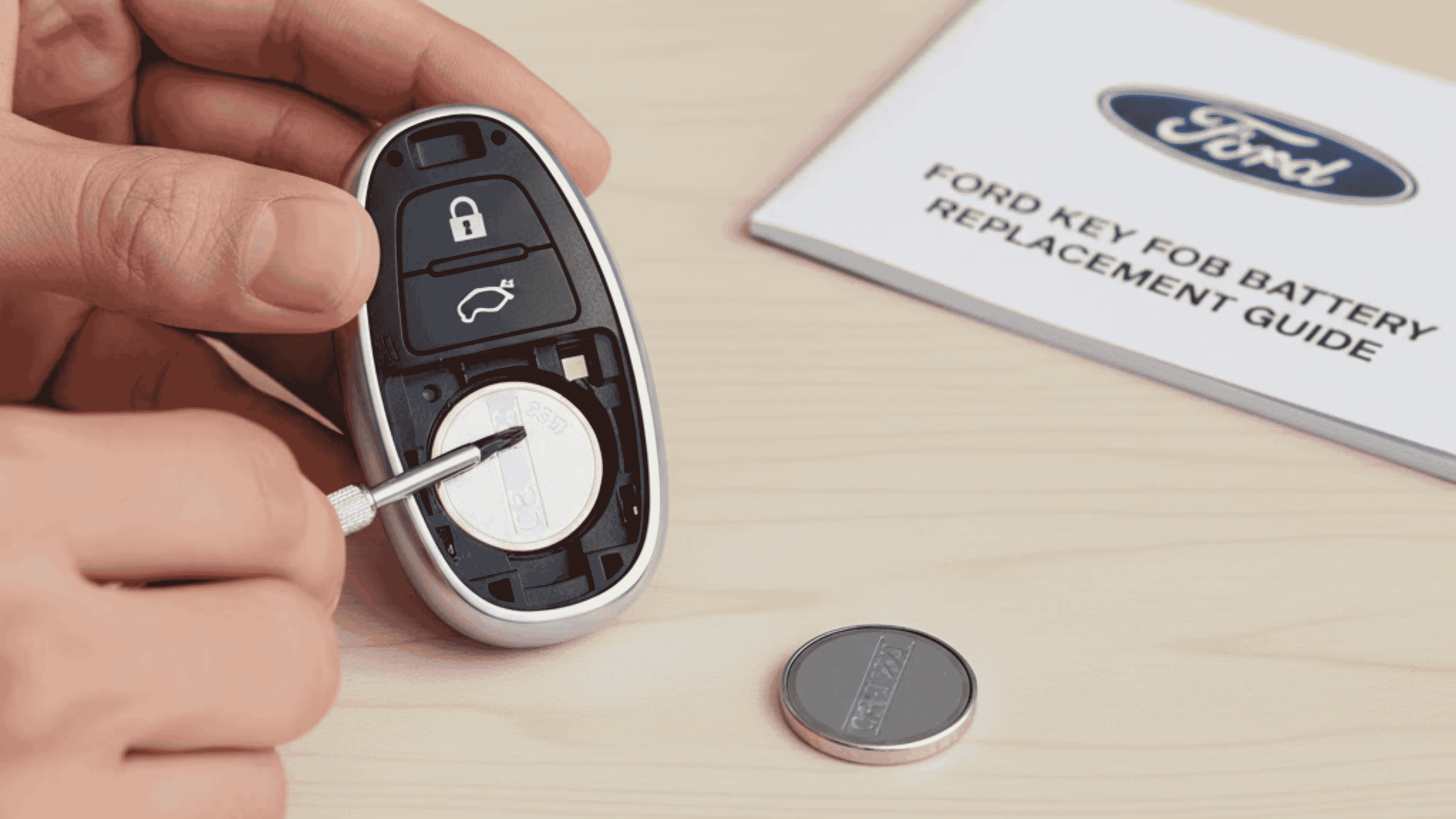
Once the casing is separated, lift out the electronic circuit board or locate the battery compartment cover if the board remains secured in the lower shell. Note the orientation of the existing battery: the positive (+) side, which is typically stamped with text and numerical markings, faces upward in a 2014 Prius fob. Carefully slide or pop the old coin cell out of its metal retaining clip.
4. Install the New Coin Cell
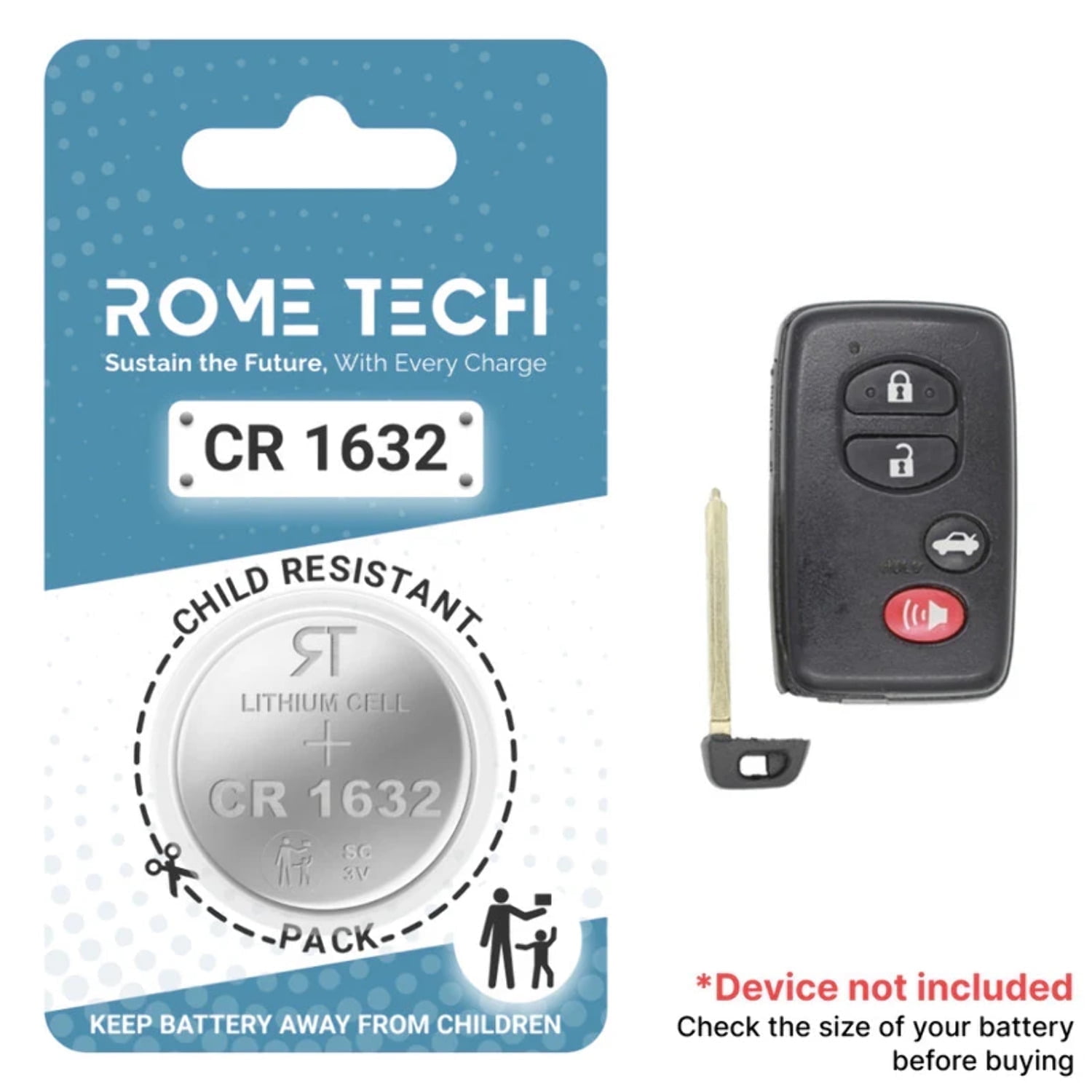
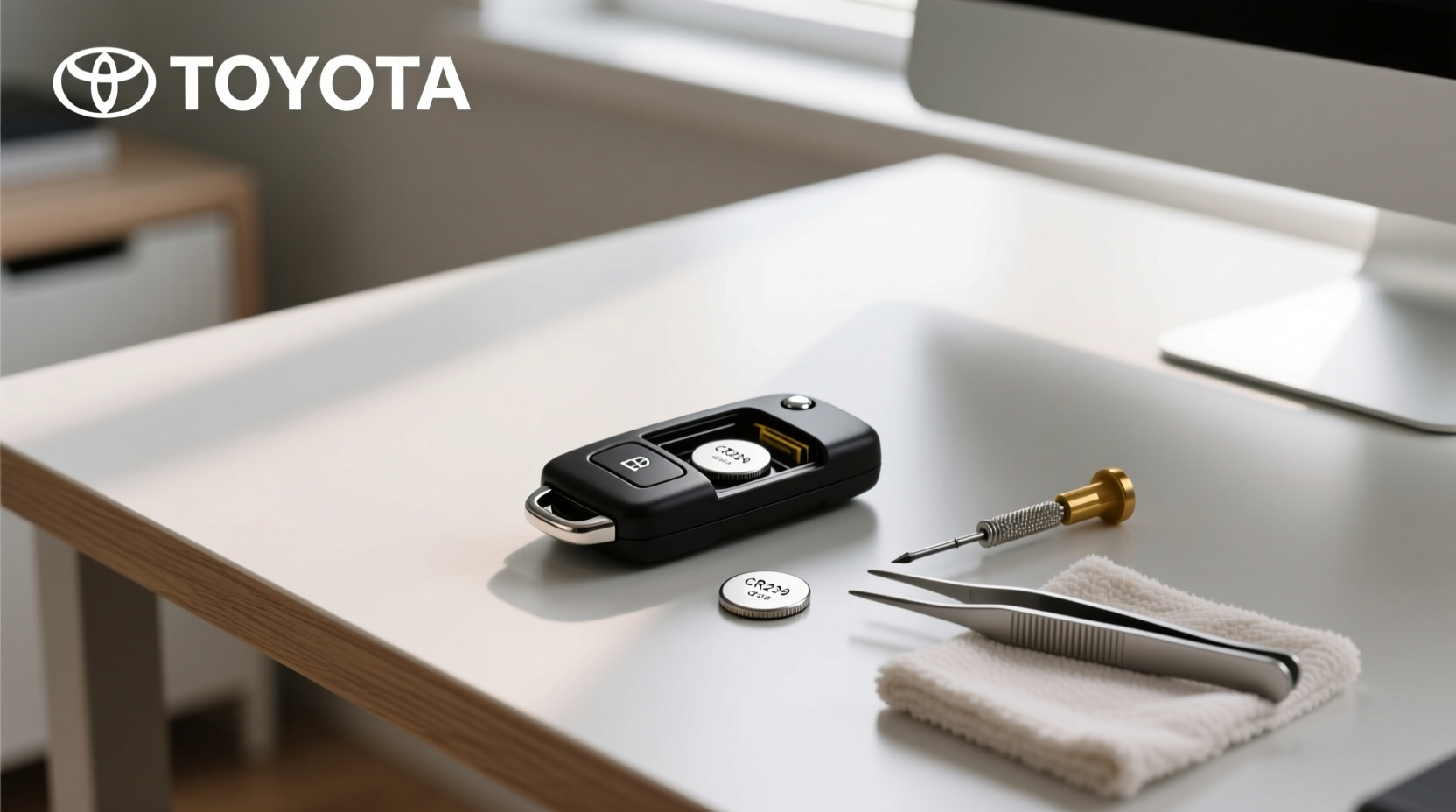
The 2014 Prius Smart Key fob utilizes a CR2032 3-volt lithium coin cell battery in most regional configurations (though certain slim card-style fobs may use a CR1632). Confirm the exact cell size by inspecting the markings on the old battery. Slide the new CR2032 battery into the retention clip with the positive (+) side facing up, matching the orientation of the original cell. Avoid touching the flat surfaces of the new battery with bare fingers, as natural skin oils can leave a residue that accelerates self-discharge; handle the cell by its edges or use a clean cloth.
5. Reassemble and Test
Align the two halves of the plastic key fob casing and press them firmly together until all plastic retention clips snap securely into place. Reinsert the mechanical emergency key until it clicks into the locked position. Stand near your 2014 Prius and test the lock, unlock, and panic buttons, then step inside and verify that the push-button start system recognizes the key instantly without requiring physical docking against the start button.
Troubleshooting Smart Key Recognition Issues
If replacing the coin cell battery does not restore normal operation to the 2014 Prius key fob, the issue may stem from deeper electrical or synchronization problems. Understanding these edge cases saves time and prevents unnecessary repeated battery purchases.
First, verify that the replacement battery is fresh and installed with the correct polarity. Counterfeit or expired coin cells purchased from unverified online marketplaces often suffer from low initial voltage, resulting in an immediate failure to operate the Smart Key system. Use a digital multimeter if possible to ensure the battery reads a minimum of 3.0 volts.
If the battery tests positive, the internal terminals inside the fob may be oxidized or misaligned. Carefully inspect the metal contact prongs inside the fob housing. If corrosion is present, clean the contacts gently with isopropyl alcohol and a cotton swab.
When the fob operates mechanically or via manual button presses but the Prius still displays a "Key Not Detected" warning during startup, the vehicle's internal transponder synchronization may have lapsed. In such cases, holding the key fob directly against the start button while pressing the brake pedal and power button allows the vehicle's near-field backup sensor to read the chip, bypassing a weak wireless transmission loop. Persistent failure points to a malfunctioning vehicle-side receiver or a corrupted fob programming code that requires dealership re-flashing or replacement.
Frequently Asked Questions
What type of battery does a 2014 Prius key fob use?
The standard 2014 Toyota Prius key fob utilizes a CR2032 3-volt lithium coin cell battery. However, if your vehicle came equipped with the optional slim card-style smart key rather than the standard pod fob, it typically requires a smaller CR1632 battery. Always inspect the markings on your old battery before purchasing a replacement.
How do I start my 2014 Prius if the key fob battery is completely dead?
If the fob battery is entirely depleted, press the brake pedal down firmly and touch the Toyota emblem side of the key fob directly against the engine start/stop button. The car features a built-in electromagnetic backup reader that detects the transponder chip inside the dead fob, allowing the vehicle to start normally so you can drive to a service location.
Why did my new key fob battery drain so quickly?
Rapid battery drain in a 2014 Prius key fob usually occurs because the fob is stored too close to the vehicle overnight, causing the Smart Key system to maintain a constant radio frequency connection. Storing the key fob at least fifteen to twenty feet away from the vehicle prevents this continuous polling loop and preserves battery life.
Do I need to reprogram my key fob after changing the battery?
No reprogramming is required when replacing the coin cell battery in a 2014 Prius key fob. The vehicle's security codes and programming data are stored on a permanent memory chip housed within the fob's circuit board, which retains its data even when power is completely removed during a battery swap.