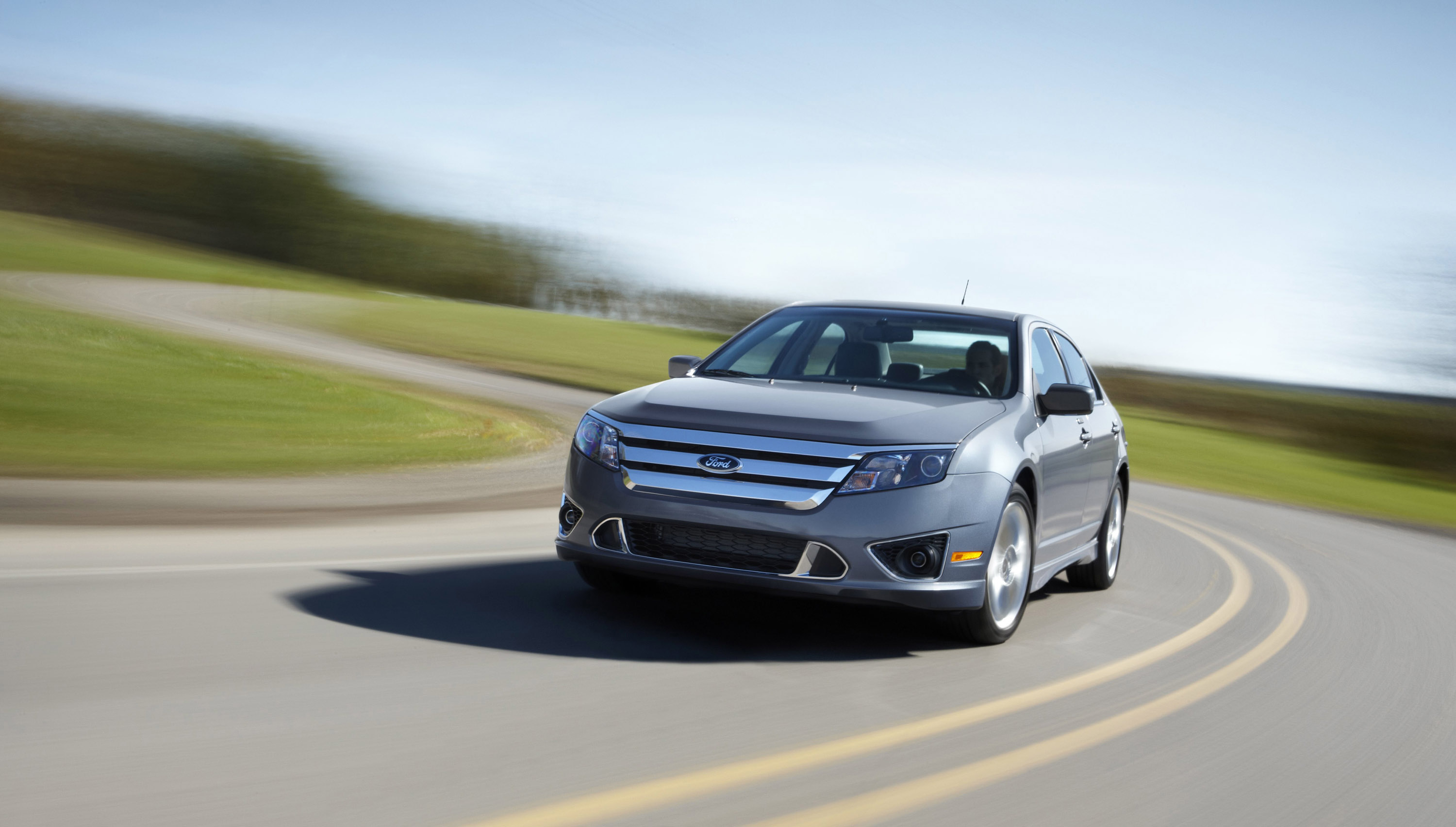
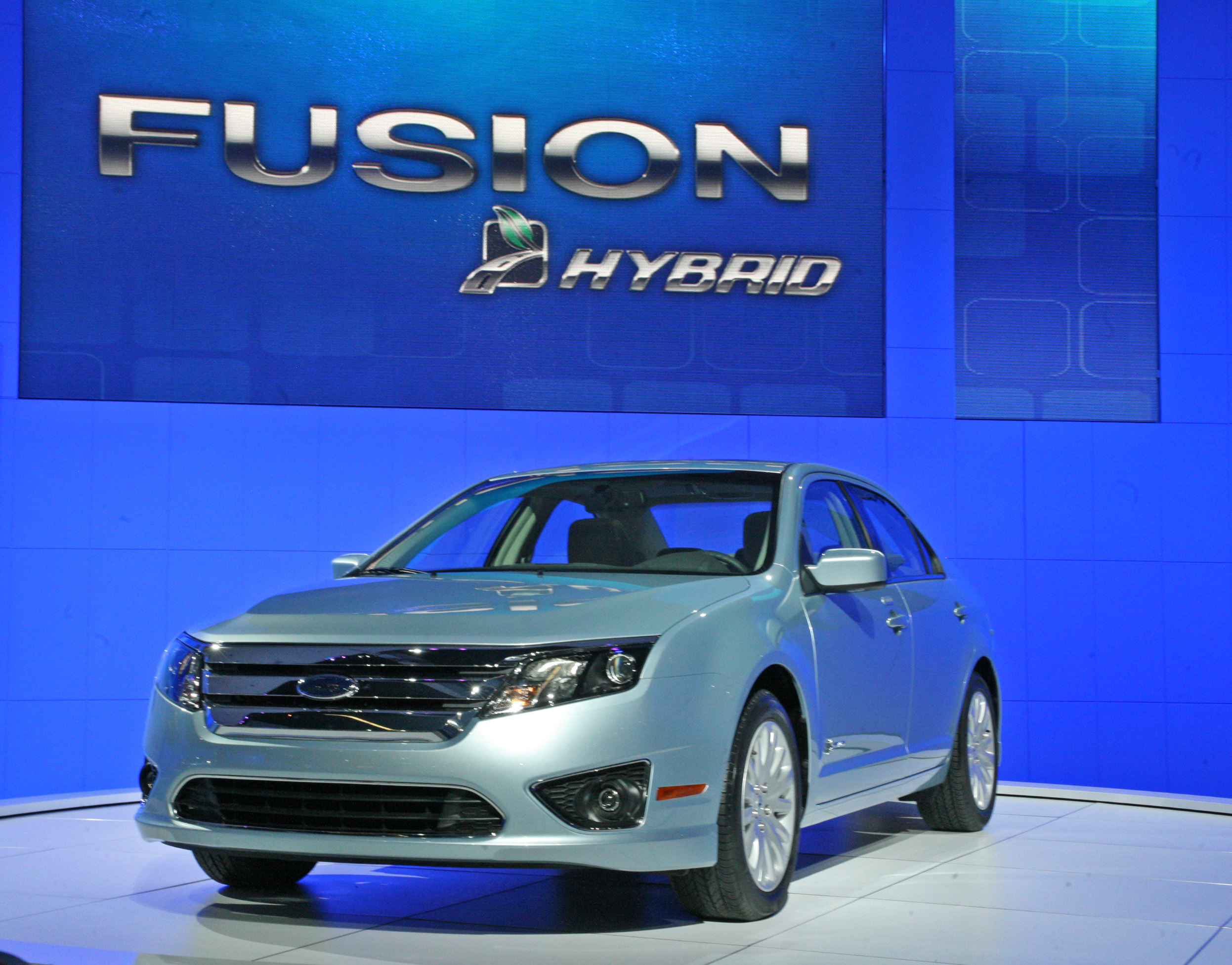
The 2010 Ford Fusion Hybrid delivers an EPA-estimated fuel economy of 41 miles per gallon in city driving and 36 miles per gallon on the highway, achieving a combined rating of 38 miles per gallon. These figures established the sedan as a highly competitive hybrid upon its introduction, offering substantial fuel savings over conventional internal combustion engine vehicles of the same era.
Introduction to the 2010 Ford Fusion Hybrid Powertrain
When Ford introduced the Fusion Hybrid for the 2010 model year, it entered a midsize sedan segment largely dominated by the Toyota Camry Hybrid. To secure a foothold, Ford engineered a dedicated full-hybrid system that paired a 2.5-liter four-cylinder Atkinson-cycle gasoline engine with an electric traction motor, managed by an electronically controlled continuously variable transmission (eCVT). This combination produces a net system horsepower of 191, providing a balance of responsive acceleration and sustained efficiency.
Understanding the gas mileage of the 2010 Ford Fusion Hybrid requires examining how its powertrain operates under diverse driving conditions. Unlike mild hybrids that merely assist the engine, a full hybrid can operate on electric power alone at lower speeds, significantly curbing fuel consumption in congested urban environments. However, achieving and maintaining the EPA-rated figures depends heavily on maintenance history, driving behavior, and external environmental variables that affect high-voltage battery performance.
EPA Fuel Economy Ratings and Specifications
The Environmental Protection Agency tested the 2010 Ford Fusion Hybrid under standardized laboratory conditions to establish its official fuel economy ratings. These numbers serve as the baseline benchmark for comparison against contemporaneous hybrid and non-hybrid sedans.
| Metric | EPA Rating | Description |
|---|---|---|
| City Fuel Economy | 41 MPG | Optimized for stop-and-go traffic utilizing regenerative braking and electric-only propulsion. |
| Highway Fuel Economy | 36 MPG | Achieved at sustained cruising speeds where the gasoline engine assumes primary load. |
| Combined Fuel Economy | 38 MPG | A weighted average reflecting a typical split of 55% city and 45% highway driving. |
| Fuel Tank Capacity | 17.5 Gallons | Provides a theoretical maximum driving range of over 600 miles on a single fill-up. |
These official numbers demonstrated a significant leap forward for domestic hybrid engineering. The inclusion of a 17.5-gallon fuel tank allowed for exceptional long-distance cruising ranges, reducing the frequency of fueling stops during long road trips.
Real-World Gas Mileage Versus EPA Estimates
While laboratory testing provides a uniform standard, real-world gas mileage for a 2010 model-year vehicle often varies based on its current mechanical condition and age. Over time, factors such as battery degradation, tire rolling resistance, and mechanical wear can cause actual fuel economy to deviate from original EPA figures.
Urban Driving Dynamics
In city environments, drivers frequently report meeting or even exceeding the 41 MPG rating, provided they utilize smooth acceleration and anticipate stops to maximize regenerative braking. The eCVT recovers kinetic energy during deceleration, routing it back into the high-voltage nickel-metal hydride (NiMH) battery pack. Heavy traffic congestion, frequent short trips where the engine fails to reach optimal operating temperature, and aggressive throttle inputs can quickly drop urban efficiency into the low 30s.
Highway Driving Dynamics
Highway fuel economy is generally more sensitive to aerodynamic drag and speed. At sustained speeds exceeding 65 miles per hour, the electric motor provides minimal assistance, leaving the 2.5-liter Atkinson-cycle engine to carry the aerodynamic load. Consequently, real-world highway mileage often clusters around 33 to 35 MPG rather than the peak 36 MPG, particularly when navigating hilly terrain or driving against strong head winds.
Key Factors Influencing Fuel Economy
Several distinct mechanical and environmental elements dictate whether a 2010 Ford Fusion Hybrid achieves its maximum potential fuel efficiency.
High-Voltage Battery Health and Age
The vehicle relies on a 275-volt nickel-metal hydride battery pack located behind the rear seats. Over more than a decade of operation, these battery packs can experience capacity fade or cell imbalance. A degraded battery holds less charge, forcing the gasoline engine to activate more frequently to supply electrical current or drive the wheels directly, which degrades overall fuel economy.
Ambient Temperature and Climate Control
Hybrid powertrains are sensitive to extreme temperatures. During cold winter months, the gasoline engine must run more frequently immediately after startup to warm up the catalytic converter and heat the cabin, temporarily eliminating electric-only operation. Conversely, heavy use of the air conditioning system in peak summer heat increases electrical load on the high-voltage system, slightly reducing fuel efficiency.
Low Rolling Resistance Tires and Wheel Alignment
Hybrid vehicles are engineered with low rolling resistance tires to minimize friction against the asphalt. Replacing these with standard performance tires or running incorrect tire pressures can introduce a noticeable penalty in miles per gallon. Furthermore, out-of-spec wheel alignment increases drag, forcing the powertrain to work harder to maintain momentum.
Maintenance Practices to Restore Fuel Economy
For owners seeking to maintain or restore the gas mileage of a 2010 Ford Fusion Hybrid, targeted maintenance is essential. Neglected routine maintenance directly undermines powertrain efficiency.
- Spark Plug Replacement: Worn spark plugs cause incomplete combustion, reducing engine thermal efficiency and lowering fuel mileage. Replacing them at recommended intervals ensures optimal combustion in the Atkinson-cycle engine.
- Hybrid Cooling System Service: The hybrid inverter and battery pack rely on dedicated coolant loops. Ensuring these cooling systems are clean and functioning properly prevents thermal throttling, which can alter power delivery and efficiency.
- Throttle Body and Mass Air Flow (MAF) Sensor Cleaning: Carbon buildup on the throttle plate or a contaminated MAF sensor skews the air-fuel ratio calculations, leading to inefficient fuel injection.
- Tire Pressure Monitoring: Maintaining tire pressures at the manufacturer's recommended specification (typically found on the doorjamb placard) reduces unnecessary rolling resistance.
Frequently Asked Questions
What is the driving range of a 2010 Ford Fusion Hybrid on a full tank?
With a 17.5-gallon fuel tank and a combined EPA rating of 38 MPG, the vehicle has a theoretical maximum driving range of approximately 665 miles. Real-world range typically spans 550 to 600 miles depending on driving conditions, terrain, and fuel reserves.
Does the 2010 Ford Fusion Hybrid require special gasoline?
No. The vehicle is designed to run on standard regular unleaded gasoline with an octane rating of 87. Using higher-octane fuel provides no efficiency or performance advantage for this specific engine architecture.
How does cold weather affect the 2010 Ford Fusion Hybrid gas mileage?
Cold weather significantly impacts hybrid efficiency. Sub-freezing temperatures reduce battery efficiency and force the gasoline engine to run continuously during initial startup phases to provide cabin heat and reach optimal operating temperature, frequently dropping fuel economy by 10% to 20% on short trips.
Can a weak 12-volt accessory battery affect hybrid fuel economy?
Yes. The 2010 Ford Fusion Hybrid uses a standard 12-volt battery to power the vehicle's computer modules and accessories before the high-voltage system engages. A failing 12-volt battery can cause erratic sensor readings, improper charging cycles, and unnecessary engine run-time, indirectly harming fuel economy.
Is the hybrid battery user-serviceable or replaceable?
The high-voltage NiMH battery pack is a self-contained unit located behind the rear seat. While individual modules can theoretically be replaced, professional replacement of the entire assembly or reconditioned unit is standard practice when capacity diminishes significantly.
Conclusion and Next Actions
Achieving optimal gas mileage in a 2010 Ford Fusion Hybrid relies on a combination of attentive mechanical maintenance and adaptive driving techniques. To verify your vehicle's current standing, calculate fuel economy manually over several tankfuls rather than relying solely on the onboard SmartGauge cluster display. Inspect tire pressures monthly, verify that hybrid cooling fans operate without obstruction, and address any check-engine lights promptly to ensure the emissions and hybrid control systems function in harmony.