The Nintendo 64 is fondly remembered for colorful platformers and party hits, but its library also hid a surprisingly gritty, atmospheric selection of classic horror N64 games that pushed the console’s hardware to its limits to deliver genuine dread and suspense.
The Nintendo 64 era occupies a fascinating, transitional space in the history of interactive horror. While systems like the original PlayStation are often given the lion's share of credit for pioneering survival horror through static-background titles like Resident Evil and Silent Hill, the N64 carved out a distinct niche of its own. Constrained by the cartridge format's limited storage capacity—which forced developers to rely heavily on clever coding, dense fog, and moody ambient soundscapes rather than sprawling pre-rendered cinematic videos—N64 horror games achieved a distinct, claustrophobic atmosphere.
Exploring these titles today reveals a treasure trove of technical ingenuity and nightmarish design. From licensed cinematic shockers to gritty first-person shooters and quirky cult classics, the platform offered diverse experiences that terrified a generation of players. Understanding these titles requires looking past the low-polygon models and muddy textures to examine how lighting, audio design, and innovative control schemes combined to induce psychological terror.
Technical Limitations and Atmospheric Innovation on the N64
Developing horror games for the Nintendo 64 presented a unique set of engineering hurdles. Cartridges offered lightning-fast load times compared to the sluggish CD-ROM drives of competing systems, but they severely restricted data storage. Developers could not rely on lengthy orchestral scores, extensive voice acting, or cinematic FMVs (Full Motion Videos). Instead, they had to squeeze every ounce of performance out of the console's Silicon Graphics (SGI) coprocessor and the Reality Signal Processor (RSP).
To mask hardware draw-distance limits and maintain stable frame rates, developers heavily utilized fog and darkness. Ironically, this limitation became horror's greatest asset. Obscuring the environment forced players to rely on directional audio and sudden, startling encounters.
Furthermore, the iconic N64 controller—with its unique central analog stick—forced developers to experiment with control schemes long before dual-analog setups became the industry standard. While navigating 3D space could sometimes feel clunky by modern standards, this very clumsiness often heightened the sense of helplessness when fleeing from relentless enemies.
| Game Title | Developer/Publisher | Primary Perspective | Core Horror Theme |
|---|---|---|---|
| Resident Evil 2 | Capcom / Angel Studios | Third-Person Fixed | Biological outbreak, survival |
| Castlevania | Konami | Third-Person 3D | Gothic horror, monster hunting |
| Castlevania: Legacy of Darkness | Konami | Third-Person 3D | Prequel expansion, werewolf action |
| Turok: Dinosaur Hunter | Iguana Entertainment / Acclaim | First-Person | Prehistoric dread, visceral combat |
| Turok 2: Seeds of Evil | Iguana Entertainment / Acclaim | First-Person | Sci-fi horror, grotesque alien entities |
| Doom 64 | Midway Games | First-Person | Hellish invasion, industrial dread |
| Quake II | id Software / Activision | First-Person | Sci-fi military body horror |
| Perfect Dark | Rare | First-Person | Extraterrestrial conspiracy, paranoia |
| Shadow Man | Acclaim Studios Teesside | Third-Person 3D | Voodoo mysticism, supernatural realms |
| The New Tetris / Hybrid Picks | Various | Puzzle / Atmospheric | Ambient tension (Contextual) |
Note: Due to the extreme scarcity of dedicated survival-horror titles natively built for the N64, comprehensive lists of classic horror N64 games naturally incorporate dark action-adventure, first-person shooters with heavy horror tropes, and ambitious technical ports that defined the console's darker side.
The Mount Rushmore of N64 Survival Horror
1. Resident Evil 2
Bringing Resident Evil 2 to the Nintendo 64 was widely considered a technical impossibility. The original PlayStation release spanned two entire CD-ROMs, holding roughly 1.4 gigabytes of data. Programmer and software engineer Factor 5 managed the seemingly impossible feat of compressing the entire game—including all cinematic sequences, voice acting, and two distinct campaigns—onto a single 512-megabit (64-megabyte) N64 cartridge.
While the audio compression resulted in a slightly muffled soundscape and the FMV cutscenes suffered from heavy artifacting, the actual in-game experience remained entirely intact. Players guided Leon S. Kennedy and Claire Redfield through the zombie-infested ruins of Raccoon City. The N64 version also included exclusive bonus features, such as the "Ex Files" documents written by series creator Shinji Mikami, which shed new light on the lore of the overarching franchise, alongside randomizer settings for alternative costume colors and weapon upgrades.
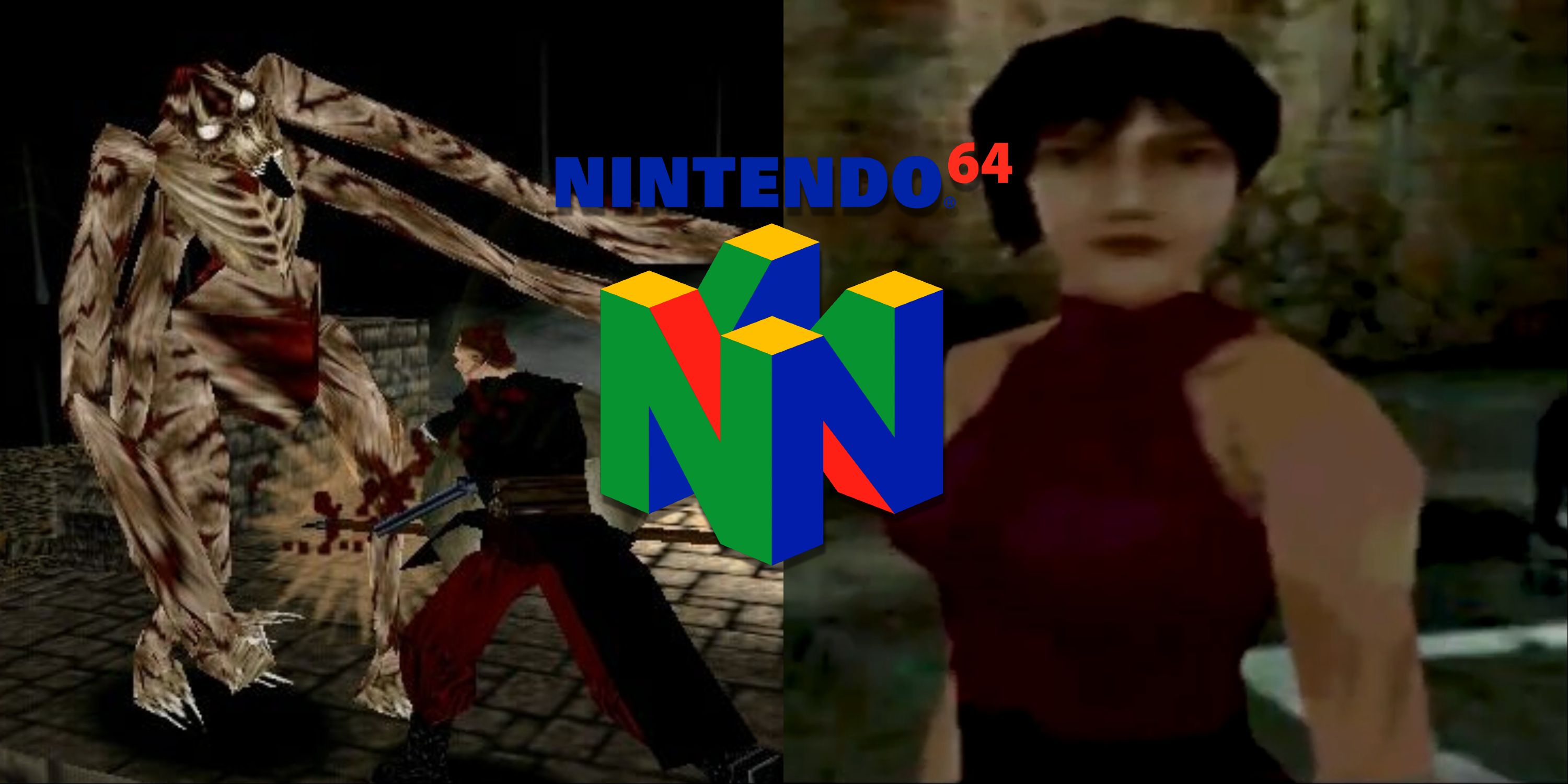
2. Castlevania (1999)
Konami’s transition of its legendary vampire-hunting franchise into 3D was a massive undertaking. Released simply as Castlevania in North America, the game cast players as either Reinhardt Schneider, a whip-wielding descendant of the Belmont clan, or Carrie Fernandez, a young magical adept.
Set within the sprawling, foreboding grounds of Dracula’s estate in the year 1839, the game leaned heavily into classic gothic tropes. It featured terrifying encounters in hedge mazes, crumbling ballrooms filled with mechanical death traps, and a nerve-wracking in-game clock mechanism that changed gameplay dynamics depending on whether day or night had fallen. The infamous Villa level—where players must avoid a chainsaw-wielding Frankenstein’s monster while searching for keys—stands as one of the most tense sequences of the 32/64-bit era.
3. Castlevania: Legacy of Darkness
Released later the same year, Castlevania: Legacy of Darkness served as both a prequel and an expanded Director's Cut of its predecessor. Players took control of Cornell, a lycanthropic warrior on a mission to rescue his adopted sister from the clutches of Dracula before a lunar eclipse completes a dark ritual.
This iteration refined the camera system, introduced smoother performance, and allowed players to unlock the original characters from the first game alongside entirely new protagonists. The inclusion of Cornell's ability to transform into a literal werewolf added a visceral, aggressive combat option to the traditional platforming and puzzle-solving formula, rounding out the definitive gothic horror experience on the platform.
4. Shadow Man
Based on the Acclaim comic book series, Shadow Man is perhaps the darkest, most philosophically bleak game released for the Nintendo 64. Players assume the role of Michael LeRoi, a voodoo warrior cursed with the mask of the Dead, granting him the ability to walk freely between the world of the living and Deadside.
The game's atmosphere is thick with dread, featuring industrial-gothic architecture, skin-suit-wearing serial killers as villains, and a sprawling, labyrinthine underworld populated by tortured souls. Shadow Man eschewed traditional linear progression in favor of a sprawling metroidvania structure, requiring players to acquire specific voodoo artifacts to unlock new pathways in a realm soaked in occult imagery and genuinely unsettling sound design.
First-Person Nightmares and Action Horror
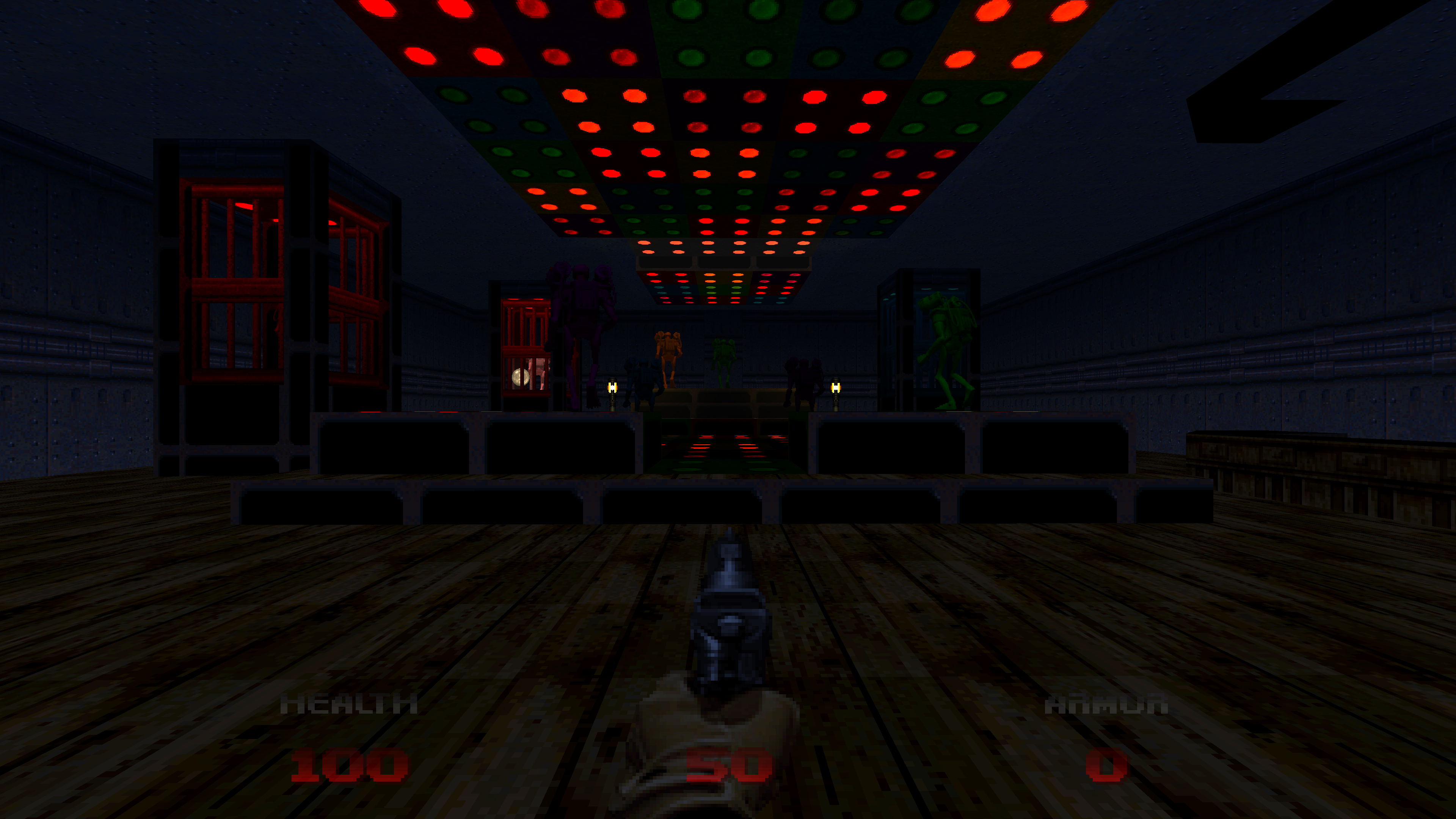
5. Doom 64
Far from being a mere port of PC classics, Doom 64 was a completely ground-up development by Midway Games that featured entirely new geometry, heavily upgraded sprites, and a brooding, ambient industrial soundtrack composed by Aubrey Hodges.
The game replaced the heavy metal adrenaline of the original PC titles with oppressive, atmospheric dread. Dimly lit corridors, eerie echoing machinery, and shadowy demonic entities lurking in pitch-black corners gave Doom 64 a survival-horror pacing that set it apart from its predecessors. It stands as a masterclass in how to adapt a fast-paced action formula into a slow-burn nightmare through sheer lighting and sound direction.
6. Quake II
While id Software’s Quake II is fundamentally a sci-fi military shooter, its campaign on the Nintendo 64 possesses an intensely grim, industrial horror aesthetic. Players land on the hostile alien planet Stroggos, where humanity is systematically harvested, mutilated, and integrated into cybernetic war machines.
The N64 port, handled by Major League Wrestling founder Court Bauer and optimized by Raster Productions, featured entirely unique level designs distinct from the PC version. The claustrophobic lighting, grotesque "Stroggification" medical facilities, and relentless enemy AI combined to create an action-horror experience that felt distinctly heavier and more terrifying than its desktop counterpart.
7. Turok: Dinosaur Hunter
At first glance, Turok: Dinosaur Hunter appears to be a straightforward action title. However, the game's prehistoric setting, dense fog, and aggressive enemy design leaned heavily into primal survival horror.
Players navigated dense jungles, dark caverns, and ancient ruins while hunted by velociraptors, genetically altered human mercenaries, and terrifying bosses. The isolation, combined with the echoing roars of unseen predators hidden behind the thick N64 fog banks, created an atmosphere of continuous tension and vulnerability.
8. Turok 2: Seeds of Evil
Expanding significantly on the psychological terror of the original, Turok 2: Seeds of Evil introduced some of the most grotesque creature designs and visceral weaponry of the era. Facing off against the Primagen and his mutated minions, players had to survive labyrinthine levels infested with swarming alien horrors.
The game's audio design deserves special mention; the echoing screeches of enemies scurrying through ventilation shafts and dark tunnels created an almost unbearable sense of paranoia. Coupled with tight corridors and challenging platforming over bottomless chasms, Turok 2 tested the nerves of even seasoned first-person shooter fans.
9. Perfect Dark
While Rare’s Perfect Dark is celebrated as a premier cyberpunk spy thriller, its latter half descends rapidly into unsettling extraterrestrial horror. As protagonist Joanna Dark uncovers a global conspiracy involving a war between two alien races—the benevolent Maians and the parasitic, grotesque Skedar—the tone shifts drastically.
Levels set in Area 51, subterranean alien breeding facilities, and dark jungles overrun by towering, monstrous Skedar mutants introduced genuine shock value. The transition from espionage techno-thriller to desperate survival against terrifying extraterrestrial entities remains one of the most memorable genre pivots in gaming history.
10. Nightmare Creatures (Unreleased Prototype / Historical Context)
While officially cancelled for a commercial N64 release due to publisher restructuring and the shifting market priorities of the late 90s, early builds of Nightmare Creatures demonstrated how well the platform could handle gothic monster-slaying action. Mentioned frequently in historical retrospectives alongside released titles, it underscores how desperately players and developers sought out horror experiences on the platform. (Note: For collectors looking to play authentic classic horror N64 games today, stick to the fully released titles cataloged above).
How to Play Classic Horror N64 Games Today
Experiencing these titles in 2026 involves navigating a spectrum of collecting hurdles, hardware modifications, and emulation options. Because N64 cartridges were manufactured with internal flash memory or lithium batteries to save game progress, many original cartridges now suffer from dead save batteries, requiring careful soldering work to replace.
- Original Hardware: Playing on an original N64 connected via an S-Video or RGB-modded cable to a CRT (Cathode-Ray Tube) television provides the authentic visual experience. CRT scans naturally blend the muddy textures and dark fog, making the graphics look vastly superior to modern high-definition displays.
- Modern Upscaling: Connecting an original console to modern HDMI displays requires dedicated upscalers like the RetroTINK line or a digital HDMI modification kit (such as the UltraHDMI) to avoid massive input lag and severe scaling distortion.
- Emulation: Software emulators like M64p or RetroArch offer enhanced rendering resolutions, texture filtering toggles, and modern dual-analog controller mapping, though players may occasionally encounter graphical glitches in complex titles like Resident Evil 2.
Frequently Asked Questions
What was the scariest game on the Nintendo 64?
Many horror enthusiasts and retro critics consider Resident Evil 2 the scariest game on the platform due to its intense resource management, sudden jump scares, and relentless pursuers like the Tyrant (Mr. X). However, for purely original atmospheric dread, Shadow Man and Doom 64 offer uniquely terrifying psychological landscapes.
Why are there so few survival horror games on the N64?
The primary limitation was the storage capacity of N64 cartridges. Traditional survival horror games of the late 90s relied heavily on pre-rendered background images and massive amounts of audio/video data, which fit comfortably on compact discs (CD-ROMs) but could not fit within standard N64 cartridge limits without aggressive, expensive data compression.
Can I play N64 horror games on modern consoles?
Availability on modern digital storefronts (such as Nintendo Switch Online) is extremely limited for third-party N64 titles due to complex licensing rights. Playing these games officially often requires owning the original physical cartridges or relying on authorized retro compilations where available.
Do original N64 horror game cartridges still save games?
Many physical N64 cartridges utilized internal coin-cell batteries to power SRAM save files. Because these batteries typically last between 15 to 30 years, many surviving cartridges have exhausted their batteries, meaning players will need to replace the battery inside the cartridge shell to retain save data.
Final Recommendation
For players looking to dive into classic horror N64 games today, the absolute best starting point is Resident Evil 2 if you want traditional survival horror puzzle-solving, or Doom 64 if you prefer fast-paced, atmospheric first-person dread. Ensure your display setup minimizes input lag, dim the lights, and experience how 90s developers turned technical hardware constraints into legendary atmospheric masterpieces.