In 2026, the most effective multilingual international CRM software solutions are defined by their ability to provide native-language interfaces, real-time currency conversion, and localized compliance modules. Leading platforms such as Salesforce, HubSpot, and Zoho CRM have evolved to support over 50 languages and provide automated data residency options, ensuring global teams can collaborate seamlessly while respecting regional regulations and cultural nuances.
The Evolution of Global Customer Relationship Management
The landscape of international business has shifted from centralized operations to a highly decentralized, "glocalized" model. In 2026, a CRM is no longer just a database; it is a localization engine. Organizations operating across borders require tools that do more than just translate text. They need systems that understand regional tax laws, varied date formats, and the intricate social norms of diverse markets.
A multilingual international CRM software facilitates this by offering a "Single Source of Truth" (SSOT) that is accessible in the preferred language of every user. This prevents the "data silos" that historically plagued global enterprises, where the Tokyo branch used a different system than the Berlin headquarters. Modern systems use advanced Unicode (UTF-8) standards to ensure that characters from all scripts—be it Kanji, Cyrillic, or Arabic—are stored and rendered correctly across all modules.
Key Technical Prerequisites for International CRM Deployment
Before selecting a platform, technical leads must evaluate the underlying architecture of the CRM. A truly international system must meet several rigorous technical standards to ensure stability and performance across different geographical regions.
Native Localization vs. Machine Translation
There is a critical distinction between a CRM that offers machine-translated UI elements and one that provides native localization. Native localization involves manually vetted translations of every button, help tip, and error message to ensure clarity and professional tone. In 2026, top-tier CRMs allow administrators to toggle between "Language Packs" that are updated by the software vendor, ensuring that new features are immediately available in all supported tongues.
Multi-Currency and Exchange Rate Automation
For sales teams, the ability to quote and invoice in local currency while reporting in a corporate "base currency" is non-negotiable. Leading systems integrate directly with financial data providers like OANDA or the European Central Bank to pull real-time exchange rates. This ensures that a multi-million dollar pipeline in Brazilian Real (BRL) is accurately reflected in the US Dollar (USD) executive dashboard, accounting for daily fluctuations without manual entry.
Data Residency and Sovereign Clouds
With the tightening of data sovereignty laws globally, such as the EU's GDPR, China’s PIPL, and various state-level laws in the US, 2026 CRMs must offer localized hosting. Platforms like Salesforce now utilize "Hyperforce" architecture, allowing customers to choose the specific region where their data is stored physically. This is a primary requirement for companies in the financial and healthcare sectors that must keep citizen data within national borders.
Leading Multilingual CRM Platforms in 2026
Salesforce Customer 360
Salesforce remains the dominant force in the international CRM market due to its sheer scale and customization depth. Its "Global Template" approach allows enterprises to build a master configuration that can then be localized for different regions.
- Language Support: Supports over 40 languages natively, with hundreds of additional languages available through community-contributed packs.
- Best For: Large enterprises with complex, multi-layered international hierarchies.
- Unique Feature: AI-driven "Einstein Translation" which can translate incoming customer service tickets or emails in real-time, allowing a Spanish-speaking agent to assist a French-speaking customer without a human intermediary.
HubSpot CRM
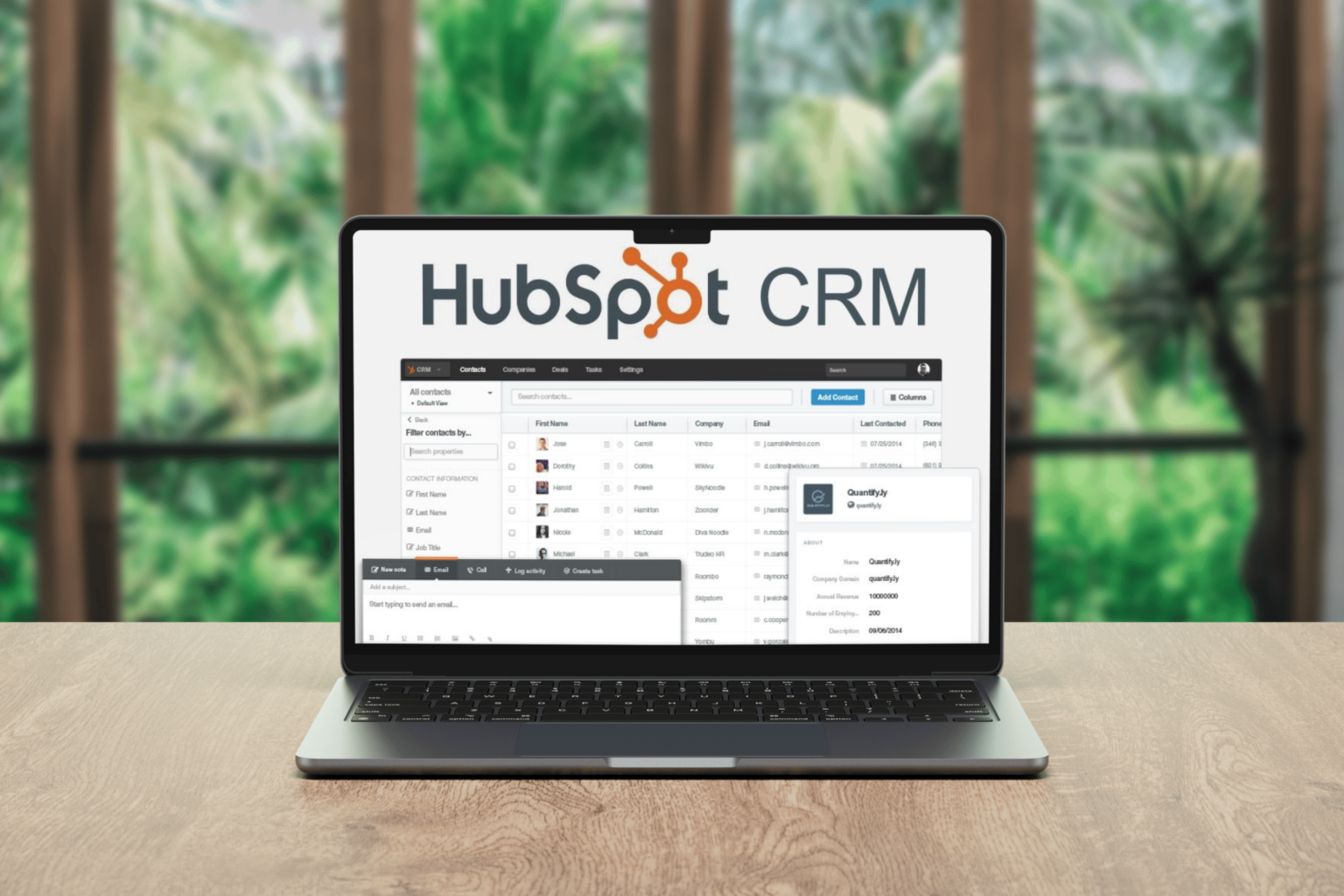
HubSpot has solidified its position as the leader for mid-market international firms. Its focus on user experience (UX) means that its multilingual interface is among the most intuitive available in 2026.
- Language Support: Full support for 15+ major business languages with localized knowledge bases and customer support.
- Best For: Companies looking for a unified marketing, sales, and service hub that is easy for non-technical staff to navigate.
- Unique Feature: Localization of the "Content Hub," which allows marketing teams to manage multilingual versions of the same web page or email within a single interface, automatically serving the correct version based on the visitor's IP or browser settings.
Zoho CRM
Zoho offers perhaps the best value for international startups and scaling businesses. As a company with a massive global footprint itself, Zoho’s CRM was built with internationalization in its DNA.
- Language Support: Native support for 28 languages and a robust "Right-to-Left" (RTL) UI for Arabic and Hebrew markets.
- Best For: Small to medium enterprises (SMEs) that need high customization at a lower price point.
- Unique Feature: Zoho’s AI assistant, "Zia," is fully multilingual, capable of performing sentiment analysis on customer feedback in various languages to detect localized trends or brewing PR issues.
Microsoft Dynamics 365
For organizations already embedded in the Microsoft ecosystem, Dynamics 365 offers unparalleled integration with Office 365 and Azure, which are already localized for almost every country on Earth.
- Language Support: Extensive support covering over 45 languages.
- Best For: Companies requiring deep integration with ERP systems and complex supply chain management.
- Unique Feature: Seamless integration with Microsoft Translator, which is baked into the "Sales Accelerator" to provide real-time suggestions during international sales calls.
Comparison of Top International CRM Solutions
The following table summarizes the core capabilities of the leading multilingual CRM systems as of 2026.
| Feature | Salesforce | HubSpot | Zoho CRM | Microsoft Dynamics |
|---|---|---|---|---|
| Native Languages | 40+ | 15+ | 28+ | 45+ |
| RTL Support | High | Moderate | High | High |
| Data Residency | Global (Hyperforce) | US, EU, Japan | Global | Global (Azure) |
| Currency Management | Advanced / Multi-layer | Standard | Advanced | Advanced |
| AI Translation | Einstein (Native) | Third-party / API | Zia (Native) | MS Translator |
| Best Use Case | Large Global Corp | Mid-market Growth | SME / Value | Microsoft Ecosystem |
Implementation Strategies for Multilingual CRM
Deploying a CRM across different countries is more of a cultural project than a technical one. Success in 2026 depends on a phased approach that respects local autonomy while maintaining global standards.
1. Standardization vs. Localization (The 80/20 Rule)
A common mistake is trying to standardize 100% of the CRM processes globally. Successful firms typically standardize 80% of the data fields (like Lead Source, Revenue, and Stage) to ensure global reporting is accurate. The remaining 20% should be left for local customization. For example, a sales team in Germany may require specific fields to comply with local "Double Opt-In" marketing laws that are not relevant to a team in the United States.
2. User Adoption and Training
Training must be conducted in the local language of the users. Even if the staff speaks English as a second language, technical training is most effective when delivered in a native tongue. This reduces friction and ensures that the complex nuances of the CRM—such as lead scoring or automated workflows—are fully understood.
3. Data Cleansing and Migration
When moving to a centralized international CRM, data from various regional legacy systems must be normalized. This involves more than just removing duplicates; it requires standardizing address formats (e.g., US Zip Codes vs. UK Postcodes) and phone number formats (using the E.164 international standard).
Common Challenges and Troubleshooting
Even with the best software, international deployments often face hurdles. Identifying these early can save significant time and resources.
- Latency Issues: Users in remote regions may experience slow load times if the CRM server is physically distant. Solutions include using a Content Delivery Network (CDN) or selecting a CRM with local data centers.
- Time Zone Synchronization: Automation and reminders must be relative to the user’s local time, not the corporate headquarters. Verify that the CRM’s "Workflow Engine" is time-zone aware.
- Legal Compliance Shifts: Regulations change frequently. In 2026, it is vital to have a CRM that offers "Compliance-as-a-Service" updates, where the vendor automatically updates the platform to meet new laws like the latest amendments to the GDPR.
Frequently Asked Questions
Does "multilingual" include customer-facing portals?
Yes, a true international CRM extends its language capabilities to customer-facing elements. This includes self-service portals, help desks, and automated chat interfaces. If a customer in Brazil logs into your portal, the interface should automatically detect their browser language and display content in Portuguese, including localized knowledge base articles and support ticket forms.
How much extra do language packs usually cost?
In 2026, most top-tier CRM providers include major language packs in their standard enterprise pricing. However, "tier-two" or "tier-three" languages (those with smaller speaker populations) might require a specific add-on or a higher-tier subscription level. Always verify if the translation is "static" (labels only) or "dynamic" (data content translation), as dynamic translation often incurs additional API or AI usage fees.
Can these CRMs handle different tax structures?
Yes, but often through integration. While the CRM can store tax IDs and calculate basic percentages, most international firms sync their CRM with a localized ERP or tax engine like Avalara. This ensures that a quote generated in the CRM for a client in India correctly reflects the GST (Goods and Services Tax) requirements.
Is it possible to have different "Home" dashboards for different regions?
Absolutely. Modern CRMs allow for "Role-Based Access Control" (RBAC) combined with "Regional Profiles." This means a manager in Singapore sees a dashboard with Asian market KPIs and local news, while a manager in New York sees North American metrics, even though they are both looking at the same underlying global data set.
How does the CRM handle "Right-to-Left" (RTL) languages?
Top providers like Zoho and Microsoft Dynamics have rebuilt their UI frameworks to support RTL natively. This is not just about moving text to the right; it involves mirroring the entire layout, including the position of sidebar menus, icons, and action buttons, to provide a natural reading and navigation experience for Arabic, Hebrew, and Persian speakers.
Practical Recommendation for 2026
When choosing a multilingual international CRM, your decision should be guided by your organization's geographic footprint and technical maturity. If you are a large, highly regulated enterprise, Salesforce with its Hyperforce architecture is the most secure and scalable choice. For mid-sized companies focused on rapid growth and ease of use across Europe and the Americas, HubSpot offers the best balance of power and simplicity. If cost-effectiveness and a presence in emerging markets (Middle East, Africa, SE Asia) are your priorities, Zoho CRM provides the most comprehensive localized feature set for the price.
Before finalizing your choice, conduct a "Localization Audit" with your regional leads. Have them test a trial version of the software in their native language to ensure that the translations are accurate and that the workflow aligns with local business practices. A CRM is only as good as the data entered into it, and users are far more likely to provide high-quality data when the system speaks their language.