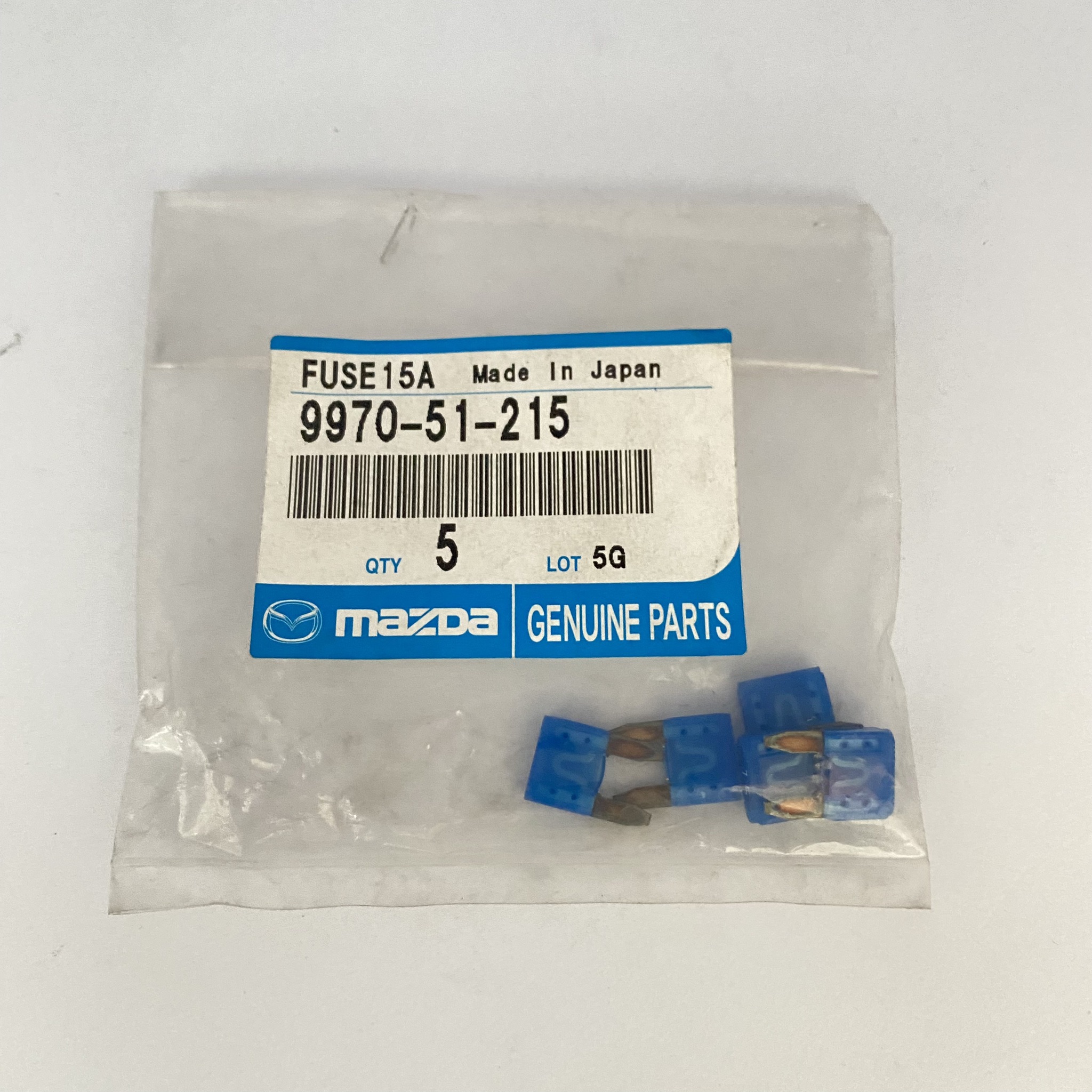
To locate the horn fuse on a Mazda 3, you must access the engine compartment fuse block, typically situated near the battery or air filter housing. For most generations, the horn is protected by a 15A fuse (often labeled "HORN" or "STOP/HORN"). Always consult the diagram on the underside of the fuse box cover for your specific model year.
The automotive horn is one of the most critical safety components of your vehicle, serving as the primary auditory warning system for other drivers and pedestrians. When it fails, it is not merely an inconvenience; it is a significant safety hazard and, in many jurisdictions in 2026, a reason for a vehicle to fail its annual safety inspection. While a silent horn can be caused by various electrical issues, the most common and easiest-to-fix culprit is a blown fuse.
This guide provides a comprehensive breakdown of the Mazda 3 horn fuse locations across all four generations, detailed troubleshooting steps, and instructions for replacement to ensure your vehicle remains safe and compliant.
Understanding the Mazda 3 Electrical Protection System
Before diving into specific locations, it is important to understand why your Mazda 3 uses fuses. Fuses are designed to be the "weakest link" in an electrical circuit. If a power surge occurs or if the horn assembly draws too much current due to a short circuit, the fuse filament melts, breaking the circuit and protecting more expensive components—like the Wiring Harness or the Front Body Control Module (FBCM)—from heat damage or fire.
In the Mazda 3, the horn circuit is relatively high-draw compared to sensors, which is why it typically uses a 15-ampere (15A) fuse. Depending on the generation of your Mazda 3, this fuse may be dedicated solely to the horn or shared with the brake lights (often labeled "STOP").
Mazda 3 Horn Fuse Locations by Generation
Mazda has redesigned the fuse box layouts significantly over the decades. To find your specific fuse, identify your vehicle’s generation below.
First Generation (BK Series: 2004–2009)
The first-generation Mazda 3 established the standard layout that many subsequent models followed. In these vehicles, the horn circuit is closely tied to the braking system circuit for redundancy and safety.
- Primary Location: Engine Compartment Fuse Block.
- Access: Open the hood and look for the black plastic box on the driver’s side (Left-Hand Drive models), positioned between the battery and the fender.
- Fuse Label: Look for "STOP" or "HORN". In many early BK models, the 15A fuse labeled "STOP" controls both the brake lights and the horn.
- Specific Identification: On the diagram under the lid, it is frequently found in the middle row of the mini-fuses.
Second Generation (BL Series: 2010–2013)
The BL series refined the electrical architecture. The fuse box remained in the engine bay, but the labeling became more distinct.
- Primary Location: Engine Compartment Fuse Block.
- Access: Located near the air cleaner assembly on the driver's side. Release the plastic clips to lift the cover.
- Fuse Label: "HORN".
- Amperage: 15A (Blue).
- Notes: If the horn is not working but the fuse is intact, the second generation is known for occasional relay sticking. The horn relay is often located in the same box, usually a small black or gray square component.
Third Generation (BM/BN Series: 2014–2018)
With the introduction of SkyActiv technology, the electrical systems became more integrated. The fuse box is more compact, and the fuses used are often "Low-Profile Mini" fuses.
- Primary Location: Engine Compartment Fuse Block.
- Access: Positioned on the driver's side of the engine bay.
- Fuse Number: Refer to the lid diagram; it is typically Fuse #25 or #28 depending on the specific trim level (i, s, Touring, Grand Touring).
- Fuse Label: "HORN".
- Amperage: 15A.
Fourth Generation (BP Series: 2019–2026)
The current generation of Mazda 3 features a highly sophisticated electrical system. While the horn remains a physical diaphragm unit, its trigger is managed through the vehicle’s communication bus.
- Primary Location: Engine Compartment Fuse Block.
- Access: Located on the left side of the engine compartment.
- Fuse Label: "HORN".
- Amperage: 15A.
- Modern Context: In 2026 models, the fuse box cover features a QR code that, when scanned with a smartphone, provides an interactive 3D map of the fuse layout and real-time troubleshooting steps through the Mazda MyWay app.
Technical Specifications: Mazda 3 Horn Fuses
The following table summarizes the typical fuse requirements for the Mazda 3. Use this to verify you have the correct replacement part before attempting a repair.
| Generation | Year Range | Fuse Location | Label | Amperage | Fuse Type |
|---|---|---|---|---|---|
| 1st Gen (BK) | 2004–2009 | Engine Bay | STOP / HORN | 15A | Mini Fuse |
| 2nd Gen (BL) | 2010–2013 | Engine Bay | HORN | 15A | Mini Fuse |
| 3rd Gen (BM/BN) | 2014–2018 | Engine Bay | HORN | 15A | Low-Profile Mini |
| 4th Gen (BP) | 2019–2026 | Engine Bay | HORN | 15A | Low-Profile Mini |
Step-by-Step Guide to Replacing the Horn Fuse
Replacing a fuse is one of the simplest automotive tasks, but it must be done correctly to avoid damaging the fuse box terminals.
1. Preparation and Safety
Ensure the vehicle is parked on a level surface and the ignition is completely OFF. For 2026 models with push-button starts, ensure the key fob is far enough away from the vehicle so the "Accessory" mode does not accidentally engage. While not strictly necessary for a fuse change, some technicians recommend disconnecting the negative battery terminal if you suspect a major short circuit.
2. Locate and Open the Fuse Box
Pop the hood and locate the black plastic box in the engine bay. Squeeze the locking tabs to remove the cover. Turn the cover over; you will see a printed diagram showing the location of every fuse and relay.
3. Identify and Remove the Fuse
Find the 15A fuse labeled "HORN". Most Mazda 3 models include a small white plastic fuse puller tool stored inside the engine bay fuse box or the interior kick-panel fuse box. Use this tool to grip the fuse and pull it straight up.
4. Inspect the Fuse
Hold the fuse up to a light source. Look at the metal U-shaped wire inside the plastic housing.
- Intact: The wire is a continuous loop. The fuse is likely fine.
- Blown: The wire is broken, melted, or there is a dark "burn" mark inside the plastic.
5. Insert the New Fuse
Replace the blown fuse with a new one of the exact same amperage (15A). Never replace a 15A fuse with a higher-rated one (e.g., 20A or 30A), as this allows more current to flow through the wires than they are designed to handle, potentially causing a fire.
Troubleshooting Beyond the Fuse
If you replace the fuse and the horn still doesn't work—or if the new fuse blows immediately—the problem lies elsewhere in the circuit.
The Horn Relay
The relay is an electromagnetic switch that allows a small current (from your steering wheel button) to trigger a large current (to the horn). If the relay fails, the "switch" never closes. You can often test this by swapping the horn relay with another identical relay in the box (such as the AC compressor relay) to see if functionality returns.
The Horn Assembly (The "Slug")
The physical horns are usually located behind the front grille or bumper. Over time, water, road salt, and debris can corrode the terminals or the internal diaphragm.
- Test: Use a multimeter to check for 12V power at the horn connector while an assistant presses the horn button. If power is present but the horn is silent, the horn unit itself is defective.
The Clock Spring
The clock spring is a spiral-wound electrical connector located inside the steering column. It allows the steering wheel to turn while maintaining a constant electrical connection for the airbag, steering wheel controls, and the horn.
- Symptom: If the horn only works when the wheel is turned to a certain angle, or if the "Airbag" warning light is also illuminated, the clock spring has likely failed.
Grounding Issues
The horn circuit requires a solid ground connection to the vehicle's chassis. If the mounting bolt for the horn is rusted or loose, the circuit will not complete. Cleaning the mounting point with a wire brush can often restore the connection.
Common Mistakes to Avoid
- Ignoring the Root Cause: Fuses rarely blow for no reason. If your horn fuse blows twice in a week, you have a short circuit or a failing horn drawing too much current. Investigate the wiring before you run out of fuses.
- Using Incorrect Amperage: As mentioned, using a 20A fuse in a 15A slot is dangerous. It is better to use a 10A fuse in an emergency (it may blow immediately, but it won't melt your wires) than to use a higher-rated one.
- Probing Terminals Aggressively: When using a multimeter or test light, do not jam the probes into the fuse slots. This can spread the metal "fingers" inside the fuse box, leading to a loose connection and intermittent electrical issues.
Frequently Asked Questions
Where is the interior fuse box on a Mazda 3?
While the horn fuse is in the engine bay, the interior fuse box is located behind a plastic panel in the passenger-side or driver-side kick panel (depending on the generation). This box typically houses fuses for the radio, interior lights, and power windows. If your horn and your interior lights both fail, it is worth checking the "Room" fuse in the engine bay, as it often provides "always-on" power to several systems.
Can I spray WD-40 on my horn if it sounds "muffled"?
It is not recommended to spray lubricants inside the horn. A muffled sound usually indicates water ingress or internal corrosion. Sometimes, adjusting the small screw on the back of the horn (which changes the tension on the diaphragm) can restore the tone, but usually, a muffled horn is a sign it is near the end of its life.
Why does my horn fuse blow every time I use it?
This is a classic sign of a short to ground. Somewhere between the fuse box and the horn, the power wire's insulation has rubbed off, and the bare wire is touching the metal frame of the car. Alternatively, the internal windings of the horn itself may have shorted out.
Is the horn fuse shared with the hazard lights?
In some older Mazda models, the horn and hazard lights share a circuit, but in the Mazda 3, they are usually separate. However, the horn is frequently on the same circuit as the brake lights (STOP fuse) in the first-generation models. If your horn is out, check your brake lights immediately to ensure you aren't driving without rear signals.
How much does it cost to replace a horn fuse?
A pack of replacement fuses typically costs between $5 and $10 at any automotive parts store. If you take the vehicle to a mechanic, they may charge a minimum diagnostic fee (often $50–$100), so it is highly economical to check the fuse yourself first.
Final Recommendations
If your Mazda 3 horn is unresponsive, start with the simplest solution: check the 15A fuse in the engine compartment. For 2026 owners, utilize the digital manuals and QR codes provided under the hood to ensure you are pulling the correct fuse for your specific trim level. If the fuse is intact, proceed to test the relay and the horn assembly with a multimeter.
Maintaining a functional horn is not just about following the law; it is about having the tools necessary to prevent accidents in a split second. If you find yourself needing to replace the horn assembly entirely, consider upgrading to a "HELLA" style dual-tone horn, which is a popular and compatible aftermarket modification for the Mazda 3 that provides a more authoritative sound.