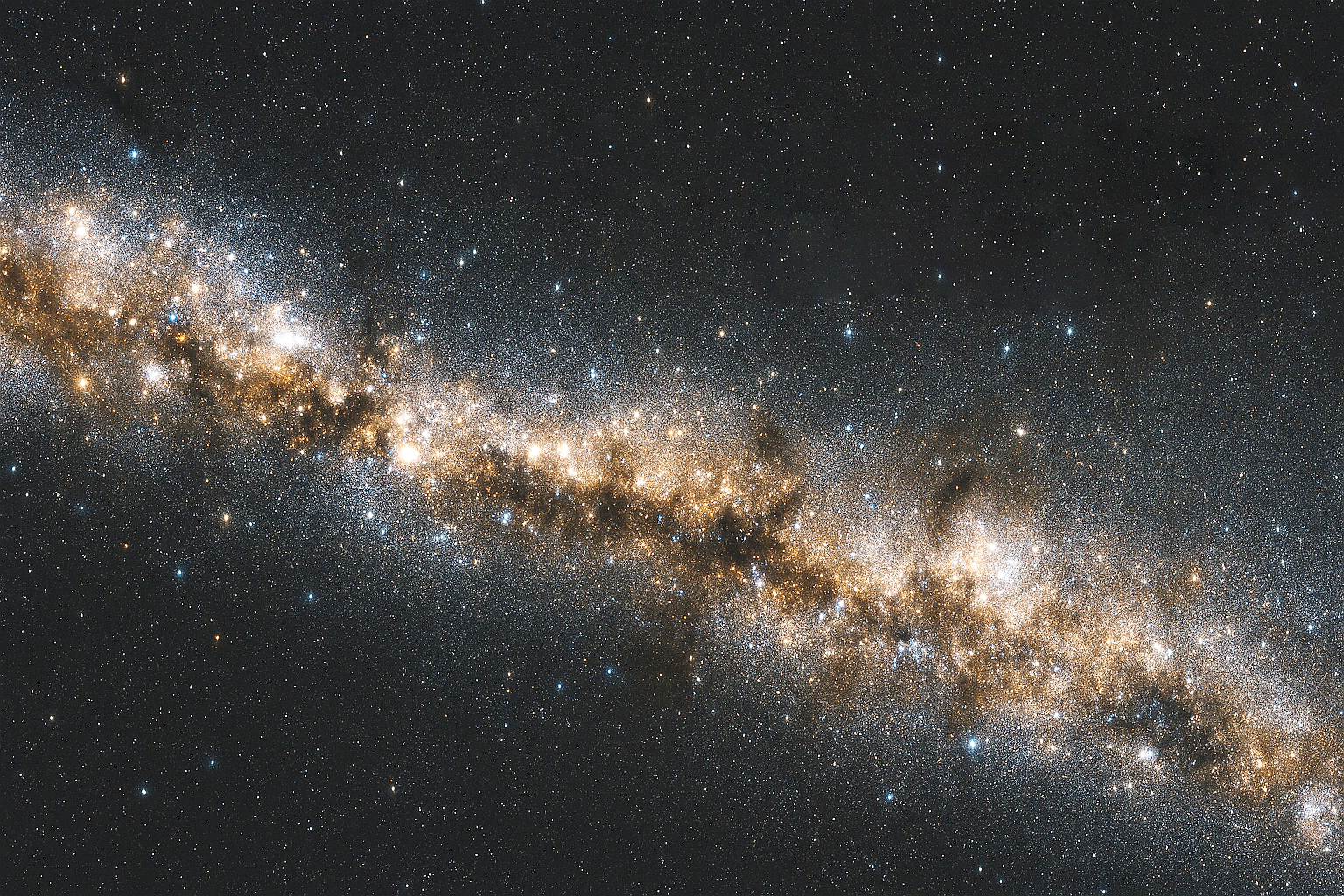
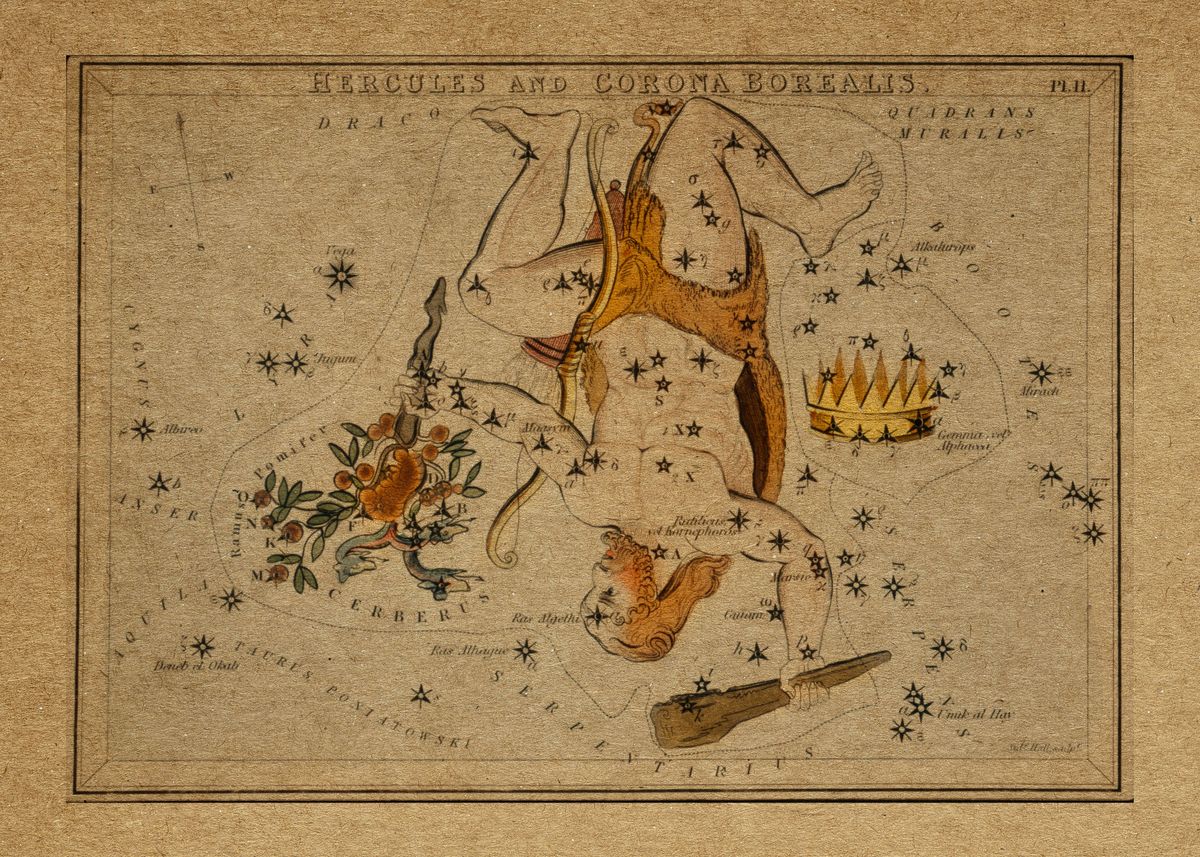
The Hercules-Corona Borealis Great Wall and TON 618 represent two distinct extremes of astronomical measurement: the former is a vast, coherent structure of galactic superclusters defining the limits of the observable universe's organization, while the latter is a singular, hyper-massive black hole representing a concentrated point of gravitational intensity. While they cannot be directly compared by mass or volume in a standard sense, they define the boundaries of the macro-structure and micro-singularity models in modern cosmology.
Defining the Hercules-Corona Borealis Great Wall
The Hercules-Corona Borealis Great Wall (Her-CrB GW) is widely recognized by astronomers as the largest known structure in the observable universe. First identified in 2013 through the analysis of data from the Swift Gamma-Ray Burst Mission, this structure is a galactic filament—a massive, interconnected network of galaxies, gas, and dark matter that traces the "cosmic web."
The structure spans approximately 10 billion light-years in its longest dimension. To put this into perspective, the observable universe has a diameter of roughly 93 billion light-years. This means the Her-CrB GW occupies a significant fraction of the total visible cosmos. It is located at a redshift of approximately 1.6 to 2.1, meaning we are observing it as it existed roughly 10 billion years ago.
The existence of such a massive structure poses significant questions for the Cosmological Principle. This principle suggests that on the largest scales, the universe should be homogeneous and isotropic—meaning it should look essentially the same in every direction with no major irregularities. A structure as large as the Her-CrB GW challenges this assumption, suggesting that there are irregularities in the distribution of matter that exceed the theoretical predictions for the scale at which the universe should become "smooth."
Decoding TON 618: The King of Singularities
In contrast to the sprawling web of the Her-CrB GW, TON 618 is a discrete object. It is a hyper-luminous, broad-absorption-line quasar located in the constellation Canes Venatici. At the heart of this quasar lies a supermassive black hole with an estimated mass of 66 billion times that of our Sun.
TON 618 is categorized as an active galactic nucleus (AGN). Its extreme luminosity is produced by the gravitational energy of matter being pulled into the accretion disk surrounding the central black hole. Because it is so far away—roughly 10.4 billion light-years—it is one of the most distant objects we can study in high detail. The "size" of TON 618 is not measured by the quasar itself, but by the Schwarzschild radius of its central black hole, which is roughly 384 billion kilometers, or about 40 times the distance from the Sun to Neptune.
Unlike the Great Wall, which is a collection of thousands of individual galaxies bound together by gravity, TON 618 is a singular gravitational engine. It represents the upper theoretical limit of how massive a black hole can grow through the accretion of surrounding matter in the early universe.
Comparative Framework: Structure vs. Singularity
To understand the difference between these two entities, one must distinguish between "cosmic web structure" and "compact objects." The following table clarifies the fundamental differences in their nature, scale, and classification within astrophysics.
| Feature | Hercules-Corona Borealis Great Wall | TON 618 |
|---|---|---|
| Classification | Galactic Filament/Supercluster | Quasar/Supermassive Black Hole |
| Primary Scale | 10 Billion Light-Years | ~2,500 Astronomical Units (Schwarzschild radius) |
| Composition | Galaxies, Dark Matter, Intergalactic Gas | Gas, Accretion Disk, Event Horizon |
| Mass Metric | Estimated in solar mass equivalents of galaxies | 66 Billion Solar Masses (Central singularity) |
| Cosmological Role | Largest known scale of matter distribution | Extreme endpoint of black hole evolution |
The Challenge of Cosmic Measurements
When researchers discuss the "size" of these two objects, they are using different metrics of measurement. For the Hercules-Corona Borealis Great Wall, size is determined by the spatial extent of the galaxy distribution. Astronomers map this by observing gamma-ray bursts (GRBs) that originate from specific galaxies within the wall. By plotting the distance of these GRBs, they can visualize the density of the wall.
For TON 618, the measurement is focused on gravitational influence and luminosity. Astronomers calculate the mass of the central black hole by observing the velocity of gas within its broad-line region—the zone where gas clouds orbit the black hole at extreme speeds. Using the luminosity of the quasar as a proxy for its accretion rate, they can derive the mass of the central engine.
The comparison between them is largely conceptual. You cannot compare the "density" of a wall to the "gravity" of a hole. However, both serve as "extremes" that help cosmologists test their models. The Her-CrB GW tests how big the universe can get, while TON 618 tests how dense and massive a single point can become.
Implications for Cosmological Models
The existence of the Her-CrB GW suggests that the distribution of dark matter may not be as uniform as previously hypothesized. If gravity has had enough time to pull galaxies into a structure 10 billion light-years across, it suggests that the "seeds" of these structures in the early universe were larger or more influential than current Standard Model cosmology—the Lambda-CDM model—strictly accounts for.
Conversely, TON 618 provides a window into the early growth of supermassive black holes. Finding a 66-billion-solar-mass black hole roughly 10 billion years ago presents an "early formation" problem. How did it have enough time to accumulate that much matter so shortly after the Big Bang? Theories range from rapid accretion to the merger of multiple smaller black holes, but TON 618 remains a primary benchmark for determining the upper limits of black hole growth.
Navigating the Observable Limits
For observers and science enthusiasts looking to understand these objects, it is important to realize that neither is visible through standard amateur equipment. These objects are defined by professional surveys and space-based observatories.
- Hercules-Corona Borealis Great Wall: This is a statistical construct. You don't "see" it as a single object in a telescope; you see it as a mapped density distribution in galactic surveys.
- TON 618: This appears as a point-source of light. While it is incredibly bright, its distance makes it appear as a faint, red-shifted point that requires spectroscopy to identify correctly as a quasar.
Frequently Asked Questions
Is the Hercules-Corona Borealis Great Wall the biggest thing in the universe? Currently, yes. It is the largest confirmed structure. However, "size" is a matter of definition. Some argue that because it is so large, it challenges the definition of a "structure" by potentially violating the homogeneity of the universe, leading some researchers to debate its existence as a single unified entity versus a coincidental alignment.
Is TON 618 the largest black hole? TON 618 is one of the most massive black holes ever identified. While other candidates have been proposed in recent years with potentially higher masses, TON 618 remains the most widely cited, verified example of an "ultramassive" black hole.
Can we travel to these locations? These objects are at cosmological distances. Even if we could travel at the speed of light, it would take billions of years to reach them. Because of the expansion of the universe, many parts of the Her-CrB GW are actually moving away from us at velocities that make them unreachable by any future human vessel.
Why are these objects important for science in 2026? As of 2026, these objects are essential for calibrating the next generation of deep-space surveys. They act as "stress-tests" for our theories. If a theory cannot explain how such a massive black hole formed or how such a vast structure assembled, that theory must be refined.
How do we map things 10 billion light-years away? We use light as a time machine. Because light takes time to travel, looking at these objects is effectively looking into the past. We use redshift measurements to determine the distance and motion of these galaxies relative to us, which allows us to triangulate their position in 3D space.
Conclusion and Next Actions
The Hercules-Corona Borealis Great Wall and TON 618 stand as bookends to the story of the universe's complexity. The former displays the power of gravity to organize matter on the largest possible canvas, while the latter shows the power of gravity to crush matter into the smallest possible state.
To continue learning about these subjects, those interested in large-scale structures should look into the latest releases from the Euclid mission and the Roman Space Telescope, which are currently providing higher-resolution mapping of the cosmic web. For those interested in black holes, following the ongoing data analysis from the James Webb Space Telescope regarding high-redshift quasars will provide the most current context on how objects like TON 618 formed so rapidly after the Big Bang.