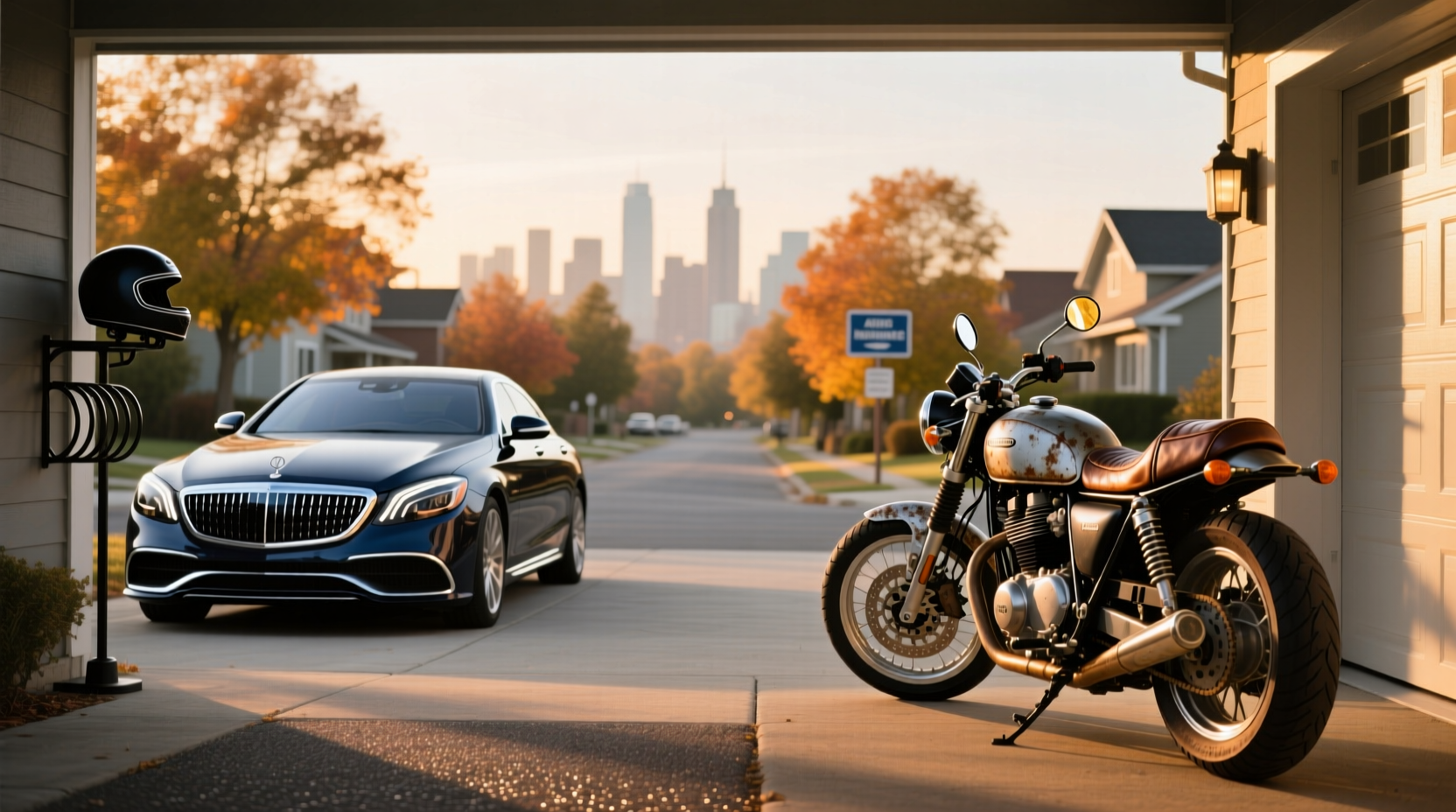
No, car and motorcycle insurance requirements are not the same across all states, nor are they identical to each other within many jurisdictions. While most states mandate liability coverage for both vehicle types, specific rules regarding Personal Injury Protection (PIP), guest passenger liability, and financial responsibility exemptions create significant legal distinctions between cars and motorcycles.
Insurance regulation in the United States is primarily handled at the state level rather than the federal level. This decentralization means that a driver moving from New York to Florida will encounter vastly different legal expectations for their automobile and their motorcycle. In 2026, these distinctions remain a critical point of compliance for vehicle owners, as the rise of "micro-mobility" and high-performance motorcycles has led some states to refine their definitions of what constitutes a motor vehicle for insurance purposes.
The Foundational Difference Between Car and Motorcycle Mandates
The primary reason car and motorcycle insurance requirements differ is the risk profile associated with each vehicle. Actuarial data consistently shows that motorcycle riders face a higher risk of severe injury or fatality in an accident compared to occupants of passenger cars. Because insurance is essentially a mechanism for managing financial risk, state legislatures often treat these two classes of vehicles differently to balance consumer protection with market affordability.
For passenger cars, the focus is often on "no-fault" systems or comprehensive liability to ensure that all parties in a multi-vehicle accident have some form of immediate medical coverage. For motorcycles, however, many states exclude riders from mandatory Personal Injury Protection (PIP) because the cost to provide such coverage for high-risk vehicles would make insurance premiums prohibitively expensive for the average rider.
Furthermore, the legal definition of a "motor vehicle" in state statutes frequently excludes motorcycles. This semantic distinction allows states to apply one set of laws to cars (four-wheeled vehicles) and a separate, often less restrictive or specifically tailored set of laws to motorcycles.
Compulsory Insurance vs. Financial Responsibility
To understand the landscape in 2026, one must distinguish between "compulsory insurance" and "financial responsibility laws."
- Compulsory Insurance: This requires a vehicle owner to purchase an insurance policy with specific minimum limits before they can register the vehicle or operate it on public roads. Most states follow this model for passenger cars.
- Financial Responsibility: This requires an owner to prove they have the financial means to pay for damages if they cause an accident. While insurance is the most common way to prove this, some states allow for bonds or cash deposits.
While almost all states require compulsory insurance for cars, a handful of states have historically offered more flexibility for motorcycles. For example, in states like Florida, motorcycle riders are not required to provide proof of insurance to register their bike, though they are still financially liable if an accident occurs. If a rider in such a state causes an accident and cannot pay for the damages, they face the suspension of their license and registration.
Key Coverage Areas Where Requirements Diverge
When comparing car and motorcycle insurance, the differences usually manifest in three specific areas: Personal Injury Protection, Guest Passenger Liability, and Uninsured/Underinsured Motorist coverage.
Personal Injury Protection (PIP) and No-Fault Laws
In "no-fault" states like Michigan, New York, and New Jersey, car owners are required to carry PIP. This coverage pays for the policyholder's medical expenses regardless of who caused the accident. However, many of these states explicitly exclude motorcycles from the PIP mandate.
The rationale is that since riders are more likely to suffer catastrophic injuries, including them in the general PIP pool would drive up everyone’s premiums. Consequently, a motorcyclist in a no-fault state might find that their car insurance covers their medical bills if they are injured in a sedan, but their motorcycle policy provides zero medical coverage for themselves unless they specifically opt for an "add-on" medical payments (MedPay) provision.
Guest Passenger Liability
Most car insurance policies include liability coverage for passengers automatically. If a driver crashes and their passenger is injured, the driver’s liability coverage typically pays for the passenger's medical bills.
In the motorcycle world, this is not always a given. Several states allow insurance companies to exclude "Guest Passenger Liability" from the base motorcycle policy. Riders who frequently carry a passenger (pillion) may be required by law in some states to add a specific endorsement for passenger coverage, whereas car owners have this protection integrated into their standard liability limits.
Uninsured and Underinsured Motorist (UM/UIM)
UM/UIM coverage protects you if you are hit by someone who has no insurance or insufficient insurance. For cars, some states make this coverage mandatory. For motorcycles, it is often optional, even in states where it is required for cars. This is a critical distinction because riders are more vulnerable to hit-and-run accidents or being struck by drivers who fail to see them.
State-Specific Anomalies in 2026
To illustrate the lack of uniformity, we must look at states that deviate significantly from the national average.
| State | Car Insurance Requirement | Motorcycle Insurance Requirement | Notable Distinction |
|---|---|---|---|
| Florida | Mandatory PIP and Property Damage Liability (PDL). | No insurance required for registration (for riders over 21). | Riders must wear helmets if they don't carry $10k in medical benefits. |
| New Hampshire | No mandate (must prove financial responsibility after an accident). | No mandate (must prove financial responsibility after an accident). | One of the few states where neither is strictly compulsory. |
| Virginia | Mandatory insurance (or pay a $500 Uninsured Motor Vehicle fee). | Mandatory insurance (or pay the fee). | The fee does not provide insurance; it only allows registration. |
| Michigan | High PIP limits required (No-Fault). | No-fault PIP does not apply to riders by default. | Riders only get PIP benefits if a car is involved in the accident. |
| Washington | Mandatory Liability. | Mandatory Liability. | Historically, motorcycles were exempt, but law now mirrors car requirements. |
The Case of Florida
Florida remains the most prominent outlier. For a car, you must show proof of insurance to get a license plate. For a motorcycle, you do not. However, if a motorcycle rider is involved in a crash and is found at fault, and they do not have insurance, they can be held personally liable for all costs. Furthermore, if a rider chooses not to wear a helmet (and is over 21), Florida law requires them to carry at least $10,000 in medical benefits coverage. This creates a unique intersection of safety laws and insurance requirements that does not exist for car drivers.
The Case of Michigan
Michigan's "No-Fault" system is complex. If you are in a car, your own insurance pays for your injuries. If you are on a motorcycle and you collide with another motorcycle, your own insurance (if you have MedPay) or your own resources must cover you. However, if a motorcycle is involved in an accident with a motor vehicle (a car or truck), the motorcyclist is often entitled to PIP benefits from the insurer of the car involved. This creates a legal environment where car owners effectively subsidize the catastrophic injury risks of motorcyclists in specific collision scenarios.
Why "Full Coverage" is a Misnomer
One common mistake consumers make in 2026 is assuming that "full coverage" means the same thing for both vehicles. In the insurance industry, "full coverage" is not a legal term. It typically refers to a policy that includes liability, collision, and comprehensive coverage.
However, because motorcycle requirements are often lower or more flexible, a "full coverage" motorcycle policy might still lack Personal Injury Protection or Guest Passenger Liability, which would be standard on a car policy. Riders must be more diligent in reading the "Exclusions" section of their policy to ensure they are actually protected against personal injury, not just damage to the bike.
Technical Considerations: Defining the Vehicle
As of 2026, the line between motorcycles and cars has blurred with the advent of three-wheeled vehicles (like the Polaris Slingshot or Can-Am Spyder) and high-speed electric bikes (e-bikes).
- Autocycles: Many states have created a third category called "autocycles." These often have three wheels, a steering wheel, and pedals. Some states require car insurance for these, while others classify them as motorcycles for insurance purposes.
- Electric Motorcycles: While they may not have an internal combustion engine, their speed capability usually classifies them as motorcycles. This means they must meet motorcycle insurance mandates, which are distinct from the low-speed e-bike regulations that generally do not require insurance.
Compliance and Verification in 2026
Modern enforcement has made it difficult to bypass insurance requirements. Most states now use electronic insurance verification systems (IVS) that link DMV registration databases with insurance company records.
If a car's insurance policy lapses, the insurer notifies the state, and the owner may receive a notice of registration suspension within days. For motorcycles, the enforcement varies. In states where insurance is required for registration, the same IVS rules apply. In states where it is not required for registration, enforcement usually only happens during a traffic stop or at the scene of an accident.
Common Mistakes to Avoid
- Assuming Reciprocity: Just because your motorcycle insurance is legal in your home state doesn't mean it meets the requirements of a state you are touring. While most policies "step up" their limits to meet the minimums of another state while you are traveling, the fundamental lack of PIP or other coverages might leave you vulnerable in a no-fault state.
- Relying on Health Insurance: Many riders assume their health insurance will cover them if they are injured. However, some health insurance policies have "high-risk activity" exclusions that may limit or deny coverage for motorcycle accidents. Car insurance PIP is usually primary, meaning it pays before health insurance kicks in.
- Ignoring the Passenger: As mentioned, many riders assume their liability covers their passenger. Always check for a "Passenger Liability" line item on a motorcycle policy; if it’s at $0 or "Excluded," your passenger has no protection from your policy.
Frequently Asked Questions
Is motorcycle insurance cheaper than car insurance?
Generally, yes, motorcycle insurance premiums are lower than car insurance premiums. This is not because the risk is lower, but because the property damage potential of a motorcycle is much smaller than that of a 4,000-pound car. Additionally, because many states don't mandate PIP for motorcycles, the insurer is not on the hook for the massive medical costs that they would be for a car driver in a no-fault state.
Can I use the same insurance company for both?
Most major insurers offer both car and motorcycle policies and often provide a "multi-policy discount." However, the policies remain legally distinct documents with different terms, conditions, and state-mandated minimums. A "bundle" is a billing convenience, not a merger of the legal requirements.
Do I need insurance for a moped or scooter in 2026?
This depends entirely on the engine displacement (cc) or wattage of the motor. In most states, if the vehicle goes over 30 mph or has an engine larger than 50cc, it is classified as a motorcycle and requires motorcycle insurance. Below that threshold, it may be classified as a moped, which sometimes requires a lower level of insurance or none at all, depending on the state.
Does a car license cover motorcycle insurance requirements?
No. To be properly insured and compliant with state law, the operator must usually have a motorcycle endorsement (M-class) on their license. If you have an accident on a motorcycle and only possess a standard car driver’s license, your insurance company may deny your claim, arguing that you were operating the vehicle illegally.
What happens if I move to a state with higher requirements?
When you move and update your registration, you must adjust your policy to meet the new state’s minimums. Failure to do so can result in the DMV blocking your registration or a lapse in coverage that triggers significant fines. Car and motorcycle owners should consult an agent at least 30 days before a move to ensure continuity of coverage.
Recommendations for Vehicle Owners
If you own both a car and a motorcycle, do not assume that the legal minimums for one will protect you for the other. For car owners, ensure your liability limits are high enough to protect your assets, as the $25,000 minimum in many states is insufficient for modern medical costs.
For motorcycle riders, the most important action is to purchase Uninsured/Underinsured Motorist coverage and Medical Payments (MedPay). Because many states do not require these for motorcycles, and because you are statistically more likely to be injured by an underinsured driver, these optional coverages are your primary line of defense. Always verify your state’s specific definition of "motor vehicle" to see if you are excluded from no-fault protections, and adjust your personal medical coverage accordingly.