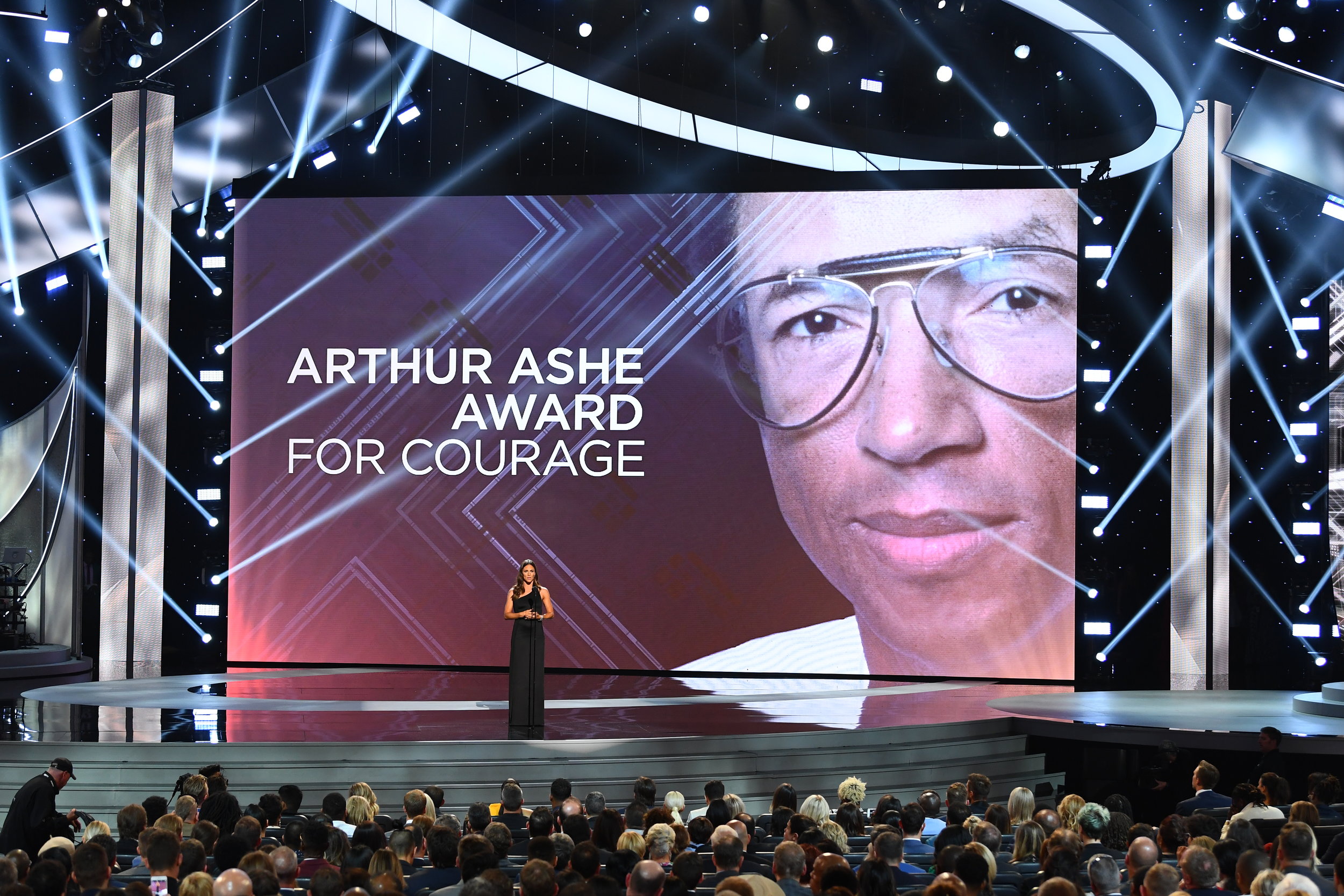
The Arthur Ashe Award for Courage is one of the most prestigious honors in sports, yet its interpretation of "courage" has evolved significantly since its inception in 1993. Originally tethered to athletic triumph in the face of physical adversity, the award has shifted toward recognizing individuals who use their platforms to advocate for social justice, human rights, and systemic reform, reflecting changing societal expectations of athletes as public figures.
The Origins of the Arthur Ashe Courage Award
Established in 1993, the Arthur Ashe Award for Courage was created to honor the late tennis legend Arthur Ashe, who was known as much for his activism as for his athletic prowess. Ashe, who died of AIDS-related complications in 1993, became a symbol of integrity and dignity in the public eye. When the ESPYs (Excellence in Sports Performance Yearly Award) introduced the category, the initial standards were primarily focused on athletes who overcame significant physical hurdles—such as cancer diagnoses, debilitating injuries, or life-altering accidents—to return to their sport.
The narrative arc of an early winner was typically one of personal resilience. The "courage" in question was internal; it was the athlete’s ability to withstand pain and maintain focus despite a body that had betrayed them. This definition aligned with the traditional sports trope of the "warrior," where the battlefield is the arena and the enemy is medical trauma or physical limitation.
The Shift Toward Societal and Systemic Advocacy
As the cultural climate transitioned into the 21st century, the definition of courage began to expand. This shift did not replace the medical resilience model but augmented it with a new dimension: the courage of conscience.
Athletes began to realize that their visibility provided a unique aperture for social change. Courage moved away from "playing through pain" and toward "speaking truth to power." This transition was heavily influenced by the rise of digital media, which allowed athletes to bypass traditional gatekeepers and speak directly to their fan bases. Winners in the 2010s and 2020s were increasingly selected based on their willingness to risk endorsements, public scrutiny, and career stability to highlight issues such as racial inequality, LGBTQ+ rights, and gender equity.
This evolution is not merely a change in selection criteria; it reflects a fundamental shift in the social contract between athletes and the public. Modern audiences expect athletes to be more than just high-performance machines; they expect them to be moral leaders within their communities.
Analyzing the Standards of Courage: A Comparative Framework
To understand how the standards have shifted, one must look at the criteria applied to nominees over the decades. The following table illustrates the conceptual shift in what constitutes "courage" in the context of the Arthur Ashe ESPY.
| Era | Primary Domain of Courage | Nature of the Challenge | Outcome Objective |
|---|---|---|---|
| 1990s - 2000s | Physical / Medical | Injury, Disease, Disability | Return to play, personal survival |
| 2010s - 2026 | Social / Political | Systemic Injustice, Advocacy | Public awareness, legislative change |
| Hybrid Era | Integrated | Life-long advocacy + Personal struggle | Broadening institutional empathy |
The Controversy of Defining Courage
The shift in standards has not been without debate. Critics of the modern selection process argue that by prioritizing social and political activism, the award risks alienating segments of the sports audience that prefer the arena to remain an escape from political discourse. Conversely, proponents argue that to define courage solely through physical hardship ignores the profound bravery required to challenge status quo power structures.
The "shifting standards" are effectively a mirror of the polarization present in modern society. When an award is given for standing up for a specific cause, that cause is inherently validated by the institution bestowing the honor. Consequently, the Arthur Ashe ESPY has become a focal point for discussions regarding the role of sports institutions in political life.
Key Factors in Current Selection Processes
As of 2026, the selection process for the Arthur Ashe Award for Courage considers several key factors that emphasize this move toward broad social impact:
- Platform Utilization: How effectively has the candidate leveraged their fame to benefit a marginalized group?
- Personal Risk: Did the candidate face professional or financial blowback as a result of their stance?
- Consistency: Is this a singular event of "courageous" behavior, or is it part of a long-term commitment to a cause?
- Resonance: Does the act of courage resonate with the current global or national zeitgeist?
These factors prioritize long-term, sustained efforts over singular, impulsive acts of bravery. The committee looks for evidence of institutional change—cases where an athlete’s actions resulted in policy updates, increased funding for specific initiatives, or a shift in public opinion regarding a critical issue.
The "Ashe" Legacy: Balancing Medical and Social Courage
Despite the shift toward advocacy, the legacy of Arthur Ashe remains central. Ashe himself bridged these worlds; he was an athlete who survived a heart condition, but he was also a tireless advocate for civil rights and AIDS awareness. Therefore, the award retains a connection to his specific history of personal physical struggle coupled with public service.
Modern recipients often share this dual heritage. It is rarely the case that a winner is selected solely for activism without a compelling personal backstory. The most successful candidates for the award are those who weave their personal life challenges into their broader message of social advocacy. This integration prevents the award from feeling like a purely political accolade and maintains its roots in the sports world.
Challenges in Measuring Impact
One of the most difficult tasks for those determining the "standard" of courage is quantifying the impact of the winners. Unlike an athletic statistic—such as a batting average or a time in a race—the efficacy of a social movement is notoriously difficult to measure.
- Visibility vs. Action: Is public awareness enough to constitute courage, or must there be tangible, legislative, or structural results?
- The "Celebrity" Factor: Does the immense wealth and privilege of modern professional athletes mitigate the "risk" they take? If an athlete is safe from financial ruin, does their act of courage carry the same weight as someone with less to lose?
These questions are at the heart of the 2026 discourse surrounding the ESPYs. The selection committee must balance the optics of celebrity activism with the reality of how much an athlete is actually sacrificing.
The Role of Technology and Media in Amplifying Courage
In 2026, the mechanism through which courage is displayed has evolved alongside the definition. The rise of decentralized social media networks and independent athlete-led media platforms means that "courageous" acts are often documented in real-time. This immediacy changes the nature of the award.
In the past, the story of an athlete’s courage might be told through a carefully curated documentary or an interview months after the fact. Today, the public often witnesses the act of courage as it happens. This changes the standard of proof; the "heroic" narrative is often formed by the public before the award committee even makes its selection. Consequently, the award committee is increasingly responding to a consensus that has already been built within the digital public square.
Frequently Asked Questions (FAQ)
1. Who determines the winner of the Arthur Ashe ESPY Award? The award is selected by the ESPN editorial leadership and a committee that reviews candidates based on their contributions to sports and society. They evaluate the nominee’s impact over the previous calendar year and their historical commitment to the values associated with Arthur Ashe.
2. Does the award still go to athletes dealing with physical illness? Yes. While the scope of the award has expanded to include social and political activism, athletes who demonstrate extreme resilience in the face of medical or physical crises remain eligible and frequently win.
3. Is there a specific application process for the award? No, there is no public application or nomination process. The selection is internal, handled by ESPY organizers and subject-matter experts who monitor the landscape of sports throughout the year.
4. How does the award reconcile political divisiveness? The selection committee focuses on the concept of "courage" as a bridge to universal values like empathy, perseverance, and justice. They often select candidates whose work addresses issues that have broad, albeit not universal, support, aiming to maintain the prestige of the honor while acknowledging the realities of a complex social landscape.
5. How has the definition of "courage" changed since 1993? The definition has shifted from a primarily internal, physical focus—conquering one's own limitations—to a primarily external, social focus—using one's platform to address systemic limitations in society.
Practical Steps for Aspiring Advocates in Sports
If you are an athlete or a sports professional seeking to emulate the spirit of the Arthur Ashe award, focus on these three pillars:
- Identify a Specific Cause: Generic advocacy often fades. Courage is best demonstrated through consistent, focused work on a specific issue—such as youth sports access, educational equity, or health awareness—that aligns with your personal background or community.
- Build Authentic Coalitions: Do not act in isolation. The most courageous acts are those that amplify the voices of experts and those directly impacted by the issue you are highlighting.
- Accept the Cost: True courage carries a risk. Whether it is potential loss of sponsorships or the challenge of being a polarizing figure, you must be prepared for the consequences of your position. Courage is not defined by the absence of fear or risk, but by the decision to move forward despite them.
The Arthur Ashe ESPY Award remains a vital barometer for what we value as a society. As the standards of courage continue to evolve, the award will likely move further toward recognizing those who can effectively synthesize the physical discipline of sports with the intellectual rigor of social leadership.