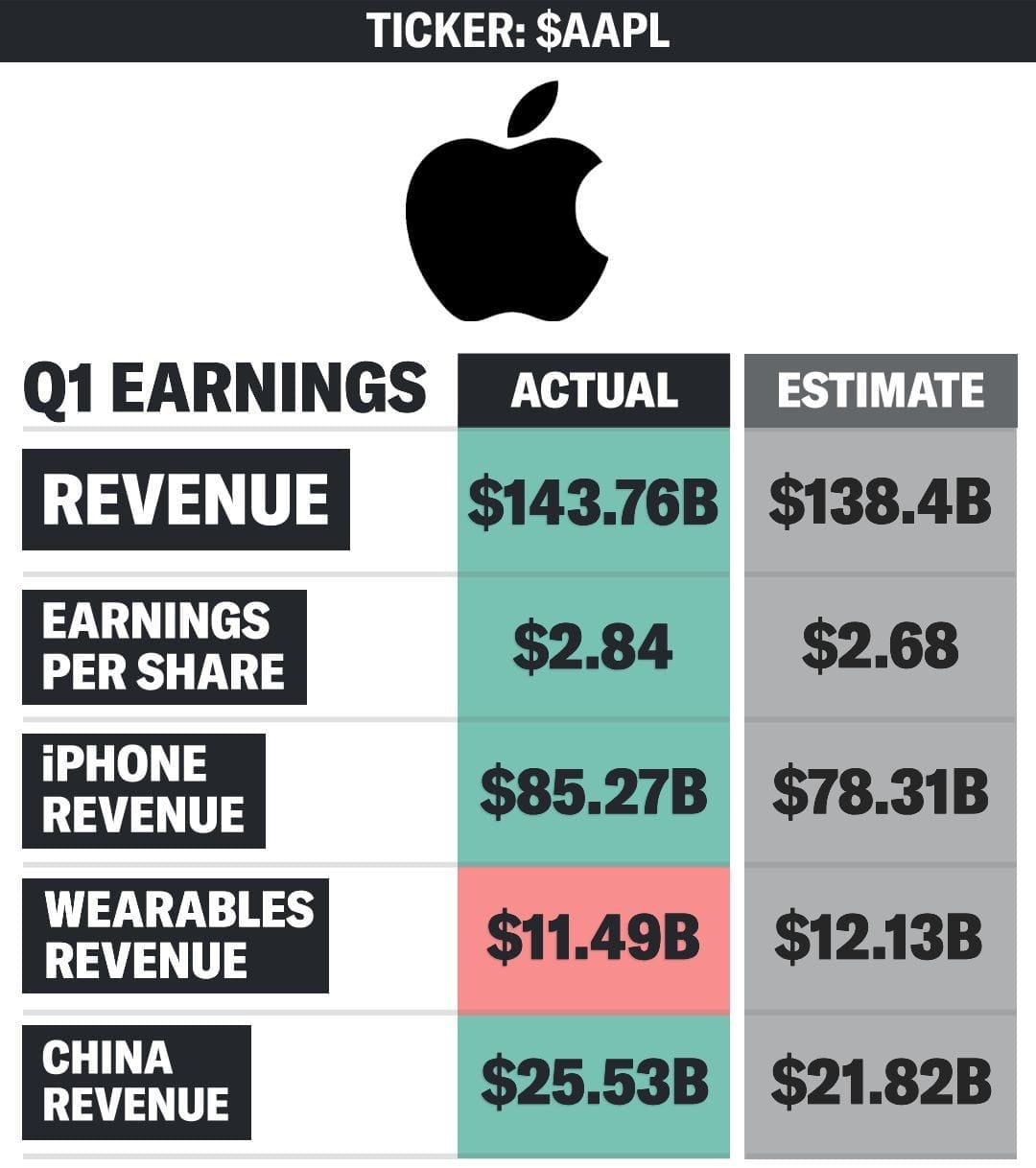
An earnings whisper for Apple Inc. (NASDAQ: AAPL) represents the unofficial, unreleased earnings per share (EPS) expectation held by institutional buy-side traders, hedge funds, and independent retail networks. Often diverging from official sell-side Wall Street consensus estimates, the whisper number reflects real-time sentiment and helps market participants gauge potential stock volatility following the quarterly report.
Disclaimer
This article is for informational and educational purposes only and does not constitute financial, investment, or trading advice. Equity trading around earnings announcements carries substantial risk. Always conduct independent research or consult a licensed financial advisor before making investment decisions.
Understanding Earnings Whispers vs. Wall Street Consensus
When Apple prepares to publish its quarterly financial results, two distinct sets of expectations govern market reactions: official sell-side consensus estimates and unofficial "whisper" numbers.
Sell-side consensus numbers are compiled by financial data vendors such as FactSet, Bloomberg, and Refinitiv. These figures aggregate published EPS and revenue models from equity research analysts working at major brokerage firms and investment banks (such as Goldman Sachs, Morgan Stanley, and J.P. Morgan). Sell-side analysts update their official models periodically, but compliance reviews, firm publishing rules, and conservative modeling guidelines can create a lag between market shifts and published estimates.
- Wall Street Sell-Side Consensus (Brokerage analysts, published research, periodic updates)
- Earnings Whisper Number (Buy-side hedge funds, channel check data, crowdsourced platforms)
- Post-Earnings Price Movement (Determined by how actual results compare against the Whisper Number)
An earnings whisper number captures the actual bar Apple must clear to trigger a positive post-earnings stock price movement. Historically, whisper numbers tend to sit higher than sell-side consensus during bull markets or strong product cycles, as buy-side participants factor in last-minute supply chain data, credit card tracking data, and regional app store spending that official sell-side reports may not yet reflect.
Core Financial Drivers of Apple's Upcoming Whisper Estimates
Evaluating Apple’s whisper number requires tracking the operational and macroeconomic metrics that institutional traders monitor in the weeks leading up to the report. Because Apple represents a significant weight in major indexes like the S&P 500 and Nasdaq-100, institutional expectations focus heavily on specific product and operational levers.
1. iPhone Segment Revenue and Channel Inventory
The iPhone remains Apple's largest single revenue generator. Buy-side expectations rely heavily on secondary channel checks from semiconductor suppliers (such as TSMC), display manufacturers, and assembly partners (such as Foxconn). Institutional traders track sell-through rates, lead times across online storefronts, and carrier promotional intensity to project whether iPhone revenue will outpace official guidance.
2. Services Segment and High-Margin Recurring Revenue
Apple’s Services division—which includes the App Store, Apple Music, iCloud, Apple Pay, Licensing, and Apple TV+—carries a significantly higher gross margin than hardware products (often exceeding 70%). A higher proportion of Services revenue expands total gross margin percentages. Whisper estimates often pivot on whether Services growth can offset any seasonal or regional softness in hardware sales.
3. Greater China Performance and Local Competition
Revenue from Greater China (Mainland China, Hong Kong, and Taiwan) remains a key point of sensitivity for institutional investors. Whisper numbers quickly adjust based on localized smartphone market share data, regional macroeconomic trends, and competitive pressure from domestic OEMs (original equipment manufacturers).
4. Consolidated Gross Margin Guidance
Wall Street frequently focuses on Apple’s gross margin trajectory. When Apple provides directional margin guidance, buy-side models immediately stress-test these targets against component pricing dynamics (such as NAND/DRAM memory costs and chip fabrication rates). A higher-than-expected whisper number often reflects an anticipation of margin expansion driven by favorable component pricing or premium product mix shifts (e.g., iPhone Pro and Pro Max dominance).
Comparing Consensus Estimates, Buy-Side Whispers, and Crowdsourced Data
To understand how different market participants project Apple's earnings, it helps to compare the primary sources of expectations:
| Expectation Type | Primary Data Source | Key Participants | Update Frequency | Main Purpose |
|---|---|---|---|---|
| Sell-Side Consensus | Published equity research models aggregated by Bloomberg/FactSet | Brokerage analysts, investment bank research teams | Periodic (days to weeks before earnings) | Public benchmark; baseline for media headline beats/misses |
| Buy-Side Whisper | Proprietary hedge fund models, alternative data (credit card feeds, web scraping) | Portfolio managers, buy-side analysts, quantitative funds | Continuous / Real-time up to the earnings call | Internal positioning, long/short tactical trading |
| Crowdsourced Whisper | Financial platforms (e.g., Estimize, WhisperNumber) | Independent analysts, retail traders, industry professionals | Continuous crowd aggregation | Democratized sentiment tracking, behavioral sentiment analysis |
Where to Track Live Apple Earnings Whisper Numbers
Investors tracking Apple’s upcoming earnings report can monitor several recognized platforms to assess unofficial market expectations:
- Estimize: A open financial platform that aggregates estimates from buy-side analysts, independent researchers, and retail contributors. Estimize historically demonstrates a higher accuracy rate than traditional sell-side consensus because it incentivizes timely updates and incorporates broader inputs.
- WhisperNumber.com: One of the oldest tracking services dedicated specifically to polling individual and institutional traders regarding their expected earnings outcome prior to release dates.
- Alternative Data Providers: Quantitative funds utilize alternative data brokers that track app store download volumes, international freight shipments, semiconductor supply chain lead times, and digital ad spending to build dynamic, real-time earnings models.
- Options Implied Volatility (IV): While not an explicit EPS dollar figure, the options market provides an "implied move" calculation based on the pricing of front-month straddles. Calculating the implied move reveals the percentage price fluctuation the options market expects immediately following the release.
Historical Price Dynamics: Sell-Side Beats vs. Whisper Misses
A frequent point of confusion for investors is why Apple stock may decline immediately after reporting earnings that exceed official Wall Street sell-side estimates. This dynamic usually involves the distinction between beating published consensus and meeting the actual whisper number.
Scenario A:
- Actual EPS > Sell-Side Consensus AND Actual EPS > Whisper Number
- Result: Strong upward price momentum / Post-earnings rally
Scenario B:
- Actual EPS > Sell-Side Consensus BUT Actual EPS < Whisper Number
- Result: Stock price drops despite "official" earnings beat ("Priced in")
Scenario C:
- Actual EPS < Sell-Side Consensus AND Actual EPS < Whisper Number
- Result: Significant negative price adjustment / Sell-off
If Wall Street consensus projects an EPS of $1.50, but buy-side alternative data pushes the informal whisper number to $1.58, a reported EPS of $1.53 technically constitutes an official "beat" of 3 cents. However, because institutional capital had priced the equity for a $1.58 performance, the stock may experience selling pressure as institutional desks rebalance positions to reflect the lower-than-anticipated reality.
Tactical and Risk Management Strategies Around Earnings
Trading around Apple earnings reports involves elevated implied volatility and execution risks. Market participants utilize specific strategies to navigate earnings releases:
1. Risk-Defined Options Strategies
Rather than buying outright directional call or put options—which suffer from rapid implied volatility collapse (known as "IV crush") immediately after results are released—traders often employ risk-defined spreads. Vertical credit spreads or iron condors allow traders to capture elevated option premiums while capping maximum downside loss.
2. Post-Earnings Announcement Drift (PEAD)
Conservative equity investors often wait until the earnings announcement and subsequent conference call conclude before taking action. Post-Earnings Announcement Drift (PEAD) is a documented market efficiency phenomenon where stocks that deliver a dual beat (exceeding both consensus and high whisper numbers along with strong forward guidance) continue to outperform over the subsequent 30 to 90 days.
3. Evaluating Forward Guidance Over Past EPS
For Apple, the backward-looking EPS figure is only half the equation. The market's reaction hinges heavily on management’s qualitative commentary and quantitative framework for the following quarter during the executive earnings call with CEO Tim Cook and the Chief Financial Officer. A strong whisper beat in the reported quarter accompanied by cautious guidance for the upcoming quarter frequently results in negative price action.
Step-by-Step Checklist for Apple Earnings Day
To systematically process Apple's earnings report as it releases, follow this structured evaluation workflow:
Step 1: Check Headline EPS & Revenue vs. Published Sell-Side Consensus
Step 2: Compare Reported EPS against Pre-Release Whisper Estimates (Estimize/WhisperNumber)
Step 3: Analyze Segment Performance (iPhone, Services, Wearables, Mac, iPad)
Step 4: Review Gross Margin % (Hardware vs. Services Mix)
Step 5: Monitor Greater China Revenue Trajectory
Step 6: Listen to Live Conference Call Guidance & Commentary on Upcoming Quarter Trends
Compare Headline Figures: Immediately assess reported EPS and Revenue against both sell-side consensus and your tracked whisper benchmark.
Examine Gross Margins: Verify whether gross margins met or exceeded the upper bound of Apple's prior guidance range.
Assess Services Acceleration: Look for sustained double-digit growth in the Services arm, which underpins Apple's valuation multiple expansion.
Evaluate Regional Splits: Pay specific attention to Greater China and Emerging Markets growth rates to confirm global demand health.
Listen for Capital Returns: Check updates to Apple's share repurchase program authorization and quarterly dividend adjustments.
Frequently Asked Questions
Why do earnings whisper numbers often differ from official Wall Street estimates?
Official Wall Street estimates are produced by sell-side brokerage analysts who must follow formal institutional publishing standards and compliance workflows. This can result in delayed updates. Whisper numbers aggregate real-time buy-side sentiment, crowd-sourced inputs, and alternative datasets (such as supply chain and consumer transaction data), making them more responsive to late-breaking market shifts.
What happens if Apple beats official consensus but misses the whisper number?
When Apple reports EPS above the official sell-side consensus but below the informal whisper number, the stock often declines. This occurs because institutional investors and hedge funds had already priced the stock based on the higher whisper expectation. When actual results fall short of that higher internal threshold, investors revalue the stock downward.
Are earnings whisper numbers legal under financial regulations?
Yes. Earnings whisper numbers are simply aggregated market expectations, estimates, and alternative data analyses compiled by public platforms, independent research firms, and market participants. They do not involve non-public material information (MNPI) provided illegally by company insiders.
How does Estimize generate its Apple whisper estimates?
Estimize crowdsources earnings and revenue forecasts from a broad community of contributors, including buy-side hedge fund analysts, independent researchers, finance academics, and retail traders. By weighting estimates based on historical contributor accuracy, the platform generates a dynamic consensus model that frequently proves more accurate than traditional sell-side averages.
How does implied volatility affect options trading during Apple earnings?
Prior to earnings, option premiums inflate significantly due to elevated implied volatility (IV)—the market's expectation of a price swing. Immediately after Apple reports, this uncertainty resolves, causing implied volatility to drop rapidly (known as "IV crush"). Option buyers who hold unhedged single-leg options may lose money even if they predict the price direction correctly if the stock move is smaller than the implied volatility move priced into the options.
Key Takeaways for Investors
Tracking the Apple earnings whisper for the upcoming quarter offers valuable context beyond basic headline financial metrics. While sell-side consensus provides the public baseline, the whisper number reflects the true hurdle Apple must cross to sustain positive equity momentum.
Before placing trades or adjusting long-term portfolio allocations ahead of Apple’s earnings release, cross-reference crowdsourced platforms like Estimize against options market implied volatility. Always evaluate backward-looking earnings results alongside forward-looking guidance provided during the executive conference call to maintain a balanced, risk-managed investment approach.