Anya Taylor-Joy and Charlize Theron represent two distinct yet intersecting generations of cinematic excellence, characterized by their transformative acting styles, physical commitment to roles, and profound influence on the "strong female lead" archetype. While Theron established the blueprint for the modern female action icon through her Oscar-winning versatility and production power, Taylor-Joy has become the face of the 2020s, blending ethereal art-house sensibilities with high-octane franchise appeal, most notably by inheriting Theron’s iconic role of Furiosa.
The Intersection of Two Eras: From Theron’s Legacy to Taylor-Joy’s Ascendance
In the landscape of 2026, looking back at the last decade of film, few narratives are as compelling as the creative lineage between Charlize Theron and Anya Taylor-Joy. This is not merely a story of one actress replacing another in a franchise; it is an exploration of how contemporary cinema has shifted from the grit and grounded realism of the early 21st century to the more stylized, mythic, and genre-bending aesthetics of the current era.
Charlize Theron, a veteran of the industry for over three decades, fundamentally altered the expectations for leading women. Before Theron, female-led action was often hyper-sexualized or niche. Through her work in the 2000s and 2010s, she proved that a female lead could be as brutal, stoic, and physically commanding as any male counterpart, all while maintaining a deep, emotional complexity.
Anya Taylor-Joy entered the scene just as the industry was searching for a new kind of star—one who could navigate the nuances of "prestige television" and the demands of global blockbusters simultaneously. Her rise has been meteoric, defined by an "otherworldly" presence that directors have utilized to bridge the gap between traditional drama and speculative fiction. By the time she took on the mantle of Furiosa in George Miller's 2024 prequel, she was not just an actress following in a legend's footsteps; she was a contemporary powerhouse redefining what that legend could be.
Charlize Theron: The Architect of the Modern Action Heroine
To understand Theron’s impact on contemporary cinema, one must look at her trajectory from the transformative performance in Monster (2003) to her definitive turn in Mad Max: Fury Road (2015). Theron’s career is a masterclass in risk-taking and physical transformation.
Breaking the "Bond Girl" Mold
Early in her career, Theron was often cast for her striking looks, but she resisted the pigeonholing that limited many of her peers. Her portrayal of Aileen Wuornos in Monster remains a benchmark for "deglamorization"—not for the sake of shock, but to facilitate an uncompromising deep-dive into a character's psyche. This performance earned her an Academy Award and established her as a formidable dramatic force.
The Rise of the Producer-Actor
Theron’s influence extends beyond her acting. Through her production company, Denver and Delilah Productions, she has maintained significant control over her projects. This has been crucial in the development of films like Atomic Blonde (2017) and The Old Guard (2020). By 2026, her model of "actor-as-producer" has become the standard for top-tier talent seeking to ensure the quality and thematic consistency of their work.
Furiosa and the Stoic Warrior
In Mad Max: Fury Road, Theron created Imperator Furiosa, a character that arguably overshadowed the titular Max. Her performance was defined by what she didn't say. Using her eyes and her physical presence to convey a lifetime of trauma and a desperate hope for redemption, she set a new standard for the "warrior" archetype. She stripped away the tropes of the "damsel" and replaced them with a weary, tactical brilliance.
Anya Taylor-Joy: The Ethereal Shape-Shifter of the 2020s
If Theron represents the grounded, visceral strength of the previous decade, Anya Taylor-Joy represents the versatile, expressive, and genre-fluid nature of contemporary cinema in the 2020s.
The Horror Roots and the "Final Girl" Evolution
Taylor-Joy first caught the industry's attention in Robert Eggers' The Witch (2015). Her performance as Thomasin introduced audiences to her ability to hold the screen with minimal dialogue, relying instead on a heightened emotional sensitivity. Unlike traditional horror leads, Taylor-Joy’s characters often lean into the darkness rather than just fleeing from it, a theme she revisited in The Menu (2022) and Last Night in Soho (2021).
The Cultural Phenomenon of The Queen’s Gambit
The release of The Queen’s Gambit in late 2020 was a turning point. As Beth Harmon, Taylor-Joy proved she could anchor a massive cultural moment. Her performance was a blend of intellectual ferocity and profound vulnerability. This role showcased her ability to make static activities—like playing chess—look as high-stakes and visually arresting as an action sequence.
Stylistic Precision and Visual Identity
Directors frequently cite Taylor-Joy’s unique facial structure and large, expressive eyes as a primary tool in their storytelling. In the current era of high-definition cinematography and IMAX formats, her ability to convey complex internal monologues through subtle facial shifts has made her an invaluable asset for visual-first directors like George Miller and Denis Villeneuve.
The Furiosa Mantle: A Case Study in Character Continuity
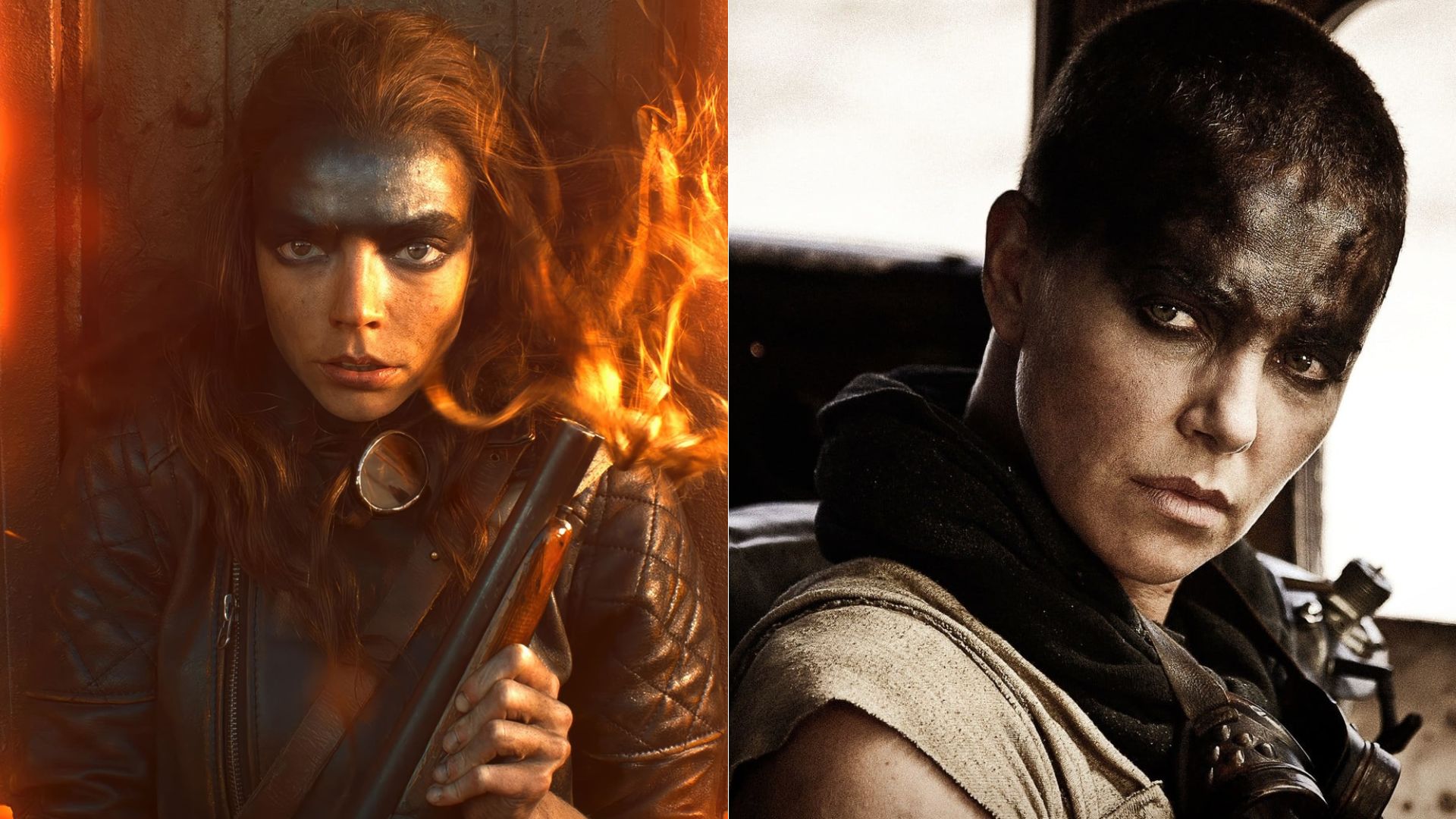
The most direct link between these two icons is the character of Furiosa. In the 2024 film Furiosa: A Mad Max Saga, Taylor-Joy took on the origin story of the character Theron made famous. This transition is one of the most successful examples of character continuity in modern film history.
Theron’s Stoic Foundation
Theron’s Furiosa was a finished product—a woman who had already survived the worst the wasteland had to offer. Her strength was defensive and resolute. When audiences met her in Fury Road, she was already a leader, seasoned by years of servitude and secret planning. Theron’s performance was rooted in the "aftermath" of survival.
Taylor-Joy’s Origin and Vulnerability
Taylor-Joy’s task was to show the "becoming." In the prequel, she portrayed a younger, more raw version of the character. While Theron’s Furiosa was a wall of stone, Taylor-Joy’s was a flickering flame—constantly at risk of being extinguished but possessing an intense, burning drive for vengeance. The transition worked because Taylor-Joy did not try to mimic Theron; instead, she provided the emotional logic that explained how a hopeful girl could eventually become the hardened warrior Theron portrayed.
Bridging the Performance Gap
Critics and film historians in 2026 note that the two performances are symbiotic. To watch Taylor-Joy in Furiosa is to understand the scars that Theron carries in Fury Road. This "relay race" of acting demonstrates how two different performers can contribute to a single iconic legacy without one diminishing the other.
Comparative Analysis: Performance Styles and Screen Presence
While both actresses are known for their intensity, their technical approaches to the craft differ in ways that reflect the changing landscape of filmmaking.
| Feature | Charlize Theron | Anya Taylor-Joy |
|---|---|---|
| Acting Style | Immersive, physical transformation, often grounded in "Method" elements. | Expressive, stylized, relying on internal emotional rhythms and visual "eye-work." |
| Primary Genre | Action-Drama, Thriller, Gritty Realism. | Gothic Horror, Period Drama, Speculative Fiction, High-Concept Action. |
| Physicality | Heavy stunt work, focus on raw power and endurance (e.g., Atomic Blonde). | Precision movement, dance-like choreography, focus on agility and presence. |
| Industry Role | Established Actor-Producer with a focus on female-led IP. | Leading Actor and "Muse" for auteur directors with growing creative influence. |
| Key Directorial Collabs | George Miller, Patty Jenkins, David Leitch. | Robert Eggers, George Miller, Mark Mylod, Scott Frank. |
Production and Power: Theron and Taylor-Joy as Industry Players
In 2026, the power dynamic in Hollywood has shifted toward talent-led production. Both Theron and Taylor-Joy are central to this shift, albeit at different stages of their careers.
Charlize Theron has moved into a "stateswoman" role. Her company, Denver and Delilah, is no longer just a vehicle for her own roles but a significant producer of content across streaming platforms. She has used her leverage to champion directors from diverse backgrounds and to push for higher standards in stunt safety and choreography.
Anya Taylor-Joy, meanwhile, has reached a level of "bankability" that allows her to be highly selective. By 2026, she has begun to take on executive producer credits, following the path blazed by Theron. Her influence is seen in the "aesthetic" of the films she chooses—often favoring high-concept, visually distinct projects that prioritize atmosphere and character over traditional narrative structures.
The Future of Contemporary Cinema (Perspective from 2026)
As we look toward the late 2020s, the influence of these two women continues to shape what audiences expect from the big screen. The "strong female lead" is no longer a novelty or a marketing buzzword; it is a foundational element of the medium, thanks in large part to Theron’s mid-career push and Taylor-Joy’s current dominance.
The trend in 2026 is moving toward "hyper-performance"—where the physical and the digital merge. Theron’s work in motion-capture and de-aging (used sparingly but effectively) and Taylor-Joy’s uncanny ability to mesh with heavily stylized CGI environments have made them the blueprints for the future of the "hybrid" actor. They represent the successful marriage of traditional theatrical training and the demands of modern technology.
Furthermore, their careers highlight a move away from the "disposable" star. In the past, female actresses often faced a "shelf life." Theron, now in her 50s, is as relevant and sought-after as ever, while Taylor-Joy, in her early 30s, has already built a body of work that rivals veteran performers. This longevity reflects a positive shift in industry standards regarding age and gender.
FAQ
How did Anya Taylor-Joy prepare for the role of Furiosa compared to Charlize Theron?
Charlize Theron focused heavily on the internal stoicism and the physical "weight" of the character, famously suggesting that the character should have a buzzed head to reflect her utilitarian lifestyle. Anya Taylor-Joy’s preparation involved intense physical training and stunt driving, but she also spent significant time studying the "emotional lineage" of the character to ensure her portrayal felt like a younger version of Theron’s, rather than a different person entirely.
Have Charlize Theron and Anya Taylor-Joy ever worked together?
As of 2026, they have not shared the screen in a traditional sense, although they shared the character of Furiosa across two different films. However, industry rumors frequently suggest a collaboration is in development, possibly a high-stakes thriller produced by Theron’s Denver and Delilah Productions starring both women.
What are the most defining films for both actresses in the 2020s?
For Charlize Theron, The Old Guard (2020) and its subsequent sequels have defined her recent decade, cementing her as a staple of the high-concept action-streaming genre. For Anya Taylor-Joy, The Queen's Gambit (2020), The Menu (2022), and Furiosa (2024) are the pillars of her contemporary success.
Who is more influential in terms of industry production?
Currently, Charlize Theron holds more production influence due to the longevity and established track record of her company. However, Anya Taylor-Joy is rapidly following a similar trajectory, increasingly taking on creative roles behind the camera to secure the artistic integrity of her projects.
Is there a "Furiosa" connection beyond the Mad Max films?
The connection is primarily thematic. Both actresses are often cast as characters who are "outsiders" or survivors. Whether it’s Theron in Monster or Taylor-Joy in The Witch, both have built their careers on playing women who must navigate and overcome hostile environments, making them the spiritual heirs to each other's filmographies.
Practical Recommendation for Film Enthusiasts
To fully appreciate the evolution of contemporary cinema through these two actresses, viewers should engage in a comparative marathon. Start with Theron’s Monster to understand her dramatic foundation, followed by Taylor-Joy’s The Witch. Then, watch Mad Max: Fury Road followed immediately by Furiosa: A Mad Max Saga. This sequence provides a clear window into how the industry’s approach to character, action, and female-led storytelling has matured and expanded over the last two decades.