The idiom "any port in a storm" signifies that in a time of crisis or extreme difficulty, any available refuge, solution, or source of help is acceptable, even if it would be considered unfavorable or suboptimal under normal circumstances. It highlights the shift from seeking the best possible outcome to prioritizing immediate survival or stability.
While the phrase originated in the hazardous world of 18th-century seafaring, its application has evolved to cover psychological resilience, financial "flight to quality" strategies, and modern crisis management. Understanding this concept is essential for navigating high-stakes environments where the luxury of choice is often the first thing lost.
The Nautical Origins and Etymology
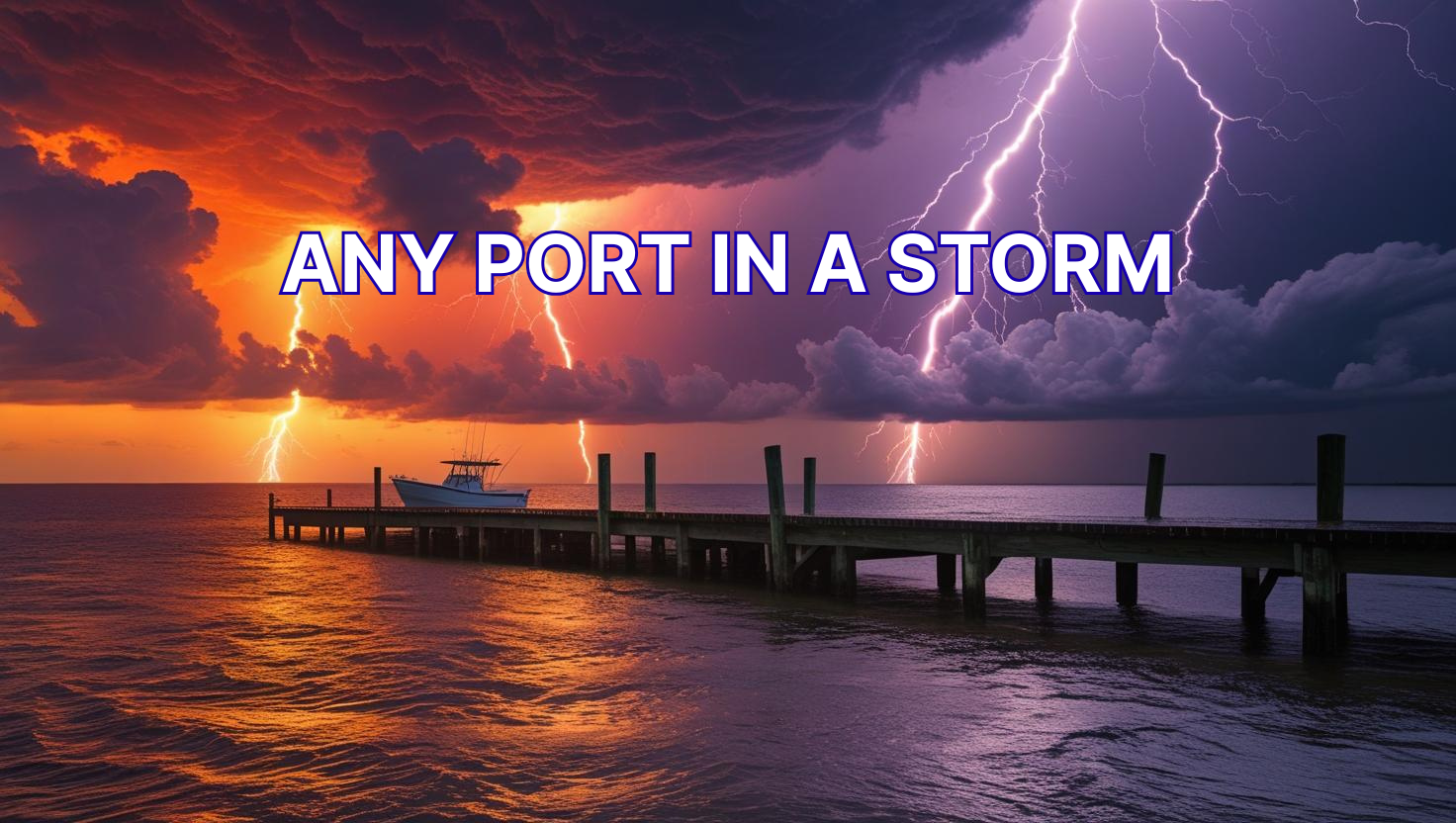
To truly grasp the depth of "any port in a storm," one must look at the literal maritime context from which it emerged. In the age of sail, a storm was not merely an inconvenience; it was a life-threatening event. A ship caught in a gale faced the risk of being driven onto rocks, capsizing, or being lost at sea. In such moments, a captain could not afford to be picky about which harbor to enter.
A "port" in this context refers to any sheltered body of water where a ship can find protection from the open sea. Under normal conditions, a captain would seek a port with deep water, excellent facilities, and easy access to trade. However, during a violent storm, even a shallow, poorly equipped, or politically hostile harbor was preferable to the destructive power of the ocean.
The first recorded literary use of the phrase is widely attributed to John Cleland in his 1749 novel, Memoirs of a Woman of Pleasure (commonly known as Fanny Hill). Cleland wrote, "it was a maxim (as she said) among the men, that 'any port in a storm'..." By the mid-18th century, the phrase had already transitioned from a literal maritime rule to a metaphorical social commentary. It captured a fundamental human truth: extremity narrows our focus to the immediate necessity of safety.
The Psychological Mechanism: Survival Over Strategy
From a psychological perspective, "any port in a storm" describes the shift from high-level executive functioning to the "survival brain." When individuals face a significant crisis—be it emotional, professional, or physical—the prefrontal cortex, responsible for nuanced decision-making and long-term planning, often takes a backseat to the amygdala.
Cognitive Narrowing in Crisis
In 2026, psychological research continues to emphasize the concept of "cognitive narrowing." When the "storm" (stress) hits, our ability to process multiple variables diminishes. We stop looking for the "perfect" solution and start looking for "a" solution. This is a survival mechanism. If you are drowning, you do not check the safety rating of a piece of floating debris; you grab it because it keeps your head above water.
The Trade-off of the Suboptimal
The psychological weight of this idiom lies in the admission of imperfection. Choosing "any port" implies a conscious trade-off. You are aware that the refuge you are seeking is flawed. In a career context, this might mean taking a lower-paying job during a recession. In a social context, it might mean reconciling with a difficult family member during a personal tragedy. The "port" provides the stability needed to catch one's breath, even if the surroundings are far from ideal.
Financial and Economic Applications
In the world of finance, the "any port in a storm" mentality is frequently observed during market volatility. This behavior is technically referred to as a "flight to quality" or a "flight to safety."
When global markets face uncertainty—such as geopolitical conflicts, sudden inflationary spikes, or systemic banking failures—investors abandon high-risk assets like speculative tech stocks or emerging market currencies. Instead, they flood into "safe haven" assets.
Safe Haven Assets in 2026
As of 2026, the traditional financial "ports" remain consistent, though their relative strengths fluctuate based on the nature of the economic storm:
- Gold: Historically the ultimate "port," gold maintains intrinsic value when fiat currencies are devalued.
- U.S. Treasuries: Despite shifting global dynamics, the liquidity and perceived safety of U.S. government debt serve as a primary refuge for institutional capital.
- The Swiss Franc: Known for Swiss neutrality and a stable banking system, the Franc remains a localized port for European capital.
- Cash Reserves: In a deflationary storm, simply holding cash is the safest port, despite the lack of yield.
The Opportunity Cost of the Refuge
The danger of the financial "any port" is the opportunity cost. Because everyone is rushing toward the same safety, the cost of entering that port rises (e.g., gold prices spike), and the eventual return on investment may be lower than if the investor had weathered the storm in a more diversified position. However, for those facing total ruin, the cost of the port is a price worth paying.
Comparing Crisis Response Idioms
To better understand the nuances of "any port in a storm," it is helpful to compare it with other common idioms that deal with necessity and limited choice.
| Idiom | Core Message | Key Difference |
|---|---|---|
| Any port in a storm | Seek immediate refuge regardless of quality. | Focuses on safety and survival during a crisis. |
| Beggars can't be choosers | One must accept what is offered when they have nothing. | Focuses on lack of resources or status, not necessarily a crisis. |
| Desperate times call for desperate measures | Extreme situations require extreme actions. | Focuses on action and aggression rather than seeking shelter. |
| Making a virtue of necessity | Pretending that a forced choice was actually desired. | Focuses on rationalization and maintaining appearances. |
| The lesser of two evils | Choosing the least harmful of two bad options. | Focuses on a binary choice rather than a general search for safety. |
The "False Refuge" Trap: When the Port is Dangerous
While the idiom suggests that any refuge is better than the storm, experience teaches us that some ports are more dangerous than the sea itself. In crisis management, this is known as the False Refuge Trap.
A ship seeking shelter in a harbor with "holding ground" (the ability for an anchor to grip the bottom) that is made of loose sand or smooth rock will find that its anchor drags. The ship may end up being smashed against the pier it thought would save it.
Modern Equivalents of the False Refuge
- Predatory Lending: An individual facing a financial storm may turn to a payday lender. This "port" provides immediate relief but often leads to a cycle of debt that is more destructive than the initial crisis.
- Toxic Relationships: Someone exiting a traumatic breakup (the storm) might jump into a new, unhealthy relationship (the port) simply to avoid the pain of being alone.
- Short-term Corporate Fixes: A company facing a revenue drop might slash its R&D budget. While this saves cash today, it destroys the company’s ability to compete in the future.
The wisdom of "any port in a storm" must therefore be tempered with a quick assessment of the port’s integrity. If the port is likely to collapse under the same pressure as the storm, it is not a refuge; it is a secondary hazard.
Practical Steps for Identifying a "Safe Port"
If you find yourself in a metaphorical storm in 2026—whether personal, professional, or financial—use the following steps to evaluate your options quickly.
1. Identify the Primary Threat
Before choosing a port, you must know what you are running from. Is it a lack of liquidity? A loss of reputation? Physical danger? A port that protects against one may leave you vulnerable to another.
2. Verify the "Holding Ground"
Ask yourself: "What is the long-term cost of this safety?" If the refuge requires you to compromise your core ethics or incur debt you can never repay, it may be a false refuge.
3. Seek Temporary Duration
A port in a storm is meant to be a temporary stop, not a permanent home. Ensure that the solution you choose allows for an "exit strategy" once the weather clears. Avoid "ports" that lock you into long-term commitments that will hinder you later.
4. Communication and Transparency
If you are entering a "port" (e.g., asking for help from a competitor or taking a bridge loan), be clear about the terms. Ambiguity during a crisis often leads to conflict once the pressure subsides.
Frequently Asked Questions
Is "any port in a storm" a cynical phrase?
Not necessarily. While it acknowledges that choices are compromised, it is fundamentally a pragmatic and survival-oriented concept. It recognizes the reality of human limitation in the face of overwhelming forces. It is more about resilience than cynicism.
Who first said "any port in a storm"?
The sentiment likely existed in seafaring culture for centuries, but the first written record of the specific phrasing is found in John Cleland's Memoirs of a Woman of Pleasure in 1749.
Can this idiom be used in a positive way?
Yes. It can be used to praise someone’s resourcefulness and lack of pretension. If a team manages to save a project by using an unconventional or "ugly" tool because it was the only one available, they are successfully applying the "any port" principle to achieve a positive outcome.
How does "any port in a storm" relate to "the lesser of two evils"?
They are related but distinct. "The lesser of two evils" implies you have exactly two choices, both bad. "Any port in a storm" implies you are in a state of distress and will take anything that offers protection, regardless of how many options might exist or how imperfect they are.
Does "any port in a storm" apply to modern technology?
Absolutely. In cybersecurity, if a primary server goes down (the storm), an IT department might move operations to a legacy backup system that is slow and outdated (any port). It isn't the best system, but it keeps the business online.
Final Recommendation: Proactive "Port" Planning
The best way to handle the "any port in a storm" scenario is to identify your ports before the storm hits. In 2026, whether you are managing a household budget or a multinational corporation, the key to resilience is "Pre-Crisis Mapping." Identify which assets, relationships, or contingency plans will serve as your shelters. By pre-vetting your "ports," you ensure that when the winds pick up, you aren't forced into a harbor that will ultimately cause more harm than the storm itself.