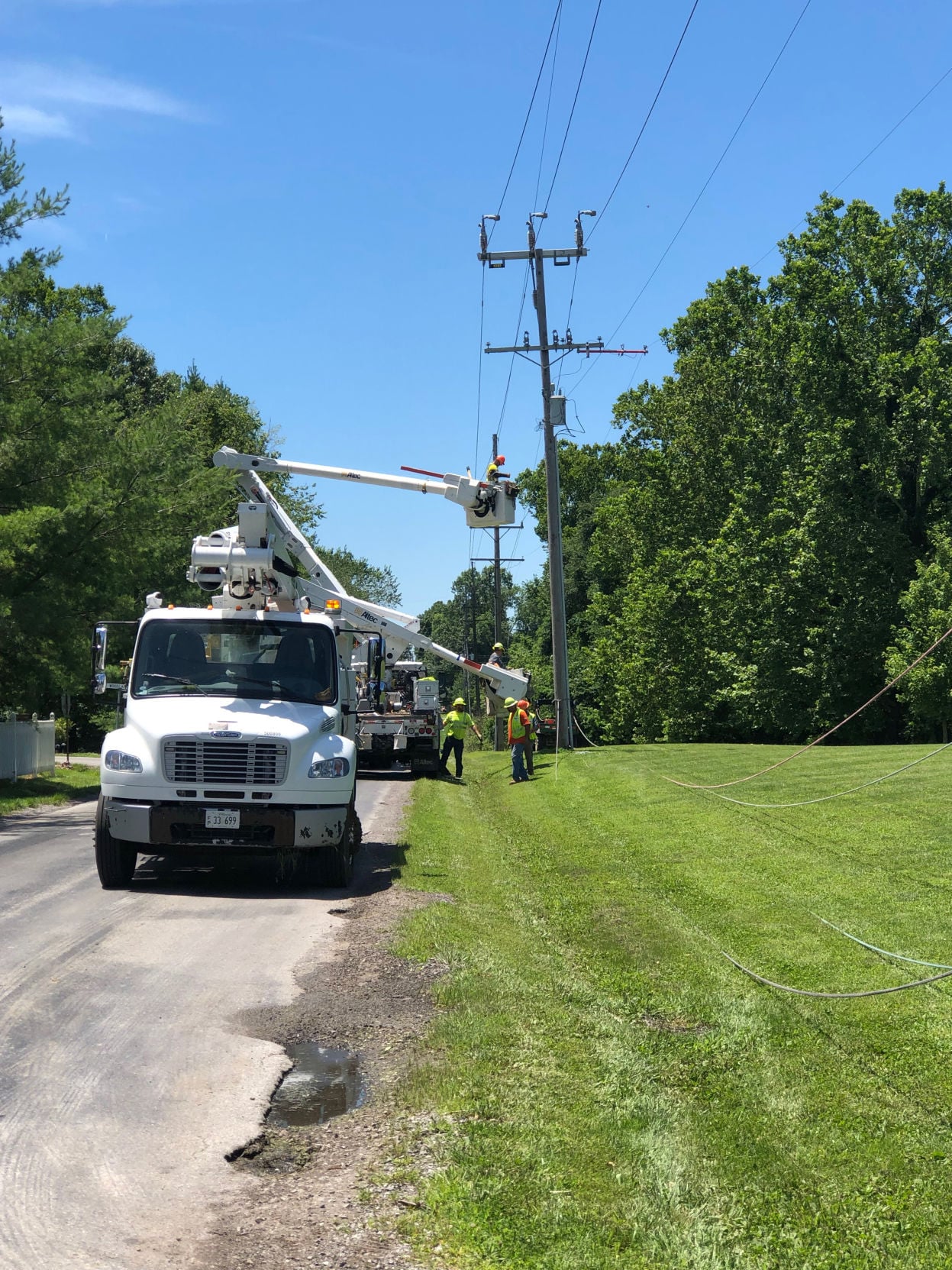
Ameren Illinois provides electric and natural gas delivery services to approximately 1.2 million electric and 800,000 natural gas customers across central and southern Illinois. As a regulated utility, it manages the infrastructure—poles, wires, and pipelines—required to transport energy from generators to homes and businesses, regardless of the energy supplier chosen by the customer.
Ameren Illinois operates as a subsidiary of Ameren Corporation, headquartered in St. Louis, but its Illinois operations are distinct and governed by the Illinois Commerce Commission (ICC). Spanning roughly 43,700 square miles, the service territory encompasses 1,200 communities. Navigating the complexities of utility service requires an understanding of the distinction between delivery and supply, the impact of state-wide energy legislation, and the technical requirements for maintaining service reliability.
The Structure of Utility Service in Illinois
To understand Ameren Illinois power services, one must first recognize the "decoupled" nature of the Illinois energy market. Since the late 1990s, Illinois has operated under a deregulated model for electricity supply. This means that while Ameren Illinois is the sole entity responsible for the physical delivery of power in its specific territory, customers have the right to choose who produces that power.
Delivery vs. Supply
Every utility bill is divided into two primary segments. The Delivery Service charges cover the cost of maintaining the grid, including transmission lines, substations, and local distribution wires. These rates are set through multi-year rate plans approved by the ICC. The Supply Service charges represent the actual cost of the electricity or natural gas you consume.
If you do not choose a third-party retail electric supplier (RES), you default to Ameren Illinois' "Basic Generation Service," where the company purchases power on the wholesale market and passes that cost to you without a markup. This distinction is vital because Ameren Illinois does not profit from the supply portion of the bill; their revenue is generated primarily through the delivery infrastructure.
Regulatory Oversight and the ICC
The Illinois Commerce Commission serves as the watchdog for all utility activities. In 2026, Ameren Illinois continues to operate under the Integrated Grid Plan (IGP) framework, a requirement resulting from the Climate and Equitable Jobs Act (CEJA). This framework requires the utility to align its investments with state goals regarding decarbonization, equity, and reliability. Every rate adjustment or major infrastructure project must undergo a rigorous public hearing process before ICC approval.
2026 Infrastructure and Grid Modernization
As of 2026, Ameren Illinois has largely completed its transition to a "Smart Grid." This technological overhaul has fundamentally changed how power is managed at the residential and commercial levels.
Advanced Metering Infrastructure (AMI)
The rollout of smart meters across the Illinois territory allows for two-way communication between the customer and the utility. For the consumer, this means:
- No More Estimated Bills: Consumption data is transmitted digitally, eliminating the need for manual meter readings.
- Granular Usage Data: Customers can view their energy consumption in 15-minute intervals through the online portal, identifying specific times of day when energy use spikes.
- Faster Outage Restoration: The grid can now "ping" meters to confirm whether a specific house has power, allowing the utility to pinpoint the location of a fault before a customer even calls to report it.
Self-Healing Grid Technology
One of the most significant technical advancements in the 2026 service landscape is the implementation of "Intelligent Switches." These devices can automatically detect a fault on a power line (such as a fallen tree limb) and reroute electricity from an alternative path within milliseconds. This technology reduces the number of customers affected by a single point of failure and often restores power so quickly that clocks do not even reset.
Understanding Residential and Commercial Service Rates
Utility rates are complex and depend on the service classification (Residential, Small Business, or Large Industrial) and the voltage requirements of the property.
Residential Service Classifications
Most residential customers fall under "Rate DS-1" for electric delivery. In 2026, residential rates are influenced by the Multi-Year Rate Plan (MYRP), which provides a predictable upward or downward adjustment based on the utility's capital investment in the grid.
| Service Component | Description | Typical Application |
|---|---|---|
| Customer Charge | A fixed monthly fee regardless of usage. | Covers billing, meter maintenance, and service lines. |
| Standard Delivery | A per-kWh charge for moving power. | Scales with your energy consumption. |
| Supply (BGS) | The market price of electricity. | Defaults to Ameren unless a third party is chosen. |
| Environmental Surcharge | Fees mandated by state law. | Funds renewable energy credits and efficiency programs. |
| Peak Demand (Optional) | Charges based on the highest usage hour. | Available for customers with high-capacity needs. |
Business and Industrial Services
Small and large businesses operate under different rate structures, such as DS-2 (Small General Service) or DS-3/DS-4 for high-voltage industrial users. These classifications often include "Demand Charges," which are calculated based on the maximum amount of power the facility draws at any one time. This incentivizes businesses to spread their energy-intensive operations across the day rather than starting all machinery simultaneously.
Starting, Stopping, and Transferring Service
Managing an account with Ameren Illinois has been streamlined through digital integration. However, there are specific prerequisites and timelines that must be followed to ensure continuous service.
Service Activation Requirements
When starting service at a new location, customers must provide:
- Service Address: The exact physical location including unit numbers.
- Personal Identification: Social Security Number or alternative government ID to verify creditworthiness.
- Requested Start Date: Ameren typically requires at least two business days' notice for standard activations.
- Deposit Policy: Depending on credit history or previous payment patterns with Illinois utilities, a security deposit may be required. Under Illinois law, these deposits must be returned with interest after 12 months of on-time payments.
New Construction and Upgrades
For new buildings or service upgrades (e.g., upgrading a 100-amp panel to 200-amp for an electric vehicle charger), customers must work with the Ameren Illinois Construction Hotline. This process involves a site visit by a design engineer to determine if the local transformer and lateral lines can handle the increased load. In 2026, with the push for residential electrification, these upgrades are common, and Ameren provides specific technical guidelines for interconnecting distributed energy resources.
Energy Efficiency and the "ActOnEnergy" Program
A core component of Ameren Illinois' service is its commitment to energy reduction. The "ActOnEnergy" initiative offers various rebates and incentives designed to lower the overall demand on the grid.
Residential Rebates
- Smart Thermostats: Significant instant rebates are often available for ENERGY STAR-certified thermostats that allow the utility to manage load during peak events (with customer consent).
- HVAC Upgrades: Incentives for high-efficiency heat pumps, which have become the standard for heating and cooling in the 2026 Illinois market.
- Home Energy Audits: Customers can request a virtual or in-person audit where a technician identifies air leaks and insulation gaps.
The Peak Time Rewards Program
This is a "demand response" program enabled by smart meter technology. During days of extreme heat or cold when the regional power grid is stressed, Ameren Illinois may trigger a "Peak Time" event. Customers who voluntarily reduce their electricity usage during these specific hours receive a credit on their following month's bill. This is a critical tool for maintaining grid stability and avoiding the need for "peaker" power plants that are more expensive and less environmentally friendly.
Sustainability and Renewable Energy Integration
Following the mandates of the Climate and Equitable Jobs Act, Ameren Illinois has aggressively integrated renewable energy into its delivery network.
Net Metering and Distributed Generation
Customers with rooftop solar panels are eligible for net metering. When a solar array produces more power than the home consumes, the excess energy flows back into the Ameren grid, and the customer's meter literally "runs backward" or earns credits. By 2026, the transition from traditional net billing to "Distributed Generation" (DG) rebates has been a focal point of ICC discussions, moving toward a system that compensates solar owners based on the value the energy provides to the grid at specific times.
Community Solar
For customers who cannot install solar (such as renters or those with shaded roofs), community solar programs allow them to subscribe to a portion of a large solar farm located elsewhere in the Ameren Illinois territory. The credits generated by that farm are then applied to the customer’s Ameren bill, providing a way to support renewable energy and lower costs simultaneously.
Financial Assistance and Payment Support
Recognizing that energy is a basic necessity, Ameren Illinois participates in several assistance programs governed by both state and federal law.
- LIHEAP (Low Income Home Energy Assistance Program): A federally funded program that provides one-time grants to eligible low-income households to help pay for heating and cooling.
- Warm Neighbors Cool Friends: A program administered by the Energy Assistance Foundation that provides help to those who may not qualify for LIHEAP but are still facing financial hardship, often referred to as "the working poor."
- Budget Billing: This service levels out the seasonal "peaks" of a bill. Ameren calculates an average based on the previous 12 months of usage, and the customer pays the same amount every month. The account is "trued up" annually to account for any discrepancies between the estimate and actual usage.
Technical Specifications for Service Reliability
Ameren Illinois maintains its reliability through a tiered system of voltage distribution. Residential areas are typically served by 120/240-volt single-phase power. Commercial areas may utilize 208Y/120-volt or 480Y/277-volt three-phase power, which is necessary for large motors and industrial equipment.
The utility is also subject to the Service Reliability Standards set by the ICC. These standards track metrics like SAIDI (System Average Interruption Duration Index) and SAIFI (System Average Interruption Frequency Index). In 2026, Ameren Illinois is required to report these metrics transparently, ensuring that capital investments result in fewer and shorter power outages for the consumer.
Frequently Asked Questions
How do I report a power outage to Ameren Illinois?Outages can be reported 24/7 via the Ameren Illinois mobile app, the online outage center, or by calling 1-800-755-5000. Because of the smart meter infrastructure, the utility often receives an automated notification, but manual reporting helps confirm the extent of local damage, such as downed lines or damaged transformers.
Can I change my energy supplier while staying with Ameren Illinois?Yes. Under Illinois law, you can choose a Retail Electric Supplier (RES) for the "supply" portion of your bill. Ameren Illinois will continue to deliver the power and send you a single integrated bill. It is important to compare the "Price to Compare" (Ameren’s default rate) against any third-party offers to ensure you are actually saving money.
What is the "Environmental Disclosure" on my bill?This is a state-required breakdown of the sources of the electricity supplied to you. It lists the percentage of power coming from nuclear, coal, natural gas, wind, and solar. As Illinois moves toward its 2050 carbon-free goal, the percentage of renewable energy in this disclosure has steadily increased.
What should I do if I see a downed power line?Always assume a downed line is energized and stay at least 10 feet away. Call Ameren Illinois or 911 immediately. Even if the line isn't sparking, it could be "live" and extremely dangerous.
Does Ameren Illinois offer protection plans for my home's wiring?Ameren Illinois itself is responsible for the lines up to the "point of attachment" on your home. For internal wiring or exterior meter sockets, they often partner with third-party providers like HomeServe to offer optional repair insurance, though these are not mandatory utility services.
Practical Recommendation for Customers
To maximize the value of Ameren Illinois' power services in 2026, customers should prioritize three actions: First, register for an online account to access real-time usage data; this is the most effective way to identify energy waste. Second, enroll in "Budget Billing" to avoid high seasonal spikes during Illinois' volatile winter and summer months. Third, check the Ameren Illinois ActOnEnergy portal for current rebates before purchasing any major appliance or HVAC system, as these incentives can often offset 20-50% of the equipment cost.